FemPhases

Trust Bar Marquee

Menopause Transition

AMH and Fertility: What Low or High AMH Really Means

Introduction If you’ve had a fertility blood test and your AMH result has left you anxious, you’re not alone. A lot of women search for AMH and fertility because they want one simple answer: Does this result mean I can or cannot get pregnant? That question matters, especially when you are trying to conceive, thinking about waiting, or feeling unsettled by a number on a lab report. The truth is that AMH can give useful information, but it does not tell the whole story. Quick answer: AMH is a hormone that helps estimate your ovarian reserve, which means the number of eggs remaining in your ovaries. It can help doctors understand how your ovaries may respond to fertility treatment, but it does not reliably predict whether you can get pregnant naturally right now. Age, ovulation, egg quality, sperm health, and your overall reproductive health still matter a great deal. (ACOG) What is it? AMH stands for anti-Mullerian hormone. It is made by small follicles in the ovaries. Because those follicles contain immature eggs, AMH is often used as a marker of ovarian reserve. In plain English, it gives a rough idea of how many eggs are left compared with what is expected for your age. (Cleveland Clinic) What does AMH tell you? AMH and fertility are linked mainly through ovarian reserve. A higher AMH level usually suggests a higher number of remaining eggs, while a lower AMH level usually suggests fewer remaining eggs. (Cleveland Clinic) What AMH cannot tell you? This is the part many women are not told clearly enough: AMH does not measure egg quality, and it does not reliably predict whether you will get pregnant naturally this month or next. ACOG advises that a single AMH level in women not already seeking fertility care should not be used to predict natural fertility or the exact timing of menopause. (ACOG) AMH Level Interpretation Guide Why doctors use it Doctors often use AMH as part of a bigger fertility picture, especially when planning IVF or other fertility treatment, because it can help predict how strongly the ovaries may respond to stimulation medicines. (ASRM) Why does it happen? AMH levels change because your ovarian reserve changes over time. Age is the main reason. AMH usually falls with age because the number of eggs in the ovaries naturally declines over time. That decline is normal. (MedlinePlus) Other things that may affect AMH 1. Higher AMH Higher AMH can sometimes be seen in women with PCOS, because the ovaries may contain more small follicles. A high result does not automatically mean better fertility. In some cases, it may point to ovulation problems rather than an advantage. (UHCW) 2. Lower AMH Lower AMH may happen with age, diminished ovarian reserve, certain medical conditions, or after treatments that affect the ovaries, such as some cancer treatments. It may also reflect that your egg supply is lower than average for your age. (Cleveland Clinic) One result never tells the full story. AMH and fertility should never be judged by a single number alone. Doctors usually consider your age, menstrual history, ultrasound findings, medical history, and, sometimes, other hormone tests. (ASRM) Signs or symptoms AMH itself does not usually cause symptoms. You cannot feel your AMH level. What women often notice instead are signs of an underlying issue that may sit alongside an abnormal AMH result. Possible signs that deserve attention periods that are very irregular or absent difficulty getting pregnant Symptoms of PCOS, such as acne, excess facial hair, or cycle irregularity a history of endometriosis, ovarian surgery, chemotherapy, or pelvic infections early signs of perimenopause, such as changing cycles or hot flushes in some women (ASRM) A normal cycle does not always mean a normal AMH. Some women with low AMH still have regular periods and may still ovulate. That is one reason AMH and fertility can feel confusing. A lower AMH does not automatically mean pregnancy is impossible. (ACOG) What is normal, and when to pay attention This is where many women want a neat chart, but AMH ranges vary by lab, test method, and age. That means a result should always be interpreted using the lab’s reference range and your personal situation. (ASRM) What is usually considered reassuring A result within the expected range for your age can be reassuring, but it still does not guarantee easy conception. Fertility depends on much more than ovarian reserve. (ACOG) When a low AMH matters more A low AMH deserves more attention if: a. You are over 35 Age and ovarian reserve together matter more than either one alone. (ACOG) b. You have been without success. If you are under 35, evaluation is generally recommended after 12 months of trying. If you are 35 or older, it is recommended after 6 months. If you are over 40, or you have known issues such as irregular periods, endometriosis, or previous ovarian surgery, it is reasonable to seek help sooner. (ASRM) c. Your periods are irregular. AMH and fertility should be assessed alongside regular ovulation. Irregular periods may matter more than the AMH number alone. (ASRM)   When a high AMH matters more A high AMH may need follow-up if you have symptoms of PCOS or if fertility treatment is being planned, because it can be linked to a stronger ovarian response to stimulation. (UHCW) When to speak to a doctor Speak to a doctor, gynaecologist, or fertility specialist if: a. You are worried about a result. A doctor can explain what your AMH means in the context of your age and health, not just as a standalone number. b. You have been trying to conceive. under 35: after 12 months 35 or older: after 6 months over 40: don’t wait too long to ask for advice (ASRM) You have other red flags. Seek medical advice sooner if you have: irregular or absent periods known PCOS or endometriosis recurrent miscarriage past ovarian surgery previous chemotherapy or radiation severe pelvic pain or other symptoms that suggest a

AMH and Fertility: What Low or High AMH Really Means Read More »
Signs of Endometriosis You Should Not Ignore: Symptoms That Need Attention

Introduction If you have been wondering whether your painful periods, pelvic pain, or bowel symptoms could be signs of endometriosis, you should not ignore them; you are not overreacting. Many women are told that severe period pain is “just part of being a woman,” but ongoing pain that disrupts your life deserves proper attention. Endometriosis can look different from one person to another. For some women, it shows up as worsening period pain. For others, it appears as pain during sex, bowel pain, fatigue, or trouble getting pregnant. Quick answer: The main signs of endometriosis you should not ignore are pain that is severe, recurring, or starts interfering with daily life. This can include painful periods, pelvic pain between periods, pain during sex, painful bowel movements, pain when urinating during your period, heavy bleeding, and fertility difficulties. Endometriosis is treatable, but it should be evaluated by a doctor rather than dismissed. (nhs.uk) What is Endometriosis? Endometriosis is a condition in which tissue similar to the lining of the womb grows outside the womb, often on organs such as the ovaries, fallopian tubes, bowel, bladder, or pelvic lining. This tissue still responds to hormones, which means it can cause inflammation, irritation, scarring, and pain. (nhs.uk) Why Endometriosis matters Endometriosis is not simply “bad period pain.” It is a long-term condition that can affect physical health, emotional well-being, sex life, work, sleep, and fertility. NICE also notes that people with endometriosis may need long-term support because the impact can be wide-ranging. (NICE) Why does Endometriosis happen? The exact cause is not fully understood. It likely develops through a mix of factors rather than one single reason. These may include hormones, immune system factors, family history, and the way endometrial-like tissue can grow outside the womb. (ACOG) Trying to Conceive After 35: What Changes and What Doesn’t A few things doctors do know Hormones play a role. Endometriosis tissue responds to hormones such as estrogen, which can help explain why symptoms often flare around the menstrual cycle. (ACOG) It can run in families. A family history can increase suspicion, which is why NICE recommends asking about it when endometriosis is being considered. (NICE) Symptoms do not always match severity. Some women with significant endometriosis have mild symptoms, while others with smaller areas of disease may have severe pain. That is one reason symptoms should be taken seriously, even when scans are normal, or the pain seems hard to explain. Signs or symptoms The biggest message here is simple: the signs of endometriosis you should not ignore are the ones that keep happening, get worse, or start affecting your daily life. Common signs of endometriosis you should not ignore Very painful periods that stop you from doing normal activities Pelvic pain before, during, or after your period Heavy periods or bleeding that feels hard to manage Pain during or after sex, often felt deep inside Painful bowel movements during your period Pain when urinating during your period Lower back pain or ongoing pelvic ache Bloating, bowel discomfort, or intestinal pain Fatigue alongside recurring pain Difficulty getting pregnant or fertility concerns (nhs.uk) Symptoms that are easy to dismiss Some signs of endometriosis you should not ignore do not always look obviously “gynaecological.” For example: Bowel symptoms around your period If you notice pain when opening your bowels, constipation, diarrhoea, or deep pelvic pressure that gets worse around your period, that pattern matters. (Office on Women’s Health) Bladder pain during your period Pain when passing urine during menstruation can also be part of the picture and should not be brushed off. (Office on Women’s Health) Pain that keeps returning Pain that comes back month after month, especially if it is getting worse, is one of the clearest signs of endometriosis you should not ignore. (nhs.uk) Cramping in Early Pregnancy: What Is Normal and What Is Not? What is normal, and when to pay attention A mild amount of cramping that improves with rest, heat, or simple pain relief can happen with periods. But pain is not “normal” when it regularly disrupts your life. What may be within the usual range Mild cramps for a day or two Symptoms that respond well to simple pain relief Discomfort that does not stop you from functioning When to pay attention The signs of endometriosis you should not ignore usually involve a pattern like this: You miss work, school, or social plans because of period pain Pain relief is no longer helping enough Your symptoms are getting worse over time Sex becomes painful You have bowel or bladder pain linked to your cycle You feel exhausted by your periods every month You have been trying to conceive without success and also have painful periods or pelvic pain (nhs.uk) A medically responsible reminder Severe pain should not be self-diagnosed as endometriosis. Other conditions can also cause pelvic pain or heavy bleeding, including fibroids, pelvic inflammatory disease, adenomyosis, ovarian cysts, or bladder and bowel conditions. A proper medical assessment matters. (NICE) When to speak to a doctor Speak to a doctor if you think you have signs of endometriosis that you should not ignore, especially if the symptoms are affecting your daily life, relationships, mental well-being, or fertility. Book an appointment if Your periods are consistently very painful You have pelvic pain between periods You have pain during sex You notice bowel or bladder pain around menstruation Your bleeding is very heavy You have symptoms plus trouble conceiving What the doctor may do A doctor may ask about your symptom pattern, periods, sex, fertility, and family history. They may examine you, arrange an ultrasound, discuss symptom tracking, and refer you to a specialist if needed. NICE recommends examination and ultrasound in suspected cases, while also recognising that endometriosis can still be present even if imaging is normal. (NICE) Go urgently if Seek urgent medical help if you have: Sudden, severe pelvic pain, unlike your usual symptoms Very heavy bleeding causing dizziness or fainting Fever, vomiting, or signs of acute illness Severe

Signs of Endometriosis You Should Not Ignore: Symptoms That Need Attention Read More »

Trying to Conceive After 35: What Changes and What Doesn’t

Introduction If you’re trying to conceive after 35, one question can start to sit heavily in the background: Have I left it too late? For many women, this season comes with a mix of hope, pressure, and conflicting advice. You may hear that everything suddenly becomes difficult at 35, or that age matters little at all. The truth sits somewhere in the middle. Fertility does change with age, but 35 is not a cliff edge, and many women do conceive in their mid-to-late 30s and beyond. (CDC) Quick answer: Trying to conceive after 35 often means pregnancy may take longer, and it is worth being a bit more proactive sooner. What does not change is that regular ovulation, well-timed sex, good preconception health, and checking in early if something feels off still matter most. If you are 35 or older and have been trying for 6 months without pregnancy, it is sensible to speak to a doctor. (ASRM) What is it? Trying to conceive after 35 means attempting pregnancy in a stage of life when fertility is gradually becoming less efficient than it was in the 20s and early 30s. It does not mean infertility by default. It means the odds of conception per cycle are lower than before, and the time-to-pregnancy may be longer. (ASRM) What changes after 35? The number of eggs in the ovaries continues to decline Egg quality also changes with age Ovulation may still happen regularly, but conception can take longer The risk of miscarriage and chromosomal problems rises with age (acog.org) What does not change? You still only need one healthy egg, one healthy sperm, and the right timing A healthy cycle still matters Your partner’s fertility still matters too Good pre-pregnancy care can still make a meaningful difference (CDC) Earliest Signs of Pregnancy: What They Mean and When to Test Why does it happen? The main reason trying to conceive after 35 can look different is age-related ovarian change. Women are born with all the eggs they will ever have. Over time, both the number and quality of those eggs decline. That decline becomes more noticeable in the mid-30s, though it remains gradual and highly individual. (CDC) The biggest biological reasons Egg quantity There are fewer eggs available over time, so the chance of releasing an egg that leads to pregnancy becomes lower. (CDC) Egg quality As eggs age, chromosome errors become more common. This can make conception harder and increase the risk of miscarriage. ACOG notes that clinically recognised early pregnancy loss rises from about 20% at age 35 to about 40% at age 40. (acog.org) Other health factors At 35 and beyond, it is also more common to have issues that can affect fertility, such as endometriosis, fibroids, thyroid problems, blocked tubes, or conditions that affect ovulation. Male fertility can also decline with age, especially after age 40. (CDC) Signs or symptoms Trying to conceive after 35 does not always come with obvious symptoms. Many women have regular periods and feel completely well. Still, some signs may indicate it’s worth checking in earlier. Signs everything may still be on track Regular menstrual cycles Clear signs of ovulation, such as predictable cycle patterns No history of pelvic infection, major pelvic surgery, or endometriosis No known sperm concerns in a partner (CDC) Signs worth paying attention to Very irregular periods or no periods Very painful periods Known endometriosis or PCOS Previous pelvic inflammatory disease or STI complications Recurrent miscarriage A history of chemotherapy, pelvic surgery, or fertility problems A male partner with known sperm issues or testicular problems (ASRM) What is normal, and when to pay attention This is often the part women most want clarified. Trying to conceive after 35 does not mean panic at month one or two. It is still normal for pregnancy to take a little time. What is usually normal It can take several months. Even in healthy couples, pregnancy does not usually happen instantly. Timing, ovulation, and chance all play a role. Intercourse every 1 to 2 days during the fertile window gives the highest pregnancy rates, though 2 to 3 times a week is often nearly as effective and easier to sustain. (ASRM) A bit more planning helps. When trying to conceive after 35, it helps to: Take 400 micrograms of folic acid daily Stop smoking Avoid alcohol while trying to conceive Review medicines with a doctor Aim for a healthy weight Track cycles if that helps you identify your fertile window (nhs.uk) Cramping in Early Pregnancy: What Is Normal and What Is Not? When to pay attention sooner If you are 35 or older, most expert guidance suggests seeking assessment after 6 months of regular, unprotected sex without pregnancy, rather than waiting a full year. If you are over 40 or you already know you may have a fertility issue, it is reasonable to seek help even sooner. (ASRM) When to speak to a doctor You do not need to wait until things feel desperate. Make an appointment sooner if: You are trying to conceive after 35, and 6 months have passed without pregnancy You are over 40 Your periods are irregular, absent, or very painful You have had 2 or more miscarriages You or your partner has a known fertility-related condition You have thyroid disease, diabetes, or another long-term condition You take regular medication and want to know if it is pregnancy-safe (acog.org) What a doctor may do Early fertility review A doctor or fertility specialist may review your cycle pattern, medical history, medications, lifestyle, and your partner’s health, too. Fertility is never only a “woman’s issue.” (CDC) Tests may include Blood tests to look at ovulation and hormones A semen analysis for a partner Imaging or further checks to see if there are signs of blocked tubes, fibroids, or endometriosis (ASRM) Key takeaway Trying to conceive after 35 does bring real changes, but not hopeless ones. The biggest difference is usually timing: pregnancy may take longer, and it makes sense to act

Trying to Conceive After 35: What Changes and What Doesn’t Read More »

Vaginal Discharge Colours: What’s Normal?

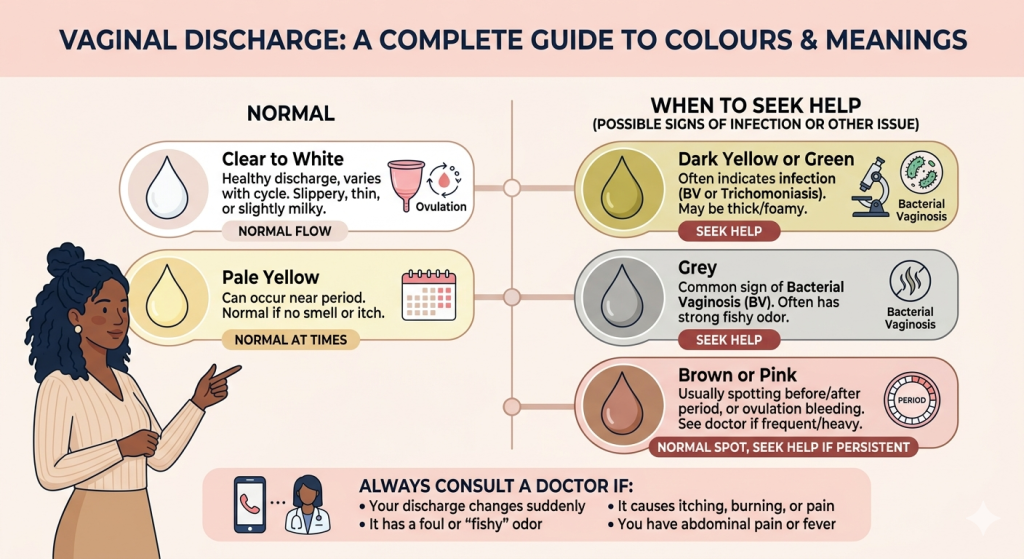
Vaginal discharge colours: what is normal and what is not. If you’ve ever looked at your underwear or toilet paper and wondered whether the colour of your discharge means something is wrong, you are not alone. Vaginal discharge colour is a question many women search for when they notice discharge that looks different from usual and want a clear, calm answer. For most women, discharge changes slightly throughout the month. Clear, white, or off-white discharge is often normal. Colours like grey, green, bright yellow, or blood-stained discharge are more likely to need attention, especially if there is a strong smell, itching, burning, pain, or bleeding outside your period. What is it? Vaginal discharge is fluid made by the vagina and cervix. It helps keep the vagina clean, moist, and protected. ACOG says normal discharge is usually clear to white and has no noticeable odour. Cleveland Clinic also notes that healthy discharge can be clear, milky white, or off-white, and its texture can vary throughout the menstrual cycle. What normal discharge can look like Normal discharge may be: clear white or off-white watery slightly sticky creamy stretchy and slippery around ovulation These changes often occur because hormones fluctuate throughout the month. Cervical mucus naturally changes around ovulation, when it can become more slippery or egg-white-like. Why colour gets so much attention When people search for vaginal discharge colours, they are usually trying to work out whether a colour change is harmless or a warning sign. Colour matters, but it is not the only clue. Smell, texture, itching, burning, pelvic pain, and whether the change is new for you all matter too. Why does it happen? The short answer is that discharge changes because your body changes. Hormones, ovulation, your period, pregnancy, infections, irritation, and menopause can all affect how discharge looks. Mayo Clinic says unusual discharge can happen with yeast infection, bacterial vaginosis, sexually transmitted infections, pregnancy, menopause-related changes, and some hygiene products. Brown Discharge Before Your Period: What It Means Common colour meanings i. Clear or white This is usually normal. ACOG and NHS both note that healthy discharge is often clear or white. ii. Thick white This can still be normal at some points in the cycle. But if it looks clumpy, like cottage cheese, and causes itching or soreness, thrush becomes more likely. iii. Yellow A pale yellow discharge may sometimes be harmless, especially if it has no odour or causes no irritation. But dark yellow discharge, or yellow discharge with pain, smell, or itching, may need checking. ACOG notes that yellow discharge that differs from your normal can occur with some STIs. iv. Green Green discharge is not usually considered normal and may indicate an infection, especially if it is frothy or accompanied by irritation. NHS lists green or yellow frothy discharge as a possible sign of trichomoniasis. v. Grey Grey discharge, especially if thin and fishy-smelling, often raises concern for bacterial vaginosis. The NHS describes bacterial vaginosis as commonly causing greyish-white, thin discharge with a strong fishy smell. vi. Brown or blood-tinged Brown discharge can happen when old blood mixes with vaginal fluid. It may appear around the start or end of a period. But bleeding between periods or after menopause should not be ignored. Signs or symptoms When thinking about vaginal discharge colours, it helps to look beyond colour alone. Signs that are often less worrying These usually fit with normal discharge: clear, white, or off-white colour mild change in amount across the month no strong odour no itching, burning, or pain stretchy mucus around ovulation Signs that may point to a problem These deserve more attention: fishy smell thick, clumpy, white discharge with itching green, grey, or unusually yellow discharge soreness, swelling, or burning pain when peeing or during sex pelvic pain spotting outside your period The NHS and Mayo Clinic both advise getting checked if discharge changes in colour, smell, or texture and is accompanied by irritation, bleeding, or pain. Spotting Before Your Period: Causes, Timing & When to Worry What is normal, and when to pay attention This is where vaginal discharge colour becomes most useful. Not every change means a problem. Your usual pattern matters. Usually normal Clear, milky, or off-white discharge This is the range most often considered healthy. Cycle-related changes You may notice more discharge before ovulation or in the weeks before your period. ACOG notes that discharge can become thicker and heavier in the weeks leading up to menstruation. Mild brown discharge around a period This can be old blood rather than a fresh problem. Pay attention when The discharge is new or clearly different. A big change from your usual pattern matters more than a small variation. There is a strong smell. A fishy smell often needs assessment, especially with grey discharge. There is itching, burning, or soreness. These symptoms suggest irritation, thrush, vaginitis, or infection. There is bleeding outside your period. This should not be brushed off, especially after menopause. When to speak to a doctor If you are searching vaginal discharge colours because something feels off, trust that instinct. Speak to a doctor, sexual health clinic, or nurse if you have: green, grey, or strong yellow discharge discharge with a strong, unpleasant smell itching, burning, swelling, or pain bleeding between periods or after sex pelvic pain Symptoms that keep coming back a new discharge change during pregnancy any bleeding or brown discharge after menopause Mayo Clinic recommends medical review for greenish, yellowish, thick, cheesy, or strongly smelling discharge, and for itching, burning, irritation, or spotting outside your period. A practical reminder Try not to self-diagnose based solely on colour. Different infections and causes can overlap, and the right treatment depends on the actual cause. NHS specifically advises against self-diagnosing unusual discharge. Key takeaway If you have been looking for vaginal discharge colours, the main thing to remember is this: clear, white, and off-white discharge is often normal, while grey, green, strongly yellow, foul-smelling, itchy, painful, or blood-stained discharge outside your period deserves more attention.

Vaginal Discharge Colours: What’s Normal? Read More »

Brown Discharge Before Your Period: What It Means

Brown discharge before your period: what it means If you’ve noticed brown discharge before your period, it’s completely understandable to wonder whether it is normal, whether something is wrong, or whether you should get checked. For many women, brown discharge before their period turns out to be old blood mixing with normal vaginal fluid, especially around the start or end of a cycle. But sometimes it can point to irritation, hormonal changes, pregnancy-related spotting, or an infection. Quick answer: In many cases, brown discharge before your period is just a small amount of old blood slowly leaving the body. It is often harmless, especially if it happens for a day or two and your period arrives as expected. If it comes with pain, bad smell, itching, unusual bleeding, or happens after menopause, it is worth speaking to a doctor. What is it? Brown discharge before your period is vaginal discharge that looks light brown, dark brown, rust-colored, or almost black. The colour usually comes from older blood. Fresh blood is red, but when blood takes longer to leave the uterus or vagina, it oxidises and turns brown. Cleveland Clinic notes that brown discharge often occurs when blood mixes with vaginal fluid, which is why it may appear as streaks, spots, or light staining in your underwear. Why the colour matters Brown discharge is different from the usual clear or white discharge many women have during the month. Normal discharge is typically clear to white and should not have a strong odour. A colour change is not always a problem, but it is something to notice in context with the rest of your symptoms. What it can look like You might notice: light brown spotting on toilet paper dark brown streaks in underwear brown mucus-like discharge a small amount of brown discharge for 1 to 2 days before bleeding starts Spotting Before Your Period: Causes, Timing & When to Worry Why does it happen? There are several reasons for brown discharge before your period, and many of them are not serious. i. Old blood leaving the body This is the most common reason. Sometimes the uterus sheds a very small amount of lining before full menstrual flow starts. Because that blood leaves slowly, it looks brown rather than bright red. ii. Hormonal changes Hormone shifts can cause light spotting before a period. This may happen during times when cycles are changing, such as: puberty perimenopause after stress after major weight changes with some hormonal contraception Mayo Clinic notes that hormone imbalance and anovulation can lead to unexpected bleeding between periods. Breakthrough bleeding can also happen with birth control pills. iii. Early pregnancy spotting Sometimes what seems like brown discharge before your period is actually very light early pregnancy spotting. This can happen around the time a period is expected. Early pregnancy bleeding is common and does not always signal a major problem, but pregnancy-related bleeding should still be taken seriously, especially if there is pain. iv. Infection or irritation If the discharge also smells unpleasant, causes itching, burning, pelvic pain, or comes with bleeding after sex, it may be linked to an infection or another cause of abnormal bleeding rather than a simple pre-period change. The NHS advises getting checked if discharge changes in smell, colour, or texture, especially if accompanied by pain or bleeding. v. Other causes Less commonly, brown discharge before your period can be linked to: Cervical or uterine causes polyps fibroids changes in the lining of the uterus cervix irritation Cycle irregularity missed ovulation irregular periods recent change in contraception Signs or symptoms Brown discharge before your period is more likely to be harmless when: it lasts only a short time it is light spotting, not heavy bleeding there is no strong smell there is no itching or burning your period starts normally soon after Symptoms that can happen alongside it You may also notice: mild cramping a heavier flow starting later that day or the next day sticky or mucus-like discharge light spotting only when wiping Symptoms that deserve more attention Pay closer attention if you have: pelvic pain that is strong or worsening bad-smelling discharge fever itching, soreness, or burning bleeding after sex very irregular bleeding a missed period with spotting and possible pregnancy Bleeding Between Periods: Common Causes and When to Get Checked What is normal, and when to pay attention A small amount of brown discharge before your period can be normal. Many women see this once in a while, and it may mean the period is about to start. Usually considered normal Brown discharge is often normal when: It happens briefly A day or two before your period can be a normal pattern. It is light A few spots or a small streak is usually less concerning than heavier bleeding. It fits your usual cycle. If this happens sometimes and your cycle is otherwise predictable, it may be how your body starts menstruation. Pay attention when it is new, persistent, or unusual. It is a good idea to keep track if: it keeps happening over several cycles when it never used to it lasts many days it becomes heavier it happens at random times in the month you are pregnant or might be pregnant you have gone through menopause ACOG says spotting between periods counts as abnormal uterine bleeding and should be assessed in the right clinical context. NHS guidance also says postmenopausal bleeding, even a small amount of pink or brown discharge, should always be checked. When to speak to a doctor Speak to a doctor or sexual health clinician if brown discharge before your period: Needs routine medical advice keeps happening and is new for you comes with pelvic pain comes with a fishy or unpleasant smell causes itching, burning, or irritation happens after sex is linked with missed periods or possible pregnancy starts after beginning or changing contraception and does not settle Needs urgent medical advice Get urgent help if you have: severe one-sided pelvic pain heavy bleeding

Brown Discharge Before Your Period: What It Means Read More »

Spotting Before Your Period: Causes, Timing & When to Worry

Spotting before your period: what it means, why it happens, and when to worry If you’ve noticed spotting before your period, it can be hard not to wonder what your body is trying to tell you. Is it just part of your cycle? Could it mean pregnancy? Or is it a sign that something else is going on? The good news is that spotting before your period is often linked to common, non-serious causes like hormonal shifts, ovulation, or birth control. But sometimes it needs a closer look, especially if it is new, frequent, painful, heavy, or happening after sex. What is it? Spotting before your period means light bleeding or blood-stained discharge that happens before your usual menstrual flow starts. It is usually much lighter than a period. You might only notice a few drops on your underwear, a little pink, red, or brown discharge, or blood when you wipe. How spotting is different from a period A full period usually follows a more recognisable pattern. A normal menstrual cycle often comes every 21 to 35 days, and bleeding usually lasts 3 to 7 days. Spotting is more likely to be: light enough for a liner rather than a pad or tampon pink, light red, brown, or rust-coloured brief, often lasting hours to 1 to 2 days off-pattern for your usual cycle Why Is My Period Late but I’m Not Pregnant? Common Causes, Hormone Changes, and When to Worry Why does it happen? There is no single reason for spotting before your period. Timing matters a lot. i. Hormonal changes Small hormone shifts can cause the uterine lining to shed a little early. This can happen naturally in some cycles, especially around ovulation or in the days leading up to a period. Ovulation spotting tends to happen around the middle of the cycle, often about halfway between one period and the next, and is usually very light and short-lived. ii. Birth control Hormonal contraception is one of the most common causes of bleeding between periods. This includes the pill and other hormone-based methods. Breakthrough bleeding is often harmless, but it is still worth mentioning to a clinician if it continues or changes. iii. Early pregnancy Sometimes spotting before your period is actually implantation bleeding. This can happen when a fertilised egg implants into the lining of the uterus. It is usually very light, often pink or brown, and tends to happen about 10 to 14 days after ovulation, which can be close to when a period is due. iv. Infections or irritation Sexually transmitted infections can cause bleeding between periods. Bleeding after sex can also happen with cervical changes, vaginal dryness, or irritation. v. Polyps, fibroids, PCOS, or endometriosis Small growths, such as polyps or fibroids, can cause spotting. Conditions like PCOS can disrupt the cycle, and endometriosis can cause pain plus bleeding between periods. vi. Perimenopause As hormones become less predictable in the years leading up to menopause, cycles can become less regular, and spotting may show up more often. Any bleeding after menopause, though, should always be checked. Signs or symptoms Spotting before your period can look slightly different from one woman to another, but there are a few common patterns. What it may look like a few drops of blood on toilet paper light pink, red, or brown discharge very light staining on the underwear bleeding that lasts less than a day or up to 2 days What may come with it? Mild symptoms that can happen with normal spotting light cramping breast tenderness bloating changes in discharge Symptoms that deserve more attention pelvic pain that feels stronger than usual bleeding after sex foul-smelling discharge fever missed period plus pain bleeding that gets heavier or keeps returning Bleeding between periods: common causes and when to get checked What is normal, and when to pay attention A small amount of spotting before your period can be normal once in a while, especially if: it is very light it stops within a day or two it happens around ovulation it occurs soon after starting or changing hormonal birth control you have no severe pain or other worrying symptoms Pay closer attention if it is: happening every cycle when it never used to getting heavier lasting longer than a couple of days happening after sex linked with severe pain, dizziness, or unusual discharge happening after menopause A practical next step If spotting before your period is new or confusing, track: when it happens what colour it is how long it last whether you have pain, sex-related bleeding, or other symptoms whether pregnancy is possible That record can make a doctor’s appointment much more useful. Cleveland Clinic also recommends tracking where the spotting falls in your cycle to help work out whether it matches ovulation or something else. When to speak to a doctor It is sensible to speak to a doctor or a sexual health clinic if you are bleeding between periods or after sex. NHS guidance says that unusual bleeding is often not serious, but it should still be checked. Book an appointment soon if: spotting before your period keeps happening your periods have changed noticeably you have bleeding after sex you think you might be pregnant you have symptoms of infection you have pelvic pain or worsening cramps Get urgent help if: you have missed a period, have unusual bleeding, and have tummy or pelvic pain the bleeding becomes heavy you feel faint, weak, or unwell A missed period with bleeding and pain can be a sign of ectopic pregnancy, which needs urgent assessment. Key takeaway Spotting before your period is common, and in many cases it comes down to hormones, ovulation, contraception, or early pregnancy. But it is worth paying attention to the pattern. If it is new, persistent, painful, heavy, or tied to other symptoms, getting checked is the safest next step. You do not need to panic, but you do not need to ignore it either. Frequently Asked Questions Is spotting before your

Spotting Before Your Period: Causes, Timing & When to Worry Read More »

Bleeding After 40: When Irregular Bleeding Needs a Medical Check

Bleeding after 40: When irregular bleeding needs a medical check If you’re dealing with bleeding after 40, it can be hard to know whether this is just a normal part of perimenopause or something that needs medical attention. A lot of women notice their periods becoming heavier, closer together, farther apart, or more unpredictable in their 40s. That can be common, but not every change should be brushed aside. Quick answer Bleeding after 40 is often linked to perimenopause, when hormone levels start shifting and periods become less predictable. But bleeding that is very heavy, happens after sex, appears between periods regularly, or shows up after menopause should be checked by a doctor. The key is not to panic, but not to ignore it either. If bleeding feels new, unusual for you, or hard to explain, it is worth getting medical advice. What is it? Bleeding after 40 usually refers to changes in vaginal bleeding or periods that happen in your 40s and beyond. This might include: Changes you may notice periods coming closer together skipped periods spotting between periods heavier bleeding than usual bleeding that lasts longer than your usual pattern bleeding after sex bleeding after menopause What doctors call it When bleeding falls outside your usual pattern, it may be described as abnormal uterine bleeding. That does not automatically mean something serious is wrong. It simply means the timing, amount, or pattern of bleeding is different enough to deserve attention. Why does it happen? For many women, bleeding after 40 happens because the body is moving through perimenopause. During this phase, ovulation becomes less regular. That can affect how the womb lining builds up and sheds, which is why periods may become more unpredictable. Missing Periods in Perimenopause: Why It Happens and When to Pay Attention Common reasons it can happen i. Hormone changes in perimenopause This is one of the most common reasons. You may skip a month, then have a heavier or longer bleed the next time. ii. Fibroids or polyps These growths are often non-cancerous, but they can cause heavier bleeding, longer periods, or bleeding between periods. iii. Adenomyosis or other womb changes Changes in the uterus can make periods heavier or more painful. iv. Medicines and contraception Hormone replacement therapy, some contraceptives, and other medicines can affect bleeding patterns. v. Vaginal dryness or thinning after menopause After menopause, the tissues of the vagina and womb can become thinner and more fragile, which can lead to bleeding. vi. Less common but important causes Sometimes irregular bleeding can be linked to a more serious problem, including endometrial changes or cancer. That is why bleeding after menopause, or bleeding that clearly feels wrong for you, should never be ignored. Signs or symptoms Not all bleeding after 40 looks the same. Some changes are subtle, while others are hard to miss. Signs to notice your period is much heavier than usual you soak through pads or tampons very quickly your periods start lasting much longer you bleed between periods you bleed after sex your cycle becomes very unpredictable you feel tired, weak, or short of breath, which can happen if heavy bleeding leads to anaemia you have bleeding more than 12 months after your periods stopped Symptoms that deserve extra attention i. Heavy bleeding that affects daily life If you are changing period products every 1 to 2 hours, avoiding normal activities, or worrying about flooding or leaking, that is worth discussing with a doctor. ii. Bleeding after menopause Any vaginal bleeding after menopause should be assessed. NHS guidance says you should see a GP if this happens, and referral for specialist assessment is standard. What is normal and when to pay attention This is usually the part women want answered most clearly: what counts as normal, and what should not be ignored? What can be common in your 40s During perimenopause, it can be common for periods to: become irregular be lighter or heavier than before come earlier or later than expected occasionally be skipped altogether That said, “common” does not always mean “nothing to check.” A change can be hormone-related and still deserve medical review if it is severe, persistent, or unusual for you. Pay attention if: i. The bleeding is much heavier than your normal period. Especially if it disrupts daily life or causes anaemia symptoms. ii. You are bleeding between periods often. A single random episode may not be serious, but repeated spotting or bleeding between periods should be assessed. iii. You bleed after sex. This can have simple explanations, but it still needs checking. iv. You have bleeding after menopause. This is one of the clearest signs to get medical advice promptly. Postmenopausal bleeding is not considered normal. v. The pattern is new and keeps happening. If bleeding after 40 becomes a pattern rather than a one-off, it is sensible to book an appointment. Perimenopause symptoms: How to tell if the changes you’re noticing are normal When to speak to a doctor You should speak to a doctor about bleeding after 40 if it is persistent, heavy, unpredictable, or simply not typical for you. Make an appointment soon if: your periods have changed significantly you are bleeding between periods you are bleeding after sex you have very heavy periods bleeding is making you feel faint, drained, or unwell you think you may be becoming anaemic you are worried, even if you are not sure it is serious Seek urgent help if: you are soaking through pads or tampons rapidly for hours you feel dizzy, faint, breathless, or very weak you have severe pain with heavy bleeding you may be pregnant and are bleeding One rule that matters most Any bleeding after menopause needs medical review If you have gone 12 months without a period and then bleed, it should be checked. NICE guidance includes postmenopausal bleeding in urgent cancer referral pathways, not because cancer is the most likely cause, but because it is important to rule it out. Key takeaway Bleeding after

Bleeding After 40: When Irregular Bleeding Needs a Medical Check Read More »

What Does a Hot Flush Feel Like? Signs, Causes and Relief

If you have been wondering what a hot flush feels like, you are not alone. For many women, it can feel sudden, strange, and hard to explain at first. One minute you feel fine, and the next you feel a wave of heat rising through your chest, neck, or face. Hot flushes are very common in perimenopause and menopause, and while they are usually not dangerous, they can be uncomfortable, disruptive, and sometimes worrying. Quick answer So, what does a hot flush feel like? Most women describe it as a sudden rush of heat, often strongest in the face, neck, and chest. You may also notice sweating, flushed or clammy skin, a racing heartbeat, chills afterwards, or anxiety while it is happening. Hot flushes are one of the most common menopause symptoms and are linked to changing estrogen levels that affect the body’s temperature control.   What is a hot flush? A hot flush is a short episode of sudden warmth that seems to spread quickly through the upper body. It may last for a few seconds or several minutes. Some women feel only mild warmth. Others feel intense heat, damp skin, and a strong need to remove layers, open a window, or cool down fast. When it happens during sleep, it is often called a night sweat. When women ask what a hot flush feels like, they are often trying to work out whether what they are experiencing is normal. A hot flush can feel like: a sudden wave of internal heat warmth rising into the chest, neck, and face flushed or reddened skin sweating or damp clothing a pounding or fluttering heartbeat clammy skin followed by chills as the episode passes feeling unsettled, irritated, or briefly anxious Why does it happen? Hot flushes are part of what doctors call vasomotor symptoms. They are strongly linked to the hormone changes of perimenopause and menopause, especially falling and fluctuating oestrogen levels. These changes affect the brain’s temperature regulation, making the body more likely to trigger a heat response even when you are not actually overheating. They can start in perimenopause, which means they may begin before their periods stop completely. NHS guidance notes that menopause symptoms can start years before periods end and can continue afterwards. Some women also notice triggers that make a hot flush more likely, such as: hot drinks caffeine alcohol spicy food smoking stress warm rooms or heavy bedding Perimenopause symptoms: How to tell if your changing periods are normal Signs or symptoms If you are asking what a hot flush feels like, the experience is often more than just “feeling warm.” It can be a whole-body sensation that appears suddenly and fades just as quickly. Common signs include: sudden heat in the upper body flushed face or neck sweating clammy skin chills afterwards sleep disruption if it happens at night mood changes or irritability because repeated flushes can be exhausting Hot flushes can also affect quality of life. They may interrupt work, sleep, concentration, confidence, and social comfort. For some women, they are occasional and manageable. For others, they happen many times a day and become one of the hardest parts of menopause. What is normal, and when to pay attention In many cases, hot flushes are a normal part of perimenopause and menopause. They can last for months or years, and symptoms may change over time. Not every woman has them, and their severity varies widely from person to person. What is usually considered common or expected: episodes that come and go flushes that are mild to moderate more symptoms around perimenopause or early menopause night sweats that disturb sleep but improve with support or treatment It is worth paying closer attention if: symptoms are severe or happening very often your sleep is badly affected you feel faint, unwell, or have chest pain the symptoms do not seem to fit your age or cycle pattern you are unsure whether it is menopause or something else A medically responsible reminder: not every episode of sudden heat is automatically menopause. Other health issues can sometimes cause similar symptoms, so it is sensible to get checked if anything feels unusual, persistent, or worrying. When to speak to a doctor Speak to a doctor, GP, or menopause-trained clinician if hot flushes are affecting your daily life, sleep, mood, or ability to function. NHS guidance advises speaking to a GP or nurse if you think you have perimenopause or menopause symptoms. Treatment options can include lifestyle steps, cognitive behavioural therapy, and prescription treatment. Hormone therapy is considered the most effective treatment for bothersome hot flushes for many women, though it is not right for everyone. Practical things that may help include: dressing in light layers keeping the bedroom cool using a fan choosing cooler drinks reducing known triggers managing stress exercising regularly seeking support if symptoms are affecting sleep or mood Why Is My Period Late but I’m Not Pregnant? Common Causes, Hormone Changes, and When to Worry Key takeaway If you have been asking, “What does a hot flush feel like?” the simplest answer is this: it usually feels like a sudden wave of heat rising through the upper body, often accompanied by sweating, flushing, and sometimes chills or a racing heartbeat afterwards. It is a very common menopause symptom, and while it can feel unsettling, support and treatment are available. If your symptoms are frequent, severe, or affecting your life, it is worth speaking to a healthcare professional. FAQs What does a hot flush feel like during menopause? It usually feels like a sudden rush of heat, most noticeable on the face, neck, and chest, often accompanied by sweating, flushing, and sometimes chills afterwards. How long does a hot flush last? A hot flush often lasts from seconds to a few minutes, though frequency and intensity vary widely between women. Are hot flushes normal in perimenopause? Yes. They often begin in perimenopause, even before periods stop completely. What can trigger a hot flush? Common triggers include alcohol,

What Does a Hot Flush Feel Like? Signs, Causes and Relief Read More »

Why Am I Sweating at Night? Causes, Menopause and What Helps

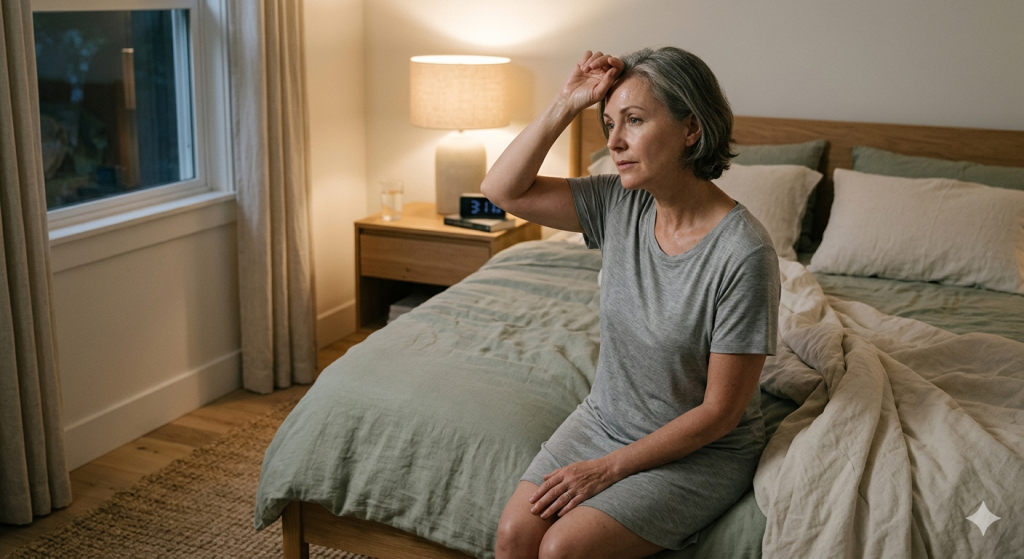
If you keep waking up hot, damp, or needing to change your clothes or bedding, it is natural to wonder, why am i sweating at night? This is a very common question, especially in perimenopause and menopause, when night sweats often happen as part of the body’s changing hormone patterns. But menopause is not the only possible reason, which is why it helps to understand what night sweats are, what can trigger them, and when they deserve a closer look. Quick answer If you are asking, why am i sweating at night, one of the most common answers is perimenopause or menopause, when changing oestrogen levels can affect the body’s temperature control and cause night sweats. Night sweats are the nighttime version of hot flushes and can range from mild warmth to sweating that soaks sleepwear or sheets. Other possible causes include anxiety, some medicines, low blood sugar, alcohol, or other health conditions, so persistent or unusual symptoms should be checked. Missing Periods in Perimenopause: Is It Normal? What are Night sweats? Night sweats are episodes of sweating during sleep that feel more intense than just being too warm under a duvet. They may wake you suddenly, leave your skin clammy, or make you feel cold afterwards once the sweat starts to dry. In menopause care, they are often grouped with hot flushes under the term vasomotor symptoms. When women search why am I sweating at night, they are often trying to work out whether this is ordinary overheating or something more. A room that is too warm or heavy bedding can cause sweating, but that is not always the same as true night sweats. Repeated episodes that interrupt sleep, especially alongside other menopause symptoms, are more suggestive of night sweats linked to hormone changes. Why does it happen? For many women, the answer to why am i sweating at night is linked to perimenopause or menopause. Falling and fluctuating oestrogen levels can affect the hypothalamus, the part of the brain involved in temperature control. That can make the body react as if it is overheating, even when it is not, leading to sweating, flushing, and broken sleep. Night sweats can start during perimenopause, which means they may begin before periods stop completely. They are also very common. The Menopause Society says hot flashes and night sweats are the most commonly reported symptoms of the menopause transition, with up to 80% of women experiencing them at some point. Still, menopause is not the only explanation for why I’m sweating at night. NHS guidance lists other common causes, including: anxiety medicines such as some antidepressants, steroids, and painkillers low blood sugar alcohol or drug use hyperhidrosis, which causes excessive sweating sometimes no clear cause is found Mayo Clinic also notes that night sweats can sometimes be linked to infections, thyroid problems, and other medical conditions. Hormone Replacement Therapy (HRT) and contraception: Do you need birth control in perimenopause? Signs or symptoms Night sweats can feel different from one woman to another. Common signs include: waking up sweaty or drenched damp pyjamas or bed sheets feeling very hot suddenly during sleep flushed skin a racing heart or unsettled feeling waking up cold or chilled afterwards poor sleep and tiredness the next day If you are still asking, why am I sweating at night, it can help to notice whether it happens with other menopause symptoms too, such as irregular periods, hot flushes in the daytime, mood changes, sleep trouble, or brain fog. These symptom patterns can help make sense of what is going on. What is normal, and when to pay attention In perimenopause and menopause, night sweats are common and can happen for months or years. Symptoms vary a lot. Some women notice occasional mild sweating. Others wake several times a night feeling soaked and exhausted. NICE says menopause symptoms can range from minor to severe and may be experienced over short or long time periods. What is often considered common: sweating episodes that come and go symptoms alongside perimenopause or menopause broken sleep from feeling suddenly hot improvement with cooling steps or treatment What deserves more attention: symptoms that are new, severe, or getting worse drenching sweats without any clear menopause pattern fever, unexplained weight loss, or feeling generally unwell symptoms that started after a new medicine night sweats with chest pain, breathing difficulty, or fainting A medically responsible reminder: not every answer to why am i sweating at night is menopause. Recurrent night sweats can have other causes, so it is worth getting checked when symptoms do not fit the bigger picture or feel off. Bleeding Between Periods: Common Causes and When to Get Checked When to speak to a doctor Speak to a doctor or menopause-trained clinician if night sweats are affecting sleep, mood, work, or daily life. NHS guidance says to speak to a GP or nurse if you think you have menopause or perimenopause symptoms. It is also sensible to seek medical advice if: you are not sure whether menopause is the cause the sweating is frequent or severe you have other worrying symptoms lifestyle changes are not helping you want to discuss treatment options What may help in the meantime: keep the bedroom cool wear light sleepwear use lighter bedding avoid triggers such as alcohol, spicy food, caffeine, smoking, or overheating try stress reduction exercise regularly seek support for bothersome symptoms because effective treatments are available For many women with bothersome vasomotor symptoms, hormone therapy is the most effective treatment, though it is not suitable for everyone and should be discussed with a clinician. Key takeaway If you have been asking, why am I sweating at night, the most common reason in midlife is perimenopause or menopause, when hormone changes can trigger night sweats. They are common, but they should not be brushed aside if they are severe, unusual, or affecting your quality of life. Good support, practical self-care, and medical treatment can make a real difference. Frequently Asked Questions Why am I sweating

Why Am I Sweating at Night? Causes, Menopause and What Helps Read More »

Heavy periods in your 40s: causes, signs, and what helps

Introduction If you are dealing with heavy periods in your 40s, it can be hard to know what is normal and what is not. Your periods have become harder to manage, you are bleeding through products faster than before, or you are starting to dread that time of the month. Many women notice changes in their cycles during this stage of life, and heavy periods in their 40s are a common source of concern. Quick answer Heavy periods in your 40s are often linked to perimenopause, when hormone levels start to shift and periods can become less predictable. But heavy bleeding can also be caused by fibroids, polyps, adenomyosis, thyroid problems, medicines, or other health issues. If bleeding is much heavier than usual, lasts longer, or is affecting your daily life, it is worth getting checked. What are heavy periods? Heavy periods are periods that feel excessive for you and start affecting your comfort, confidence, or quality of life. It is not only about how much blood is lost. It is also about whether your period is disrupting your sleep, work, social life, or energy levels. Missing Periods in Perimenopause: Is It Normal? Common ways women describe it You may be experiencing heavy periods in your 40s if you: soak through pads or tampons more quickly than usual need to use two products at once pass large blood clots need to get up in the night to change protection bleed through clothes or bedding feel anxious about leaving the house during your period feel drained or washed out each month Why it matters Heavy bleeding is common, but it should not be brushed off if it is changing your daily life. Ongoing heavy periods can also lead to low iron levels or anaemia, which can leave you feeling tired, weak, dizzy, or short of breath. Why does it happen? Hormone changes in perimenopause The most common reason for heavy periods in your 40s is perimenopause. This is the stage before menopause when hormone levels, especially oestrogen and progesterone, begin to fluctuate. Ovulation may happen less regularly, which can affect how the womb lining builds up and sheds. That can lead to periods that are: heavier longer closer together more unpredictable than before Bleeding between periods: what causes it and when to get checked Other possible causes Not all heavy periods in your 40s are caused by perimenopause. Other possible reasons include: Fibroids These are non-cancerous growths in or around the womb. They can cause heavy bleeding, pressure, pelvic discomfort, or a feeling of fullness. Polyps These are small growths in the lining of the womb or cervix that can cause heavier bleeding or spotting between periods. Adenomyosis This happens when tissue similar to the womb lining grows into the muscle of the womb. It can cause heavy, painful periods. Thyroid problems An underactive or overactive thyroid can affect your cycle and contribute to heavy bleeding. Medicines Some medicines, especially blood thinners, can make bleeding heavier. Less common but important causes Sometimes heavy bleeding needs further investigation to rule out more serious problems, including changes in the womb lining. What can help The right treatment depends on the cause, but options may include: cycle tracking to spot patterns anti-inflammatory pain relief, such as ibuprofen, if safe for you tranexamic acid prescribed by a doctor hormonal treatment, including the hormonal coil treatment for fibroids, polyps, or other underlying causes iron supplements if blood tests show low iron Signs or symptoms Heavy periods in your 40s can show up in different ways. Bleeding changes You might notice: flooding or sudden gushes of blood bleeding for longer than usual larger clots than before needing to change products very often spotting between periods bleeding after sex Symptoms linked to blood loss Heavy bleeding can also affect the rest of your body. Watch for: unusual tiredness dizziness headaches pale skin shortness of breath feeling weaker than usual These symptoms can sometimes point to iron deficiency or anaemia. What is normal, and when to pay attention 1. What can be common It is common for cycles to change during your 40s, especially in perimenopause. Some women notice heavier bleeding, more cramping, shorter cycles, or irregular timing. 2. What should not be ignored Even though heavy periods in your 40s are common, some changes deserve medical attention. Pay attention to: your periods are suddenly much heavier than before you soak through a pad or tampon every hour for more than 2 hours your bleeding lasts much longer than usual you bleed between periods you bleed after sex you feel faint, weak, or breathless your periods are affecting work, sleep, or normal life you have bleeding after 12 months without a period A simple rule is this: common does not always mean harmless. Iron deficiency in women: signs, symptoms, and when to ask for a blood test When to speak to a doctor Speak to a doctor if heavy periods in your 40s are new, worsening, or becoming hard to manage. You should also ask for medical advice if you think you may have low iron or if your bleeding pattern has changed noticeably. A doctor may ask about: how often your periods come how long they last how heavy the bleeding is whether you have pain, clots, or spotting whether you bleed after sex any medicines you take whether there is a chance of pregnancy Tests that may be suggested Depending on your symptoms, your doctor may suggest: a blood test to check iron levels or anaemia thyroid blood tests an ultrasound scan an examination sometimes a hysteroscopy to look inside the womb Seek urgent help if: you are soaking through products very quickly for hours you feel faint or severely weak you are short of breath you have severe pain with unusual bleeding there is a chance you may be pregnant and bleeding heavily Key takeaway Hormone changes often cause heavy periods in your 40s during perimenopause, but they are not something you have to put

Heavy periods in your 40s: causes, signs, and what helps Read More »