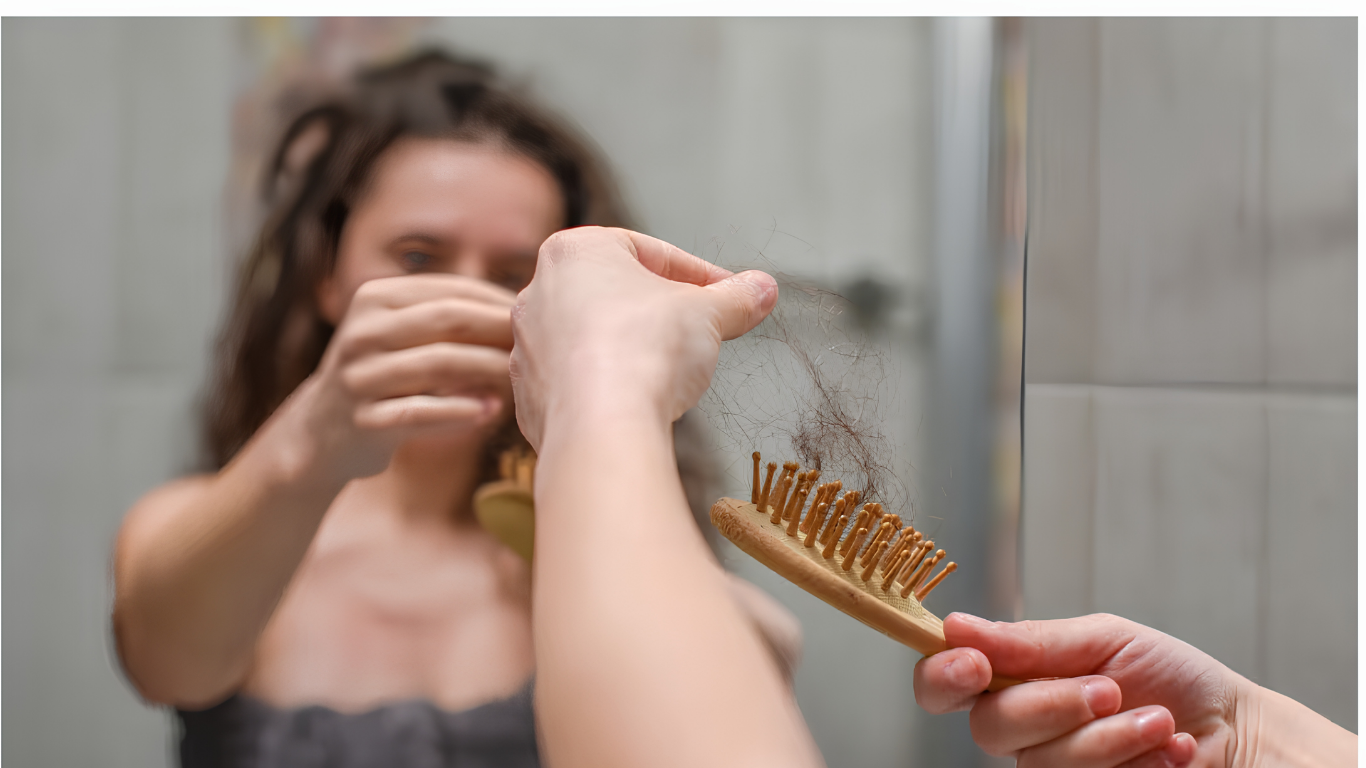


You move your hair into its usual parting before leaving home, then pause: is there more scalp showing? Perhaps your brush looks fuller too, and you wonder whether this belongs alongside changing periods or broken sleep.
Hair thinning in perimenopause deserves more than a shrug about hormones. Understanding whether you have gradual thinning, increased shedding or patchy loss can help you decide what to monitor, what might help and when to seek assessment.
Perimenopause hair loss can involve gradual thinning, increased shedding or another scalp condition. Hormonal changes may contribute, but genetics, illness, nutrition and medicines also matter. Identifying the pattern helps guide assessment and realistic treatment choices.
Hair thinning in perimenopause: recognise the pattern
These patterns can overlap, so appearance alone cannot confirm a diagnosis:
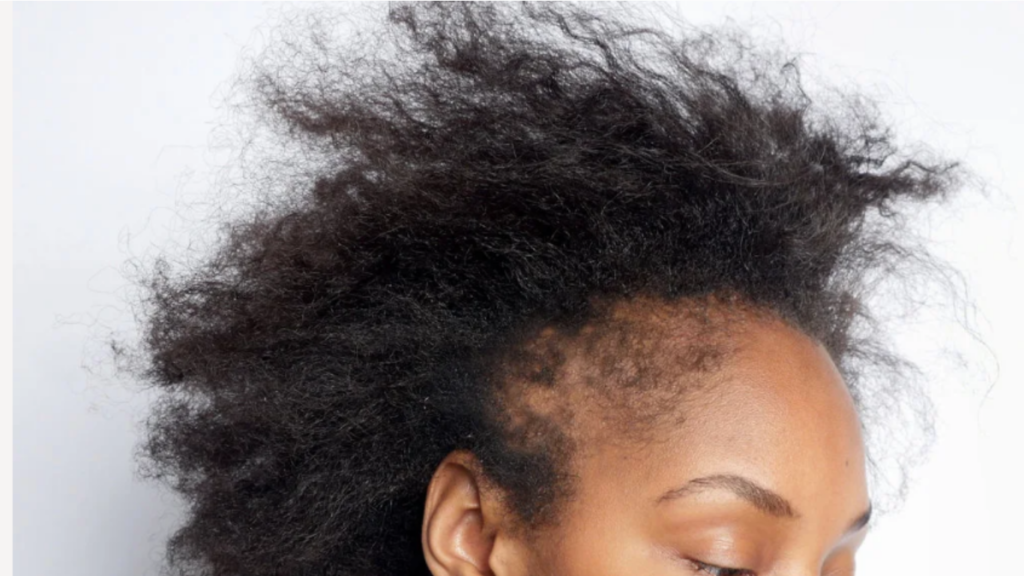
- Gradual thinning: a slowly widening parting or reduced fullness across the crown may suggest female pattern hair loss. Hair follicles produce progressively finer hairs, making the scalp more visible.
- Increased shedding: noticeably more loose hairs during washing or brushing, spread across the scalp, may be telogen effluvium. This means more hairs than usual have entered the resting and shedding stage.
- Patchy loss: separate bald areas need assessment for causes such as alopecia areata, where the immune system attacks hair follicles, or scalp infection.
The British Association of Dermatologists explains telogen effluvium, which often begins around three months after a trigger, such as fever, surgery, major stress or marked weight loss. Finding more hair after recovering from illness could therefore reflect an earlier disruption rather than something you did yesterday. bad.org.uk
Washing frequency and styling affect how much shed hair you see at once. A larger wash-day collection does not, by itself, tell you which condition is present.
Why hormones are only part of the picture
Female pattern hair loss has a strong inherited component and becomes more common after menopause. Hormonal changes may contribute around this transition, but the exact role of oestrogen remains uncertain; most affected women have normal androgen levels, as DermNet’s explanation of female pattern hair loss notes. dermnetnz.org
Other possibilities include thyroid disease, iron deficiency, insufficient nutrition and medication effects. Tight braids, extensions or repeatedly pulling hair back firmly can also damage follicles; heat and chemical processing may contribute to breakage.
Mention heavier periods, dietary restriction, recent illness and new medicines at an appointment. Do not stop prescribed medicine yourself, and avoid assuming a supplement is needed before the cause is assessed. aad.org
Related Reading: Explore Unseen Perimenopause Symptoms in Your Late 30s for broader context about changes during this transition.
What may help, depending on the cause
Start with a scalp examination and a review of the timing and pattern. A qualified healthcare professional may suggest targeted blood tests, such as iron or thyroid checks, rather than assuming every change requires hormone testing.
For telogen effluvium, the priority is addressing an identifiable trigger or deficiency. Shedding often settles within three to six months, although restoring fullness takes longer and persistent shedding needs reassessment. bad.org.uk
For confirmed female pattern hair loss, topical minoxidil is an established option. The American Academy of Dermatology’s treatment guidance explains that it takes roughly six to twelve months to assess benefit, and continued use is needed to maintain results.
Minoxidil can initially increase shedding and cause scalp irritation or unwanted facial hair. Avoid it during pregnancy, when planning pregnancy or while breastfeeding; formulations, availability and approved uses vary by country, so check local advice. aad.org
Prescription options, including spironolactone or low-dose oral minoxidil, require individual assessment and monitoring. Some uses are off-label, meaning they are prescribed outside their officially approved indication; discuss side effects and pregnancy precautions before starting. aad.org
Everyday choices can support comfort without promising regrowth:
- Loosen styles that pull and reduce damaging heat or chemical processing.
- Choose affordable meals containing protein and varied foods; correct confirmed deficiencies with professional guidance.
- Consider a different parting, scarf, wig, or camouflage fibres if you want.
- Take occasional photographs in similar lighting instead of repeatedly checking throughout the day.
Related Reading: Daily Mood & Hormone Check-In to note emotional wellbeing alongside your own hair-change notes; it cannot diagnose the cause.
When a wider parting or scalp changes need assessment
- Routine appointment: arrange assessment for progressive thinning, persistent shedding or hair changes affecting your confidence. Bring a timeline, medication list and photographs if available.
- Prompt assessment: seek advice sooner for distinct patches, rapid progression, eyebrow loss, a receding hairline, scalp pain, burning, scale, or crusting. These may need different treatment; inflammatory scarring conditions can permanently damage follicles, so early recognition matters.
- Urgent assessment: hair thinning alone is usually not an emergency. Severe or sudden accompanying symptoms need urgent medical advice.
The American Academy of Dermatology’s guide to hair-loss causes explains why infection, immune conditions, traction and scarring require different approaches. aad.org
Support that fits your situation
- Ask: “What pattern do you see, and which tests would change treatment?”
- If specialist access is limited, begin with an accessible primary-care professional and discuss referral options.
- Explain cost concerns before agreeing to tests or ongoing products.
- Tell someone trusted if checking, covering or worrying about your hair is taking over your day.
Frequent questions women often ask
Does perimenopause hair loss always grow back?
Regrowth depends on the cause, and temporary shedding often improves once its trigger resolves. Female pattern hair loss usually needs ongoing management, while scarring can prevent regrowth.
Can a widening parting happen without excessive shedding?
Yes, progressively finer hairs can reduce coverage without an obvious increase in loose hairs. A scalp examination helps distinguish this from other patterns.
Should I buy biotin or hair vitamins?
Routine supplements are not a substitute for finding the cause. Discuss suspected deficiency and any products you take before spending money on more.
Is changing my hairstyle enough?
Gentler styling can reduce pulling and damage, but it can’t treat every cause of thinning. You can choose camouflage, medical treatment, both, or neither, based on your preferences.
Key takeaways
- A wider part, increased shedding, and bald patches can signal different causes.
- Hormones may contribute, along with inheritance, illness, nutrition, and medicines.
- Assessment helps match treatment to the cause.
- Minoxidil takes time and continued use; suitability varies.
- Seek earlier advice for patchy loss or an uncomfortable, changing scalp.
- Your comfort, budget and preferences belong in the treatment discussion.
Conclusion
Getting ready shouldn’t become a daily examination of your scalp. Understanding the pattern gives you a practical next step, whether that is booking an assessment, adjusting a tight hairstyle or choosing how much attention you want to give your hair today.
Disclaimer
This article is for educational purposes only and does not replace personalised medical advice, diagnosis or treatment. Seek urgent medical help for severe, sudden or concerning symptoms.