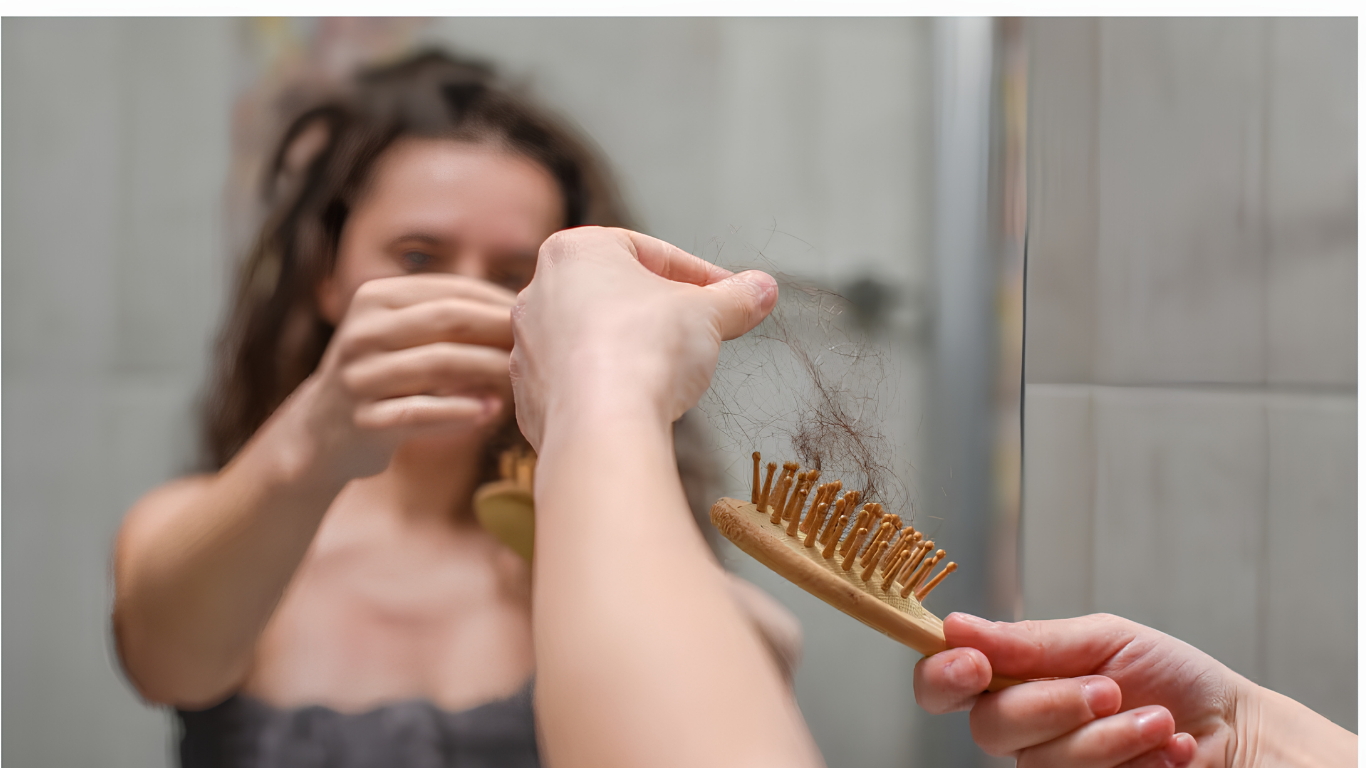

Kate, Age: 39
My Story
The first thing I’d say when my husband walked through the door was, “Sorry, I haven’t started dinner yet.”
Sorry I haven’t hoovered. Sorry the washing’s still in the machine. Sorry, I know I said I’d ring the dentist. I’ll do it tomorrow. I’m just really tired today.
It became my opening line, my greeting, my way of entering every room. Sorry. Sorry. Sorry. As though existing in my own home without a list of completed tasks was something that required an apology.
I don’t know exactly when the tiredness started. That’s the thing about it: there was no single morning I woke up and thought, “Something is wrong.” It crept in the way damp gets into old walls. Slowly, quietly, until suddenly everything felt heavier than it used to. Getting the kids ready for school. Carrying the shopping in. Standing long enough to cook a proper meal. Things I’d done a thousand times before without thinking twice now felt like I was dragging myself through wet sand.
I remember one Tuesday it was definitely a Tuesday because it was recycling day and I’d forgotten to put the bins out again. I sat in my car in the Tesco car park for twenty minutes before going in. Not because I was on my phone. Not because I was upset. I just couldn’t make my legs want to move. I sat there with the engine off, watching other people walk in and out with their trolleys, and I thought: what is wrong with you?
That question followed me everywhere. What is wrong with you? You used to manage all of this. You used to batch-cook on Sundays. You used to take the kids swimming and still have energy for a load of ironing afterwards. You used to be so much better at this.
I started keeping a mental tally of all the things I wasn’t doing well enough. The school emails I’d missed. The birthday card I forgot to post for my niece. The fact that my youngest had worn odd socks to school three times in one week because I couldn’t keep on top of the laundry. None of these things was a disaster. I knew that, logically. But stacked together, day after day, they felt like proof that I was failing.
My mum came round one Saturday and found me still in my dressing gown at noon. The kids were watching telly, and I was sitting at the kitchen table with a cup of tea that had gone cold. She didn’t say much. She just started tidying up, the way mums do when they’re worried but don’t want to make a fuss. Before she left, she squeezed my arm and said, “You look done in, love.”
I cried after she drove away. Not because she’d said anything unkind. But because someone had noticed, and I hadn’t had to pretend.
At work, I smiled. At the school gates, I smiled. I asked other mums how their weekends were, and I laughed at the right moments, and I said, “Oh, I know, me too, it’s manic isn’t it,” and I kept going. I kept going because I didn’t know what else to do. Because resting felt like giving in. Because I had this voice in my head that said, “Everyone else is managing.” Why can’t you?
My friend Emma came over for wine one Friday a rare thing, because I’d been cancelling plans for months. She asked me, properly asked me, how I was. And I said what I always said: “I’m fine, just tired.” She looked at me for a long time. Then she said, “You’ve been ‘just tired’ for about six months now.”
She wasn’t being cruel. She was being honest in the way only someone who genuinely cares about you can be. And hearing it out loud for six months made me realise how long I’d been running on empty and calling it normal.
I went to see my DOCTOR the following week. Not because I’d had a revelation, or because I’d suddenly decided to prioritise myself, please; I’m not that organised. I went because I’d promised Emma I would, and I’m terrible at breaking promises to other people. Funny, that. I could break every promise I made to myself without blinking. But someone else? I’ll drag myself to the doctor’s at half eight on a Wednesday morning.
I won’t go into the details of that appointment because, honestly, it’s still something I’m working through. But I will say this: the DOCTOR didn’t dismiss me. She didn’t tell me I was just stressed, or that this was what being a mum in your late thirties looked like. She listened. She asked questions. She took it seriously. And that alone made me feel like maybe I should take it seriously too.
Looking Back
When I look back now, the thing that sits heaviest with me isn’t the tiredness itself. It’s the guilt, the sheer amount of energy I spent feeling bad about being tired. I was exhausted, and then I was exhausted from being ashamed of being exhausted. It’s almost laughable, except it wasn’t funny at all when I was living it.
I’d turned rest into something that had to be earned. I could lie on the sofa, but only after I’d done everything else. I could go to bed early, but only if the kitchen was clean. I could ask for help, but only if I’d already tried to do it all myself first. And the bar for “everything” kept moving, because I was comparing myself to a version of me that no longer existed a version who had more capacity, more energy, more of whatever invisible fuel keeps you going.
I was so busy being sorry that I never stopped to ask whether the tiredness was trying to tell me something.
What Helped Me
I wish I could say there was one moment where everything shifted, but it wasn’t like that. It was small, undramatic things.
Going to the doctor. That was the first one. Not because I got all the answers, but because I stopped carrying it alone.
Telling my husband, clearly and without softening it, that I was struggling. Not “I’m a bit tired.” Not “I think I’m coming down with something.” But: “I don’t feel like myself, and I haven’t for a while.” He didn’t try to fix it. He just moved the laundry into the dryer without being asked, and somehow that was enough.
Letting my mum help without feeling like it meant I’d failed. She took the kids on Saturday mornings so I could sleep. Actual sleep. Not lying-in-bed-scrolling sleep. Real, curtains-closed, phone-off sleep.
Stopping apologising. This one is still a work in progress. But I started catching myself hand on the door, mouth already open, “Sorry I …” … and I’d pause. And I’d say something else instead. Or nothing at all. Sometimes nothing is the most radical thing you can say.
What I Wish I’d Known
I wish I’d known that rest is not the reward you get after you’ve done everything. It’s the thing that makes everything possible.
I wish I’d known that struggling doesn’t mean failing. That asking for help doesn’t mean you’re less capable. It means you’re human, and humans are not designed to run without stopping.
I wish someone had told me sooner that the version of yourself you keep comparing yourself to the one who could do it all probably couldn’t do it all either. She was just too busy to notice.
And I wish I’d known that tiredness is not a character flaw. It is not laziness wearing a different coat. Sometimes your body is asking for something, and the bravest thing you can do is listen.
Reflection
I’m not fixed. I want to say that plainly, because I think we read these kinds of stories and look for the neat ending, the bit where she says, “And now I run 5K every morning and I’ve never felt better.” That’s not this story.
Some weeks are good. I have energy, I feel like myself, I make plans and keep them. Other weeks, I’m back in the Tesco car park, sitting with the engine off, needing a minute. And I’m learning slowly, imperfectly, that both of those versions of me deserve kindness, not just the one who gets everything done.
I still make the packed lunches. I still show up at the school gates. I still do the things that need doing. But I’ve stopped saying sorry for the things that don’t get done. I’ve stopped treating my tiredness like a personal failure and started treating it like information.
I don’t have all the answers. But I have a DOCTOR who listens, a friend who asks the real questions, a mum who shows up with carrier bags full of shopping, and a husband who moves the laundry without being asked. And I have this: the slow, quiet understanding that I am allowed to rest. Not because I’ve earned it. Just because I need it.
That’s enough for now.
Every woman’s experience is different. This story is shared to help others feel less alone and is not intended to replace professional medical advice.