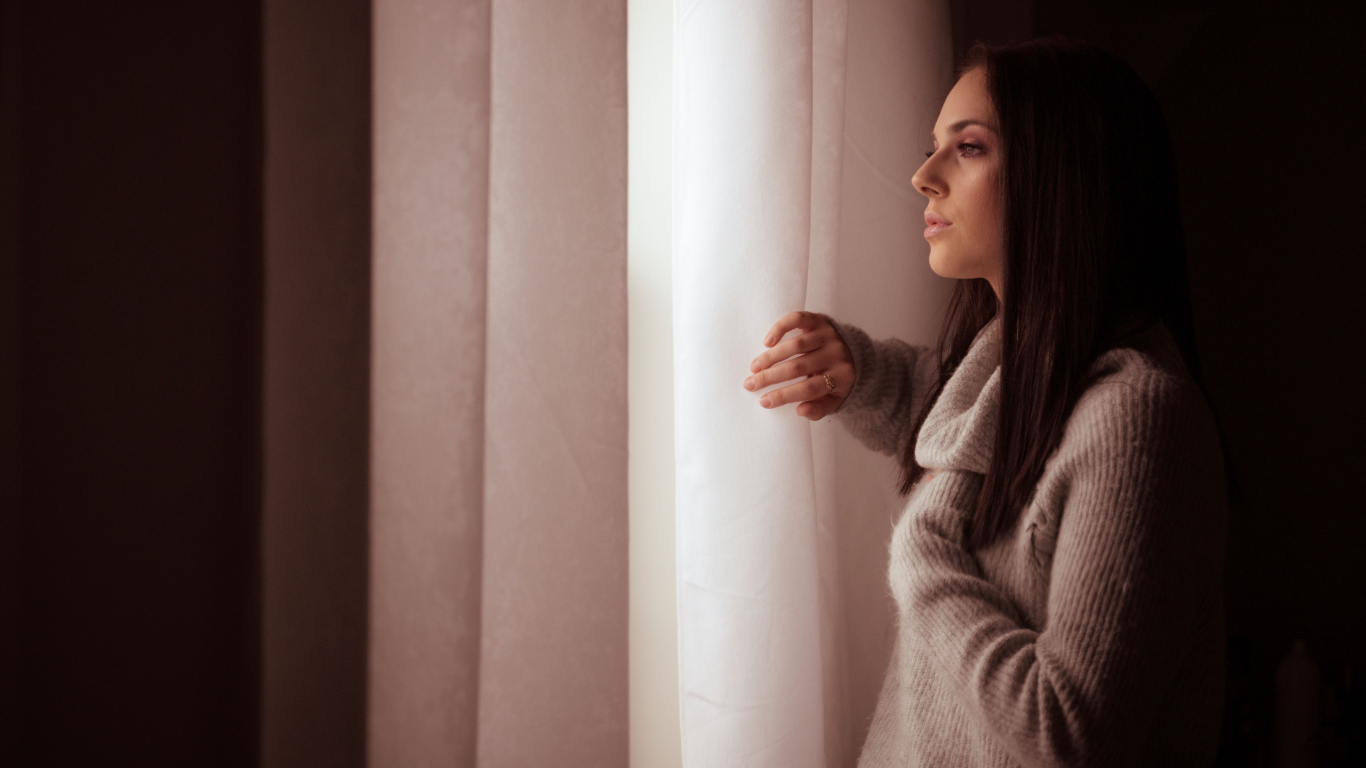


A moment can catch you by surprise when you start seeing someone new. You have had a lovely evening. Dinner lingered into conversation. You laughed more than you expected to. Perhaps there was a kiss at the door, or a long hug that made you smile after they left. And then the door closes.
The house becomes quiet again.
You kick off your shoes, make yourself a cup of tea, and feel something you weren’t expecting.
Relief.
Not because you wanted them to leave. Not because you do not care about them. You simply like coming home to yourself.
For women who have spent years building a life of their own, this can create an uncomfortable question. If I really love someone, shouldn’t I eventually want to share everything? Not necessarily.
Quick answer: Wanting a relationship does not mean giving up your independence. At this stage of life, love can include separate homes, protected routines, financial autonomy and enough breathing room for both people to remain fully themselves.
Loving Someone Without Losing Yourself
Many of us absorbed a fairly narrow picture of what a serious relationship should look like.
You meet. You fall in love. You spend more and more time together. Eventually, you combine homes, possessions, finances and daily routines until two lives become one household. For some people, that arrangement feels wonderful.
For others, especially after decades of adulthood, it can feel less romantic than complicated. By your late fifties or sixties, your home may represent far more than a roof and furniture. It may be the first place you have ever lived entirely on your own terms.
You know where everything belongs.
You know how quiet you like the mornings. You can read until midnight without disturbing anyone. You can eat breakfast at three in the afternoon if you choose. Leave the television off for three days. Invite a friend over without consulting anybody.
There is something deeply satisfying about that kind of autonomy. Wanting to protect your independence does not mean you are emotionally unavailable or selfish; it can be a healthy way to honor your needs and foster well-being.
It may simply mean you have learned that closeness and independence do not have to cancel each other out.
Why Independence Can Feel Different Later in Life
Relationships later in adulthood often begin in already established lives. There may be children or grandchildren. Long-standing friendships. Work. Retirement plans. Caring responsibilities. Property. Pets. Travel routines. Community commitments. Financial arrangements.
You are not building a life from an empty room.
You are inviting somebody into a furnished one.
That distinction matters.
Some women have also reached this point after years of caregiving, marriage, parenting or carrying the invisible work of a household. They may love deeply and still feel reluctant to take on another adult’s washing, appointments, meals, moods, or social calendar.
There can be enormous freedom in recognising that love does not automatically make those tasks yours.
There is also growing recognition that intimate relationships can take different forms. Research on older adults has examined what is sometimes called living apart together, or LAT, where partners consider themselves a couple but maintain separate households. A 2024 study using UK longitudinal data described LAT as an established partnership form among older adults and explored its relationship with mental wellbeing. Read the study on living apart together and older adults
That does not mean separate homes are somehow healthier or better than living together. It means they are a real option.
When Your Own Space Has Become Part of Who You Are
Perhaps you have lived alone since divorce. Maybe you were widowed and spent years learning how to inhabit a home that suddenly felt too quiet.
Perhaps you never married. Maybe you raised children largely on your own, cared for ageing parents or spent years organising your days around everybody else’s needs.
Eventually, something shifted.
The silence stopped feeling empty.
It started feeling peaceful.
You stopped waiting for someone else to decide what happened next.
You became accustomed to sleeping diagonally across the bed.
And now someone lovely has arrived. That can be beautiful without making you want to undo everything you have built.
How Independence Can Affect a New Relationship
Protecting your independence sounds straightforward until another person’s feelings become involved. One partner may hear, “I need an evening to myself,” and understand it perfectly.
Another may hear rejection.
You might enjoy spending three nights together and then desperately want your own bed.
Your partner might interpret that as emotional distance.
You may be happy to travel together but uncomfortable sharing finances.
You might adore their company and have absolutely no desire to combine wardrobes, kitchen cupboards or utility bills. These differences are not automatically relationship problems.
They are relationship information.
The important question is whether you can speak honestly about them without shaming either person for what they need. Remember, seeking support when needed can empower you and help maintain your emotional health.
Separate Does Not Automatically Mean Lonely
An important distinction exists between choosing solitude and experiencing unwanted loneliness.
The World Health Organisation defines loneliness as the distressing feeling that occurs when a gap exists between the relationships a person has and the connection she wants or needs. Social isolation refers more objectively to having too few relationships or interactions. World Health Organisation: understanding social connection
That means living alone is not the same thing as being lonely.
A woman can live alone and feel deeply connected to a partner, friends, relatives, neighbours and community.
Another woman can share a house with somebody and feel painfully alone.
Quality matters.
The WHO’s work on social connection emphasises that meaningful relationships and social connection support wellbeing throughout life. Building and maintaining these connections can help women feel a sense of belonging and emotional security.
The goal, then, is not simply to have somebody under the same roof.
It is to have relationships that feel supportive, satisfying and safe.
Common Feelings Women May Notice
Keeping your independence in a new relationship can bring some surprisingly complicated emotions.
You may feel:
- guilty for wanting time alone;
- worried that your partner will think you are not committed;
- defensive when someone suggests you should move in together;
- protective of your finances;
- reluctant to change routines that help you feel settled;
- anxious about becoming responsible for somebody else’s needs;
- relieved when a date ends, and you return home;
- excited about love while still resisting traditional expectations;
- unsure whether your need for space is healthy or a sign you are afraid of intimacy.
There is no single interpretation.
Wanting space can be entirely comfortable and healthy.
Sometimes, however, a strong urge to avoid closeness may be connected to painful previous relationships, grief, anxiety or fear of being hurt again. If that feels true for you and causes distress, exploring it with a counsellor or therapist may help.
The point is not to convince yourself to want more closeness.
It is to understand what you actually want.
You Do Not Have to Merge Everything
One of the quieter freedoms of later-life relationships can be deciding which parts of your lives you want to combine.
It does not have to be all or nothing.
You might share holidays but not bank accounts.
You might spend weekends together but sleep separately during the week.
You might keep your own homes indefinitely.
You may decide to live together but retain separate bedrooms or personal spaces.
You might introduce your families slowly.
You might never marry.
Or you may decide, after several years, that living together feels exactly right.
There is no prize for choosing the arrangement that looks most conventional from the outside.
The arrangement has to work for the people actually living it.
Money Can Make Independence More Complicated
Financial independence can become particularly important later in life. By this stage, you may have savings, pensions, property, debts, inheritance plans or financial responsibilities involving children or other relatives.
Combining finances can therefore carry different consequences than it might have decades earlier.
You do not need to apologise for moving carefully.
Before making significant financial commitments together, it may be sensible to understand the legal and financial implications where you live. Marriage, cohabitation, property ownership, inheritance and pension rights vary considerably between countries. Independent legal or financial advice can sometimes be useful before changing property ownership, adding someone to accounts, guaranteeing debts or making major shared investments.
Romance and caution can exist in the same relationship.
What May Help
Be specific about what independence means to you.
“I need my independence” can sound frighteningly broad to a partner. Try explaining what you actually mean.
Perhaps you want two evenings each week alone. Maybe you want to maintain your own home. Perhaps financial independence is particularly important.
Specific needs are easier to discuss than vague fears.
Do not apologise for enjoying solitude.
You don’t need to earn time alone by being sufficiently sociable first.
For some women, solitude is restorative.
Keep friendships alive.
A new relationship can easily become absorbing.
Try not to let romance replace friendships, community connections, or activities that already enrich your life.
The US National Institute on Ageing distinguishes living alone from loneliness and encourages maintaining meaningful social connections in different forms. National Institute on Aging: loneliness and social isolation
Talk about expectations before assumptions harden.
Do you both imagine living together eventually?
Marriage?
Separate finances?
Regular travel?
Daily contact?
No timetable is perfect, but understanding what each person wants can prevent painful misunderstandings later.
Notice whether compromise goes both ways.
Healthy independence is not one person doing exactly what she wants while the other constantly adjusts.
Both partners’ needs deserve consideration.
Protect financial boundaries until trust is established.
Avoid rushing into shared bank accounts, large loans, property transfers or financial commitments because a relationship feels exciting.
Allow the relationship to evolve.
What feels right after six months may change after three years.
You are allowed to renegotiate.
When Independence Turns Into Distance
There is a difference between having boundaries and building walls so high that nobody can reach you. You may want to look more closely at what is happening if every increase in closeness makes you panic, if you repeatedly end good relationships as soon as they become serious, or if previous experiences make trust feel almost impossible.
Again, this does not mean you need to become more dependent.
It means there may be something worth understanding. A therapist or counsellor can provide a private place to explore whether your choices feel genuinely freeing or whether fear is quietly making them for you.
It Is Worth Getting Support If…
Consider speaking with a counsellor, therapist, healthcare professional or another appropriate practitioner if:
- past abuse, betrayal or loss makes new relationships feel persistently frightening;
- anxiety about losing independence prevents you from forming relationships you genuinely want;
- you feel pressured to move in, marry, share money or give up parts of your life before you are ready;
- a partner repeatedly ignores your boundaries or tries to isolate you from friends and family;
- disagreements about independence become controlling, intimidating or threatening;
- loneliness or isolation is affecting your mood or everyday wellbeing.
If a partner is controlling, threatening or violent, seek support from appropriate domestic-abuse or emergency services where you live.
When to Speak to a Healthcare Professional
Wanting independence is not a health problem.
However, if you have become increasingly withdrawn and this change is accompanied by persistent low mood, anxiety, sleep problems, loss of interest in activities or difficulty coping with everyday life, it may be worth speaking with a doctor, nurse practitioner or mental-health professional.
Loneliness and social isolation are associated with poorer physical and mental wellbeing, although they are not the same thing and do not affect every woman in the same way.
A healthcare professional may ask about your mood, relationships, recent losses, physical health, medicines, sleep and life circumstances.
You could note beforehand when you began feeling different, whether you still enjoy seeing people you care about, and whether being alone feels peaceful or painful. Support and referral pathways vary between countries.
Frequently Asked Questions Women Often Ask
Is it normal to want a partner but still want to live alone?
Yes. Some people enjoy committed relationships while maintaining separate homes. This arrangement is sometimes called living apart together. Whether it suits you depends on your preferences, circumstances and relationship.
Does wanting space mean I am afraid of commitment?
Not necessarily. Some women simply value privacy, routine and autonomy. What matters is whether the amount of space you want feels comfortable and chosen rather than driven by fear that causes you distress.
Can a serious relationship work if we live separately?
It can. Commitment is expressed through reliability, honesty, affection, shared plans and mutual care, not solely through sharing an address.
What if my partner wants to live together and I do not?
Neither person’s preference is automatically wrong. The important thing is to discuss what each of you needs and whether you can agree on an arrangement you both genuinely accept.
Should couples keep separate finances later in life?
There is no universal rule. Some couples combine finances, some keep them separate and others use a mixture. Legal, tax, inheritance and property consequences vary by location, so professional advice may be useful before major changes.
Is living alone bad for my health?
Living alone and loneliness are not the same thing. Some women living alone have rich social lives and strong relationships. What matters more is whether you have meaningful connection and whether your level of social contact feels right for you.
Key Takeaways
- Wanting love does not require surrendering independence.
- Separate homes, finances or routines can be valid choices within a committed relationship.
- Living alone is not the same as loneliness or social isolation.
- Clear conversations about expectations can prevent resentment and confusion.
- Financial and legal consequences deserve careful thought before you formally combine lives.
- Your relationship doesn’t need to resemble anyone else’s to be meaningful.
Conclusion
Perhaps love at this stage of life is not about finding somebody who fills every space. Perhaps there are spaces you no longer want filled.
The quiet bedroom. The Sunday morning spent reading. The friend you have coffee with every Wednesday. The money you manage yourself. The kitchen where everything is exactly where you left it.
A good relationship does not necessarily ask you to hand those things over. Maybe somebody comes into your life who understands that when you say, “I’d love to see you tomorrow,” you genuinely mean it. And when you add, “but tonight I want to be on my own,” they understand that too.
Not as rejection.
Not as a warning.
Simply as part of loving the woman you have become.
Disclaimer
This article is for educational purposes only and does not replace personalised medical advice, diagnosis or treatment. If you are worried your symptoms are getting worse, or if something doesn’t feel right in your body, please speak with your doctor, nurse practitioner, gynaecologist, endocrinologist, or another qualified healthcare professional. Seek urgent medical help for severe, sudden or concerning symptoms.