
The first thing I did was check the toilet paper again.
Then my underwear.
Then the toilet paper.
I was twelve, standing in a school toilet with a broken latch, trying to make sense of a reddish-brown stain. Outside, girls were laughing near the sinks. Someone was complaining about homework. Soon, the bell would ring, and I would be expected to return to a classroom as though nothing had happened.
For a moment, I thought I had hurt myself.
I knew periods existed. I had seen packets of pads in our bathroom cupboard and watched a video about puberty at school. There had been diagrams, embarrassed giggles, and words that sounded important.
But knowing the word menstruation did very little for me in that cubicle.
I couldn’t remember anyone telling me what the first blood might look like. I had expected something bright red and obvious. It was a small, rusty-looking stain that left me unsure what was happening.
I folded toilet paper into my underwear and waited for the room to empty.
My biggest fear was standing up and discovering that everyone could see.
Until that moment, I’d mostly forgotten my body while using it. I ran, climbed, danced badly, and fell asleep with one leg out from under the duvet. Now it seemed to demand my attention all at once.
I checked the back of my skirt before leaving.
My friend Linda was outside our classroom, searching her bag for a pen. I managed to tell her what I thought had happened, though I could barely get the words out.
She looked uncertain too.
That frightened me at first. I had wanted her to become instantly knowledgeable, to produce a pad and a complete explanation. Instead, she helped me find our form tutor.
Our teacher’s calmness steadied me.
She took me to the school office, where there were spare pads, and explained how to use one. Until then, it hadn’t occurred to me that the school might be prepared for something I wasn’t.
In the toilet, I struggled with the wrapper and sticky backing. I placed the pad too far forward, peeled it away, and tried again.
Having something practical to do helped. I could adjust a pad. I could wash my hands. I could put the spare in my bag.
I returned to maths with the strange feeling that something enormous had happened without the rest of the world noticing.
The lesson continued. Someone borrowed a ruler. My teacher wrote fractions on the board. I sat carefully and wondered whether the pad would move whenever I did.By lunchtime, I was exhausted from paying attention to myself.At home, Mum was chopping onions when I told her. She stopped what she was doing, hugged me, and brought a packet of pads upstairs.
Her response was affectionate, but her happiness about me growing up unsettled me.
That morning, I had forgotten my PE kit. I still wanted the landing light left on at night. I sometimes slept with an old stuffed rabbit tucked behind my pillow.
I didn’t feel ready for an announcement about becoming a woman.
I wanted clean underwear and some idea of what tomorrow would be like.
Mum asked about my stomach and helped me get comfortable. I had a dull ache, enough to notice but not enough to explain how worried I was.
The questions in my head kept multiplying.
I wondered how long the bleeding would last, whether it would return every day, and what would happen if I stained a classroom chair. I worried about running, sleeping, and changing a pad in a busy school toilet.
Most of those questions stayed in my head.
I had already learned to recognise certain subjects as embarrassing. Nobody had given me a formal list. I had picked it up from lowered voices, hurried explanations, and the way period products disappeared into shopping bags.
That evening, Mum found me sitting beside my open schoolbag.
Once she realised how uncertain I felt, she stayed.
We packed spare pads, clean underwear, and a small bag for anything stained. She showed me the packet instructions and explained how to wrap a used pad and put it in the bin.
Then I told her what had happened at school.
I described the broken latch, the folded toilet paper, and the fear that somebody might notice before I understood it myself.
She listened with an expression I hadn’t expected. She had assumed I knew more. I had assumed there would be time to learn.
Neither of us had realised how much was missing between a school diagram and an ordinary Tuesday.
A few days later, I spoke to the school nurse.
My first period was nearly over, but I still had questions. She explained that early periods could take time to settle into a pattern. A date marked on a calendar could help me keep track, but it wasn’t a promise that the next one would arrive that day.
She also explained that reddish-brown staining could be how a first period began. The detail that had frightened me most turned out to be something I could have been prepared for.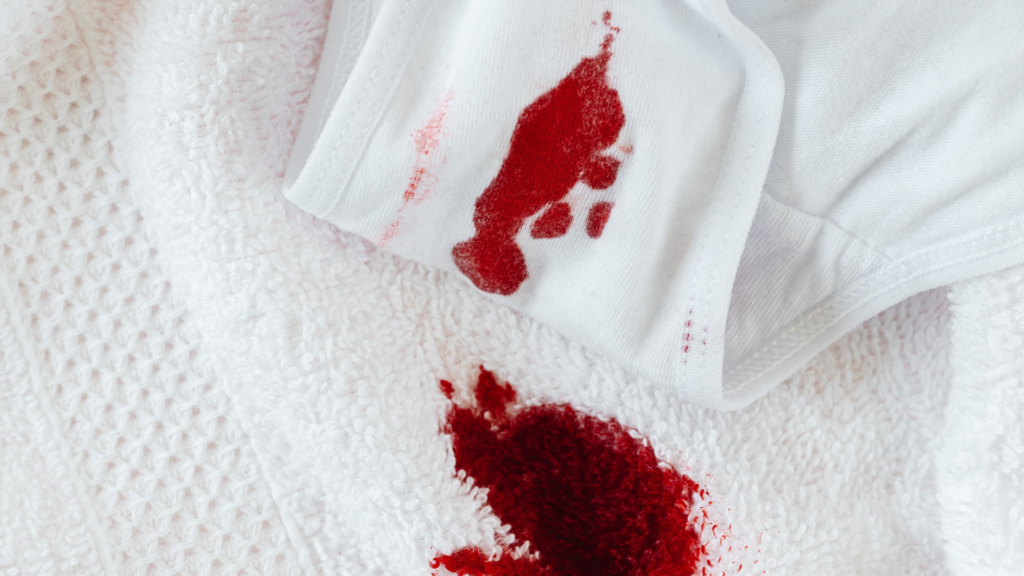
We went through different period products. I felt comfortable starting with pads, and I learned that I could choose what suited me rather than copy somebody else.
She made room for the practical things I wanted to know: managing school days, finding supplies, and asking for help.
I also learned that period pain, which stopped me from doing my usual activities, deserved a conversation with a GP. I didn’t have to accept every difficulty as something to endure quietly.
For several months, I remained watchful. Every unfamiliar stomach ache sent me to the toilet. I checked my skirt before standing up and kept supplies tucked between my exercise books. Understanding periods didn’t immediately remove my embarrassment.
But small things became easier.
I learned where the bins were. I became quicker at opening wrappers. I stopped feeling that using the toilet during a lesson required an elaborate excuse.
One afternoon, Linda needed a pad, and I had a spare.
I passed it to her without fuss. Afterwards, I felt a quiet satisfaction. Something that had left me helpless was becoming something I could manage and sometimes help someone else manage, too.
Years later, my younger cousin found the pads in my bathroom drawer.
My first instinct was to wait to explain until she was older. Then I remembered how suddenly older had arrived for me.
I sat beside her and showed her an unopened pad. We looked at the wrapper and talked about what periods were, what she might notice, and which adults could help her.
Her greatest concern was whether she would still be able to play.
I recognised the worry beneath it. She was wondering how much of her familiar life she would have to surrender.
I reassured her that she would still be herself.
Soon, she lost interest in the packet and went looking for her shoes. I put it back in the drawer, somewhere she could reach it.