


Introduction
If you are wondering how to start intermittent fasting, you are not alone. Intermittent fasting has become one of the most talked-about approaches to weight management, metabolic health, and healthy ageing. Yet many people begin with unrealistic expectations, restrictive eating patterns, or advice from social media that does not reflect current medical evidence.
Intermittent fasting is an eating pattern that alternates periods of eating with periods of fasting. Unlike traditional diets that focus on what foods you eat, intermittent fasting focuses primarily on when you eat.
Research from 2024–2026 continues to show that intermittent fasting may support modest weight loss, improve insulin sensitivity (how effectively your body uses insulin), and help some people reduce excess body fat when combined with healthy lifestyle habits. However, it is not a magic solution, and it is not appropriate for everyone.
Understanding how to start intermittent fasting safely can help you avoid common mistakes and create a sustainable routine that supports long-term health rather than short-term dieting.
The In-Depth Study
What Is Intermittent Fasting?
Intermittent fasting refers to structured periods of eating and fasting.
Common approaches include:
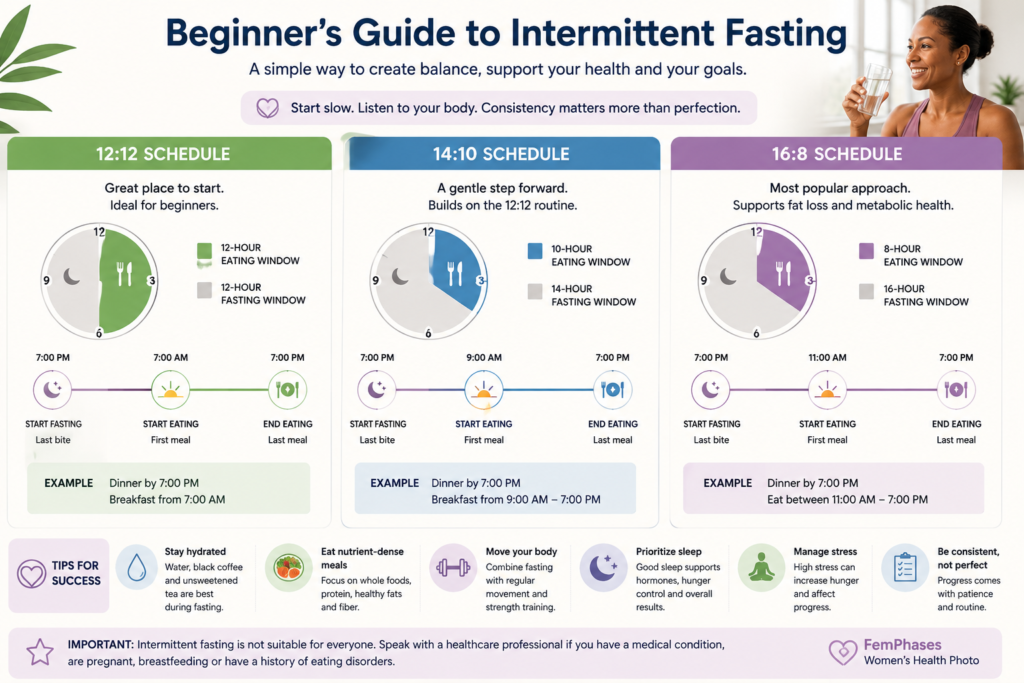
- 12:12 fasting (12-hour eating window, 12-hour fast)
- 14:10 fasting
- 16:8 fasting (16-hour fast, 8-hour eating window)
- 5:2 approach (five normal eating days and two reduced-calorie days)
For most beginners, healthcare professionals recommend starting with a 12-hour overnight fast before progressing gradually.
How Intermittent Fasting May Support Weight Loss
Several biological mechanisms may explain why intermittent fasting can support weight management:
- Reduced overall calorie intake
- Improved insulin sensitivity
- Increased fat utilisation during fasting periods
- Reduced late-night eating
- Greater awareness of hunger and fullness cues
Current evidence suggests that weight-loss outcomes are often similar to those of other calorie-controlled eating approaches when overall nutritional quality is maintained.
The Hormone Connection
Fasting influences several hormones involved in metabolism:
- Insulin: Helps regulate blood sugar
- Ghrelin: The hormone that stimulates hunger
- Leptin: Helps regulate fullness
- Cortisol: The body’s primary stress hormone
For women, hormone fluctuations during menstruation, perimenopause, menopause, pregnancy, and breastfeeding may affect how fasting feels and whether it is appropriate.
What Recent Research Shows
Recent reviews suggest intermittent fasting may:
- Produce modest weight loss
- Improve blood sugar control in some individuals
- Reduce visceral fat (fat around internal organs)
- Improve certain cardiovascular risk markers
However, experts emphasise that long-term success depends more on sustainable habits than on fasting alone.
Signs and Symptoms
i. Signs Intermittent Fasting May Be Working
You may notice:
- Improved awareness of hunger cues
- Reduced snacking
- Gradual weight loss
- Better energy stability
- Improved meal planning habits
ii. Signs Your Approach May Be Too Restrictive
Watch for:
- Extreme hunger
- Irritability
- Persistent fatigue
- Headaches
- Dizziness
- Poor concentration
- Sleep disturbances
- Binge eating after fasting periods
These symptoms may indicate that your fasting window is too long or your nutritional intake is inadequate.
When Women Should Pay Extra Attention
Women may be more sensitive to energy restriction during:
- Pregnancy
- Breastfeeding
- Fertility treatment
- Perimenopause
- Menopause
- Recovery from illness
If symptoms worsen or menstrual cycles become irregular, seek medical advice.
A Note on Medical Advocacy
If fasting causes significant symptoms or affects your quality of life, trust your body. Sustainable health strategies should support well-being, not create distress.
Diagnosis and Treatment
How Healthcare Professionals Assess Weight Concerns
There is no medical test for intermittent fasting suitability, but clinicians may evaluate:
- Body mass index (BMI)
- Waist circumference
- Blood pressure
- Blood glucose
- Cholesterol levels
- Thyroid function
- Hormonal health
Who Should Speak to a Healthcare Professional First?
Before starting intermittent fasting, consult a healthcare professional if you:
- Have diabetes
- Take glucose-lowering medication
- Have a history of eating disorders
- Are pregnant
- Are breastfeeding
- Have chronic medical conditions
- Have unexplained weight loss
Treatment Beyond Fasting
Weight management may also include:
- Nutritional counselling
- Physical activity programmes
- Sleep optimisation
- Stress management
- Medical treatment when appropriate
Barriers
Mistake #1: Starting Too Aggressively
One of the biggest mistakes nurses see is jumping straight into a 16- or 18-hour fast.
A gradual approach is often more sustainable.
Mistake #2: Undereating During Eating Windows
Some people unintentionally consume too few nutrients.
This can lead to:
- Fatigue
- Muscle loss
- Nutrient deficiencies
- Increased hunger
Mistake #3: Ignoring Protein Intake
Protein helps:
- Preserve muscle mass
- Improve fullness
- Support metabolism
Many people focus on fasting windows but neglect protein intake.
Mistake #4: Using Fasting as Punishment
Intermittent fasting should not compensate for overeating or become a form of self-punishment.
Healthy habits are more effective than cycles of restriction and guilt.
Mistake #5: Expecting Rapid Results
Healthy weight loss is typically gradual.
Unrealistic expectations often lead to frustration and abandonment of healthy habits.
Solutions & Support
How to Start Intermittent Fasting Safely
If you are learning how to start intermittent fasting, consider the following approach:
Week 1–2
- Aim for a 12-hour overnight fast
- Stop eating after dinner
- Eat breakfast at your usual time
Week 3–4
- Extend fasting to 13–14 hours if comfortable
Week 5+
- Consider a 14:10 or 16:8 pattern if appropriate
Build Meals Around Protein
Examples include:
- Fish
- Eggs
- Greek yoghurt
- Beans
- Lentils
- Lean poultry
- Tofu
Protein supports fullness and helps preserve muscle mass during weight loss.
Prioritise Fibre
High-fibre foods include:
- Vegetables
- Fruit
- Whole grains
- Beans
- Seeds
Fibre helps manage hunger and supports digestive health.
Support Sleep and Stress Management
Poor sleep and chronic stress can affect:
- Appetite regulation
- Food cravings
- Cortisol levels
- Weight management efforts
Clinical Support vs Lifestyle Support
Clinical interventions may include:
- Dietitian support
- Obesity medicine consultation
- Diabetes management
- Hormonal assessment
Lifestyle strategies include:
- Regular exercise
- Strength training
- Healthy sleep habits
- Balanced nutrition
- Stress reduction
The most effective approach often combines both.
Conclusion
Understanding how to start intermittent fasting safely is often more important than choosing the most restrictive fasting schedule. While intermittent fasting may help some people lose weight and improve metabolic health, success depends on consistency, balanced nutrition, realistic expectations, and listening to your body’s signals.
The best fasting plan is one that supports your health, fits your lifestyle, and remains sustainable over time.
Takeaway
Quick Action Plan
✅ Start with a 12-hour overnight fast
✅ Focus on protein and fibre-rich meals
✅ Stay hydrated
✅ Avoid extreme fasting schedules
✅ Prioritise sleep and stress management
✅ Seek medical advice if you have health conditions
✅ Track how you feel, not just the number on the scale
Not sure where your symptoms fit? Take the Tools and Quizzes to understand your pattern.
Frequently Asked Questions
1. Is intermittent fasting safe for women?
Many women can safely practise intermittent fasting, but pregnancy, breastfeeding, certain medical conditions, and a history of eating disorders require medical guidance before starting.
2. How long should beginners fast?
Most healthcare professionals recommend beginning with a 12-hour overnight fast and increasing gradually if appropriate.
3. Can intermittent fasting help with menopause weight gain?
Some women find intermittent fasting helpful for managing weight during menopause, but results vary. A balanced diet, strength training, sleep, and stress management remain essential.
4. What can I drink during a fast?
Water, plain tea, and black coffee are generally permitted during fasting periods, although individual plans may vary.
Why do I feel dizzy when fasting?
Dizziness may occur due to dehydration, low-calorie intake, medication side effects, or an overly aggressive fasting schedule. Seek medical advice if symptoms persist.
Does intermittent fasting slow metabolism?
Current evidence does not show that appropriately structured intermittent fasting significantly slows metabolism in healthy adults.
Who should avoid intermittent fasting?
Pregnant women, breastfeeding mothers, individuals with eating disorders, and some people with diabetes or chronic illness should seek professional advice before fasting.
Medical Disclaimer
This article is for educational purposes only and does not replace personalised medical advice, diagnosis, or treatment. If you are worried about your symptoms, if your symptoms are getting worse, or if something does not feel right in your body, please speak with your doctor, nurse practitioner, gynaecologist, endocrinologist, or another qualified healthcare professional. Seek urgent medical help for severe, sudden, or concerning symptoms.