


The question came on an ordinary Thursday evening, which somehow made it worse.
I was sitting across from a man I had been seeing for nearly two months, the remains of dinner between us, when the conversation drifted towards exes. He told me about the girlfriend he had lived with at university, the one after that who had broken his heart, and another relationship that had ended because they wanted different things. Then he looked at me and asked about mine.
I could have given him the edited version. I had dates. I had almost-things. I had men whose names once made my stomach flicker when they appeared on my phone. I had kissed people in doorways, slept beside someone and woken to the strange intimacy of hearing him breathe, and spent three months seeing a perfectly kind man but somehow never became necessary to me.
Instead, I said the thing I usually soften.
“I’ve never been in love.”
He thought I meant recently.
“No,” I said. “I mean ever.”
There was only a second of silence, but I felt myself rush to fill it. I explained that I was not against relationships, not emotionally numb, not secretly waiting for a perfect man with a soundtrack playing behind him. I heard myself presenting evidence for my own normality.
That was the part that stayed with me afterwards. Not his reaction, which was gentler than I had feared, but mine.
At 26, never having been in love had started to feel less like a fact about my life and more like something I needed to explain.
Why had everyone else seemed to get there before me?
I had loved people, just not like that
The confusing thing is that my life has never felt empty of love.
I know what it is to sit on the bathroom floor with a friend while she cries so hard she cannot speak. I know which supermarket biscuits my mum likes and which ones she claims she does not want but always eats. I know the particular ache of missing someone who has moved away, and the tenderness of hearing a friend’s key in my door when I have had a bad day.
I am capable of attachment. I care deeply. Sometimes too deeply.
Romantic love, though, has remained something I have observed from close range without quite entering.
At school, I assumed it would happen at university. At university, I assumed I was too busy, too shy, too uncertain of myself. At 23, I decided dating apps were the problem. At 24, I wondered whether I had become too independent. At 25, I began asking a more uncomfortable question: what if there was something missing in me?
Nobody had actually said that to me. That almost made it worse. The pressure was mostly atmospheric.
It lived in the engagement photographs that appeared between gym selfies and holiday pictures. It arrived in casual questions at weddings. It was there when friends discussed the particular madness of loving someone who could infuriate them by leaving wet towels on the bed and still be the person they wanted beside them when life went wrong.
I envied the familiarity as much as the romance.
Not the flowers. Not the anniversaries. I wanted the shorthand. The private language. The person who knew I hated coriander without asking. The person whose face had become part of the furniture of my life.
And because I wanted it, I assumed I should already have had it.
Never been in love at 26 does not mean I missed a deadline
Part of my anxiety came from wanting a number to tell me whether I was normal.
There is no neat national statistic for the age at which people first fall in love, partly because love is not an event that can be measured as cleanly as marriage, cohabitation or a first relationship. Those related measures still give useful context.
In August 2026, YouGov reported that 9 per cent of British adults said they had never been in a relationship. Research on romantic development has also found substantial variation in when people begin dating, with a longitudinal study suggesting that around one in five young adults had never been in a romantic relationship before 25. Those figures do not tell us who has or has not been in love, but they do challenge the idea that everyone has followed the same romantic timetable by their mid-twenties.
I wish I had understood earlier that being outside the majority experience isn’t the same as being inexplicable.
For years, I treated love as a developmental box I had failed to tick. First kiss. First relationship. First heartbreak. First person you accidentally leave a toothbrush with. Somewhere in my mind there was a sequence, and I was embarrassingly behind.
But my actual romantic life was more complicated than “nothing happened”.
Things happened.
I wanted people who did not want me. People wanted me when I felt nothing beyond affection. I stayed too long in situations because I thought attraction might deepen if I gave it time. I ended promising dates and then spent days wondering whether I had been too quick to leave. Once, I continued seeing someone mostly because my friends liked him and I was frightened that walking away from a decent man proved I was impossible to please.
He was warm, thoughtful and interested in me. I liked the way he made tea before I asked. I liked that he remembered the name of a colleague I had complained about weeks earlier. I liked resting my head on his shoulder.
I simply did not miss him when he left.
That truth felt cruel, although it was not something either of us had done wrong.
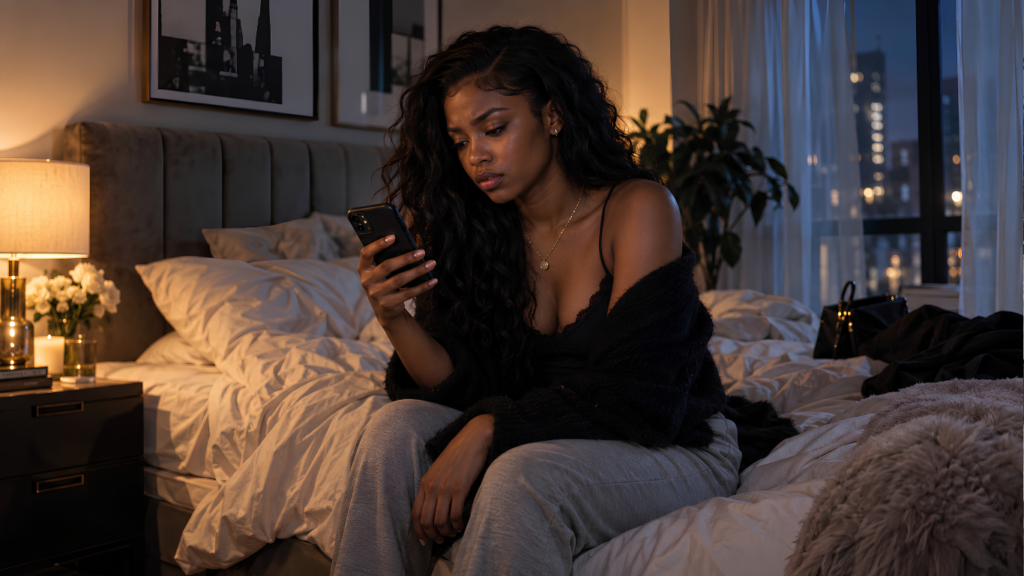
I kept asking whether I was too picky
“Maybe your standards are too high” sounds harmless until you have repeated it to yourself for several years.
So I tried lowering the wrong standards.
I talked myself into chemistry that was not there because a man was kind. I ignored boredom because someone was reliable. I stayed through conversations that felt like work because attraction seemed childish compared with compatibility. Then, on other dates, I did the opposite and dismissed people because there was no immediate rush.
I was trying to reverse-engineer love from ingredients.
Kindness plus attraction plus similar values plus enough time should equal the feeling everyone kept describing.
Except people are not recipes, and neither am I.
The more I treated every date as an assessment of whether this person might finally make me normal, the less present I became. A first drink was no longer a first drink. It was an audition for a future I had begun to panic about.
I could feel myself becoming watchful.
Do I like him enough?
Did I want him to touch me?
Would I be disappointed if he cancelled?
Could I imagine sleeping beside him in five years?
Nothing kills curiosity quite like asking a stranger to answer questions he does not yet know he has been given.
What I was really frightened of
Eventually, I realised that “Why have I never been in love?” was not the question that frightened me most.
The real question was: what if nobody ever becomes home to me?
That was harder to admit because it stripped away the clever explanations.
I was not only afraid of being unusual. I was afraid of missing a form of intimacy I genuinely wanted. I was afraid that one day my friends’ lives would become so organised around partners and children that friendship, however loving, would take up less space. I was afraid of emergencies, Sunday mornings, hospital waiting rooms, rent, old age and all the ordinary things that seem less frightening when another person is woven into them.
There was another fear underneath that one.
What if I wanted love partly because I wanted proof that I was lovable?
That question changed something.
I had spent years examining my romantic history as though someone had evaluated me. No serious relationship meant I had not been chosen. No great love meant I had not inspired one.
But the evidence did not actually say that.
There had been people who wanted more from me than I could honestly give. There had been people I wanted who could not give me what I wanted. There had been bad timing, weak chemistry, fear, ordinary incompatibility and plain chance.
None of it formed a verdict.
I stopped trying to catch up
After that Thursday dinner, the man I was seeing did not disappear.
For a while, I almost wished he would. It would have confirmed the story I had already written in my head, that my lack of romantic history was a warning label and that experienced adults would find it strange.
Instead, we kept seeing each other.
Nothing cinematic happened. I did not suddenly discover that he was the person I had been waiting for. I also did not run simply because I was frightened of what might happen.
I noticed smaller things.
I noticed that I liked the quiet after we had been talking for hours. I noticed I didn’t rehearse myself before seeing him as much as I had at the beginning. I noticed that when he touched the back of my neck while passing behind my chair, I did not immediately ask myself what the touch meant.
I let it be a touch.
That sounds insignificant, but for me it was not.
I had been so preoccupied with whether I could fall in love that I had barely allowed myself the uncertainty in which intimacy actually develops.
I still do not know where that relationship will go. It may deepen. It may end kindly. One of us may want more than the other can give. I may fall in love with him, or with someone I have not met yet, or much later than I once imagined respectable.
I cannot promise myself an outcome.
What I can stop doing is treating 26 as evidence.
I have never been in love. That is true.
It is no longer the same thing as saying there is something wrong with me.


