


It often starts quietly.
You forget why you walked into a room. You wake at 3 am for no obvious reason. Your periods suddenly become heavier, closer together, or strangely unpredictable. One week, you feel emotionally steady, and the next, you are crying in the supermarket car park, wondering what is happening to you.
Then comes the second-guessing.
Am I stressed? Burnt out? Depressed? Is this just ageing? Am I overreacting?
For many women, perimenopause does not arrive with one dramatic symptom. Instead, it slowly weaves itself into everyday life: sleep, mood, concentration, energy, relationships, work, confidence, and even the way your body feels familiar or unfamiliar to you.
Unfortunately, many women also discover that knowing something feels wrong and knowing how to explain it to a healthcare professional are two very different things.
That is why asking specific questions about your symptoms and concerns can make a big difference because it guides effective communication with your doctor. Not because you need to become an expert overnight, but because informed conversations often lead to earlier recognition, better support, and less confusion.
You deserve appointments where you feel heard, informed, and taken seriously.
This article will help you prepare for those conversations calmly and clearly — whether you are just beginning to suspect perimenopause, already struggling with symptoms, or trying to understand what treatment and support options are available. Knowing your options can inspire hope and a sense of agency in your health journey.
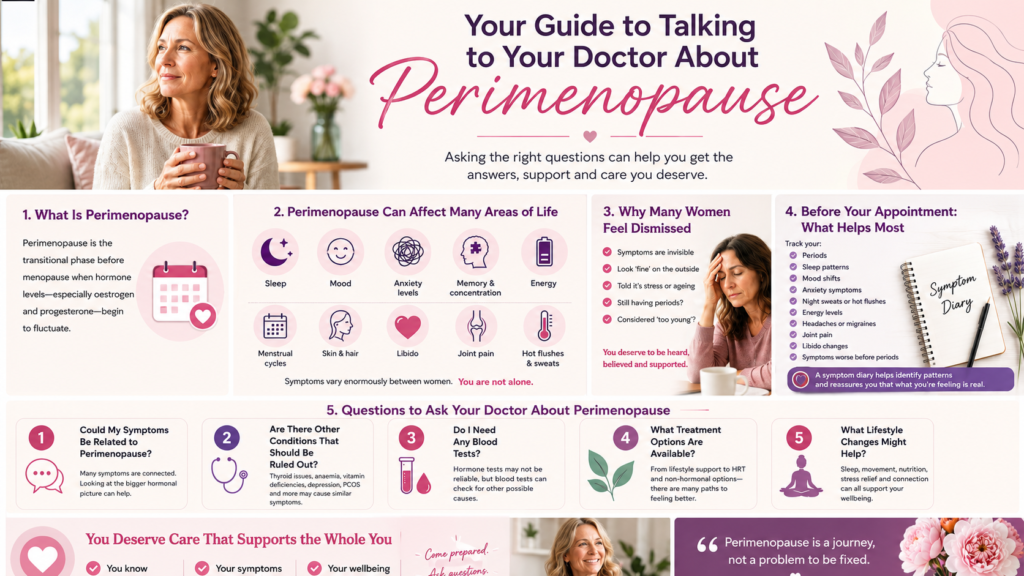
What Exactly Is Perimenopause?
Perimenopause is the transitional phase before menopause when hormone levels especially oestrogen and progesterone begin fluctuating.
It can begin in your late 30s or 40s and may last several years before periods stop completely.
During this stage, hormone fluctuations can affect:
- Sleep
- Mood
- Anxiety levels
- Memory and concentration
- Energy
- Menstrual cycles
- Skin and hair
- Libido
- Weight distribution
- Joint pain
- Migraines
- Hot flushes and night sweats
Importantly, symptoms can vary enormously between women.
Some experience mostly physical symptoms. Others notice emotional and psychological changes first. Many experience both.
According to the NHS menopause guidance, symptoms can significantly affect quality of life, relationships, confidence, and daily functioning.
Why Many Women Feel Dismissed
One of the hardest parts of perimenopause is that symptoms can feel invisible.
You may look “fine” while privately struggling with:
- Emotional overwhelm
- Panic attacks
- Exhaustion
- Irritability
- Brain fog
- Low motivation
- Sudden changes in confidence
- Feeling disconnected from yourself
Because symptoms overlap with stress, anxiety, depression, thyroid disorders, burnout, ADHD, and other health conditions, women are sometimes told they are stressed or ageing.
Sometimes they leave appointments feeling embarrassed for even bringing it up.
That emotional experience matters.
Many women delay seeking support because they worry they will not be believed, especially if they are still having periods or are considered “too young” for menopause-related symptoms.
The British Menopause Society notes that awareness of symptom variation is improving, but many women still experience delayed recognition and treatment.
Before Your Appointment: What Helps Most
You do not need to arrive perfectly organised.
Still, a few notes can make conversations easier, especially if brain fog or anxiety makes it difficult to explain symptoms under pressure.
You might track:
- Changes in periods
- Sleep patterns
- Mood shifts
- Anxiety symptoms
- Night sweats or hot flushes
- Energy levels
- Headaches or migraines
- Joint pain
- Libido changes
- Symptoms that worsen before periods
A simple symptom diary can help identify patterns.
It can also reassure you that what you are experiencing is real, consistent, and worth discussing.
Questions to Ask Your Doctor About Perimenopause
1. “Could My Symptoms Be Related to Perimenopause?”
This sounds simple, but it is often the most important place to start.
Many women spend years trying to treat isolated symptoms separately:
- Insomnia
- Anxiety
- Palpitations
- Mood changes
- Heavy bleeding
- Fatigue
Sometimes the missing piece is recognising the wider hormonal transition connecting them.
You might say:
“I’ve noticed several changes happening together, and I’m wondering whether hormones or perimenopause could be playing a role.”
That opens the conversation without sounding confrontational or self-diagnosing.
2. “Are There Other Conditions That Should Be Ruled Out?”
Not every symptom is caused by perimenopause, and asking about other health conditions that could be related promotes comprehensive care. A good healthcare professional should consider the bigger picture, including thyroid disorders, anaemia, vitamin deficiencies, depression, anxiety, sleep disorders, PCOS, endometriosis, fibroids, or autoimmune conditions.
Depending on your symptoms, they may assess for:
- Thyroid disorders
- Anaemia
- Vitamin deficiencies
- Depression or anxiety disorders
- Sleep disorders
- PCOS
- Endometriosis
- Fibroids
- Autoimmune conditions
This question shows you are seeking balanced, thoughtful care rather than assuming hormones explain everything.
3. “Do I Need Any Blood Tests?”
This is one of the most misunderstood areas of perimenopause.
Hormone blood tests are not always reliable during perimenopause because hormone levels fluctuate constantly.
According to NICE menopause guidelines, women over 45 are often diagnosed based primarily on symptoms rather than hormone tests alone.
However, blood tests may still be useful to check:
- Thyroid function
- Iron levels
- Vitamin B12
- Vitamin D
- Cholesterol
- Blood sugar
- Other possible causes of symptoms
You can ask:
“Would any blood tests help rule out other causes or support the assessment?”
4. “What Treatment Options Are Available for My Symptoms?”
There is no single “right” treatment for everyone.
Support depends on:
- Your symptoms
- Medical history
- Risk factors
- Personal preferences
- Mental health
- Lifestyle
- Whether symptoms are mild or severe
Possible options may include:
Hormone Replacement Therapy (HRT)
HRT helps replace declining hormones and can improve symptoms like:
- Hot flushes
- Night sweats
- Sleep disruption
- Mood symptoms
- Vaginal dryness
- Joint pain
For some women, it can feel genuinely life-changing.
For others, it may not feel right medically or personally.
The important thing is informed discussion rather than fear-based messaging.
The Royal College of Obstetricians and Gynaecologists clearly explains the benefits and risks and encourages individualised care.
Non-Hormonal Options
Some women cannot take HRT or prefer not to.
Other approaches may include:
- Cognitive behavioural therapy (CBT)
- Sleep support
- Anxiety management
- SSRIs or other medications
- Migraine treatment
- Lifestyle adjustments
- Pelvic floor support
- Vaginal moisturisers or local oestrogen
You deserve to know all available options — not just one pathway.
5. “Could Hormones Be Affecting My Mental Health?”
This question matters deeply.
Many women notice emotional symptoms before physical symptoms.
You may experience:
- Anxiety
- Rage
- Tearfulness
- Emotional sensitivity
- Panic attacks
- Loss of confidence
- Low mood
- Feeling emotionally unlike yourself
Hormonal shifts can affect neurotransmitters involved in mood regulation, including serotonin.
That does not mean symptoms are “all in your head.”
The emotional impact of perimenopause is real, physiological, and deserving of support.
The Office on Women’s Health notes that mood and emotional changes are common during the menopausal transition.
6. “What Can I Do About Sleep Problems?”
Sleep disruption is one of the most exhausting parts of perimenopause.
Poor sleep then worsens:
- Anxiety
- Brain fog
- Emotional resilience
- Fatigue
- Cravings
- Mood swings
It becomes a cycle.
Ask specifically about:
- Night sweats
- Early waking
- Insomnia
- Restless sleep
- Sleep anxiety
Sometimes, improving sleep becomes the foundation that helps everything else feel more manageable.
7. “What Symptoms Should I Not Ignore?”
While many symptoms are common during perimenopause, some still need medical assessment.
Always discuss symptoms like:
- Very heavy bleeding
- Bleeding after sex
- Bleeding between periods
- Sudden severe pain
- Chest pain
- Significant shortness of breath
- Fainting
- Sudden neurological symptoms
- Severe depression or suicidal thoughts
Perimenopause should never become a reason for symptoms to be automatically dismissed.
8. “How Might Perimenopause Affect Long-Term Health?”
Hormonal changes can influence:
- Bone health
- Heart health
- Cholesterol
- Muscle mass
- Metabolism
- Vaginal and urinary health
This does not mean decline is inevitable.
However, it can be helpful to discuss:
- Exercise
- Nutrition
- Bone density
- Cardiovascular risk
- Preventive health checks
Good care is not just about symptom relief. It is also about supporting future health.
9. “How Will I Know If I’m Approaching Menopause?”
Menopause is officially diagnosed after 12 consecutive months without a period.
Perimenopause, however, can involve years of fluctuating symptoms beforehand.
Understanding this timeline can help reduce confusion and self-doubt.
If You Feel Dismissed
Sadly, some women leave appointments feeling unheard.
If that happens:
- Bring written notes next time
- Ask for clarification
- Request another appointment
- Seek a second opinion
- Consider a menopause specialist
- Take someone supportive with you if needed
You are not difficult for wanting answers about your own body.
Common Myths About Perimenopause
Myth: “You’re Too Young”
Perimenopause can begin earlier than many people expect.
Some women notice symptoms in their late 30s or early 40s.
Myth: “It’s Just Stress”
Stress absolutely affects the body.
However, hormonal shifts and stress can also happen simultaneously.
Both deserve attention.
Myth: “You Have Just to Push Through”
No.
Support exists.
You deserve care that improves your quality of life rather than simply enduring symptoms in silence.
Practical Ways to Prepare for Your Appointment
Bring:
- Symptom notes
- Medication list
- Questions written down
- Menstrual history
- Family history is relevant
Consider Asking:
- What are my options?
- What are the risks and benefits?
- What symptoms should I monitor?
- When should I follow up?
- Are there lifestyle strategies that may help alongside treatment?
Gentle Reassurance for the Woman Reading This
If you have been feeling unlike yourself lately, you are not imagining it. Many intelligent, capable women are caught off guard by perimenopause because the conversation around it has historically been incomplete, oversimplified, or focused only on hot flushes.
In reality, hormonal changes can touch almost every area of life: sleep, mood, identity, confidence, relationships, energy, and emotional resilience.
That can feel frightening at times.
Still, understanding what is happening often significantly reduces fear.
You do not need to have perfect words.
You do not need to justify struggling.
You do not need to wait until symptoms become unbearable before asking for help.
The right information and supportive healthcare can make this phase feel far less confusing and lonely.