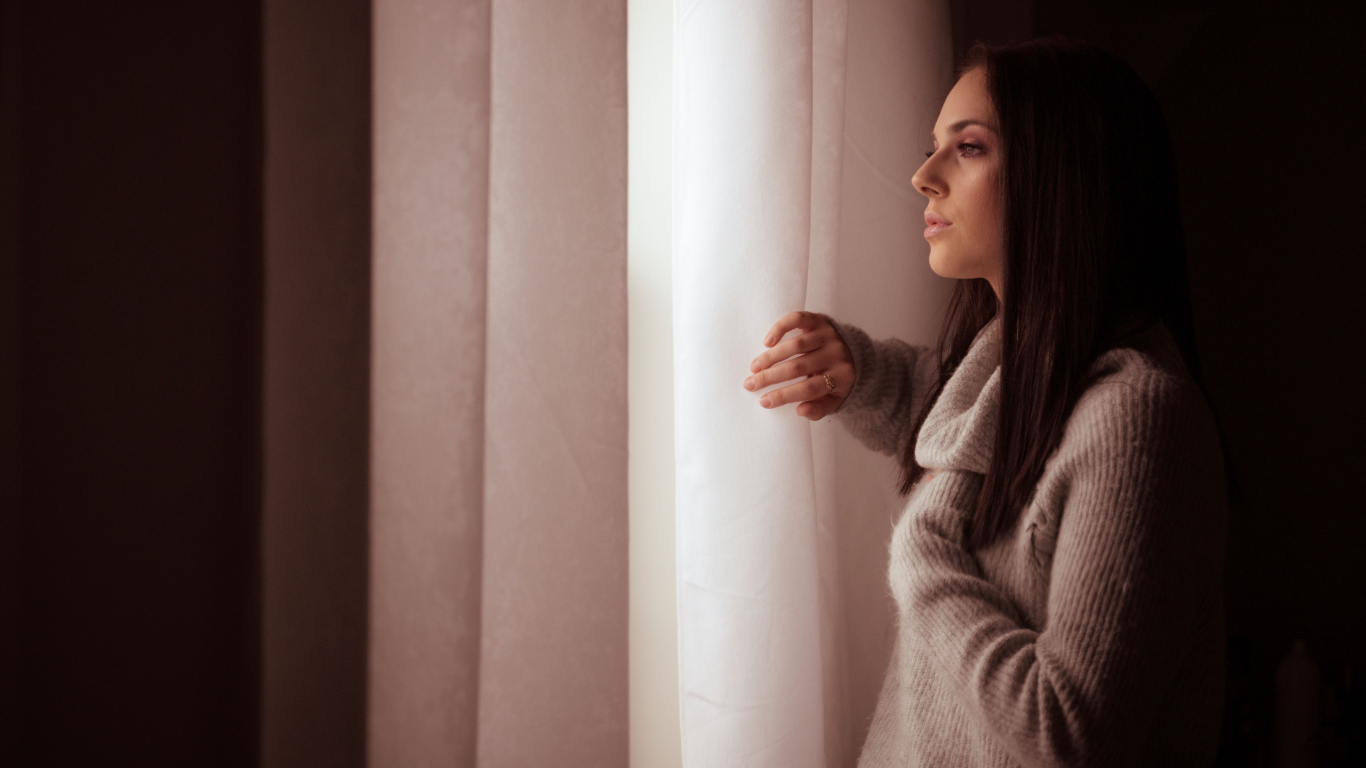


An unhealthy relationship can still contain affection, attachment, chemistry and meaningful memories. What matters is whether love coexists with fear, control, coercion or repeated harm. If you feel unsafe or trapped, seek support.
Why an Unhealthy Relationship Can Still Feel Deeply Loving
Sometimes the hardest relationships to understand are not the ones that feel bad all the time.
They are the ones where you laugh together on Saturday, feel deeply connected on Sunday and spend Monday wondering why you are crying in the bathroom.
Perhaps your partner can be tender, funny and attentive. Perhaps there are memories you genuinely treasure. Maybe you know exactly what it feels like to fall asleep beside this person and feel completely at home.
And yet something does not feel right.
You may feel anxious before raising certain subjects. You may edit yourself to avoid an argument, apologise for things you do not believe were your fault or find yourself constantly trying to restore the version of the relationship that feels good.
This can be confusing because affection and unhealthy behaviour are not mutually exclusive.
A relationship can contain love and still contain patterns that hurt you.
A relationship can contain love and still include patterns like constant criticism, gaslighting, or manipulation that hurt you, even if not overtly abusive.
The World Health Organisation defines intimate partner violence as behaviour by a current or former partner that causes physical, sexual or psychological harm, including physical aggression, sexual coercion, psychological abuse and controlling behaviours. World Health Organisation information on intimate partner violence
Recognising harm does not require you to deny every good moment that came before it.
How This Can Affect Everyday Life
One reason unhealthy relationships can be difficult to recognise is that your experience may keep changing.
After a painful argument, your partner may become especially affectionate. A period of distance may be followed by intense closeness. Someone who criticised you yesterday may reassure you today that nobody understands you the way they do.
The relief can feel powerful.
You may find yourself thinking, This is the person I fell in love with. We are back.
That hope can make it easier to minimise what happened before.
The Office on Women’s Health notes that abuse can be difficult to recognise when it develops gradually or when a partner also behaves lovingly or provides practical or financial support. Loving behaviour does not make abusive behaviour harmless. Office on Women’s Health guidance on signs of domestic abuse
Attachment can complicate things further.
You may still miss someone who hurts you. You may crave their comfort after an argument. You may remember who they were at the beginning of the relationship or hold tightly to the possibility that things could become good again.
None of that proves you secretly want to be mistreated.
Research has explored links between attachment patterns and intimate partner violence, but the picture is complex and inconsistent. A systematic review found that attachment may matter in some relationship dynamics, but many studies found no simple or consistent associations. Systematic review of attachment and intimate partner violence
So it is better to avoid reducing a complicated relationship to a fashionable psychological label.
The more useful question is often simpler: What actually happens to me in this relationship?
Common Experiences and Changes to Notice
An unhealthy relationship can look different for each couple.
You might notice that:
- wonderful periods make you question whether the painful ones were really “that bad”;
- you spend considerable energy predicting your partner’s mood;
- arguments regularly leave you confused about what actually happened;
- your needs are dismissed as unreasonable or oversensitive;
- you frequently apologise simply to restore peace;
- you have gradually stopped seeing certain friends or family members;
- you feel increasingly responsible for your partner’s emotional state;
- affection feels especially intense after conflict;
- you are frightened of saying no to certain requests;
- you feel less like yourself than you used to.
Not every difficult relationship is abusive.
Two people may have unhealthy communication habits, struggle with jealousy or repeatedly avoid conflict without one person deliberately controlling the other.
But some behaviours should not be softened into ordinary “relationship problems”.
The Office on Women’s Health lists behaviours such as monitoring where you are, demanding passwords, restricting contact with friends or family, controlling money, humiliating you, threatening you or forcing sexual activity among signs of abuse. Office on Women’s Health guide to recognising abuse
If you recognise those patterns, the central issue is not whether you communicate beautifully enough.
Focus on safety and control because understanding these aspects helps you recognize when a relationship may be unhealthy or harmful, encouraging the audience to prioritize their well-being.
What May Help When Love and Harm Feel Mixed Together
You do not have to decide the entire future of your relationship in one afternoon.
Sometimes the first useful step is simply seeing the pattern more clearly.
Look at the relationship over time
Try not to judge the relationship only by its best week or its worst argument.
Ask what the overall pattern looks like.
Do disagreements lead to repair, accountability and change? Or does the same harm happen repeatedly, followed by apologies, affection or promises before beginning again?
One sincere apology can matter.
Repeated apologies without meaningful change tell you something different.
Notice how much freedom you have
Healthy closeness does not require losing ordinary autonomy.
Can you spend time with friends? Have privacy? Control your own money where circumstances allow? Disagree without being frightened? Say no to sex? Make ordinary decisions about your clothing, work, healthcare and relationships?
If your freedom has gradually shrunk, pay attention to it.
Write things down privately if it is safe
Confusing relationships can make individual events difficult to evaluate.
If it won’t put you at greater risk, keeping a private record of what happens may help you notice patterns.
You might note what happened, what was said, whether there were threats or controlling behaviour and how you felt afterwards.
However, if a partner monitors your phone, computer or belongings, storing such information could create additional risk. Your safety comes before record-keeping.
Talk to someone outside the relationship
Isolation makes perspective harder.
A trusted friend, counsellor, therapist, healthcare professional or specialist abuse service may help you talk through what is happening without forcing you into a particular decision.
Choose someone who can listen without shaming you for loving the person or demanding that you defend every choice you have made.
Do not mistake intensity for safety
A relationship can feel passionate because the emotional highs and lows are intense.
Intensity is not the same thing as intimacy.
Ask whether you also have steadiness, respect, consent, trust and freedom to be yourself.
Let behaviour carry more weight than promises
Your partner may genuinely mean an apology when it is made.
What matters next is what happens afterwards.
Do they take responsibility? Seek appropriate help if needed? Respect your boundaries? Stop blaming you for their behaviour?
Promises describe an intention.
Patterns show you what you are living with.
It Is Worth Getting Support If…
Consider speaking confidentially with a healthcare professional, counsellor, therapist or specialist relationship-abuse service if:
- you frequently feel frightened of your partner’s reaction;
- your partner controls your money, movements, friendships, healthcare or communication;
- you are pressured, coerced or forced into sexual activity;
- threats, intimidation, humiliation or monitoring are becoming normal;
- physical violence has occurred, even if your partner later apologised;
- you increasingly feel isolated or unable to make your own decisions;
- your emotional or physical health is deteriorating because of the relationship.
If you believe you are in immediate danger, seek urgent help through an appropriate local emergency service or specialist domestic-abuse organisation. If a partner monitors your devices, consider whether you can seek help from a safer device or location.
When to Speak to a Healthcare Professional
Relationship distress can affect more than the relationship itself.
Intimate partner violence is associated with physical injury as well as depression, anxiety, post-traumatic stress symptoms, sleep difficulties and other health effects.
A doctor, nurse practitioner or mental-health professional can help if you are experiencing persistent anxiety, low mood, sleep disruption, panic, physical symptoms or injuries.
You do not need to arrive with a diagnosis or even be certain that what you are experiencing “counts” as abuse.
You can simply describe what has been happening.
It may help to mention:
- how long the relationship pattern has been present;
- whether things are becoming more frequent or severe;
- threats, controlling behaviour or physical harm;
- sexual experiences you did not freely consent to;
- changes in sleep, appetite, mood or concentration;
- injuries or unexplained physical symptoms;
- whether you feel able to disagree safely;
- whether your partner controls access to money, healthcare or other people.
Healthcare professionals may also help you access other forms of support, although services and referral pathways differ between countries.
If there is abuse, couples counselling is not always appropriate, particularly when one partner uses fear or control. Individual confidential support may be safer.
Frequently Asked Questions Women Often Ask
Can an unhealthy relationship still contain real love?
Yes. You can experience genuine affection, attachment and meaningful memories while also experiencing behaviour that harms you. Recognising the harm does not require you to declare that every feeling you ever had was false.
Why do I miss someone who treated me badly?
Attachment does not disappear simply because you recognise a relationship was unhealthy. You may miss companionship, affection, familiar routines, good memories or the future you hoped you would have together.
Does fighting mean a relationship is unhealthy?
Not necessarily. Disagreement is part of many relationships. More important questions include whether conflict feels safe, whether both people can speak honestly and whether responsibility and repair follow when somebody causes harm.
Is jealousy a sign of love?
Occasional jealousy can occur in relationships, but controlling your clothing, friendships, movements, phone, or choices is not evidence of deeper love. Persistent control deserves attention.
Why do the good moments feel so powerful after an argument?
Relief after tension can feel emotionally intense, particularly when you have been longing for closeness or reassurance. That intensity doesn’t erase what happened during the conflict.
How do I know if my relationship is abusive rather than simply unhealthy?
Patterns involving fear, coercion, physical violence, sexual pressure, threats, intimidation or significant control over your choices are particularly concerning. A specialist service or healthcare professional can help you assess what is happening confidentially.
Key Takeaways
- An unhealthy relationship can contain real affection, attachment and good memories.
- Difficult relationship patterns and abuse are not necessarily the same; control, coercion, intimidation and violence require particular attention.
- Good periods do not automatically cancel repeated harmful behaviour.
- Look at patterns over time rather than relying only on apologies or promises.
- Your ability to say no, maintain relationships, make decisions and feel safe matters.
- If you are frightened, controlled, coerced or physically harmed, confidential professional or specialist support may help.
Conclusion
One of the hardest truths about unhealthy relationships is that recognising harm does not always make love disappear.
You may still miss the person. You may remember tenderness alongside fear, or wish desperately that the best version of the relationship could become permanent.
You do not have to rewrite every good memory before you are allowed to take the painful ones seriously.
Love is part of the story. But so are your safety, freedom, boundaries and ability to remain fully yourself inside the relationship.
Those parts deserve your attention too.
This article is for educational purposes only and does not replace personalised medical advice, diagnosis or treatment. If you are worried your symptoms are getting worse, or if something doesn’t feel right in your body, speak with your doctor, nurse practitioner, gynaecologist, endocrinologist, or another qualified healthcare professional. Seek urgent medical help for severe, sudden or concerning symptoms.