
Who This Article Is For:
This article is for women who are worried about a late period, even though pregnancy does not seem to be the cause, and who want a clear, reassuring explanation of what may be happening in their bodies.
Why Is My Period Late, but I’m Not Pregnant?
A late period can throw you off fast. Even when you think pregnancy is unlikely, it is hard not to wonder what is going on. You might feel unsettled, frustrated, or stuck in that uncomfortable space between “maybe it’s nothing” and “should I be worried?”
The good news is that pregnancy is only one possible reason for a late period. Your cycle can shift for all kinds of reasons, from stress and illness to hormone changes, sleep disruption, PCOS, thyroid problems, or perimenopause.
In many cases, a late period is your body responding to a change, not necessarily a sign that something is seriously wrong.
Quick Answer
A late period without pregnancy is usually caused by delayed ovulation or a skipped ovulation cycle. Common reasons include stress, illness, travel, weight changes, intense exercise, PCOS, thyroid issues, and perimenopause.
If your period is repeatedly late, missing for more than 3 months, or comes with other symptoms like pelvic pain, milky nipple discharge, or major cycle changes, it is a good idea to speak to a doctor.
What Does a Late Period Mean?
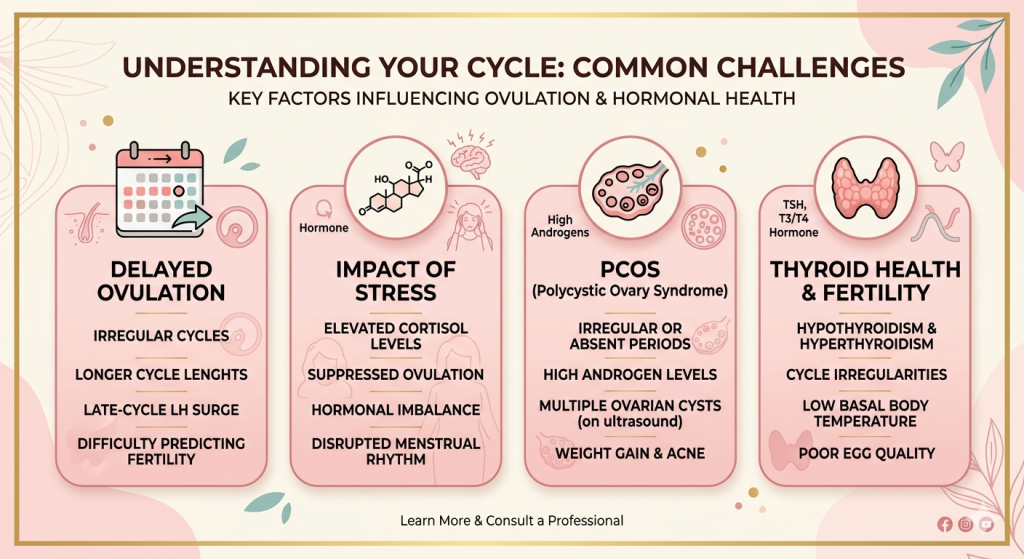
A late period usually means that ovulation happened later than usual, or did not happen at all that cycle.
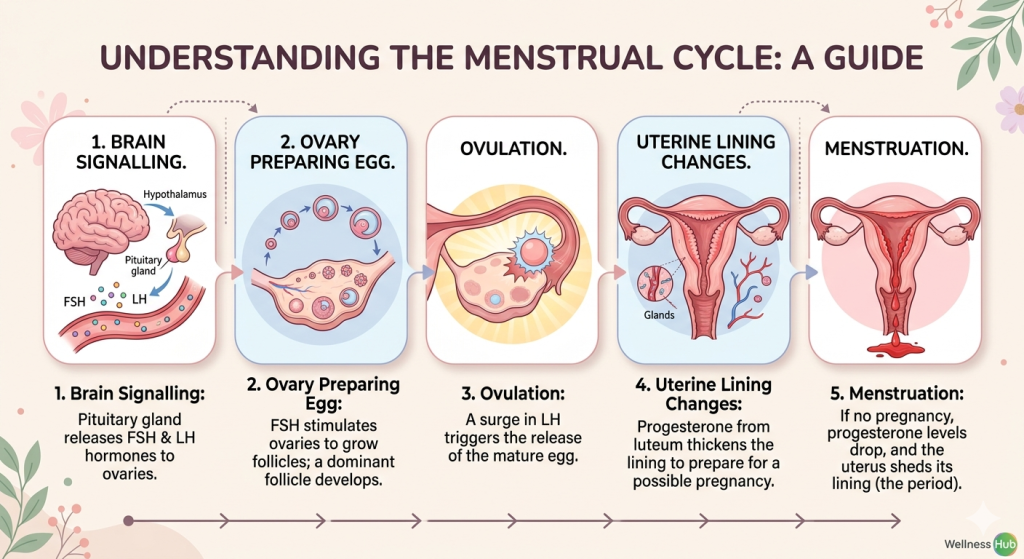
Your period does not arrive simply because a certain date comes around each month. It happens because your hormones move through a sequence: your brain signals your ovaries, your ovaries prepare and release an egg, and your uterus responds to those changes. If that process is delayed, your period will be delayed too.
This is why a late period often points to a delayed ovulation.
If you ovulate later than normal, your whole cycle shifts later. If you do not ovulate at all in that cycle, your period may come very late or not arrive when expected.
A one-off late period is common. A pattern of late or missed periods is worth paying closer attention to.
Why Does It Happen?
Your menstrual cycle is controlled by hormonal signals between the brain, ovaries, and uterus.
The brain releases hormones that tell the ovaries when to mature and release an egg. The ovaries then produce oestrogen and progesterone, which help prepare the lining of the uterus. If pregnancy does not happen, hormone levels fall, and your period begins.
When your period is late, something has usually interrupted or delayed that hormonal timing.
Here is the simplest way to think about it:
- Late ovulation = late period
- No ovulation = missed or very delayed period
That disruption can happen because of physical stress, emotional stress, illness, changes in eating habits, sleep problems, weight changes, hormone conditions, or life stage changes such as perimenopause.
Your cycle is sensitive because your body sees reproduction as closely linked to your overall well-being. When your body senses strain or imbalance, it may delay ovulation until things feel more stable.
Common Causes or Triggers
There are many reasons your period might be late, even when you are not pregnant. Some are temporary. Others may need medical follow-up.
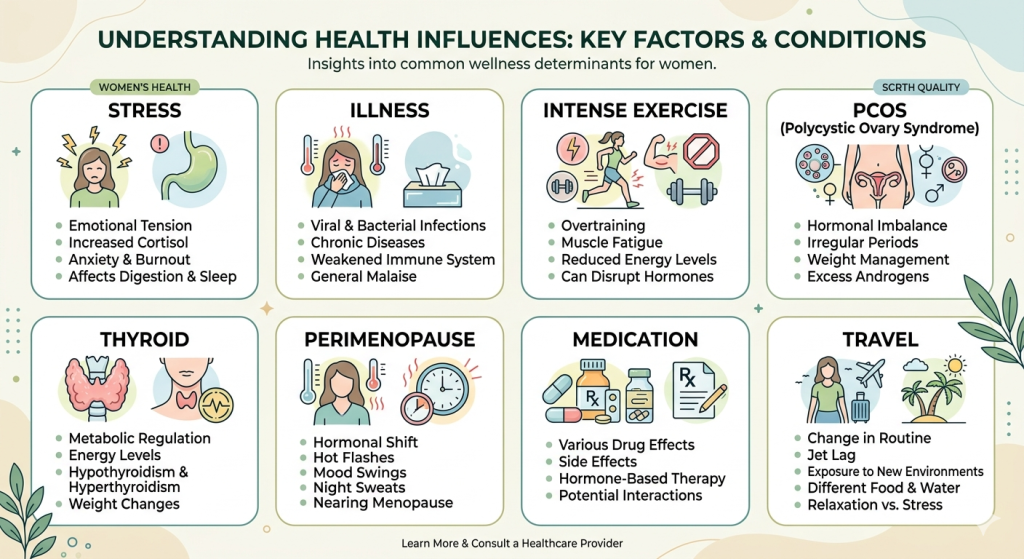
1. Stress
Stress is one of the most common causes of a late period. Emotional strain, grief, burnout, anxiety, overwork, or big life events can affect the brain signals that help trigger ovulation.
This is not “just stress.” It is a real physical effect of stress hormones on the reproductive system.
2. Illness
A fever, viral infection, stomach bug, or even a short period of feeling unwell can delay ovulation. Your body may temporarily prioritise recovery over reproduction.
3. Weight Loss or Not Eating Enough
If your body is not getting enough energy, hormone production can be affected. This can happen with dieting, unintentional weight loss, restrictive eating, or prolonged stress that affects appetite.
4. Intense Exercise
Exercise is good for health, but very intense training can affect your cycle, especially when combined with under-eating, low body fat, or poor recovery.
5. PCOS
PCOS is one of the most common hormone-related reasons for irregular or missed periods. It can make ovulation unpredictable or less frequent.
Other possible symptoms include:
- acne
- facial hair growth
- scalp hair thinning
- weight gain or difficulty losing weight
- longer or irregular cycles
6. Thyroid Problems
Your thyroid helps regulate metabolism and also affects hormone levels during menstruation. Both an underactive and an overactive thyroid can cause periods to be late, irregular, lighter, or heavier.
7. Perimenopause
If you are in your late 30s or 40s, hormone shifts linked to perimenopause can make your cycle less predictable. Periods may start coming earlier, later, heavier, lighter, or more irregularly.
8. Medications or Hormonal Birth Control
Some medications can affect cycle timing, including emergency contraception, antidepressants, antipsychotics, steroids, and some hormone treatments. Starting or stopping hormonal contraception can also change your cycle.
9. Travel, Jet Lag, or Shift Work
Changes in sleep and routine can disrupt the hormone signals that help regulate ovulation. Long flights, time zone changes, and night shifts can all play a role.
Related Hormonal or Body Changes
A late period often comes with other symptoms that can feel confusing.
You may notice:
- bloating
- cramping without bleeding
- tender breasts
- acne
- headaches
- mood swings
- fatigue
- changes in appetite
- more vaginal discharge
This can happen because your hormones may still be shifting even though your period has not arrived.
For example, oestrogen may rise and fall unevenly if ovulation is delayed. Progesterone, which usually rises after ovulation, may stay low if ovulation has not happened yet. That can leave you feeling as though your period is about to start, without bleeding actually beginning.
Sometimes a cycle becomes anovulatory, which means you do not ovulate at all. This can happen occasionally during times of stress, after illness, during the teen years, or in perimenopause.
One unusual cycle is not always cause for alarm. Repeated changes are more important to look into.
What Can Make It Worse?
Some factors can increase the likelihood of a delayed period or prolonged irregular cycles.
i. Chronic Stress
A stressful week may delay one period. Ongoing stress without enough recovery can affect several cycles in a row.
ii. Poor Sleep
Your hormones depend on sleep more than many people realise. Repeated short nights, broken sleep, night shifts, or exhaustion can all affect ovulation.
iii. Restrictive Dieting
Skipping meals, cutting calories too low, or being in a constant cycle of dieting can make it harder for the body to maintain hormonal balance.
iv. Overtraining
Too much exercise without adequate rest, recovery, or nourishment can strain the body.
v. Ignoring Repeated Changes
If your cycle has changed significantly and stays different, it is worth paying attention. Repeated late periods can be an important clue that your body needs support or medical assessment.
What May Help?
What helps depends on the cause, but there are sensible steps you can take to support your body and help you decide whether further medical advice is needed.
1. Rule Out Pregnancy Properly
If you are sexually active, take a home pregnancy test even if pregnancy feels unlikely. Timing matters. If the first test is negative and your period hasn’t arrived yet, repeat it in a few days if needed.
2. Look at the Bigger Picture
Think about what changed in the last 1 to 3 months.
Ask yourself:
- Have I been under more stress than usual?
- Have I been ill recently?
- Has my sleep been poor?
- Have I travelled or changed time zones?
- Have I changed my exercise routine?
- Have I lost or gained weight?
- Have I started a new medication or changed contraception?
These details often explain more than the late period alone.
3. Support the Basics
It sounds simple, but it matters:
- eat regular meals
- get enough rest
- aim for more consistent sleep
- avoid pushing through extreme fatigue
- reduce overly intense exercise if your body feels run down
4. Be Gentle With Stress Management
This is not about forcing yourself to be calm. It is about giving your body small signals of safety and steadiness.
Helpful options might include:
- short walks
- journalling
- breathing exercises
- reducing overload where possible
- talking to someone you trust
- taking proper rest seriously
5. Track Your Cycles and Symptoms
Keep track of when your periods come, how long your cycles last, and any other symptoms, such as acne, pain, headaches, discharge, or sleep changes. This can be very helpful if you need medical advice later.
When to Speak to a Doctor
You should speak to a doctor if:
- your period has not come for 3 months
- your periods are regularly very late or unpredictable
- your cycle has changed suddenly and stays different
- you have signs of PCOS such as acne, excess facial hair, or scalp hair thinning
- you have possible thyroid symptoms such as fatigue, palpitations, constipation, or unexplained weight changes
- you have milky nipple discharge and are not breastfeeding
- you have severe pelvic pain
- your bleeding becomes unusually heavy
- you have a history of significant weight loss, disordered eating, or over-exercising
- you think you may be in perimenopause and want guidance
Seek urgent medical help if you have severe lower abdominal pain, fainting, shoulder pain, or heavy bleeding, especially if there is any chance of pregnancy. In rare cases, a pregnancy can still be present despite an earlier negative test.

Key Takeaway
A late period without pregnancy is common, and it often comes down to delayed ovulation. Stress, illness, weight changes, sleep problems, intense exercise, PCOS, thyroid issues, medications, and perimenopause can all affect when your period arrives.
One late period is often just a temporary shift. But if the change keeps happening, your periods stop, or you notice other symptoms, it is worth getting checked.
Your cycle is not just about bleeding. It is one of the ways your body tells you how things are going overall.
FAQs
Is it normal for my period to be late but not pregnant?
Yes. A late period without pregnancy is common and often happens because ovulation occurred later than usual. Stress, illness, travel, hormone changes, and PCOS are all possible reasons.
Can stress delay your period for weeks?
Yes, it can. Stress can interfere with the hormone signals that trigger ovulation. If ovulation is delayed, your period may be delayed by days or even weeks.
Why do I feel period symptoms but no period?
You may still have hormone changes that cause bloating, cramps, breast tenderness, or mood changes, even if your period has not started. This often happens when ovulation is delayed or hormone levels fluctuate.
Can PCOS make your period late even if you are not pregnant?
Yes. PCOS often causes irregular ovulation, which can lead to late, missed, or unpredictable periods.
Can thyroid problems cause a late period?
Yes. Both underactive and overactive thyroid conditions can affect menstrual hormones and make periods late, irregular, lighter, or heavier.
When should I worry about a missed period?
It is worth speaking to a doctor if your period has been absent for 3 months, keeps coming very late, or is linked with severe pain, unusual discharge, milky nipple discharge, or major skin, hair, or weight changes.
Medical Disclaimer
This article is for general informational purposes only and is not a substitute for medical advice, diagnosis, or treatment. If your periods are repeatedly late, absent for 3 months, or you have severe pain, heavy bleeding, fainting, or pregnancy concerns, seek advice from a qualified healthcare professional promptly.