
Femphases

Ectopic Pregnancy Signs: When to Get Help and What to Watch For

Introduction

Table of contents

Key takeaway

FAQ

Related post

Seeing pain or bleeding in early pregnancy can be frightening, especially when you are not sure whether it is normal or something more serious. A lot of women search for answers after noticing one-sided pain, brown discharge, spotting, or feeling suddenly dizzy and off.

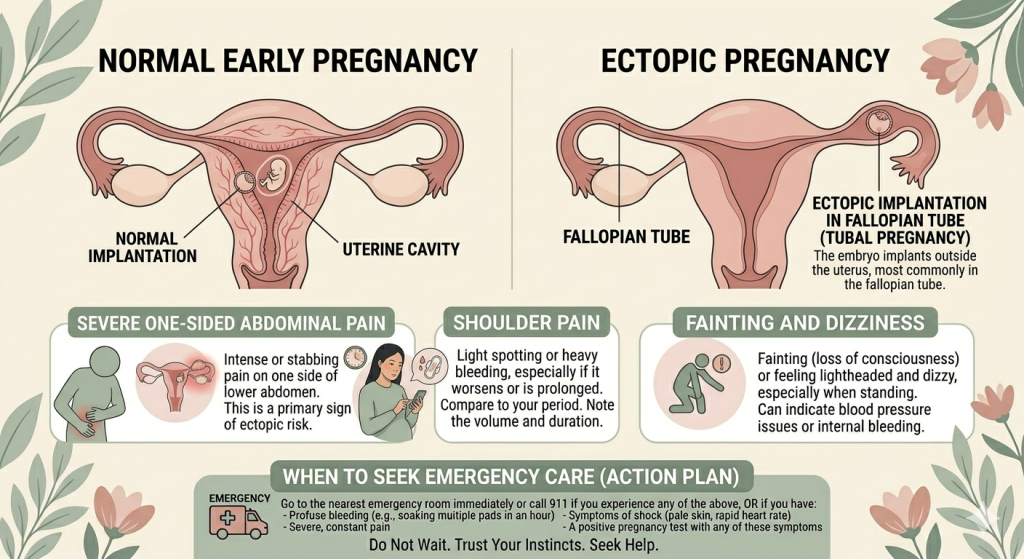
The most important thing to know is this: an ectopic pregnancy needs urgent medical attention. It happens when a pregnancy starts growing outside the womb, most often in a fallopian tube, and it cannot continue normally. Some early symptoms can seem mild at first, but certain warning signs mean you should get help straight away. (ACOG)

Quick answer

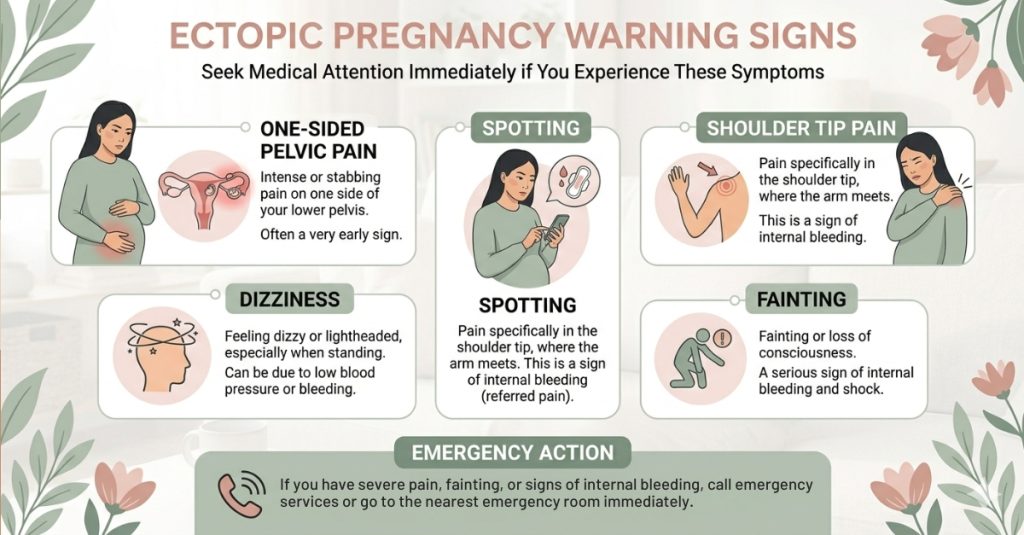
An ectopic pregnancy can cause symptoms such as one-sided lower tummy or pelvic pain, vaginal bleeding or brown discharge, shoulder tip pain, dizziness, or fainting. Symptoms often develop between 4 and 12 weeks of pregnancy. Get urgent medical help if you have severe pain, shoulder pain, feel faint, or have bleeding with worsening pain. (nhs.uk)

What is it?

An ectopic pregnancy is a pregnancy that implants outside the uterus, most commonly in a fallopian tube. Because the pregnancy is not growing in the right place, it cannot develop normally and can become dangerous if it causes the tube to stretch or rupture. The NHS notes that ectopic pregnancy does not always cause symptoms straight away, and some cases are found during assessment or a scan. (nhs.uk)

Can You Be Pregnant and Still Have Spotting?

Why does it happen?

It happens when a fertilised egg gets delayed or blocked on its way to the uterus and implants somewhere else instead. ACOG explains that past damage or changes in the fallopian tubes can raise the risk, although ectopic pregnancy can also happen in women with no clear risk factors. The key point for readers is not to blame themselves. This is a medical emergency, not something caused by everyday mistakes. (ACOG)
Medically responsible reminder: if you have a positive pregnancy test and pain or bleeding, do not assume it is “just one of those things.” Early assessment matters. (NICE)

(ACOG)

Signs or symptoms

Symptoms can vary, and some women may have very few signs at first. Common symptoms include:

  • Pain low down in the tummy or pelvis, often on one side
  • Vaginal bleeding or brown watery discharge
  • A missed period or other pregnancy symptoms
  • Discomfort when peeing or pooing
  • Shoulder tip pain
  • Dizziness, weakness, or fainting (nhs.uk)

One of the most important warning signs is one-sided pain that does not feel like an ordinary cramp. NHS guidance says the pain may come on suddenly or gradually and may be constant or come and go. Shoulder tip pain is another red flag. It is unusual, and in the context of possible pregnancy, it can suggest internal bleeding. (nhs.uk)

If the tube ruptures, symptoms may become dramatic very quickly. Signs of rupture can include:

  • a sudden, sharp, intense tummy pain
  • extreme dizziness
  • fainting or collapse
  • looking very pale
  • feeling very unwell (nhs.uk)

Medically responsible reminder: severe pain, fainting, or shoulder pain in a possible pregnancy is an emergency. Do not wait to “see if it settles.” (ACOG)

What Does Implantation Bleeding Look Like?

What is normal, and when to pay attention

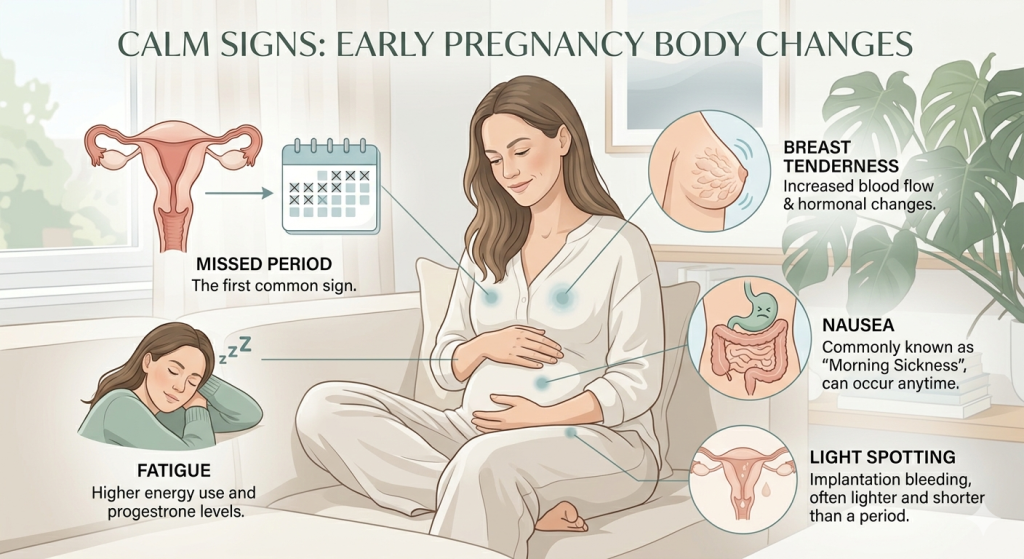
Mild cramping, light spotting, and early pregnancy discomfort can happen in a normal pregnancy, a miscarriage, or an ectopic pregnancy. That is why symptoms should be considered in context, not dismissed based on a single sign. NICE guidance highlights pain, bleeding, and a missed period as symptoms that can point to ectopic pregnancy and should be assessed, especially if symptoms are worsening. (CKS)

Pay closer attention if you notice:

  • pain mainly on one side
  • bleeding with pain
  • brown watery discharge
  • shoulder tip pain
  • dizziness or feeling faint
  • worsening symptoms after a positive test or missed period (nhs.uk)

What is not normal is assuming that light bleeding means it cannot be serious. Some ectopic pregnancies start with spotting that seems minor. Others cause almost no symptoms until they become urgent. (Ectopic Pregnancy Trust)

When to speak to a doctor

Speak to a doctor, midwife, GP, early pregnancy assessment unit, or urgent care service as soon as possible if you think you might be pregnant and have pain, bleeding, or unusual symptoms. The NHS advises getting medical advice if you have tummy pain and think you may be pregnant. (nhs.uk)

Get urgent or emergency help immediately if you have:

  • severe tummy or pelvic pain
  • shoulder tip pain
  • heavy bleeding
  • extreme dizziness
  • fainting or collapse
  • sudden worsening symptoms (ACOG)

Medically responsible reminder: Ectopic pregnancy can become life-threatening if it ruptures. Fast assessment can save lives and may also reduce complications. (RCOG)

Key takeaway

Ectopic pregnancy is not common, but it is serious. The main warning signs are one-sided pelvic or tummy pain, vaginal bleeding or brown discharge, shoulder tip pain, dizziness, and fainting, especially after a missed period or positive pregnancy test. Trust your instincts. If something feels wrong, get checked early. If symptoms are severe or sudden, seek emergency help right away. (nhs.uk)

Cramping in Early Pregnancy: What Is Normal and What Is Not?

FAQs

What are the first signs of an ectopic pregnancy?

Early signs often include one-sided lower tummy pain, vaginal bleeding or spotting, and a missed period. Some women also notice brown discharge or pain when going to the toilet. (nhs.uk)

Can an ectopic pregnancy feel like a normal pregnancy at first?

Yes. Some women still have the usual early pregnancy symptoms, such as a positive test, nausea, or breast tenderness, before warning signs appear. (ACOG)

Is shoulder pain a sign of ectopic pregnancy?

It can be. Shoulder tip pain is a recognised warning sign and may suggest internal bleeding, especially when it happens with pain or bleeding in early pregnancy. (nhs.uk)

How early do ectopic pregnancy symptoms start?

Symptoms often appear between 4 and 12 weeks of pregnancy, though timing can vary. (nhs.uk)

When should I go to the hospital for a possible ectopic pregnancy?

Go urgently if you have severe pain, shoulder pain, fainting, extreme dizziness, or sudden worsening symptoms. (Mayo Clinic)

Medical Disclaimer

This article is for general educational purposes only and is not a substitute for medical advice, diagnosis, or treatment. If you think you may have symptoms of an ectopic pregnancy, seek prompt medical advice. Get emergency help straight away if you have severe pain, shoulder pain, fainting, heavy bleeding, or feel suddenly very unwell.

Leave a Comment

Your email address will not be published. Required fields are marked *