


If you’ve been asking, “Can I get pregnant during perimenopause, you are not overthinking it. Many women notice their periods becoming irregular, start having hot flushes or mood changes, and assume pregnancy is no longer possible. It is a very common and important question.
Yes, can you get pregnant during perimenopause has a simple answer: you still can. Pregnancy becomes less likely as fertility declines, but it is still possible until menopause is confirmed. Menopause is only confirmed after 12 months in a row without a period or spotting. (National Institute on Ageing)
That means that even if you are still having periods, even if they are far apart or unpredictable, ovulation may still occur sometimes. (Mayo Clinic)
What is it?
Perimenopause is the transition leading up to menopause. It is the stage when hormone levels begin to shift and periods often become less predictable. It can last several years, and many women start noticing changes sometime between their 40s and 50s. (National Institute on Ageing)
Perimenopause symptoms: How to tell if the changes you’re noticing are typical
What does perimenopause not mean?
Perimenopause does not mean fertility has ended overnight. This is where the question of whether you can get pregnant during perimenopause matters so much. Your ovaries may not release an egg every month, but they can still release one in some months. If sperm are present around that time, pregnancy can happen. (ACOG)
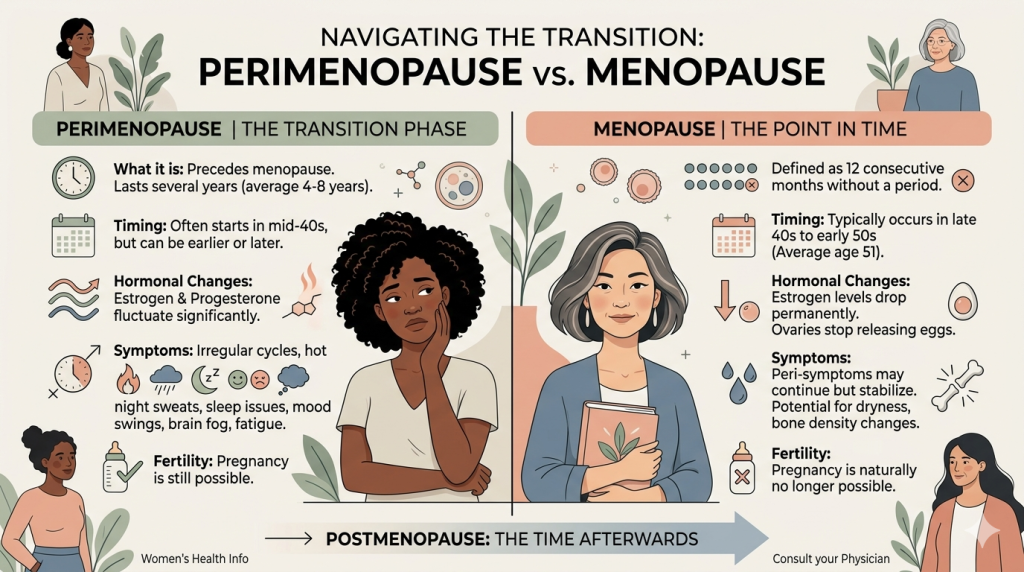
Menopause vs perimenopause
Perimenopause
- Hormones rise and fall unpredictably
- Periods may be irregular, lighter, heavier, closer together, or farther apart
- Pregnancy is still possible (Mayo Clinic)
Menopause
- Reached after 12 full months with no period or spotting
- Natural pregnancy is no longer possible after menopause is complete (National Institute on Ageing)
Why does it happen?
The short version is that fertility drops before it disappears.
During perimenopause, the ovaries make less oestrogen and progesterone, and ovulation becomes less regular. Some months, an egg is released. Other months it is not. That is why the answer to can you get pregnant during perimenopause is yes, but less predictably than before. (ACOG)
Why is confusion so common?
A lot of women assume that irregular periods mean they are “basically done.” But irregular does not mean impossible. In fact, one of the trickiest things about this stage is that you may go weeks or even months without a period and still ovulate later. (Mayo Clinic)
A practical point about contraception
If you do not want to become pregnant, contraception still matters during perimenopause. Guidance from the National Institute on Ageing and Mayo Clinic advises using birth control until you have gone a full 12 months without a period. NHS guidance also notes that if you are over 50, contraception is usually advised for 1 year after your last period, and for 2 years if you are under 50. HRT is not a form of contraception. (National Institute on Ageing)
You May want to read this: Heavy Periods in Your 40s: Is This Normal?
Signs or symptoms
There is no single symptom that tells you if you can get pregnant during perimenopause, but there are signs that tell you fertility may still be possible.
Common perimenopause symptoms
- Irregular periods
- Heavier or lighter bleeding
- Skipped periods
- Hot flushes
- Night sweats
- Sleep problems
- Mood changes
- Vaginal dryness
- Changes in sex drive (Mayo Clinic)
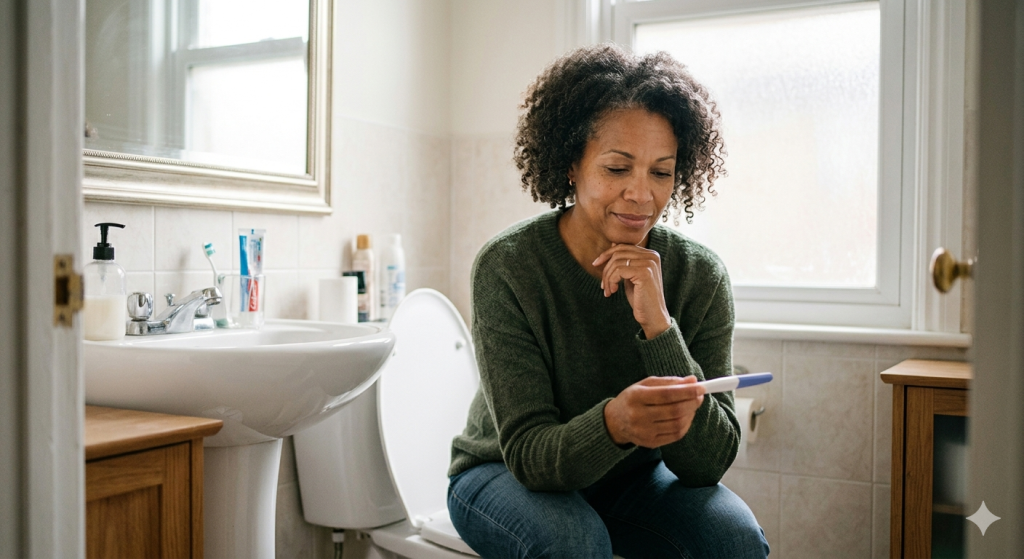
Signs of pregnancy could still be possible.
You are still having periods.
Even if they are unpredictable, periods usually indicate that ovulation could still occur. (Mayo Clinic)
You have had sex without contraception.
This is especially relevant if you assumed you were “too old” or “too close to menopause” to conceive.
You have pregnancy-type symptoms.
These can include:
- nausea
- breast tenderness
- missed period
- tiredness
- needing to urinate more often
The tricky part is that some early pregnancy symptoms can overlap with perimenopause symptoms. If there is any doubt, take a pregnancy test. That is the safest next step.
What is normal, and when to pay attention
This stage can be messy, and a lot of change can still be normal.
Usually normal in perimenopause
- cycles that are shorter or longer than before
- skipped periods
- flow that is a bit heavier or lighter
- hot flushes, sleep changes, and mood changes (Mayo Clinic)
Pay attention if you notice
Bleeding after 12 months with no periods
Bleeding after menopause should always be checked. (Mayo Clinic)
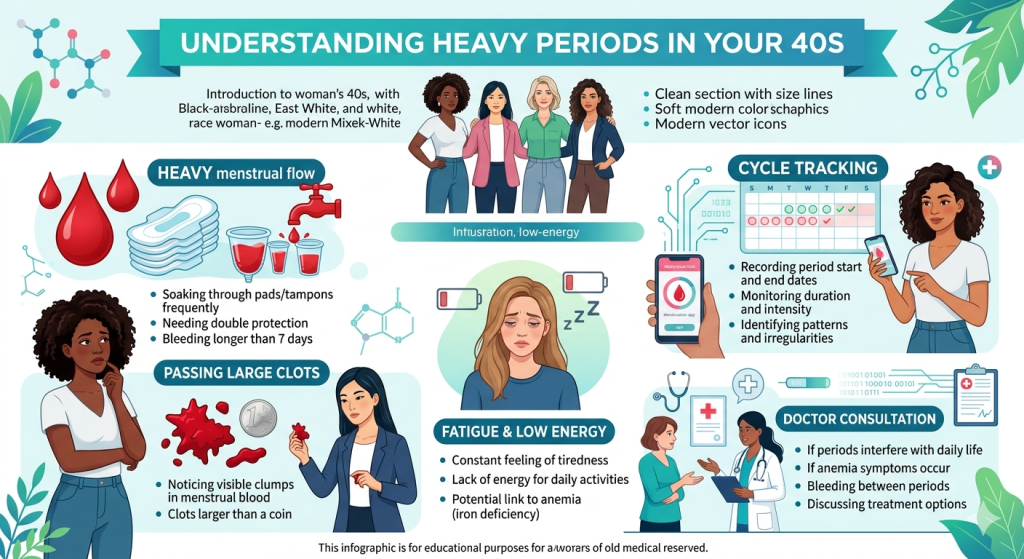
Very heavy bleeding
For example:
- soaking through pads or tampons quickly
- bleeding longer than 7 days
- passing large clots
- bleeding that leaves you dizzy, weak, or very tired
Heavy bleeding is not something to brush off. ACOG advises that abnormal bleeding should be evaluated. (ACOG)
New symptoms that do not feel right
Severe pelvic pain, unusual discharge, fainting, or sudden worsening symptoms need medical review.
When to speak to a doctor
If the question of whether you can get pregnant during perimenopause is affecting your choices, peace of mind, or symptoms, it is worth speaking to a doctor or sexual health clinician.
Book an appointment if:
- you think you might be pregnant
- you need contraception advice during perimenopause
- your symptoms are affecting sleep, mood, sex, or daily life
- your bleeding is very heavy, very frequent, or happens after sex
- you bleed after 12 months without a period
- you are using HRT and are unsure whether you still need contraception (Mayo Clinic)
HRT and contraception: Do you still need birth control during menopause transition?
A medically responsible reminder
Do not assume missed periods in your 40s or 50s are automatically “just menopause.” Pregnancy, thyroid problems, fibroids, polyps, and other causes can also affect bleeding. If something feels off, get checked.
Key takeaway
So, can you get pregnant during perimenopause? Yes, you can. Fertility is lower, but it is not zero until menopause is confirmed. If you do not want a pregnancy, keep using contraception. If you do want pregnancy, do not assume the opportunity has completely passed, but do speak to a clinician sooner rather than later for tailored advice.
The main thing is this: irregular periods can be part of perimenopause, but they are not reliable birth control.
FAQs
Can you get pregnant during perimenopause if your periods are irregular?
Yes. Irregular periods often mean ovulation is less predictable, not impossible. You can still release an egg some months. (ACOG)
Can you get pregnant during perimenopause after missing periods for a few months?
Yes. Missing a few periods does not confirm menopause. Menopause is only confirmed after 12 straight months without a period or spotting. (National Institute on Ageing)
Do you need contraception during perimenopause?
Yes, if you do not want to get pregnant. Continue until menopause is confirmed. HRT does not work as a contraception. (National Institute on Aging)
Can pregnancy symptoms look like perimenopause?
They can. Tiredness, missed periods, breast tenderness, and mood changes can overlap. If pregnancy is possible, take a test.
When are you no longer fertile?
Natural pregnancy is no longer possible after menopause is complete, which means 12 months with no period or spotting. (National Institute on Ageing)
Medical disclaimer
This article is for general education and should not replace medical advice, diagnosis, or treatment. If you think you may be pregnant, have heavy or unusual bleeding, or are worried about perimenopause symptoms, speak to a doctor or qualified women’s health clinician.