


Yes, many perimenopause symptoms are normal and happen because hormone levels start fluctuating in the years before menopause. Common changes include irregular periods, hot flushes, night sweats, sleep problems, vaginal dryness, mood changes, and brain fog. But symptoms that are very heavy, severe, unusual for you, or happening before age 45 should be discussed with a doctor. (ACOG)
What is Perimenopause?
Perimenopause is the transition leading up to menopause. It is the stage when your ovaries start producing hormones less steadily, especially oestrogen, and your cycle begins to change. Menopause itself is reached when you have gone 12 months in a row without a period. (Mayo Clinic)
Bleeding Between Periods: Common Causes and When to Get Checked
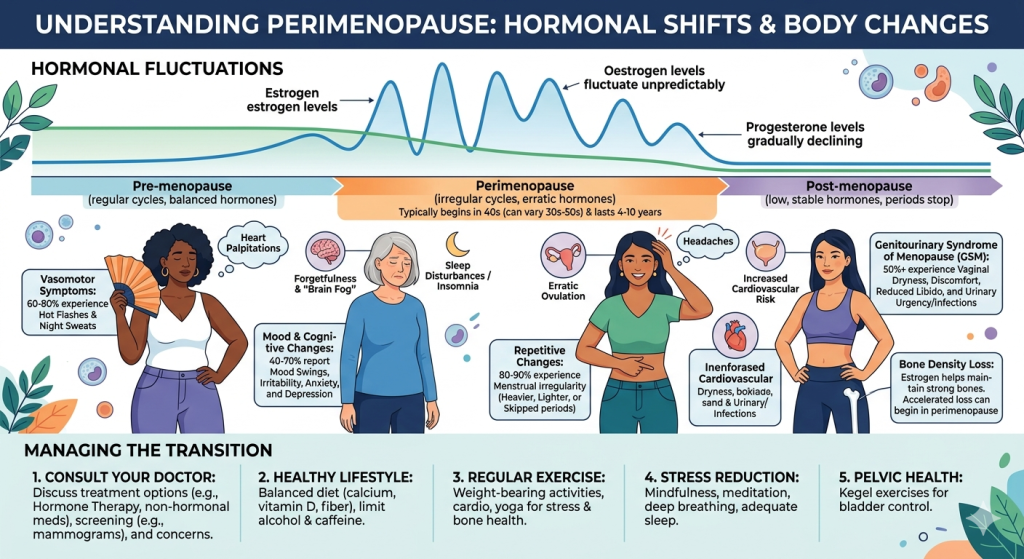
What makes perimenopause different from menopause?
I: Perimenopause
- Your hormones are still changing up and down
- You may still have periods, but they may be irregular
- Perimenopause symptoms may come and go
II: Menopause
- You have not had a period for 12 months
- Hormone levels have declined more permanently
- Some symptoms may continue, while others settle over time
For many women, the first clue is not a hot flush. It is a change in the usual pattern of periods. Cycles may become shorter, longer, lighter, heavier, closer together, or more widely spaced. (ACOG)
Why does it happen?
The reason perimenopause symptoms happen is fairly simple, even if the experience does not feel simple at all: hormone levels begin to fluctuate rather than following the smoother rhythm you were used to before. Oestrogen can rise and fall unpredictably, and ovulation becomes less regular. That is why symptoms can feel inconsistent from one month to the next. (Mayo Clinic)
1. Why symptoms can feel confusing
i: Hormone changes are not steady
You might feel fine for weeks, then suddenly have poor sleep, breast tenderness, anxiety, or a late period. That unpredictability is part of why perimenopause symptoms can be easy to second-guess. (Mayo Clinic)
ii: Not everyone gets the same symptoms
Some women mainly notice cycle changes. Others feel hot flushes, brain fog, vaginal dryness, or mood shifts first. Some have very few symptoms. (nia.nih.gov)
Signs or symptoms
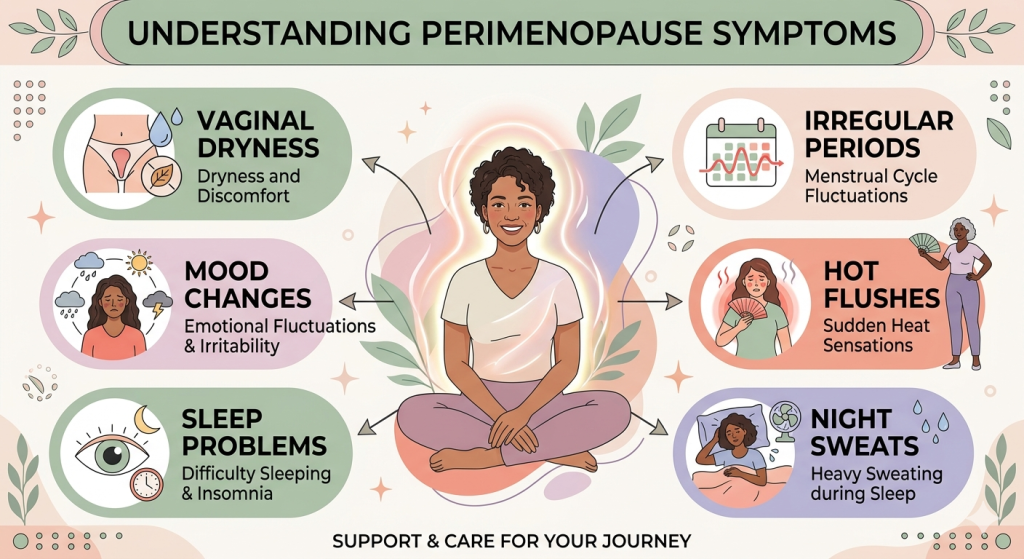
There is a range of typical perimenopause symptoms, and no one woman will have all of them.
I: Common perimenopause symptoms
II: Changes to your periods
- Periods becoming irregular
- The flow becomes lighter or heavier
- Skipping periods
- Periods coming closer together or further apart (ACOG)
III: Body symptoms
- Hot flushes
- Night sweats
- Trouble sleeping
- Vaginal dryness
- Discomfort during sex
- Reduced libido
- Urinary symptoms such as urgency or recurrent discomfort (Mayo Clinic)
IV: Mood and thinking changes
- Anxiety
- Low mood or irritability
- Mood swings
- Trouble concentrating
- Memory lapses or “brain fog” (nhs.uk)
A helpful thing to remember
Typical perimenopause symptoms do not always arrive all at once. You may notice one or two changes first, especially irregular bleeding or sleep disruption, before other symptoms appear. (ACOG)
What Are the First Signs of Menopause? Early Symptoms to Notice
What is normal, and when to pay attention
Many women want to know what counts as “normal.” In general, perimenopause symptoms are considered typical when they fit the pattern of hormonal transition and are not causing signs of another condition that needs separate assessment. (Mayo Clinic)
1. Typical changes that are often part of perimenopause
- Periods becoming less predictable
- Hot flushes that come and go
- Sleep becoming lighter or more broken
- Vaginal dryness
- Mood shifts that seem linked to cycle changes
- Mild memory or concentration difficulties (ACOG)
2. Changes that deserve more attention
Even when perimenopause symptoms are common, some symptoms should not be brushed aside.
i. Pay attention if you have
- Very heavy bleeding
- Bleeding after sex
- Bleeding after 12 months without a period
- Severe pelvic pain
- Symptoms starting before age 45
- Symptoms are so disruptive that they affect work, sleep, mood, or daily life.
A useful practical step is to track your cycle and symptoms for a few months. Note when your period starts, how heavy it is, whether you wake at night sweating, and how your mood or sleep changes. Patterns can make appointments much more productive.
Do you need a blood test?
Often, no. NICE says perimenopause in people aged 45 or over can usually be diagnosed from symptoms and menstrual history rather than hormone blood tests, because hormone levels fluctuate so much during this time. Blood tests may be considered in some women under 45 or if another cause needs to be ruled out. (NICE)
When to speak to a doctor
Speak to a doctor if your perimenopause symptoms are troubling you, feel out of character, or leave you unsure whether this is really a hormonal change. You do not need to wait until symptoms become unbearable to ask for help. Effective support and treatment options are available. (Mayo Clinic)
Make an appointment if
- You think you may be in perimenopause and want clarity
- Your bleeding is very heavy, prolonged, or unusual
- You are under 45 and having possible menopausal symptoms
- Your mood is significantly affected
- Sleep problems are wearing you down
- Vaginal dryness or pain during sex is affecting your quality of life (nhs.uk)
Seek urgent medical advice if
- You have bleeding after menopause
- You feel faint, very unwell, or are bleeding heavily
- You have severe pain, chest symptoms, or anything that feels like an emergency
That medically responsible reminder matters here: not every symptom in your 40s is automatically perimenopause. Thyroid problems, anaemia, pregnancy, fibroids, and other health issues can overlap with similar symptoms, which is another reason it is worth getting checked if you are unsure. This is especially important when symptoms are new, intense, or do not fit the usual pattern. (NICE)

Key takeaway
Typical perimenopause symptoms often include changing periods, hot flushes, night sweats, poor sleep, mood changes, vaginal dryness, and brain fog. These shifts are common and real, but that does not mean you have to put up with them so simply. If your symptoms are affecting your well-being, or if something feels off, it is reasonable to speak to a doctor and get support. (ACOG)
FAQs
How do I know if my symptoms are perimenopause or something else?
A pattern of irregular periods plus hot flushes, sleep changes, mood shifts, or vaginal dryness can point to perimenopause. But similar symptoms can happen with other conditions, so it is worth speaking to a doctor if you are unsure. (Mayo Clinic)
What is usually the first sign of perimenopause?
For many women, the first sign is a change in the normal pattern of periods. They may become irregular, heavier, lighter, shorter, or more spaced out. (nhs.uk)
Can perimenopause cause anxiety and brain fog?
Yes. Anxiety, low mood, irritability, and difficulties with memory or concentration are recognised perimenopause symptoms for some women. (nhs.uk)
Are blood tests needed to confirm perimenopause?
Not usually if you are 45 or over and have typical symptoms. Blood tests may be used in some women under 45 or when another cause is being considered. (NICE)
When should I worry about perimenopause symptoms?
Seek medical advice if symptoms are severe, you have very heavy bleeding, bleeding after sex, bleeding after menopause, or symptoms before age 45. (nhs.uk)
Medical disclaimer
This article is for general education only and is not a substitute for personal medical advice, diagnosis, or treatment. If your perimenopause symptoms are severe, unusual, affecting your daily life, or you have heavy bleeding, bleeding after menopause, or symptoms before age 45, please speak to a qualified healthcare professional.