

Introduction
When we are tired, tense, constipated, waking at 3 a.m., or feeling more “wired but exhausted” than usual, it is easy to wonder whether a supplement might help. Magnesium often comes up in women’s health conversations, especially around sleep, stress, PMS, perimenopause, menopause, muscle tension, and bowel changes.
But then the label gets confusing: glycinate, citrate, oxide, malate, threonate. Suddenly, a simple supplement choice feels like a science exam.
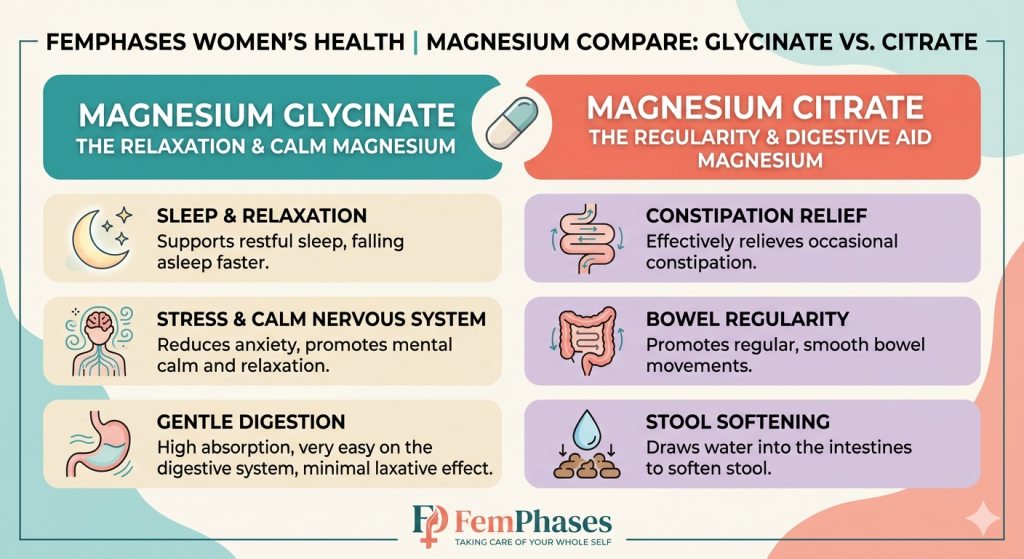
So let’s make magnesium glycinate vs citrate simple. The main difference is this: magnesium glycinate is usually the gentler choice for sleep, stress, and relaxation, while magnesium citrate is usually more useful when constipation is part of the picture. Neither is a cure-all, and the best choice depends on your body, your symptoms, your medical history, and any medication you take.
Magnesium is an essential mineral involved in nerve and muscle function, blood pressure regulation, blood glucose control, and bone health. It is also found naturally in foods such as nuts, seeds, legumes, whole grains, leafy greens, and some dairy products. The NIH Office of Dietary Supplements explains that magnesium is needed for many body processes, including energy production and normal muscle and nerve function.
Useful trusted links: NIH Magnesium Fact Sheet, NHS vitamins and minerals: magnesium, NHS constipation advice, and NICE BNF magnesium citrate.
What Is It?
Magnesium glycinate and magnesium citrate are two forms of magnesium supplements. The “magnesium” part is the mineral. The second part tells us what it is bound to.
Magnesium glycinate is magnesium bound to glycine, an amino acid. It is often chosen by people who want a gentler magnesium option that may support relaxation, sleep, muscle tension, and stress. It is usually less likely to loosen the bowels than citrate, though everyone responds differently.
Magnesium citrate is magnesium bound to citric acid. It is commonly used when constipation is a concern because it can draw water into the bowel, softening stools. That bowel effect can be helpful if you are constipated, but less helpful if you already have loose stools, IBS with diarrhoea, or a sensitive stomach.
When comparing magnesium glycinate vs citrate, think of it this way:
- For sleep and stress: magnesium glycinate is often the better starting point.
- For constipation: magnesium citrate is often the better fit.
- For sensitive digestion: magnesium glycinate may be easier to tolerate.
- For occasional bowel sluggishness: magnesium citrate may be more practical.
- For kidney disease or complex medication use: speak to a clinician first.
The NHS advises that most people can get magnesium from a varied, balanced diet, and that taking too much magnesium from supplements can be harmful. In UK guidance, 400 mg or less per day from supplements is unlikely to cause harm for most adults, but this does not mean every person should take that amount.
Sleep Disturbance Tracker
Why Does It Happen?
Why sleep and stress may worsen
Sleep and stress problems rarely have one single cause. For many women, they are a mixture of nervous system strain, busy life demands, blood sugar dips, caffeine, alcohol, pain, night sweats, anxiety, caregiving, shift work, and hormonal changes.
During perimenopause and menopause, fluctuating oestrogen levels can affect temperature regulation, mood, sleep quality, and night waking. The Office on Women’s Health notes that menopause symptoms can include sleep problems, mood changes, hot flashes, and feeling unlike yourself.
Magnesium is sometimes used because it plays a role in muscle and nerve function. But it is important to be honest: magnesium may support sleep in some people, especially if intake is low, but it will not fix every cause of insomnia, anxiety, hot flashes, trauma, depression, sleep apnoea, thyroid disease, or medication-related sleep disruption.
Why constipation may worsen
Constipation can happen for many reasons, including:
- Low fibre intake
- Not drinking enough fluid
- Low movement or long periods sitting
- Ignoring the urge to open your bowels
- Pregnancy
- Perimenopause or menopause-related routine changes
- Iron tablets
- Opioid painkillers
- Some antidepressants or antihistamines
- Underactive thyroid
- Irritable bowel syndrome
- Pelvic floor dysfunction
This is where magnesium glycinate vs citrate becomes more practical. If the main problem is stress-related poor sleep, glycinate may make more sense. If the main problem is hard stools and infrequent bowel movements, citrate may be more relevant.

Signs and Symptoms
Magnesium supplements are usually discussed when women notice symptoms such as:
- Difficulty falling asleep
- Waking during the night
- Feeling tense, restless, or unable to switch off
- Muscle tightness or cramps
- Headaches or premenstrual tension
- Constipation or hard stools
- Bloating linked with sluggish bowels
- Increased stress sensitivity
- Poor sleep during perimenopause or menopause
- Feeling physically tired but mentally alert at night
Less obvious signs that can overlap with other issues include:
- Irritability
- Low mood
- Brain fog
- Palpitations linked with anxiety or menopause symptoms
- Restless legs
- Fatigue
- Sugar cravings
- Feeling worse after poor sleep
These symptoms are not specific to magnesium deficiency. They can also be linked with low iron, thyroid imbalance, vitamin B12 deficiency, vitamin D deficiency, anxiety, depression, sleep apnoea, blood glucose changes, pregnancy, medication side effects, or menopause-related hormonal changes.
What Is Normal and When to Pay Attention?
This may be common
Some changes are common, especially during stressful seasons, pregnancy, perimenopause, menopause, or big routine changes:
- Occasional constipation after travel, dehydration, or diet changes
- A few nights of poor sleep during stress
- Mild muscle tension after exercise
- Slight bowel changes before a period
- Feeling more sensitive to caffeine or alcohol
- Sleep disruption during hot flashes or night sweats
These are worth monitoring, especially if they repeat.
This needs attention
Please do not assume everything is “just hormones” or “just stress.” Speak to a healthcare professional if you have:
- Constipation that is persistent or not improving
- Blood in your poo
- Unexplained weight loss
- New or sudden bowel habit changes
- Ongoing bloating or abdominal pain
- Tiredness that could suggest anaemia
- Severe anxiety, low mood, or panic symptoms
- Sleep problems that last for weeks
- New palpitations, chest pain, fainting, or shortness of breath
- Pregnancy concerns
- Severe mood changes or thoughts of self-harm
The NHS advises seeing a GP if constipation is not improving with treatment, happens regularly, is linked with blood in the stool, unexplained weight loss, tiredness, abdominal pain, or sudden bowel habit changes.
Evidence-Based Solutions
The safest way to approach magnesium glycinate vs citrate is to start with the symptom you most want to support.
If your main issue is sleep
Magnesium glycinate may be a sensible option to discuss with your pharmacist, nurse practitioner, or doctor. It is generally chosen because it is gentler on the gut and may support relaxation. Some people take it in the evening, often with food if it upsets the stomach.
But sleep support should not stop at supplements. Also look at:
- Caffeine timing
- Alcohol intake
- Screen exposure before bed
- Night sweats or hot flashes
- Stress load
- Blood sugar dips overnight
- Pain
- Restless legs
- Snoring or possible sleep apnoea
Mayo Clinic notes that magnesium is often promoted for sleep. However, the evidence is still limited, and magnesium citrate may have a laxative effect that is not ideal for everyone at bedtime.
If your main issue is stress
Magnesium glycinate is often preferred when stress, tension, or feeling overstimulated is the main concern. Still, it works best as part of a broader nervous system plan, not as a replacement for rest, support, therapy, medication when needed, or lifestyle changes.
Helpful foundations include:
- Regular meals with enough protein
- Reducing excess caffeine
- Gentle daily movement
- Breathing or grounding exercises
- Time outside
- Counselling or psychological support when stress is heavy
- Tracking symptoms across the cycle or menopause transition
If your main issue is constipation
Magnesium citrate may be more useful because it can soften stools and encourage bowel movement. However, it can also cause diarrhoea, cramping, or urgency, especially at higher doses.
Constipation support should also include:
- Increasing fibre gradually
- Drinking enough fluid
- Moving daily
- Responding to bowel urges
- Reviewing constipating medication with a clinician
- Considering pelvic floor issues, if you strain but cannot empty well
When comparing magnesium glycinate vs citrate for constipation, citrate usually wins. When comparing them for calm sleep, glycinate is usually the gentler starting choice.
Medical Interventions
A doctor or nurse may recommend checking for underlying causes if symptoms are ongoing, severe, new, or unusual. Depending on your situation, this may include:
- Full blood count to check for anaemia or infection
- Ferritin or iron studies
- Thyroid function tests
- Vitamin B12, folate, or vitamin D testing
- Kidney function tests before certain supplements or laxatives
- Medication review
- Pregnancy test if relevant
- Menopause assessment
- Bowel investigations if there are red flags
- Mental health support if anxiety, depression, or sleep disruption is affecting daily life
Magnesium supplements can interact with some medicines, and people with kidney problems need extra caution because the body may struggle to clear excess magnesium. NICE’s BNF includes renal impairment and monitoring considerations for magnesium citrate.

Holistic and Lifestyle Support
Before or alongside supplements, support your magnesium intake through food:
- Pumpkin seeds
- Almonds and cashews
- Black beans and lentils
- Spinach and leafy greens
- Whole grains
- Dark chocolate in small amounts
- Yoghurt or milk
- Fortified cereals
For sleep and stress, pair this with:
- A consistent wind-down routine
- Morning daylight
- Strength training two to three times weekly if suitable
- Gentle stretching
- Reduced alcohol
- Caffeine cut-off after late morning or early afternoon
- Symptom tracking
For constipation, focus on:
- Fibre from oats, beans, vegetables, berries, chia, flaxseed, and whole grains
- Fluid intake
- Daily walking
- Regular toilet routine
- Avoiding long-term laxative use without medical advice
When to See a Doctor
Please seek medical advice if symptoms persist, worsen, or feel unusual for you.
Get urgent help for chest pain, shortness of breath, fainting, sudden weakness, severe abdominal pain, black or dark red stool, heavy bleeding, bleeding after menopause, severe mood changes, or thoughts of self-harm.
Speak with a doctor, pharmacist, nurse practitioner, gynaecologist, or endocrinologist before taking magnesium if you:
- Are pregnant or breastfeeding
- Have kidney disease
- Take heart medication, antibiotics, thyroid medication, osteoporosis medication, diuretics, or regular laxatives
- Have severe diarrhoea or dehydration
- Have unexplained bowel changes
- Are taking multiple supplements
Key Takeaway
When it comes to magnesium glycinate vs citrate, the best choice depends on your main symptom.
Choose magnesium glycinate if your main goal is gentle support for sleep, stress, muscle tension, or relaxation. Choose magnesium citrate if constipation is the main issue and you can tolerate a bowel-loosening effect.
Track your sleep, stress, bowel habits, cycle changes, menopause symptoms, medication, caffeine, alcohol, and supplement dose. And if symptoms are new, severe, persistent, or worrying, the safest next step is to speak with a healthcare professional.
Not sure where your symptoms fit? Take the Tools and Quizzes to understand your pattern.
Frequently Asked Questions
1. Is magnesium glycinate or citrate better for sleep?
Magnesium glycinate is often preferred for sleep because it is usually gentler on the stomach and less likely to cause bowel urgency. Magnesium citrate may also help some people, but it can loosen stools.
2. Is magnesium citrate better for constipation?
Yes, magnesium citrate is generally more helpful for constipation because it can draw water into the bowel and soften stools. It should be used carefully, especially if you have kidney problems, diarrhoea, dehydration, or are on medication.
3. Can I take magnesium glycinate and citrate together?
Some people do, but it is better to avoid stacking supplements unless advised by a clinician. Taking multiple forms can increase the risk of diarrhoea, cramps, and excessive magnesium intake.
4. What time should I take magnesium?
For sleep, many people take magnesium glycinate in the evening. For constipation, magnesium citrate may be better earlier in the day, depending on how your bowel responds. Follow product guidance and professional advice.
5. Can magnesium help with menopause symptoms?
Magnesium may support sleep, muscle tension, stress, and bowel regularity, but it does not replace proper menopause care. If hot flashes, night sweats, mood changes, or sleep disruption are affecting life, speak with a clinician about treatment options.
6. Who should avoid magnesium supplements?
People with kidney disease, significant heart conditions, severe diarrhoea, dehydration, or complex medication routines should get medical advice first. Pregnant and breastfeeding women should also check with a healthcare professional.
7. How do I know if magnesium is working?
Track one main symptom for two to four weeks, such as sleep quality, bowel frequency, stool softness, muscle tension, or stress levels. Stop and seek advice if you develop diarrhoea, weakness, dizziness, an irregular heartbeat, or any other symptoms that concern you.
Medical Disclaimer
This article is for educational purposes only and does not replace personalised medical advice, diagnosis, or treatment. If you are worried about your symptoms, if your symptoms are getting worse, or if something does not feel right in your body, please speak with your doctor, nurse practitioner, gynaecologist, endocrinologist, or another qualified healthcare professional. Seek urgent medical help for severe, sudden, or concerning symptoms.