Introduction
If you have noticed swollen legs after childbirth, you are not alone. Many of us expect bleeding, soreness, feeding challenges, and sleepless nights after having a baby — but puffy feet, tight ankles, or legs that feel heavy can come as a surprise.
Swollen legs after childbirth are often normal, especially in the first few days. Your body is shifting fluid and recovering, which can help reassure new mothers that this is a common part of postpartum recovery.
But there is also an important safety note: sometimes leg swelling can be a sign of something more serious, such as a blood clot or postpartum preeclampsia. Look out for warning signs like redness, warmth, sudden pain, or tenderness in one leg, which require immediate medical attention. The key is knowing the difference between normal postpartum swelling and symptoms that need urgent care.
In this guide, we will walk through what swollen legs after childbirth mean, why they happen, what can help, and exactly when to call your doctor or midwife.
What is it?
Swollen legs after childbirth usually indicate fluid buildup in the lower legs, ankles, or feet. The medical term for this is oedema, which means swelling caused by excess fluid in the body’s tissues.
You might notice:
- Puffy ankles
- Feet that look larger than usual
- Tight shoes or slippers
- Sock marks around your ankles
- Heavy, tired legs
- Swelling that looks worse at the end of the day
- Mild swelling in both legs or feet
This swelling may happen after a vaginal birth or a caesarean birth. It can also feel more noticeable if you had IV fluids during labour, an epidural, a long labour, or a C-section.
For many women, postpartum swelling gradually improves as the body removes excess fluid through urine and sweat. Cleveland Clinic notes that oedema can be reduced by elevating the affected area, moving regularly, and avoiding prolonged sitting or standing. (Cleveland Clinic)
C-Section Recovery Symptoms: What’s Normal and When to Call a Doctor
Why does it happen?
1. Your body held extra fluid during pregnancy
During pregnancy, your blood volume increases to support the baby, placenta, and your changing body. Your tissues also hold more fluid. After birth, that extra fluid does not disappear immediately.
Instead, your body has to clear it slowly. This is why some women notice they pee more often or sweat more in the first week after birth.
2. Hormonal changes affect fluid balance
After delivery, your hormone levels shift quickly. These hormonal changes can affect how your body manages salt, water, and blood vessel tone.
This can make your legs, ankles, and feet look puffier for a short time.
3. IV fluids can add to swelling
If you received IV fluids during labour, induction, epidural care, or a C-section, your body may have extra fluid to process afterwards.
This does not mean anything went wrong. It simply means your body may take a few days to rebalance.
4. Less movement slows circulation
After childbirth, it is normal to rest more, move more slowly, or spend long periods feeding and holding your baby. But sitting or lying in one position for too long can cause fluid to pool in the legs and feet.
Gentle movement helps blood and other fluids return to the heart.
5. The postpartum period carries a higher clot risk
This is the part we want to take seriously without causing panic. Pregnancy and the weeks after birth naturally increase the risk of blood clots. A clot in a deep vein, often in the leg, is called deep vein thrombosis, or DVT.
The NHS advises urgent medical advice if there is pain, swelling, tenderness, warmth, heaviness, or redness in one leg, especially around the calf. (nhs.uk)
Evidence-Based Solutions
Most mild cases of swollen legs after childbirth improve with simple, safe home care. Supporting circulation and fluid drainage can help you feel more comfortable and confident during your recovery.
Elevate your legs
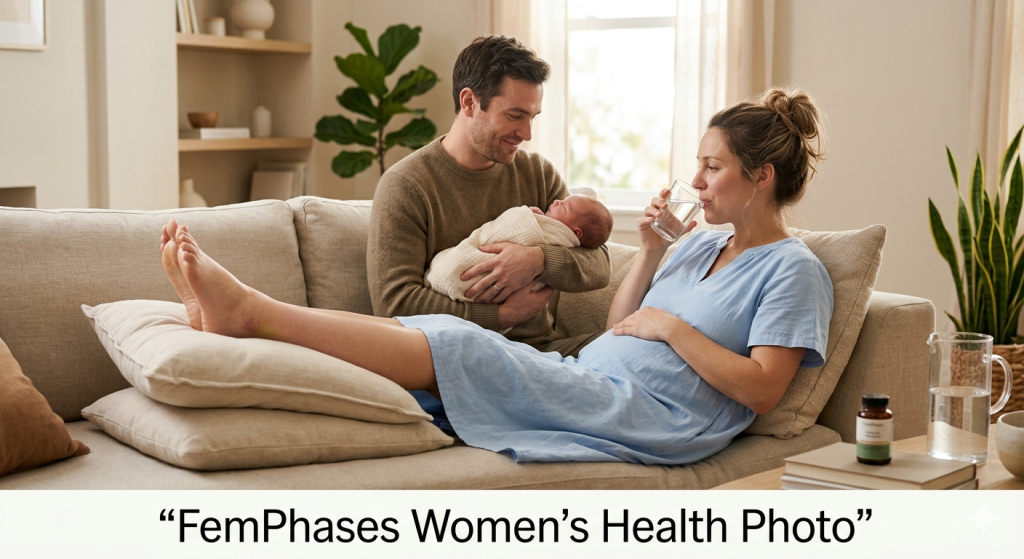
Raise your legs above heart level when you can. Even 15–20 minutes at a time may help.
Try:
- Lying on your side with pillows under your calves
- Propping your feet on cushions while feeding
- Avoiding long periods with your feet hanging down
Move gently and often.
Gentle walking can help your circulation and reduce fluid pooling.
You do not need intense exercise. In the early days, simple movement is enough:
- Walk around the room
- Do ankle circles
- Flex and point your toes
- Take short, slow walks if you feel well enough
If you had a C-section, follow your maternity team’s advice about movement and recovery.
Stay hydrated
Drinking enough water can help your body release excess fluid. Dehydration can sometimes cause the body to retain fluid.
Aim for regular fluids, especially if you are breastfeeding, sweating at night, or recovering from blood loss.
Avoid standing still for too long.
Standing in one place can make swelling worse. If you need to stand, try shifting your weight, walking for a minute, or doing gentle calf raises.
Consider compression socks – but ask first.
Compression socks may help some women, especially if swelling is mild and both legs are affected. But they are not suitable for every situation.
Do not use compression socks as a substitute for medical care if one leg is painful, red, hot, or much more swollen than the other.
Medical Interventions
Most swollen legs after childbirth do not need medication. However, medical care is important if your symptoms suggest a possible blood clot, a complication of high blood pressure, an infection, or a heart-related issue.
Depending on your symptoms, a doctor or midwife may check:
- Blood pressure
- Urine for protein
- Leg examination
- Blood tests
- Ultrasound scan of the leg if a clot is suspected
- Chest assessment if there is shortness of breath or chest pain
If a blood clot is diagnosed, treatment usually involves blood-thinning medication. If postpartum preeclampsia is suspected, blood pressure medication, monitoring, and sometimes hospital care may be needed.
March of Dimes lists sudden swelling in the legs, hands, or face alongside severe headache, vision changes, upper belly pain, or trouble breathing as possible warning signs of postpartum preeclampsia. (March of Dimes)
Signs or symptoms
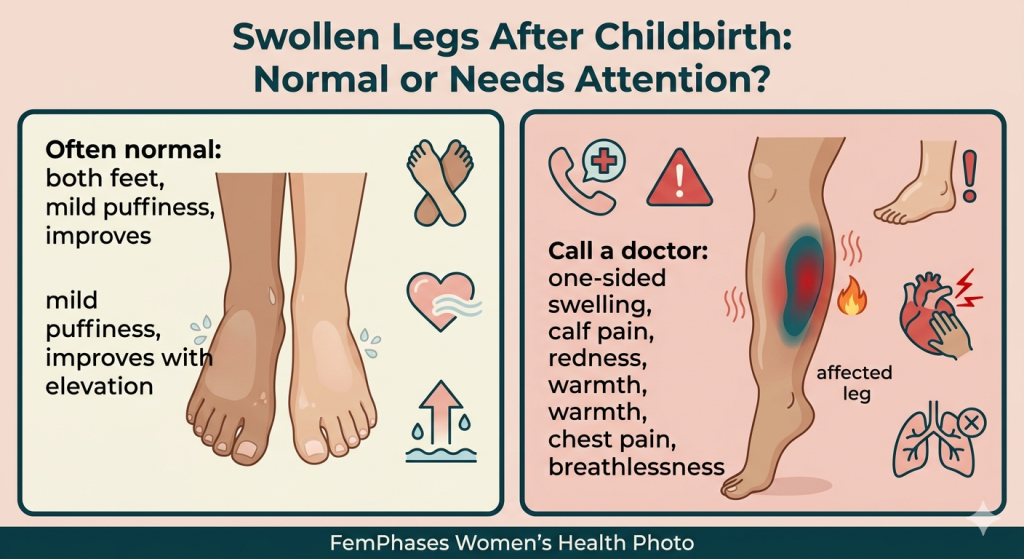
Common symptoms of normal postpartum swelling
Swelling is more likely to be normal when it is:
- Mild to moderate
- In both legs or both feet
- Not very painful
- Worse after standing or sitting for a long time
- Better with elevation and gentle movement
- Gradually improving over several days
Symptoms that need attention
Pay attention if swelling is:
- Mostly in one leg
- Painful or tender
- Red, hot, or warm to the touch
- Sudden or rapidly worsening
- Associated with chest pain or breathing difficulty
- Accompanied by headache, vision changes, or upper abdominal pain
The CDC lists severe swelling, redness, or pain in a leg or arm as an urgent maternal warning sign during pregnancy and up to six weeks after birth. (CDC)
What is normal, and when to pay attention
What’s usually normal
Swollen legs after childbirth are often normal when both feet or ankles are puffy, and you otherwise feel well.
This type of swelling often improves as your body clears extra fluid. You may notice more urination or sweating, especially at night.
Worth monitoring
Keep an eye on swelling if:
- It is not improving after several days
- It feels uncomfortable or heavy
- Your shoes still do not fit after one to two weeks
- You had high blood pressure in pregnancy
- You had a C-section or limited mobility
- You have a personal or family history of blood clots
What’s not normal
Swelling is not something to ignore if it comes with pain, redness, warmth, shortness of breath, chest pain, fainting, severe headache, or vision changes.
In those cases, it is safer to seek urgent care.
Holistic/Lifestyle Changes
Eat balanced, nourishing meals.
You do not need a strict “anti-swelling diet,” especially while recovering from birth. Focus on steady nourishment.
Helpful choices include:
- Protein-rich foods such as eggs, beans, fish, chicken, yoghurt, tofu, or lentils
- Fruits and vegetables for potassium and fibre
- Whole grains for energy
- Iron-rich foods, if you have blood loss
- Plenty of fluids
Go easy on very salty foods.
Salt is not “bad,” and postpartum recovery is not the time for extreme restriction. But very salty processed foods may make fluid retention feel worse for some people.
A gentle approach is enough: choose fresh, balanced meals when possible.
Rest, but change positions
Rest matters deeply after birth. But try not to stay in one position for hours. Feeding, contact naps, and recovery can make this difficult, so keep it simple.
Every so often:
- Rotate your ankles
- Stretch your calves
- Stand up slowly
- Walk to the bathroom or kitchen
- Elevate your feet while resting
Ask for help
This may sound small, but it matters. If swollen legs after childbirth are making you uncomfortable, ask someone to bring water, prepare food, hold the baby while you shower, or help you rest with your feet elevated.
Recovery is not meant to be done alone.
When to See a Doctor
Please get in touch with your doctor, midwife, maternity triage, or urgent care service if you notice any of the following:
- Swelling in one leg more than the other
- Calf pain, tenderness, redness, warmth, or heaviness
- Pain that gets worse when walking or flexing your foot
- Sudden or severe swelling
- Swelling with a severe headache
- Blurred vision, flashing lights, or seeing spots
- Pain in the upper right abdomen or shoulder
- Shortness of breath
- Chest pain
- Coughing blood
- Feeling faint, clammy, confused, or very unwell
- Blood pressure concerns or a history of preeclampsia
Seek emergency help immediately for chest pain, difficulty breathing, fainting, or symptoms that feel sudden and severe. March of Dimes also advises urgent care for chest pain, trouble breathing, signs of shock, or symptoms that make you feel something is seriously wrong after birth.
Key takeaway
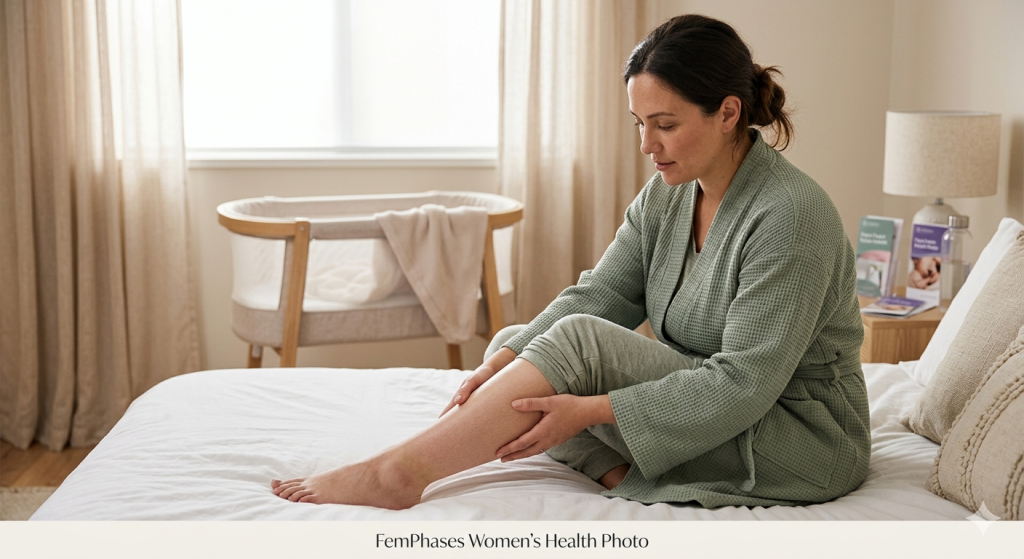
Swollen legs after childbirth are often a normal part of postpartum recovery, especially when both legs or feet are mildly swollen, and the swelling gradually improves.
The most helpful steps are simple: elevate your legs, drink fluids, move gently, rest, and avoid prolonged inactivity.
But trust your instincts. If the swelling is one-sided, painful, red, hot, sudden, or comes with chest pain, breathlessness, headache, vision changes, or feeling very unwell, seek medical advice urgently.
Postpartum recovery is full of changes, but you do not have to guess your way through worrying symptoms.
Frequently Asked Questions
1. How long do swollen legs after childbirth last?
For many women, swollen legs after childbirth improve within several days to about two weeks. It depends on pregnancy fluid retention, IV fluids, birth type, mobility, and overall recovery.
If swelling is worsening, painful, or not improving, contact your healthcare provider.
2. Are swollen feet normal after a C-section?
Yes, swollen feet and legs can happen after a C-section, especially if you received IV fluids or are moving less during recovery.
However, C-section recovery can involve reduced mobility, which may increase clot risk. Call your doctor if one leg is more swollen, painful, red, or warm.
3. Can postpartum swelling be a sign of preeclampsia?
Yes, it can be. Postpartum preeclampsia can happen after birth, even if your pregnancy seemed normal.
Swelling is more concerning if it is sudden or comes with headache, vision changes, upper abdominal pain, nausea, shortness of breath, or high blood pressure symptoms.
4. What helps swollen legs after childbirth go down?
Gentle walking, leg elevation, hydration, ankle movements, rest, and avoiding long periods of standing or sitting can help. Compression socks may help some women, but check with a healthcare professional first if you have pain or one-sided swelling.
5. When should I worry about one swollen leg after birth?
One swollen leg after birth needs medical advice, especially if it is painful, red, warm, tender, or heavier than the other leg. These can be signs of a blood clot and should be checked urgently.
6. Can breastfeeding cause swollen legs?
Breastfeeding itself does not usually cause swollen legs, but the postpartum period involves hormonal shifts, fluid changes, sweating, increased thirst, and long sitting periods during feeds. These can make swelling more noticeable.
7. Should I massage swollen legs after childbirth?
Gentle touch may feel soothing, but avoid deep massage if one leg is painful, red, hot, or more swollen than the other. If a clot is possible, deep massage is not safe. Get medical advice first.
Medical disclaimer
This article is for general education only and does not replace personalised medical advice, diagnosis, or treatment. If you have severe swelling, one-sided leg pain, chest pain, shortness of breath, vision changes, severe headache, or feel that something is not right after childbirth, contact your doctor, midwife, maternity triage, emergency services, or local urgent care provider immediately.