

For years, every change in my body, confidence and life seemed to come with the same instruction: get back to who you were. At 45, I began wondering why I was still trying to return to a woman who no longer existed.
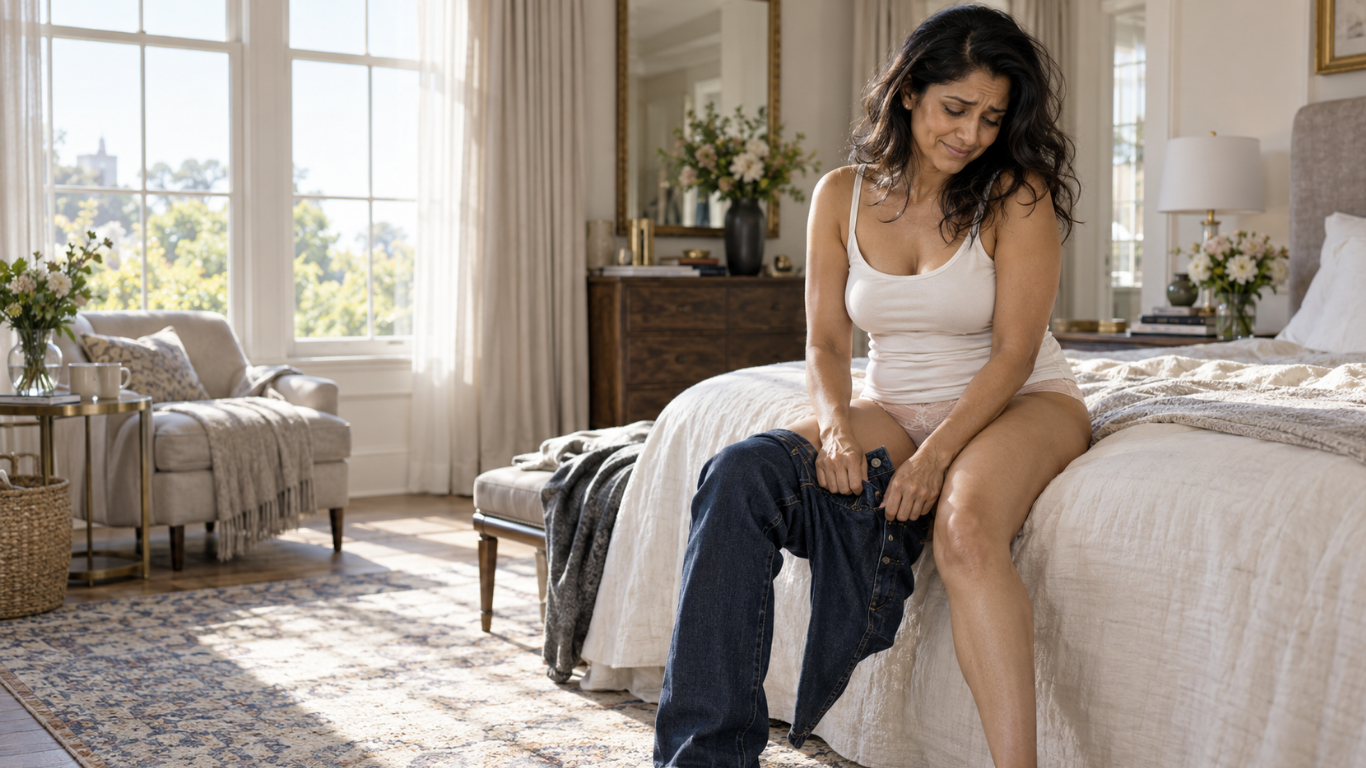
I found the jeans at the back of a drawer I had been avoiding for nearly two years. Dark denim. High waist. Size 10.
I held them up by the waistband and immediately knew what I’d do.
Try them on. Not because I particularly liked them. Not because I needed jeans. I already owned three pairs that fitted perfectly well.
These jeans had another job. They were evidence.
I stepped into them, pulled them over my thighs and got them almost to my hips before the negotiation began.
I sucked in.
I wriggled.
I lay backwards on the bed, which is a humiliating position from which to conduct any serious assessment of your life.
The button remained nearly two inches from its destination.
For a few seconds, I stared at the ceiling. Then I started laughing.
Not the breezy, accepting laugh of a woman who has achieved perfect peace with her changing body.
It was closer to disbelief.
I was 45 years old, lying flat on my bed, trying to force myself into a pair of trousers simply because they had once belonged to a version of me I had decided I was supposed to recover.
That afternoon, I put them back in the drawer. I was not ready to give them away.
But something had shifted.
For the first time, I wondered whether getting my old self back was even something I wanted.
I had spent years trying to return to myself
My old self was approximately 36. I am not sure when she was officially appointed. There had been younger versions, obviously, but 36 became the age I unconsciously treated as my personal high-water mark.
My body was smaller then. My hair was thicker.
I slept deeply enough to regard insomnia as something other people complained about.
I had more energy after work and could go out on a Thursday evening without spending Friday feeling as though I had crossed several time zones. But it was not only physical.
At 36, I felt certain about things. I was ambitious. Sociable. Efficient. Usually busy. My calendar was full, and I liked it that way.
I had spent years building a life around being someone who coped.
Then, gradually, the machinery started making different noises.
My marriage ended at 42.
It was not explosive. There was no affair, no smashed crockery, no single event dramatic enough to make the story easy to tell.
We had become unhappy in a quiet, organised way.
By the time we separated, we could discuss utility bills more easily than we could discuss each other.
After he moved out, people told me I would feel like myself again.
I believed them.
I wanted to.
I imagined there was a previous version of me waiting patiently beneath the grief, the paperwork, the strange silence of Sunday mornings.
I thought recovery meant retrieving her.
Letting go of your old self can feel like another kind of loss
I began exercising more.
I bought expensive face cream.
I downloaded dating apps, deleted them, downloaded them again.
I said yes to dinners even when I wanted to stay home because the old me had been sociable.
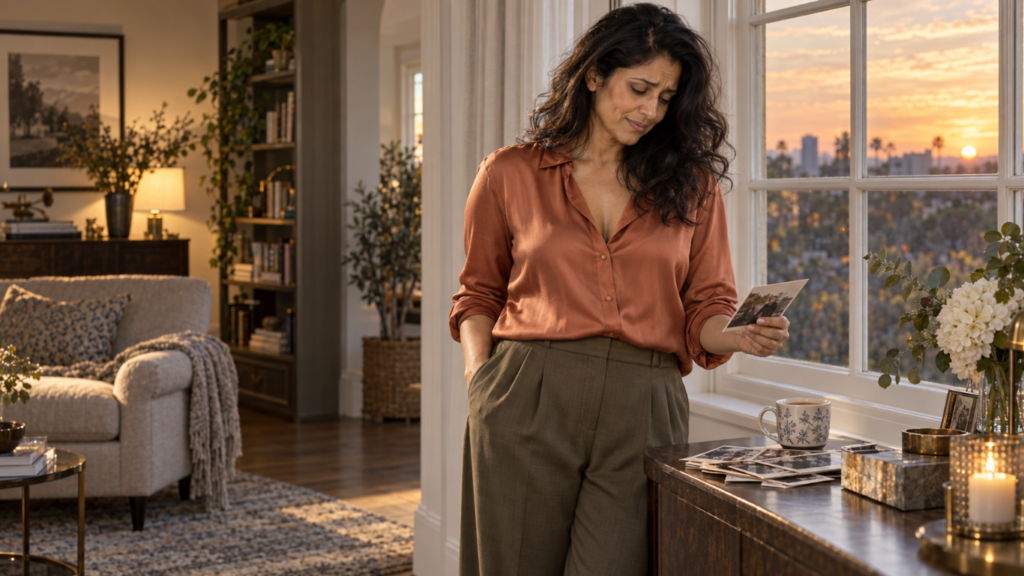
When I found photographs from before the divorce, I examined myself with the forensic attention normally reserved for crime scenes.
Look how happy I looked.
Look at my arms.
Look at my face.
Look at my waist.
Photographs are dangerous witnesses. They can show you what happened without telling you how it felt.
There were pictures in which I looked radiant during periods when I remember feeling lonely.
There were holidays where I appeared relaxed but spent half the week trying not to argue with my husband.
There were versions of my body I now idealised that, at the time, I had criticised relentlessly.
I began to realise I had not actually appreciated the woman I was trying so desperately to become again.
I had merely lost access to her.
That made her precious.
The same thing was happening with my personality.
I missed being spontaneous, but forgot that spontaneity had often been anxiety wearing lipstick.
I missed being needed, although I had spent years resenting how much people relied on me.
I missed my marriage occasionally, but not always the actual marriage.
Sometimes I missed the certainty of having one.
Those are not the same thing.
My body was not the only thing that had changed
At 45, I was uncomfortable with how often conversations about women changing became conversations about appearance.
Yes, my body was different.
My middle had softened.
My periods had become less predictable.
There were mornings when my face looked oddly unfamiliar before coffee, as though somebody had made a few small alterations overnight without consulting me. But other things had changed too.
My tolerance for certain friendships had shortened. My appetite for performing enthusiasm had almost disappeared.
I no longer wanted to spend whole weekends recovering from obligations I had agreed to out of politeness.
At work, I found myself less interested in being impressive and more interested in whether what I was doing mattered to me.
That frightened me more than the jeans.
Appearance could be blamed on ageing. What was I supposed to do with the possibility that my priorities had changed?
I had built a reputation for being accommodating.
Dependable.
Easy to be around.
I had mistaken those qualities for permanent parts of my character. Then one evening, a friend asked if I wanted to join a group holiday.
I heard myself say, “That sounds lovely.”
The familiar answer.
The correct answer.
She started describing flights. Something in me tightened.
I interrupted her. “Actually, I don’t think I want to go.”
There was a pause. Not a terrible pause.
Nobody died.
She simply said, “Oh. Okay.”
I felt guilty for the rest of the evening.
I also felt relieved.
I stopped asking whether the old me would approve
That became the more useful question. Not how do I get back to myself? But what if this is myself too?
The woman who wants quieter weekends.
The woman whose body has changed.
The woman who no longer automatically says yes.
The woman who sometimes enjoys living alone and sometimes hates carrying every shopping bag from the car herself.
I became the woman who misses her marriage without wanting it back.
The woman who can feel attractive one day and invisible the next.
There was no clean transformation.
Letting go of your old self sounds peaceful when you reduce it to a phrase.
In reality, it can feel disloyal.I miss things about who I was.
I miss her stamina.
I miss the certainty with which she made plans.
I miss how easily she believed there was plenty of time.
But I no longer think honouring her requires becoming her.
She got me here.
That does not mean she has to live here.
A few months after finding the jeans, I opened the drawer again.
They were still folded at the back.
I picked them up.
This time I did not try them on.
I put them in a bag with two dresses, an old blazer and a shirt I had kept for reasons I could no longer explain.
Then I tied the handles.
The bag stayed beside my front door for three days before I finally took it to the charity shop.
I wish I could tell you I felt liberated. Mostly, I felt slightly sad.
Then I went home, put on the jeans that fit me now, and made dinner.