
Bleeding after 40: When irregular bleeding needs a medical check
If you’re dealing with bleeding after 40, it can be hard to know whether this is just a normal part of perimenopause or something that needs medical attention. A lot of women notice their periods becoming heavier, closer together, farther apart, or more unpredictable in their 40s. That can be common, but not every change should be brushed aside.
Quick answer
Bleeding after 40 is often linked to perimenopause, when hormone levels start shifting and periods become less predictable. But bleeding that is very heavy, happens after sex, appears between periods regularly, or shows up after menopause should be checked by a doctor.
The key is not to panic, but not to ignore it either. If bleeding feels new, unusual for you, or hard to explain, it is worth getting medical advice.
 What is it?
Bleeding after 40 usually refers to changes in vaginal bleeding or periods that happen in your 40s and beyond. This might include:
Changes you may notice
- periods coming closer together
- skipped periods
- spotting between periods
- heavier bleeding than usual
- bleeding that lasts longer than your usual pattern
- bleeding after sex
- bleeding after menopause
What doctors call it
When bleeding falls outside your usual pattern, it may be described as abnormal uterine bleeding. That does not automatically mean something serious is wrong. It simply means the timing, amount, or pattern of bleeding is different enough to deserve attention.
Why does it happen?
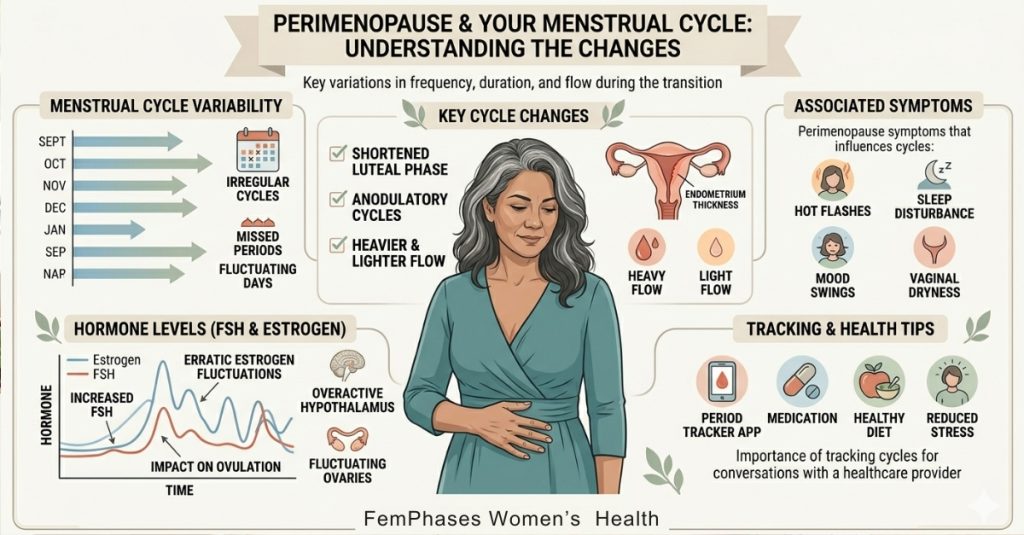
For many women, bleeding after 40 happens because the body is moving through perimenopause. During this phase, ovulation becomes less regular. That can affect how the womb lining builds up and sheds, which is why periods may become more unpredictable.
Missing Periods in Perimenopause: Why It Happens and When to Pay Attention
Common reasons it can happen
i. Hormone changes in perimenopause
This is one of the most common reasons. You may skip a month, then have a heavier or longer bleed the next time.
ii. Fibroids or polyps
These growths are often non-cancerous, but they can cause heavier bleeding, longer periods, or bleeding between periods.
iii. Adenomyosis or other womb changes
Changes in the uterus can make periods heavier or more painful.
iv. Medicines and contraception
Hormone replacement therapy, some contraceptives, and other medicines can affect bleeding patterns.
v. Vaginal dryness or thinning after menopause
After menopause, the tissues of the vagina and womb can become thinner and more fragile, which can lead to bleeding.
vi. Less common but important causes
Sometimes irregular bleeding can be linked to a more serious problem, including endometrial changes or cancer. That is why bleeding after menopause, or bleeding that clearly feels wrong for you, should never be ignored.

Signs or symptoms
Not all bleeding after 40 looks the same. Some changes are subtle, while others are hard to miss.
Signs to notice
- your period is much heavier than usual
- you soak through pads or tampons very quickly
- your periods start lasting much longer
- you bleed between periods
- you bleed after sex
- your cycle becomes very unpredictable
- you feel tired, weak, or short of breath, which can happen if heavy bleeding leads to anaemia
- you have bleeding more than 12 months after your periods stopped
Symptoms that deserve extra attention
i. Heavy bleeding that affects daily life
If you are changing period products every 1 to 2 hours, avoiding normal activities, or worrying about flooding or leaking, that is worth discussing with a doctor.
ii. Bleeding after menopause
Any vaginal bleeding after menopause should be assessed. NHS guidance says you should see a GP if this happens, and referral for specialist assessment is standard.
What is normal and when to pay attention
This is usually the part women want answered most clearly: what counts as normal, and what should not be ignored?
What can be common in your 40s
During perimenopause, it can be common for periods to:
- become irregular
- be lighter or heavier than before
- come earlier or later than expected
- occasionally be skipped altogether
That said, “common” does not always mean “nothing to check.” A change can be hormone-related and still deserve medical review if it is severe, persistent, or unusual for you.
Pay attention if:
i. The bleeding is much heavier than your normal period.
Especially if it disrupts daily life or causes anaemia symptoms.
ii. You are bleeding between periods often.
A single random episode may not be serious, but repeated spotting or bleeding between periods should be assessed.
iii. You bleed after sex.
This can have simple explanations, but it still needs checking.
iv. You have bleeding after menopause.
This is one of the clearest signs to get medical advice promptly. Postmenopausal bleeding is not considered normal.
v. The pattern is new and keeps happening.
If bleeding after 40 becomes a pattern rather than a one-off, it is sensible to book an appointment.
Perimenopause symptoms: How to tell if the changes you’re noticing are normal
When to speak to a doctor
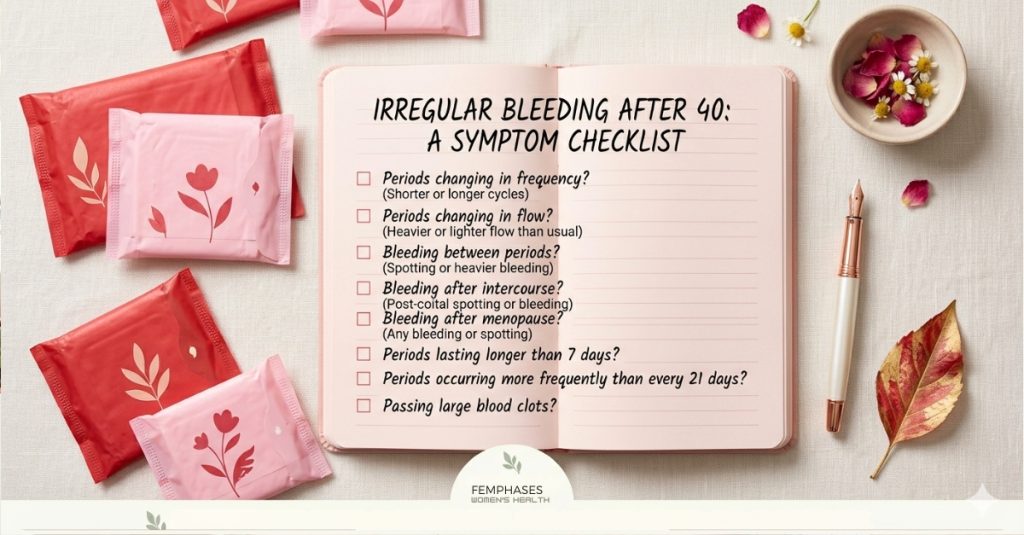
You should speak to a doctor about bleeding after 40 if it is persistent, heavy, unpredictable, or simply not typical for you.
Make an appointment soon if:
- your periods have changed significantly
- you are bleeding between periods
- you are bleeding after sex
- you have very heavy periods
- bleeding is making you feel faint, drained, or unwell
- you think you may be becoming anaemic
- you are worried, even if you are not sure it is serious
Seek urgent help if:
- you are soaking through pads or tampons rapidly for hours
- you feel dizzy, faint, breathless, or very weak
- you have severe pain with heavy bleeding
- you may be pregnant and are bleeding
One rule that matters most
Any bleeding after menopause needs medical review
If you have gone 12 months without a period and then bleed, it should be checked. NICE guidance includes postmenopausal bleeding in urgent cancer referral pathways, not because cancer is the most likely cause, but because it is important to rule it out.
Key takeaway
Bleeding after 40 is often caused by perimenopause and changing hormones, so that some cycle changes can be expected. But if the bleeding is heavy, repeated between periods, happens after sex, or appears after menopause, it deserves a proper medical check.
You do not need to panic, but you do need to pay attention. If something feels off, it is always reasonable to get it checked.
Frequently Asked Questions
Is bleeding after 40 always perimenopause?
No. Perimenopause is a common reason, but not the only one. Fibroids, polyps, medicines, infections, and more serious conditions can also cause abnormal bleeding.
Is spotting between periods normal in your 40s?
It can happen, especially during hormone shifts, but repeated spotting between periods should be discussed with a doctor.
When is heavy bleeding a concern?
It is a concern if it affects daily life, causes flooding, requires very frequent changes of pads or tampons, or leaves you feeling weak or breathless.
Should I worry about one missed period and then a heavy one?
This can happen in perimenopause, but if the bleeding is much heavier than usual or the pattern keeps repeating, it is worth checking.
Is bleeding after sex normal after 40?
Not really something to ignore. It may have a simple cause, but it should be assessed, especially if it happens more than once.
What counts as postmenopausal bleeding?
Any vaginal bleeding that happens more than 12 months after your periods have stopped because of menopause counts as postmenopausal bleeding.
Do I need to see a doctor if I am on HRT and bleeding?
Unexpected bleeding can happen with HRT, but it should still be discussed with your doctor, especially if it is new, persistent, or happens after menopause.
Medical disclaimer
This article is for general education and is not a diagnosis. If you have heavy bleeding, bleeding after sex, bleeding after menopause, symptoms of anaemia, severe pain, or any bleeding pattern that feels unusual for you, please seek medical advice promptly. If bleeding is very heavy or you feel faint, weak, or unwell, seek urgent care.