

Brown discharge before your period: what it means
If you’ve noticed brown discharge before your period, it’s completely understandable to wonder whether it is normal, whether something is wrong, or whether you should get checked. For many women, brown discharge before their period turns out to be old blood mixing with normal vaginal fluid, especially around the start or end of a cycle. But sometimes it can point to irritation, hormonal changes, pregnancy-related spotting, or an infection.
Quick answer:
In many cases, brown discharge before your period is just a small amount of old blood slowly leaving the body. It is often harmless, especially if it happens for a day or two and your period arrives as expected. If it comes with pain, bad smell, itching, unusual bleeding, or happens after menopause, it is worth speaking to a doctor.
What is it?
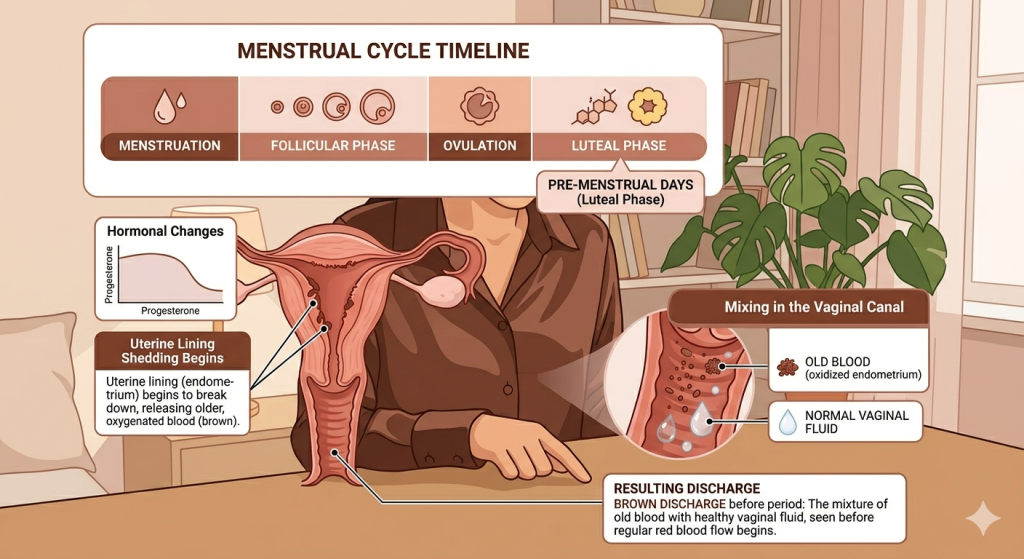
Brown discharge before your period is vaginal discharge that looks light brown, dark brown, rust-colored, or almost black. The colour usually comes from older blood. Fresh blood is red, but when blood takes longer to leave the uterus or vagina, it oxidises and turns brown. Cleveland Clinic notes that brown discharge often occurs when blood mixes with vaginal fluid, which is why it may appear as streaks, spots, or light staining in your underwear.
Why the colour matters
Brown discharge is different from the usual clear or white discharge many women have during the month. Normal discharge is typically clear to white and should not have a strong odour. A colour change is not always a problem, but it is something to notice in context with the rest of your symptoms.
What it can look like
You might notice:
- light brown spotting on toilet paper
- dark brown streaks in underwear
- brown mucus-like discharge
- a small amount of brown discharge for 1 to 2 days before bleeding starts
Why does it happen?
There are several reasons for brown discharge before your period, and many of them are not serious.
i. Old blood leaving the body
This is the most common reason. Sometimes the uterus sheds a very small amount of lining before full menstrual flow starts. Because that blood leaves slowly, it looks brown rather than bright red.
ii. Hormonal changes
Hormone shifts can cause light spotting before a period. This may happen during times when cycles are changing, such as:
- puberty
- perimenopause
- after stress
- after major weight changes
- with some hormonal contraception
Mayo Clinic notes that hormone imbalance and anovulation can lead to unexpected bleeding between periods. Breakthrough bleeding can also happen with birth control pills.
iii. Early pregnancy spotting
Sometimes what seems like brown discharge before your period is actually very light early pregnancy spotting. This can happen around the time a period is expected. Early pregnancy bleeding is common and does not always signal a major problem, but pregnancy-related bleeding should still be taken seriously, especially if there is pain.
iv. Infection or irritation
If the discharge also smells unpleasant, causes itching, burning, pelvic pain, or comes with bleeding after sex, it may be linked to an infection or another cause of abnormal bleeding rather than a simple pre-period change. The NHS advises getting checked if discharge changes in smell, colour, or texture, especially if accompanied by pain or bleeding.
v. Other causes
Less commonly, brown discharge before your period can be linked to:
Cervical or uterine causes
- polyps
- fibroids
- changes in the lining of the uterus
- cervix irritation
Cycle irregularity
- missed ovulation
- irregular periods
- recent change in contraception
Signs or symptoms
Brown discharge before your period is more likely to be harmless when:
- it lasts only a short time
- it is light spotting, not heavy bleeding
- there is no strong smell
- there is no itching or burning
- your period starts normally soon after
Symptoms that can happen alongside it
You may also notice:
- mild cramping
- a heavier flow starting later that day or the next day
- sticky or mucus-like discharge
- light spotting only when wiping
Symptoms that deserve more attention
Pay closer attention if you have:
- pelvic pain that is strong or worsening
- bad-smelling discharge
- fever
- itching, soreness, or burning
- bleeding after sex
- very irregular bleeding
- a missed period with spotting and possible pregnancy
Bleeding Between Periods: Common Causes and When to Get Checked
What is normal, and when to pay attention
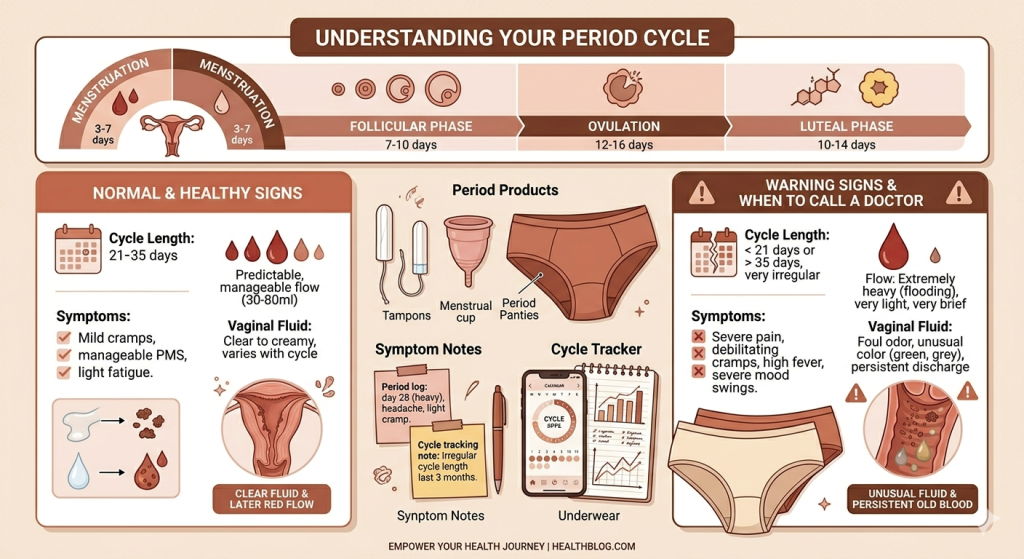
A small amount of brown discharge before your period can be normal. Many women see this once in a while, and it may mean the period is about to start.
Usually considered normal
Brown discharge is often normal when:
It happens briefly
A day or two before your period can be a normal pattern.
It is light
A few spots or a small streak is usually less concerning than heavier bleeding.
It fits your usual cycle.
If this happens sometimes and your cycle is otherwise predictable, it may be how your body starts menstruation.
Pay attention when it is new, persistent, or unusual.
It is a good idea to keep track if:
- it keeps happening over several cycles when it never used to
- it lasts many days
- it becomes heavier
- it happens at random times in the month
- you are pregnant or might be pregnant
- you have gone through menopause
ACOG says spotting between periods counts as abnormal uterine bleeding and should be assessed in the right clinical context. NHS guidance also says postmenopausal bleeding, even a small amount of pink or brown discharge, should always be checked.
When to speak to a doctor
Speak to a doctor or sexual health clinician if brown discharge before your period:
Needs routine medical advice
- keeps happening and is new for you
- comes with pelvic pain
- comes with a fishy or unpleasant smell
- causes itching, burning, or irritation
- happens after sex
- is linked with missed periods or possible pregnancy
- starts after beginning or changing contraception and does not settle
Needs urgent medical advice
Get urgent help if you have:
- severe one-sided pelvic pain
- heavy bleeding
- dizziness or fainting
- shoulder tip pain
- pregnancy with bleeding and pain
These symptoms can sometimes point to a pregnancy complication such as ectopic pregnancy, which the NHS advises treating urgently.
Key takeaway
In many cases, brown discharge before your period is old blood and not a sign of anything serious. The main things to look at are timing, amount, smell, pain, and whether it fits your normal cycle. If it is light, brief, and followed by your usual period, it is often harmless. If it is persistent, painful, foul-smelling, linked to pregnancy, or happens after menopause, it is worth getting checked.
Frequently Asked Questions
Is brown discharge before your period normal?
Yes, it can be normal. It often means a small amount of older blood is leaving the body before menstrual flow starts.
How many days before a period can brown discharge happen?
It can happen about 1 to 2 days before a period for some women, though patterns vary from person to person.
Can brown discharge before your period mean pregnancy?
Sometimes, yes. Light spotting around the time a period is due can happen in early pregnancy, but bleeding in pregnancy should still be taken seriously, especially with pain.
Is brown discharge a sign of infection?
Not by itself. But if it comes with a bad smell, itching, burning, or pelvic pain, the possibility of infection increases.
Should I worry about brown discharge before my period on birth control?
Hormonal contraception can cause spotting or breakthrough bleeding, especially after starting, changing, or missing pills. If it continues or worries you, speak to a clinician.
Is brown discharge before your period normal in perimenopause?
Cycle changes are common in perimenopause, but any new or unusual bleeding pattern is worth discussing with a healthcare professional.
Is brown discharge after menopause normal?
No. A doctor should check any bleeding, spotting, or brown discharge after menopause.
Medical disclaimer
This article is for general education and is not a diagnosis. If you have severe pain, heavy bleeding, possible pregnancy, symptoms of infection, or any bleeding after menopause, please speak to a doctor promptly. If you feel suddenly unwell, seek urgent medical care.