
Femphases: Helping women understand hormones, emotions, and midlife health.

Trust Bar Marquee

Sleep & Insomnia Solutions

Nervous System-Friendly Living for Women

Introduction You know that feeling when your phone buzzes one more time and suddenly you want to cry? Or when someone asks you a simple question and your brain freezes, even though you used to handle ten things at once without thinking? For many women, that constant sense of being “on edge” has become so normal that they barely notice it anymore. The racing thoughts at 2am. The tight shoulders. The exhaustion that sleep does not fix. The irritability that feels unlike you. The sense that your body is stuck in survival mode. This is partly why nervous system-friendly living has become such an important conversation in women’s health. It is not just another wellness trend. In many ways, it is a response to how overwhelmed modern life has become — especially for women balancing work, caregiving, hormones, mental load, emotional labour, financial stress, and constant digital stimulation. At the same time, more research is helping us understand how chronic stress affects the nervous system, hormone health, sleep, inflammation, mood, and even symptoms during perimenopause and menopause. Many women are not “failing to cope.” Their nervous systems are overloaded. And that changes the conversation completely. What Does “Nervous System-Friendly Living” Actually Mean? At its core, nervous system-friendly living means creating daily habits, routines, environments, and expectations that help your body feel safer, calmer, and less overwhelmed. It does not mean avoiding stress completely. That is impossible. Instead, it means reducing unnecessary stress overload while helping your nervous system recover more effectively from everyday life. Your nervous system is constantly scanning for safety and danger. This happens automatically, often without conscious awareness. When stress becomes chronic, the body can remain stuck in a prolonged “fight, flight, freeze, or fawn” state. Over time, this may contribute to symptoms such as: Anxiety Irritability Poor sleep Fatigue Brain fog Digestive issues Muscle tension Heart palpitations Emotional overwhelm Burnout Increased sensitivity to stress Feeling emotionally numb or disconnected For women in perimenopause or menopause, fluctuating hormones can make the nervous system even more sensitive to stress. Declining oestrogen levels may affect mood regulation, sleep quality, temperature control, and stress resilience. British Menopause Society That means the same workload or emotional pressure you managed at 35 may suddenly feel much harder at 45. Not because you are weak. Because your body is changing. Why So Many Women Feel Permanently Overstimulated Modern life places enormous demands on the nervous system. Many women spend years functioning in a constant state of hypervigilance without realising it. You answer messages while making dinner. You remember school forms while attending meetings. You carry emotional responsibility for family members. You worry about ageing parents, finances, children, relationships, work deadlines, and your own health — often all at once. Meanwhile, your nervous system rarely gets genuine rest. Scrolling late at night, multitasking all day, constant notifications, poor sleep, and chronic emotional stress all keep the body physiologically activated. Eventually, the body starts sending signals. Sometimes softly at first. Sometimes loudly. The Link Between Stress Hormones and Women’s Health When we talk about stress, many people think only about emotions. However, stress is also biological. The body releases hormones such as cortisol and adrenaline during stress responses. In short bursts, this is helpful. It helps us respond to danger. The problem happens when stress becomes chronic. Long-term nervous system activation may affect: Sleep quality Blood sugar regulation Appetite and cravings Immune function Mood Menstrual cycles Energy levels Cardiovascular health Research also shows that chronic stress can worsen menopausal symptoms, including hot flushes, anxiety, sleep disturbances, and mood changes. NHS Menopause Overview Importantly, stress does not always come from dramatic trauma. It can also come from: Chronic overwork Emotional caregiving Lack of rest Financial strain Feeling unsafe or unsupported Poor sleep Ongoing uncertainty Constant sensory stimulation This matters because many women minimise their own stress. They tell themselves: “I should be coping better.” “Other people have it worse.” “It’s probably just me.” Yet the body still keeps score. Nervous System-Friendly Living Is Not Laziness This is one of the biggest misconceptions. Rest is often misunderstood in cultures that reward constant productivity. Many women have been conditioned to believe their worth depends on how much they can tolerate, carry, achieve, or sacrifice. As a result, slowing down can feel uncomfortable, unfamiliar, or even guilt-inducing. However, nervous system regulation is not about becoming unproductive. It is about sustainability. Your body was never designed for endless stress without recovery. In fact, recovery is biologically necessary. The nervous system needs periods of safety, calm, pleasure, connection, movement, and restoration to function well. Without those moments, even strong people eventually struggle. Signs Your Nervous System May Be Overloaded Sometimes women do not recognise stress because they are still functioning externally. You can appear capable while feeling completely overwhelmed on the inside. Possible signs of nervous system overload include: Feeling “tired but wired” Snapping over small things Trouble relaxing Constant muscle tension Feeling emotionally flat Waking at 3 am with racing thoughts Difficulty concentrating Increased anxiety before periods or during perimenopause Digestive discomfort during stressful periods Feeling exhausted after social interaction Becoming highly sensitive to noise or stimulation Feeling like you are always behind These experiences are common. They are also deeply human. What Actually Helps the Nervous System? There is no single magical solution. Nervous system regulation is usually built through consistent small changes rather than dramatic overhauls. That is important because many overwhelmed women do not need more pressure disguised as “self-improvement.” They need support that feels realistic. Implementing small, consistent habits can make women feel capable and hopeful about improving their nervous system health. 1. Prioritising Sleep Without Perfectionism Sleep is one of the most important forms of nervous system recovery. However, many women struggle with sleep during periods of hormonal transition, stress, anxiety, or burnout. Helpful strategies may include: Reducing screen exposure before bed Keeping wake-up times consistent Limiting excessive caffeine late in the day Creating calming evening routines Lowering stimulation before sleep Seeking medical advice

Nervous System-Friendly Living for Women Read More »
Why Sleep Has Become the New Wellness Obsession

Introduction You lie down exhausted. Your body feels heavy. Your mind does not. You replay conversations. Think about tomorrow’s responsibilities. Wonder why you feel so tired all day, yet somehow still unable to sleep properly at night. Maybe you scroll your phone for “just five minutes,” and it turns into an hour. Maybe you wake at 3 am with a racing heart and a brain that suddenly wants to solve every problem you’ve ever had. And somewhere in the middle of all this, you start noticing something strange: everyone is suddenly talking about sleep. It can feel overwhelming. But beneath the noise, there is a reason why sleep has become the new wellness obsession and it is not just another health trend. For many women, sleep has quietly become the missing piece of the puzzle. Not because women suddenly became lazy, weak, or “bad at coping,” but because modern life places enormous pressure on the nervous system, hormones, emotional well-being, and mental load. And sleep is where the body tries to repair the damage. When sleep suffers, everything often feels harder: Mood regulation Emotional resilience Hormone balance Appetite and cravings Brain fog Energy levels Anxiety symptoms Chronic pain Focus and concentration Sleep is not simply “rest.” It is active biological maintenance. For women navigating stress, caregiving, work pressure, perimenopause, menopause, anxiety, burnout, chronic illness, or emotional exhaustion, the conversation around sleep becomes a deeply personal journey of understanding and support. Sleep Is No Longer Seen as “Optional” For years, sleep was often misunderstood as optional or a sign of weakness. Many women believed that functioning on minimal sleep was normal or even admirable, but recent research shows that prioritizing sleep is essential for health and well-being. People bragged about functioning on 4 hours of sleep. Burnout became normalised. Productivity was glorified. Rest was framed as something you earned after everything else was done. Many women absorbed this message without even realising it. Keep going. Push through. Be available. Be productive. Be emotionally supportive. Hold everything together. But the body keeps score eventually. Research now consistently shows that poor sleep affects nearly every major system in the body, including cardiovascular health, immune function, metabolism, emotional regulation, cognition, and hormone production. NHS sleep and tiredness advice This growing awareness highlights that sleep is a cornerstone of health, not a luxury, empowering women to prioritize their well-being.   Women Often Experience Sleep Problems Differently Women are more likely than men to experience insomnia symptoms, fragmented sleep, and sleep disturbances linked to hormonal changes. Office on Women’s Health — Sleep Disorders And yet many women spend years believing: “I’m just stressed.” “This is probably normal.” “Maybe I’m overreacting.” “I should be coping better.” The reality is that multiple overlapping factors influence women’s sleep: i. Hormones Oestrogen and progesterone influence sleep quality, body temperature, mood, and nervous system regulation. During perimenopause and menopause, fluctuating hormones can contribute to: Night sweats Insomnia Early waking Increased anxiety Restless sleep Heart palpitations The British Menopause Society notes that sleep disturbance is one of the most common symptoms reported during menopause transition. 2. Mental Load Many women carry invisible cognitive labour: Remembering appointments Emotional caregiving Household planning Parenting responsibilities Work pressure Family coordination Even when physically exhausted, the brain may remain hyper-alert. 3. Stress and Nervous System Activation Chronic stress can keep the body in a state of heightened alertness. Cortisol patterns may become disrupted, making it harder to fall asleep or stay asleep. This does not mean the symptoms are “all in your head.” It means the nervous system is responding to prolonged strain. The Rise of “Sleep Anxiety” Ironically, one unexpected reason why sleep has become the new wellness obsession is that people have become anxious about sleep itself. You may recognise this cycle: You have one bad night You start worrying about sleep You monitor every waking You dread bedtime Your nervous system becomes more alert Sleep becomes even harder This is incredibly common. Sleep is deeply connected to safety. When the brain perceives pressure, stress, fear, or hypervigilance, it often struggles to transition into restorative rest. Many women describe bedtime as the only quiet moment of the day, which means unresolved thoughts finally surface. That can feel frightening, lonely, or emotionally intense. But it also makes sense. Social Media Has Changed the Conversation Around Sleep The internet has played a huge role in explaining why sleep has become the new wellness obsession. Some of this has been genuinely helpful: More conversations about burnout Greater awareness of menopause Improved mental health literacy Recognition of nervous system dysregulation Reduced stigma around exhaustion But some of it has also become confusing. Women are often bombarded with: unrealistic wellness routines, expensive supplements, “perfect” sleep expectations, contradictory advice, and fear-based messaging. It can create the impression that if you are not sleeping perfectly, you are somehow failing at health. That is not true. Human sleep is naturally variable. Stressful periods, hormonal transitions, grief, parenting, illness, caregiving, and emotional strain all affect sleep patterns. Good sleep is not about perfection. It is about support, consistency, and understanding what may be affecting your body. What Actually Happens During Sleep? Sleep is not a passive shutdown. While you sleep, the body and brain are actively working: consolidating memory, regulating hormones, repairing tissues, processing emotions, supporting immune function, and clearing metabolic waste from the brain. Research also shows that sleep plays a role in emotional processing and mental health regulation. Chronic sleep deprivation is linked with increased risk of anxiety and depression symptoms. CDC — Sleep and Sleep Disorders This is another major reason why sleep has become the new wellness obsession: people are finally understanding that sleep affects far more than energy levels. Perimenopause, Menopause, and the Sleep Conversation For many women, sleep changes suddenly in their late 30s, 40s, or 50s. A woman who once slept easily may suddenly experience: waking at 3 am, vivid anxiety, overheating, racing thoughts, lighter sleep, or insomnia that seems to appear “out of nowhere.” This

Why Sleep Has Become the New Wellness Obsession Read More »

Perimenopause and Anxiety: The Hidden Hormone Link

Introduction You walk into the kitchen and suddenly forget why you are there. Your heart feels strangely fluttery. You snap at your partner over something tiny, then feel guilty five minutes later. At 3am, your mind starts racing about work, your children, your ageing parents, your future, your health, and things that never used to keep you awake before. Then comes the thought many women quietly carry: “What is happening to me?” Many women quietly carry the thought: “What is happening to me?” Recognising that anxiety and emotional changes are real can help women feel validated and understood, especially when these symptoms are often dismissed or explained away as ‘stress’ or ‘getting older.’ They are not failing. Perimenopause can affect the brain just as much as the ovaries. Hormonal fluctuations influence mood, sleep, stress responses, memory, emotional regulation, and even how sensitive the nervous system feels day to day. The emotional symptoms can be deeply real, physically overwhelming, and surprisingly intense. And yet, many women are never warned about it. This article explores the link between perimenopause and anxiety, why it happens, what symptoms can look like, what science currently understands, and, most importantly, what can genuinely help. What Is Perimenopause? Perimenopause is the transition phase leading up to menopause. It often begins in a woman’s 40s, though for some it can start in the late 30s. During this time, hormone levels especially oestrogen and progesterone fluctuate unpredictably rather than steadily declining. This transition can last several years. According to the NHS menopause guidance, common symptoms include: Irregular periods Hot flushes Night sweats Sleep problems Mood changes Brain fog Anxiety Low mood Reduced concentration Heart palpitations What surprises many women is that emotional and psychological symptoms can appear before physical symptoms become obvious. Sometimes anxiety is the very first clue. Why Anxiety Can Suddenly Appear in Perimenopause Many women who experience anxiety during perimenopause have never previously struggled with anxiety disorders. Others notice old anxiety becoming stronger, more physical, or harder to manage. This is where the link between perimenopause and anxiety becomes important to understand. Hormones like oestrogen and progesterone interact with brain chemicals such as serotonin and dopamine, influencing mood and anxiety levels, so fluctuations can make women more emotionally sensitive or reactive. i. Oestrogen affects serotonin and emotional regulation. Oestrogen plays a role in regulating serotonin, dopamine, and other brain chemicals involved in mood and emotional stability. When oestrogen fluctuates rapidly, some women may feel more emotionally sensitive, reactive, tearful, or anxious, which can help women feel understood and less alone in their experiences. ii. Progesterone has calming effects. Progesterone can have a naturally calming, sedating effect on the nervous system. As progesterone levels decline or fluctuate, some women notice: Feeling “wired” Increased panic sensations Difficulty relaxing More overwhelm Heightened emotional sensitivity iii. Sleep disruption worsens anxiety. Perimenopause often affects sleep long before women connect the dots hormonally. Night sweats, early waking, insomnia, and restless sleep place the nervous system under chronic strain. Poor sleep can significantly increase anxiety symptoms, irritability, and emotional exhaustion. iv. Stress tolerance changes Many women describe feeling as though their nervous system suddenly becomes “less resilient.” Things they once handled reasonably well now feel emotionally overwhelming. This is not a weakness. It reflects a complex interaction between hormones, sleep, stress load, nervous system sensitivity, and midlife pressures. The British Menopause Society explains that fluctuating hormone levels during perimenopause can significantly affect psychological well-being and emotional health. What Perimenopausal Anxiety Actually Feels Like One reason the link between perimenopause and anxiety gets missed is that symptoms do not always look like stereotypical anxiety. Women often describe experiences like: Feeling constantly “on edge” A sense of impending doom Sudden panic attacks Racing thoughts at night Health anxiety Feeling emotionally fragile Heart palpitations Overthinking conversations Increased social anxiety Feeling overstimulated by noise or crowds Crying more easily Feeling emotionally detached or numb Irritability that feels out of character Some women say: “I don’t even recognise myself anymore.” Others feel ashamed because they appear outwardly capable while internally struggling to cope. Many are also juggling enormous invisible pressures: Careers Parenting teenagers Caring for ageing parents Relationship strain Financial stress Grief Chronic exhaustion Hormonal shifts do not happen in isolation from real life. The Symptoms Women Often Ignore or Explain Away Sometimes women spend years trying to “fix” anxiety without recognising a hormonal component underneath it. Common overlooked signs include: 1. Physical symptoms Dizziness Heart racing Chest tightness Tingling sensations Nausea Tension headaches IBS flare-ups Muscle tension Sudden fatigue 2. Emotional symptoms Feeling emotionally overwhelmed Increased sensitivity Sudden anger Loss of confidence Feeling disconnected from yourself Fearfulness without a clear reason 3. Cognitive symptoms Brain fog Poor concentration Forgetfulness Difficulty finding words Mental exhaustion The Office on Women’s Health notes that mood and cognitive symptoms are common during the menopausal transition and can significantly affect quality of life. Why So Many Women Feel Dismissed Unfortunately, women’s symptoms are still sometimes minimised in healthcare settings. Some women are told: “It’s just stress.” “You’re depressed.” “You’re too young for perimenopause.” “Your blood tests are normal.” This can leave women doubting themselves. Because hormone levels fluctuate during perimenopause, diagnosis often depends on clinical history and symptom patterns rather than a single blood test, emphasizing the importance of detailed health discussions. Clinical history and symptom patterns matter enormously. This uncertainty can feel frustrating, especially when symptoms are affecting daily life. Can Hormone Therapy Help Anxiety? For some women, yes. For others, anxiety may require a broader combination approach. The NICE menopause guideline explains that hormone replacement therapy (HRT) may improve low mood and other menopausal symptoms in some women. However, responses vary. Some women notice: Better sleep Reduced anxiety Improved emotional stability Fewer panic sensations Better cognitive clarity Others may need: Psychological support Stress management strategies Medication for anxiety Lifestyle changes Sleep treatment Trauma-informed therapy There is no single “correct” path. And most importantly, asking for support when needed is a sign of strength, not failure, helping women feel empowered

Perimenopause and Anxiety: The Hidden Hormone Link Read More »

Perimenopause Brain Fog or ADHD? How to Tell

Introduction If you have found yourself standing in the kitchen wondering why you walked in there, rereading the same email three times, forgetting appointments, or feeling mentally “offline,” you are not alone. Many women experience these changes and are seeking answers, which can be reassuring and help them feel understood. Many women start searching for answers when they notice changes in memory, focus, and mental clarity and begin wondering: Is this perimenopause brain fog or ADHD? It can feel unsettling, especially if you have always been organised, capable, and mentally sharp. Some women worry they are developing early dementia. Others wonder if stress is finally catching up with them. And for many women in their late 30s and 40s, hormonal changes during perimenopause may be playing a much bigger role than they realise. Understanding how perimenopause brain fog differs from ADHD is crucial. This article will clarify the unique patterns, helping you distinguish between hormonal changes and lifelong attention difficulties so that you can seek appropriate support. What Is Perimenopause Brain Fog? Perimenopause brain fog is a term used to describe changes in memory, concentration, mental clarity, and processing speed linked to hormonal fluctuations during the years leading up to menopause. It is not a medical diagnosis on its own, but it is a very real symptom experienced by many women during perimenopause. Hormonal shifts, especially changing oestrogen levels, can affect parts of the brain involved in attention, language, mood, and memory. Perimenopause usually begins in a woman’s 40s, although it can start earlier. During this stage, periods may become irregular, and symptoms such as hot flushes, sleep disruption, anxiety, and mood changes often appear. Recognising these as common changes can help women feel more at ease with their experiences. Brain fog can look different from one woman to another. For some, it feels like forgetfulness. For others, it is difficulty concentrating, mental exhaustion, or struggling to multitask as they once did. Quick Answers “Perimenopause brain fog is a collection of memory, focus, and concentration symptoms linked to hormonal changes before menopause.” “Hormonal fluctuations during perimenopause can affect sleep, mood, and cognitive function at the same time.” “ADHD symptoms usually begin earlier in life, while perimenopause brain fog often appears during the late 30s or 40s.” Daily Mood & Hormone Check-In Why Does It Happen? i. Hormonal Changes and the Brain Oestrogen does much more than regulate periods. It also supports brain chemicals involved in memory, mood, focus, and verbal processing. During perimenopause, oestrogen levels fluctuate unpredictably. These hormonal shifts can affect: Attention and concentration Word recall Mental processing speed Sleep quality Emotional regulation Research suggests that sleep disruption and vasomotor symptoms, such as night sweats, may also contribute to cognitive symptoms. You can read more from the British Menopause Society and the NHS menopause guidance. ii. Stress and Mental Overload Midlife is often a time of enormous emotional and mental pressure. Many women are balancing careers, caregiving, parenting teenagers, ageing parents, relationship stress, financial concerns, and chronic exhaustion all at once. Chronic stress increases cortisol levels, which can affect concentration, sleep, and memory. Stress-related cognitive symptoms often include: Feeling mentally overwhelmed Racing thoughts Difficulty switching off Irritability Poor focus during busy or emotional periods iii. Sleep Deprivation Sleep disruption is one of the most overlooked causes of brain fog. Perimenopause commonly affects sleep because of: Night sweats Anxiety Hormonal shifts Frequent waking Insomnia Poor sleep can cause: Forgetfulness Slower thinking Emotional sensitivity Reduced attention span Difficulty finding words iv. Could It Be ADHD? Some women discover ADHD during perimenopause because hormonal changes reduce the brain’s ability to compensate for long-standing attention difficulties. ADHD in women is often missed earlier in life, especially in women who were academically capable or learned to mask symptoms. Signs that ADHD may have been present before perimenopause include: Lifelong disorganisation Chronic procrastination Difficulty completing tasks Emotional impulsivity Time blindness Struggling with focus since childhood or teenage years Perimenopause can sometimes make existing ADHD symptoms feel more intense. The National Institute for Health and Care Excellence (NICE) ADHD guidance provides further information on assessment and diagnosis. Signs and Symptoms Common Symptoms of Perimenopause Brain Fog Forgetting names or words Losing track of conversations Difficulty concentrating Mental fatigue Trouble multitasking Walking into rooms and forgetting why Reduced confidence at work Feeling mentally “slower” Increased anxiety about memory Symptoms are more common in Stress and Burnout Feeling emotionally overwhelmed Constant tension or worry Irritability Difficulty relaxing Trouble focusing during stressful periods Feeling mentally exhausted by decision-making Symptoms Linked to Poor Sleep Waking unrefreshed Daytime sleepiness Poor short-term memory Reduced patience Brain fog that improves after better sleep Symptoms That May Suggest ADHD Lifelong attention difficulties Chronic disorganisation Forgetting deadlines repeatedly Difficulty prioritising tasks Hyperfocus on some tasks but inability to start others Emotional impulsivity Symptoms present before perimenopause What Is Normal and When to Pay Attention? a. Common Changes These symptoms can be common during perimenopause, but are still worth monitoring: Mild forgetfulness Difficulty concentrating during stress Temporary word-finding problems Mental fatigue after poor sleep Feeling less mentally sharp than usual Tracking patterns can help identify triggers. Some women notice symptoms worsen: Before periods During stressful weeks After poor sleep During heavy bleeding or fatigue b. Needs Urgent Attention Please seek medical advice urgently if you experience: Sudden confusion One-sided weakness Difficulty speaking suddenly Severe headaches Fainting Chest pain Shortness of breath Rapid worsening of memory Thoughts of self-harm Major personality changes These symptoms should never automatically be assumed to be perimenopause. Evidence-Based Solutions Treatment depends on the cause, severity, overall health, age, menopause stage, medical history, and personal preferences. Medical Interventions Medical Assessment A healthcare professional may ask about: Menstrual changes Sleep quality Mood symptoms Stress levels Family history Medication use ADHD symptoms in childhood Blood tests may sometimes be used to check: Iron levels Thyroid function Vitamin B12 Vitamin D Anaemia Blood sugar levels Hormone blood tests are not always needed to diagnose perimenopause in women over 45 because symptoms and menstrual changes are

Perimenopause Brain Fog or ADHD? How to Tell Read More »

Perimenopause Brain Fog: Why It Happens and What Helps

Introduction If you have walked into a room and forgotten why you were there, struggled to find simple words mid-sentence, reread the same email three times, or felt mentally “foggy” for no obvious reason, you are not imagining it. Perimenopause brain fog is a very real experience for many women, and it can feel frustrating, unsettling, and sometimes frightening. Understanding how it affects your daily life can help you seek effective strategies and support. Many of us worry we are becoming forgetful, losing our sharpness, or simply “not coping” anymore. But in many cases, these changes are linked to the hormonal shifts of perimenopause rather than a serious neurological problem. The good news is that perimenopause brain fog is common, understood more clearly than ever before, and often improves with the right support, inspiring hope for better days. Perimenopause Symptom Quiz What Is Perimenopause Brain Fog? Perimenopause brain fog describes changes in memory, concentration, mental clarity, and thinking that happen during the years leading up to menopause. Perimenopause is the transition stage before menopause, when hormone levels begin fluctuating. It can start in our late 30s or 40s and may last several years before periods stop completely. Brain fog is not a formal medical diagnosis. It is a term women often use to describe symptoms such as: Forgetfulness Mental sluggishness Difficulty concentrating Losing track of conversations Word-finding problems Feeling mentally overwhelmed These symptoms can affect work, relationships, and confidence, making women feel more understood and less alone in their experience.  “Perimenopause brain fog is a group of cognitive symptoms linked to hormonal changes during the menopause transition.” Research suggests fluctuating oestrogen levels may affect areas of the brain involved in memory, attention, language, and processing speed. Sleep disruption, stress, anxiety, and fatigue often make symptoms worse. For more information about perimenopause symptoms, the NHS menopause overview provides a helpful overview. Why Does It Happen? Hormonal Changes Oestrogen does much more than regulate periods. It also affects brain chemicals involved in mood, attention, and memory, including serotonin, dopamine, and acetylcholine. During perimenopause, hormone levels fluctuate unpredictably rather than declining smoothly. These rapid changes may affect how efficiently the brain processes information.  “Fluctuating oestrogen levels during perimenopause can affect memory, concentration, and mental clarity.” Some women notice symptoms worsen around their period or alongside hot flushes and sleep disturbances. Sleep Disruption Many women in perimenopause experience: Night sweats Insomnia Frequent waking Poor-quality sleep Even mild sleep deprivation can affect focus, memory, reaction time, and emotional regulation. “Poor sleep can significantly worsen perimenopause brain fog, even when hormone changes are the original trigger.” Stress and Mental Load Women in midlife are often balancing multiple pressures at once: Careers Caring for children Looking after ageing parents Financial stress Relationship changes Emotional burnout Chronic stress raises cortisol levels, which can affect concentration and memory over time. Anxiety and Mood Changes Perimenopause can increase the risk of anxiety and low mood, even in women who have never experienced them before. Anxiety itself can make the brain feel overloaded and less able to process information clearly. Other Medical Causes That Can Overlap Not every case of brain fog is caused by perimenopause alone. Other conditions can mimic or worsen symptoms, including: Iron deficiency anaemia Thyroid disorders Vitamin B12 deficiency Depression ADHD Sleep apnoea Long COVID Medication side effects This is why persistent or severe symptoms deserve proper assessment, helping women feel empowered to seek support when needed. The British Menopause Society explains that menopause symptoms can affect cognitive function and quality of life significantly. Signs and Symptoms Perimenopause brain fog can look different from one woman to another. Common symptoms include: Forgetting appointments or tasks Difficulty concentrating Losing words during conversations Forgetting names Mental fatigue Feeling “scattered” Trouble multitasking Slower thinking speed Difficulty learning new information Feeling overwhelmed by decisions Losing focus while reading Increased irritability from mental overload Less obvious symptoms may include: Reduced confidence at work Social withdrawal Anxiety about memory problems Avoiding conversations Increased dependence on lists or reminders Feeling emotionally “flat” or disconnected Some women describe it as feeling mentally exhausted even after a full night’s sleep. What Is Normal and When to Pay Attention? Women should be aware of symptoms that require urgent medical evaluation. If you experience sudden confusion, severe memory loss, or neurological symptoms like weakness or difficulty speaking, seek immediate medical attention to rule out serious conditions. a. Common Changes These changes can be common during perimenopause but are still worth monitoring: Mild forgetfulness Occasional word-finding difficulty Reduced concentration during stress or poor sleep Mental fatigue that improves with rest Symptoms linked to hormonal fluctuations Tracking symptoms alongside your menstrual cycle, sleep, mood, and stress levels can help identify patterns. b. Needs Urgent Attention Some symptoms should never be dismissed as “just hormones.” Speak to a healthcare professional urgently if you experience: Sudden confusion Severe memory loss Personality changes Difficulty speaking One-sided weakness Fainting Chest pain Shortness of breath Severe headaches Thoughts of self-harm Rapid cognitive decline New neurological symptoms These symptoms may indicate another medical condition requiring urgent assessment. Evidence-Based Solutions There is no single cure for perimenopause brain fog, but many women improve significantly with a combination of medical support, lifestyle changes, symptom management, and treatment of underlying contributors. “Treatment for perimenopause brain fog depends on hormone changes, sleep quality, stress levels, overall health, and individual medical history.” Medical Interventions Medical Assessment A healthcare professional may discuss: Your menstrual history Sleep patterns Mood symptoms Medication use Stress levels Family history Lifestyle factors Blood tests may sometimes be recommended to check: Iron levels Thyroid function Vitamin B12 Vitamin D Blood sugar levels Hormone blood tests are not always necessary for diagnosing perimenopause in women over 45 because symptoms and menstrual changes are often more useful clinically. Hormone Replacement Therapy (HRT) For some women, HRT may improve brain fog, especially when symptoms are linked to hot flushes, sleep disruption, and mood changes. HRT replaces some of the hormones that decline during menopause. It may help by: Improving sleep

Perimenopause Brain Fog: Why It Happens and What Helps Read More »

AMH and Fertility: What Low or High AMH Really Means

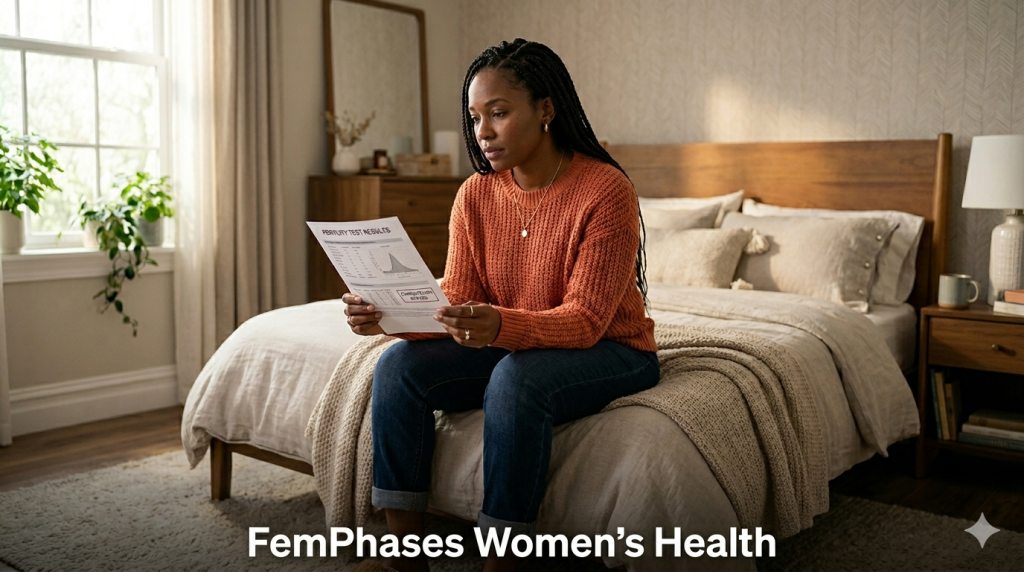
Introduction If you’ve had a fertility blood test and your AMH result has left you anxious, you’re not alone. A lot of women search for AMH and fertility because they want one simple answer: Does this result mean I can or cannot get pregnant? That question matters, especially when you are trying to conceive, thinking about waiting, or feeling unsettled by a number on a lab report. The truth is that AMH can give useful information, but it does not tell the whole story. Quick answer: AMH is a hormone that helps estimate your ovarian reserve, which means the number of eggs remaining in your ovaries. It can help doctors understand how your ovaries may respond to fertility treatment, but it does not reliably predict whether you can get pregnant naturally right now. Age, ovulation, egg quality, sperm health, and your overall reproductive health still matter a great deal. (ACOG) What is it? AMH stands for anti-Mullerian hormone. It is made by small follicles in the ovaries. Because those follicles contain immature eggs, AMH is often used as a marker of ovarian reserve. In plain English, it gives a rough idea of how many eggs are left compared with what is expected for your age. (Cleveland Clinic) What does AMH tell you? AMH and fertility are linked mainly through ovarian reserve. A higher AMH level usually suggests a higher number of remaining eggs, while a lower AMH level usually suggests fewer remaining eggs. (Cleveland Clinic) What AMH cannot tell you? This is the part many women are not told clearly enough: AMH does not measure egg quality, and it does not reliably predict whether you will get pregnant naturally this month or next. ACOG advises that a single AMH level in women not already seeking fertility care should not be used to predict natural fertility or the exact timing of menopause. (ACOG) AMH Level Interpretation Guide Why doctors use it Doctors often use AMH as part of a bigger fertility picture, especially when planning IVF or other fertility treatment, because it can help predict how strongly the ovaries may respond to stimulation medicines. (ASRM) Why does it happen? AMH levels change because your ovarian reserve changes over time. Age is the main reason. AMH usually falls with age because the number of eggs in the ovaries naturally declines over time. That decline is normal. (MedlinePlus) Other things that may affect AMH 1. Higher AMH Higher AMH can sometimes be seen in women with PCOS, because the ovaries may contain more small follicles. A high result does not automatically mean better fertility. In some cases, it may point to ovulation problems rather than an advantage. (UHCW) 2. Lower AMH Lower AMH may happen with age, diminished ovarian reserve, certain medical conditions, or after treatments that affect the ovaries, such as some cancer treatments. It may also reflect that your egg supply is lower than average for your age. (Cleveland Clinic) One result never tells the full story. AMH and fertility should never be judged by a single number alone. Doctors usually consider your age, menstrual history, ultrasound findings, medical history, and, sometimes, other hormone tests. (ASRM) Signs or symptoms AMH itself does not usually cause symptoms. You cannot feel your AMH level. What women often notice instead are signs of an underlying issue that may sit alongside an abnormal AMH result. Possible signs that deserve attention periods that are very irregular or absent difficulty getting pregnant Symptoms of PCOS, such as acne, excess facial hair, or cycle irregularity a history of endometriosis, ovarian surgery, chemotherapy, or pelvic infections early signs of perimenopause, such as changing cycles or hot flushes in some women (ASRM) A normal cycle does not always mean a normal AMH. Some women with low AMH still have regular periods and may still ovulate. That is one reason AMH and fertility can feel confusing. A lower AMH does not automatically mean pregnancy is impossible. (ACOG) What is normal, and when to pay attention This is where many women want a neat chart, but AMH ranges vary by lab, test method, and age. That means a result should always be interpreted using the lab’s reference range and your personal situation. (ASRM) What is usually considered reassuring A result within the expected range for your age can be reassuring, but it still does not guarantee easy conception. Fertility depends on much more than ovarian reserve. (ACOG) When a low AMH matters more A low AMH deserves more attention if: a. You are over 35 Age and ovarian reserve together matter more than either one alone. (ACOG) b. You have been without success. If you are under 35, evaluation is generally recommended after 12 months of trying. If you are 35 or older, it is recommended after 6 months. If you are over 40, or you have known issues such as irregular periods, endometriosis, or previous ovarian surgery, it is reasonable to seek help sooner. (ASRM) c. Your periods are irregular. AMH and fertility should be assessed alongside regular ovulation. Irregular periods may matter more than the AMH number alone. (ASRM)   When a high AMH matters more A high AMH may need follow-up if you have symptoms of PCOS or if fertility treatment is being planned, because it can be linked to a stronger ovarian response to stimulation. (UHCW) When to speak to a doctor Speak to a doctor, gynaecologist, or fertility specialist if: a. You are worried about a result. A doctor can explain what your AMH means in the context of your age and health, not just as a standalone number. b. You have been trying to conceive. under 35: after 12 months 35 or older: after 6 months over 40: don’t wait too long to ask for advice (ASRM) You have other red flags. Seek medical advice sooner if you have: irregular or absent periods known PCOS or endometriosis recurrent miscarriage past ovarian surgery previous chemotherapy or radiation severe pelvic pain or other symptoms that suggest a

AMH and Fertility: What Low or High AMH Really Means Read More »

Hormone Replacement Therapy (HRT) and contraception: Do you need birth control in perimenopause?

Hormone replacement therapy can ease hot flushes, sleep disruption, and mood changes, but many women still ask the same practical question: Do you still need birth control during menopause transition if you’re on HRT? It is a very real concern, especially when periods become irregular, and your body starts sending mixed signals. You may feel less fertile, but that does not always mean you are unable to get pregnant. Quick answer: Yes, in most cases, you still need birth control during menopause transition, even if you are taking HRT. HRT helps with symptoms, but it is not a contraceptive. You usually need contraception until menopause is confirmed, or until age 55 in many cases, depending on your situation and the method you use. What is Hormone Replacement Therapy? i. HRT and contraception are not the same thing Hormone Replacement Therapy (HRT) is a treatment for menopause symptoms. It replaces some of the hormones that naturally fall during perimenopause and menopause, especially oestrogen, and sometimes progesterone. It can help with hot flushes, night sweats, vaginal dryness, sleep problems, and low mood. Contraception, on the other hand, is there to prevent pregnancy. That is the key point that many women are not clearly told: HRT does not count as birth control during menopause transition. Even if it helps your symptoms and changes your bleeding pattern, it does not reliably stop ovulation. ii. What does menopause transition mean Menopause transition, often called perimenopause, is the time when hormone levels begin to fluctuate and periods become less predictable. Fertility drops, but pregnancy can still happen until menopause is reached. Menopause is usually confirmed after 12 months without a period if you are not using hormonal contraception that affects bleeding. Perimenopause symptoms: How to tell if your changing periods are normal Why does it happen? i. Ovulation can still happen, even with irregular periods During perimenopause, ovulation becomes less regular, not necessarily absent. That means you may skip periods for weeks or months, then ovulate unexpectedly. This is why birth control during menopause transition can still matter, even when your cycles seem to be winding down. ii. HRT treats symptoms, but does not reliably prevent pregnancy Some women assume that because HRT contains hormones, it must also prevent pregnancy. Understandable, but not correct. Standard HRT doses are not designed or licensed to work as contraception. If pregnancy is possible for you and you do not want to conceive, you need a separate contraceptive plan. Common situations where this question comes up Your periods are irregular, so you are unsure whether you are still fertile You have started HRT and assumed it would cover both symptoms and contraception You have a coil, mini-pill, or implant and wonder whether you can use it with HRT You are over 50 and trying to work out when contraception can safely stop   Signs or symptoms i. Signs you may still need contraception If any of these apply, birth control during menopause transition is still worth discussing: You are still getting periods, even if they are far apart You are under 55 and still sexually active with a male partner You are taking HRT You are using a hormonal contraceptive that makes bleeding stop, so your periods are no longer a reliable clue You are not yet sure whether menopause has been reached ii. Symptoms that can confuse the picture Perimenopause can bring: Irregular periods Hot flushes Night sweats Mood changes Sleep problems Vaginal dryness These symptoms can happen while pregnancy is still technically possible. Symptoms alone cannot tell you whether you still need birth control during menopause transition. Why Is My Period Late but I’m Not Pregnant? Common Causes, Hormone Changes, and When to Worry What is normal, and when to pay attention i. What is usually normal For many women, it is normal to need both symptom relief and contraception at the same time. This overlap can last for a few years. It is also normal for bleeding patterns to change once HRT or hormonal contraception is started. ii. General timing rules, women are often given In general, contraception can often be stopped: 1 year after the last natural period if you are over 50 2 years after the last natural period if you are under 50 At age 55, when a natural pregnancy becomes exceptionally rare for most women iii. Important reminder These timing rules can get trickier if you are using hormonal contraception or HRT, because they may affect bleeding and make menopause harder to judge. Hormone blood tests, such as FSH, are also not reliable for women using combined hormonal contraception or HRT. Practical options that may be discussed with a clinician Depending on your age and medical history, a doctor or sexual health clinician may discuss: A progestogen-only pill alongside HRT A hormonal coil that may help with contraception and, in some cases, can be used as the progesterone part of HRT if it is the right type and changed on schedule. A copper coil A contraceptive implant Switching off the combined pill around age 50 and moving to another method if appropriate When to speak to a doctor i. Make an appointment if: You are starting HRT and are unsure what to do about contraception. Your periods have stopped, but you are using hormones and cannot tell whether menopause has happened. You want to know when it is safe to stop birth control during menopause transition. You have new, heavy, prolonged, or unpredictable bleeding. You think you might be pregnant. You have migraines with aura, a history of blood clots, smoking over age 35, high blood pressure, breast cancer history, or other conditions that may affect which options are safe for you. A medically responsible next step is simple: do not stop contraception based on age, symptoms, or missed periods alone if you are using HRT or hormonal contraception. Get personalised advice. What Does a Hot Flush Feel Like? Signs, Causes and Relief Key takeaway If you remember one thing, let it

Hormone Replacement Therapy (HRT) and contraception: Do you need birth control in perimenopause? Read More »

Perimenopause symptoms: How to tell if your changing periods are normal

Perimenopause symptoms: How to tell if the changes you’re noticing are normal If you have been wondering whether your perimenopause symptoms are normal, you are not alone. Maybe your periods are suddenly unpredictable, your sleep is off, your mood feels different, or you are getting hot flushes and asking yourself, Is this really perimenopause, or is something else going on? That question is incredibly common, especially when the changes creep in gradually and do not all arrive at once. Quick answer: Yes, many perimenopause symptoms are normal and happen because hormone levels start fluctuating in the years before menopause. Common changes include irregular periods, hot flushes, night sweats, sleep problems, vaginal dryness, mood changes, and brain fog. But symptoms that are very heavy, severe, unusual for you, or happening before age 45 should be discussed with a doctor. (ACOG) What is Perimenopause? Perimenopause is the transition leading up to menopause. It is the stage when your ovaries start producing hormones less steadily, especially oestrogen, and your cycle begins to change. Menopause itself is reached when you have gone 12 months in a row without a period. (Mayo Clinic) Bleeding Between Periods: Common Causes and When to Get Checked What makes perimenopause different from menopause? I: Perimenopause Your hormones are still changing up and down You may still have periods, but they may be irregular Perimenopause symptoms may come and go II: Menopause You have not had a period for 12 months Hormone levels have declined more permanently Some symptoms may continue, while others settle over time For many women, the first clue is not a hot flush. It is a change in the usual pattern of periods. Cycles may become shorter, longer, lighter, heavier, closer together, or more widely spaced. (ACOG) Can You Get Pregnant During Perimenopause? What It Means Why does it happen? The reason perimenopause symptoms happen is fairly simple, even if the experience does not feel simple at all: hormone levels begin to fluctuate rather than following the smoother rhythm you were used to before. Oestrogen can rise and fall unpredictably, and ovulation becomes less regular. That is why symptoms can feel inconsistent from one month to the next. (Mayo Clinic) 1. Why symptoms can feel confusing i: Hormone changes are not steady You might feel fine for weeks, then suddenly have poor sleep, breast tenderness, anxiety, or a late period. That unpredictability is part of why perimenopause symptoms can be easy to second-guess. (Mayo Clinic) ii: Not everyone gets the same symptoms Some women mainly notice cycle changes. Others feel hot flushes, brain fog, vaginal dryness, or mood shifts first. Some have very few symptoms. (nia.nih.gov) Signs or symptoms There is a range of typical perimenopause symptoms, and no one woman will have all of them. I: Common perimenopause symptoms II: Changes to your periods Periods becoming irregular The flow becomes lighter or heavier Skipping periods Periods coming closer together or further apart (ACOG) III: Body symptoms Hot flushes Night sweats Trouble sleeping Vaginal dryness Discomfort during sex Reduced libido Urinary symptoms such as urgency or recurrent discomfort (Mayo Clinic) IV: Mood and thinking changes Anxiety Low mood or irritability Mood swings Trouble concentrating Memory lapses or “brain fog” (nhs.uk) A helpful thing to remember Typical perimenopause symptoms do not always arrive all at once. You may notice one or two changes first, especially irregular bleeding or sleep disruption, before other symptoms appear. (ACOG) What Are the First Signs of Menopause? Early Symptoms to Notice What is normal, and when to pay attention Many women want to know what counts as “normal.” In general, perimenopause symptoms are considered typical when they fit the pattern of hormonal transition and are not causing signs of another condition that needs separate assessment. (Mayo Clinic) 1. Typical changes that are often part of perimenopause Periods becoming less predictable Hot flushes that come and go Sleep becoming lighter or more broken Vaginal dryness Mood shifts that seem linked to cycle changes Mild memory or concentration difficulties (ACOG) 2. Changes that deserve more attention Even when perimenopause symptoms are common, some symptoms should not be brushed aside. i. Pay attention if you have Very heavy bleeding Bleeding after sex Bleeding after 12 months without a period Severe pelvic pain Symptoms starting before age 45 Symptoms are so disruptive that they affect work, sleep, mood, or daily life. A useful practical step is to track your cycle and symptoms for a few months. Note when your period starts, how heavy it is, whether you wake at night sweating, and how your mood or sleep changes. Patterns can make appointments much more productive. Do you need a blood test? Often, no. NICE says perimenopause in people aged 45 or over can usually be diagnosed from symptoms and menstrual history rather than hormone blood tests, because hormone levels fluctuate so much during this time. Blood tests may be considered in some women under 45 or if another cause needs to be ruled out. (NICE) When to speak to a doctor Speak to a doctor if your perimenopause symptoms are troubling you, feel out of character, or leave you unsure whether this is really a hormonal change. You do not need to wait until symptoms become unbearable to ask for help. Effective support and treatment options are available. (Mayo Clinic) Make an appointment if You think you may be in perimenopause and want clarity Your bleeding is very heavy, prolonged, or unusual You are under 45 and having possible menopausal symptoms Your mood is significantly affected Sleep problems are wearing you down Vaginal dryness or pain during sex is affecting your quality of life (nhs.uk) Seek urgent medical advice if You have bleeding after menopause You feel faint, very unwell, or are bleeding heavily You have severe pain, chest symptoms, or anything that feels like an emergency That medically responsible reminder matters here: not every symptom in your 40s is automatically perimenopause. Thyroid problems, anaemia, pregnancy, fibroids, and other health issues can overlap with similar

Perimenopause symptoms: How to tell if your changing periods are normal Read More »

Bleeding Between Periods: Common Causes and When to Get Checked

Introduction It can be unsettling to notice bleeding between periods when you were not expecting it. Maybe you wiped and saw light pink spotting, or maybe your period seemed to finish and then started again a few days later. Either way, it is a common reason women seek answers, and it is understandable to want to know whether it is harmless or requires a check. Quick answer: Bleeding between periods is not always a sign of a serious problem. It can happen because of hormonal changes, contraception, ovulation, infections, polyps, fibroids, pregnancy-related causes, or changes around perimenopause. But any bleeding that is unusual for you, keeps happening, is heavy, or happens after sex, during pregnancy, or after menopause should be checked by a clinician. What is bleeding between periods? Bleeding between periods means any vaginal bleeding or spotting that happens outside your usual menstrual period. Some women notice only a few drops of blood on their underwear or toilet tissue. Others may have bleeding that feels more like a light period. Medical sources often group this under “abnormal uterine bleeding,” which means bleeding that falls outside your usual pattern. Spotting before your period: causes, timing, and when it means something else Spotting vs heavier bleeding 1. Spotting A few drops of pink, red, or brown blood Often only noticeable when wiping May last a few hours to a day or two 2. Heavier bleeding Needs a pad or liner Lasts longer May come with cramps, pelvic pain, or clots A menstrual cycle is commonly around 21 to 35 days, with bleeding lasting about 3 to 7 days, so bleeding outside that pattern is worth noticing, especially if it is new for you. Why does it happen? There is no single cause of bleeding between periods. Sometimes it is linked to hormones. Other times it can point to something structural, infectious, or pregnancy-related. Common causes of bleeding between periods i: Hormonal changes Hormone shifts are one of the most common reasons for bleeding between periods. This can happen around ovulation, in the first few months after starting or changing hormonal contraception, or during perimenopause when cycles become less predictable. ii: Contraception The pill, hormonal coil, implant, injection, and emergency contraception can all cause spotting, especially in the early months. This is often called breakthrough bleeding. iii: Pregnancy-related causes Sometimes bleeding between periods is not a period issue at all. It may happen in early pregnancy, including with implantation bleeding, miscarriage, or ectopic pregnancy. Any bleeding in pregnancy should be discussed with a healthcare professional. iv: Infections or irritation Sexually transmitted infections such as chlamydia, vaginal dryness, or irritation around the cervix can cause unexpected bleeding, especially after sex. v: Polyps or fibroids These are non-cancerous growths in or around the uterus or cervix that can cause bleeding between periods, heavier periods, or bleeding after sex. vi: PCOS and other ovulation problems When ovulation is irregular, the lining of the womb can build up and shed unpredictably, which can lead to irregular bleeding or spotting. vii: Less common but important causes Occasionally, unusual bleeding can be linked to cancer or pre-cancerous changes, especially if it happens after menopause, after sex, or keeps recurring without a clear reason. Heavy periods: what is normal and when to get help Signs or symptoms Bleeding between periods can show up in different ways. The pattern often gives helpful clues. i: You might notice Light pink, red, or brown spotting Bleeding halfway through your cycle Bleeding after sex A period that seems to stop and start again Pelvic pain or cramping Unusual vaginal discharge Heavier or longer periods alongside the spotting ii: Symptoms that need more attention Bleeding that is getting heavier Passing large clots Dizziness, weakness, or shortness of breath One-sided pelvic pain Fever or foul-smelling discharge Bleeding in pregnancy Any bleeding after menopause What is normal, and when to pay attention A small amount of spotting is not always a sign of a serious problem. For example, bleeding between periods can happen with ovulation or in the first few months of a new contraceptive method. But “common” does not always mean “ignore it.” If it is unusual for you, it deserves attention. 1: It may be less worrying if It is very light and short-lived It happens once You recently started or changed hormonal contraception It fits with ovulation timing, and you otherwise feel well 2: Pay closer attention if It keeps happening month after month It is heavier than spotting It happens after sex Your periods have also become much heavier, longer, or more painful You are pregnant or could be pregnant You have gone through menopause You feel unwell, anaemic, or are in pain A helpful practical step is to track what is happening: when the bleeding starts, how long it lasts, how heavy it is, whether you have pain, and whether it is linked to sex, contraception, or missed pills. That makes it easier to explain at a medical appointment. Missing Periods in Perimenopause: Is It Normal? When to speak to a doctor Speak to a doctor, sexual health clinic, or women’s health clinician if bleeding between periods is new, recurring, or not clearly explained by something like recently starting contraception. NHS and other medical guidance advise getting unusual vaginal bleeding checked, even when the cause turns out not to be serious. i: Make an appointment soon if You keep having bleeding between periods You bleed after sex Your normal cycle has changed significantly You have pelvic pain, unusual discharge, or signs of infection You think your contraception may be affecting your bleeding, and you need advice ii: Get urgent medical help if You are pregnant and bleeding You have severe pain, fainting, or feel very unwell The bleeding is very heavy, such as soaking through pads or tampons quickly You bleed after menopause Key takeaway Bleeding between periods can happen for many reasons, and often the cause is treatable or temporary. Still, it is one of those symptoms that should

Bleeding Between Periods: Common Causes and When to Get Checked Read More »

Can You Get Pregnant During Perimenopause? What It Means

Can you get pregnant during perimenopause?: What it means and what to watch for If you’ve been asking, “Can I get pregnant during perimenopause, you are not overthinking it. Many women notice their periods becoming irregular, start having hot flushes or mood changes, and assume pregnancy is no longer possible. It is a very common and important question. Quick answer Yes, can you get pregnant during perimenopause has a simple answer: you still can. Pregnancy becomes less likely as fertility declines, but it is still possible until menopause is confirmed. Menopause is only confirmed after 12 months in a row without a period or spotting. (National Institute on Ageing) That means that even if you are still having periods, even if they are far apart or unpredictable, ovulation may still occur sometimes. (Mayo Clinic) What is it? Perimenopause is the transition leading up to menopause. It is the stage when hormone levels begin to shift and periods often become less predictable. It can last several years, and many women start noticing changes sometime between their 40s and 50s. (National Institute on Ageing) Perimenopause symptoms: How to tell if the changes you’re noticing are typical What does perimenopause not mean? Perimenopause does not mean fertility has ended overnight. This is where the question of whether you can get pregnant during perimenopause matters so much. Your ovaries may not release an egg every month, but they can still release one in some months. If sperm are present around that time, pregnancy can happen. (ACOG) Menopause vs perimenopause Perimenopause Hormones rise and fall unpredictably Periods may be irregular, lighter, heavier, closer together, or farther apart Pregnancy is still possible (Mayo Clinic) Menopause Reached after 12 full months with no period or spotting Natural pregnancy is no longer possible after menopause is complete (National Institute on Ageing) Why does it happen? The short version is that fertility drops before it disappears. During perimenopause, the ovaries make less oestrogen and progesterone, and ovulation becomes less regular. Some months, an egg is released. Other months it is not. That is why the answer to can you get pregnant during perimenopause is yes, but less predictably than before. (ACOG) Why is confusion so common? A lot of women assume that irregular periods mean they are “basically done.” But irregular does not mean impossible. In fact, one of the trickiest things about this stage is that you may go weeks or even months without a period and still ovulate later. (Mayo Clinic) A practical point about contraception If you do not want to become pregnant, contraception still matters during perimenopause. Guidance from the National Institute on Ageing and Mayo Clinic advises using birth control until you have gone a full 12 months without a period. NHS guidance also notes that if you are over 50, contraception is usually advised for 1 year after your last period, and for 2 years if you are under 50. HRT is not a form of contraception. (National Institute on Ageing) Irregular periods in your 40s: What is normal and what is not Signs or symptoms There is no single symptom that tells you if you can get pregnant during perimenopause, but there are signs that tell you fertility may still be possible. Common perimenopause symptoms Irregular periods Heavier or lighter bleeding Skipped periods Hot flushes Night sweats Sleep problems Mood changes Vaginal dryness Changes in sex drive (Mayo Clinic) Signs of pregnancy could still be possible. You are still having periods. Even if they are unpredictable, periods usually indicate that ovulation could still occur. (Mayo Clinic) You have had sex without contraception. This is especially relevant if you assumed you were “too old” or “too close to menopause” to conceive. You have pregnancy-type symptoms. These can include: nausea breast tenderness missed period tiredness needing to urinate more often The tricky part is that some early pregnancy symptoms can overlap with perimenopause symptoms. If there is any doubt, take a pregnancy test. That is the safest next step. What is normal, and when to pay attention This stage can be messy, and a lot of change can still be normal. Usually normal in perimenopause cycles that are shorter or longer than before skipped periods flow that is a bit heavier or lighter hot flushes, sleep changes, and mood changes (Mayo Clinic) Pay attention if you notice Bleeding after 12 months with no periods Bleeding after menopause should always be checked. (Mayo Clinic) Very heavy bleeding For example: soaking through pads or tampons quickly bleeding longer than 7 days passing large clots bleeding that leaves you dizzy, weak, or very tired Heavy bleeding is not something to brush off. ACOG advises that abnormal bleeding should be evaluated. (ACOG) New symptoms that do not feel right Severe pelvic pain, unusual discharge, fainting, or sudden worsening symptoms need medical review. When to speak to a doctor If the question of whether you can get pregnant during perimenopause is affecting your choices, peace of mind, or symptoms, it is worth speaking to a doctor or sexual health clinician. Book an appointment if: you think you might be pregnant you need contraception advice during perimenopause your symptoms are affecting sleep, mood, sex, or daily life your bleeding is very heavy, very frequent, or happens after sex you bleed after 12 months without a period you are using HRT and are unsure whether you still need contraception (Mayo Clinic) HRT and contraception: Do you still need birth control during menopause transition? A medically responsible reminder Do not assume missed periods in your 40s or 50s are automatically “just menopause.” Pregnancy, thyroid problems, fibroids, polyps, and other causes can also affect bleeding. If something feels off, get checked. Key takeaway So, can you get pregnant during perimenopause? Yes, you can. Fertility is lower, but it is not zero until menopause is confirmed. If you do not want a pregnancy, keep using contraception. If you do want pregnancy, do not assume the opportunity has completely passed, but do speak to

Can You Get Pregnant During Perimenopause? What It Means Read More »