


If you have walked into a room and forgotten why you were there, struggled to find simple words mid-sentence, reread the same email three times, or felt mentally “foggy” for no obvious reason, you are not imagining it. Perimenopause brain fog is a very real experience for many women, and it can feel frustrating, unsettling, and sometimes frightening. Understanding how it affects your daily life can help you seek effective strategies and support.
Many of us worry we are becoming forgetful, losing our sharpness, or simply “not coping” anymore. But in many cases, these changes are linked to the hormonal shifts of perimenopause rather than a serious neurological problem.
The good news is that perimenopause brain fog is common, understood more clearly than ever before, and often improves with the right support, inspiring hope for better days.
Perimenopause Symptom Quiz
What Is Perimenopause Brain Fog?
Perimenopause brain fog describes changes in memory, concentration, mental clarity, and thinking that happen during the years leading up to menopause.
Perimenopause is the transition stage before menopause, when hormone levels begin fluctuating. It can start in our late 30s or 40s and may last several years before periods stop completely.
Brain fog is not a formal medical diagnosis. It is a term women often use to describe symptoms such as:
- Forgetfulness
- Mental sluggishness
- Difficulty concentrating
- Losing track of conversations
- Word-finding problems
- Feeling mentally overwhelmed
These symptoms can affect work, relationships, and confidence, making women feel more understood and less alone in their experience.
“Perimenopause brain fog is a group of cognitive symptoms linked to hormonal changes during the menopause transition.”
Research suggests fluctuating oestrogen levels may affect areas of the brain involved in memory, attention, language, and processing speed. Sleep disruption, stress, anxiety, and fatigue often make symptoms worse.
For more information about perimenopause symptoms, the NHS menopause overview provides a helpful overview.
Why Does It Happen?
Hormonal Changes
Oestrogen does much more than regulate periods. It also affects brain chemicals involved in mood, attention, and memory, including serotonin, dopamine, and acetylcholine.
During perimenopause, hormone levels fluctuate unpredictably rather than declining smoothly. These rapid changes may affect how efficiently the brain processes information.
“Fluctuating oestrogen levels during perimenopause can affect memory, concentration, and mental clarity.”
Some women notice symptoms worsen around their period or alongside hot flushes and sleep disturbances.
Sleep Disruption
Many women in perimenopause experience:
- Night sweats
- Insomnia
- Frequent waking
- Poor-quality sleep
Even mild sleep deprivation can affect focus, memory, reaction time, and emotional regulation.
“Poor sleep can significantly worsen perimenopause brain fog, even when hormone changes are the original trigger.”
Stress and Mental Load
Women in midlife are often balancing multiple pressures at once:
- Careers
- Caring for children
- Looking after ageing parents
- Financial stress
- Relationship changes
- Emotional burnout
Chronic stress raises cortisol levels, which can affect concentration and memory over time.
Anxiety and Mood Changes
Perimenopause can increase the risk of anxiety and low mood, even in women who have never experienced them before. Anxiety itself can make the brain feel overloaded and less able to process information clearly.
Other Medical Causes That Can Overlap
Not every case of brain fog is caused by perimenopause alone. Other conditions can mimic or worsen symptoms, including:
- Iron deficiency anaemia
- Thyroid disorders
- Vitamin B12 deficiency
- Depression
- ADHD
- Sleep apnoea
- Long COVID
- Medication side effects
This is why persistent or severe symptoms deserve proper assessment, helping women feel empowered to seek support when needed.
The British Menopause Society explains that menopause symptoms can affect cognitive function and quality of life significantly.
Signs and Symptoms
Perimenopause brain fog can look different from one woman to another.
Common symptoms include:
- Forgetting appointments or tasks
- Difficulty concentrating
- Losing words during conversations
- Forgetting names
- Mental fatigue
- Feeling “scattered”
- Trouble multitasking
- Slower thinking speed
- Difficulty learning new information
- Feeling overwhelmed by decisions
- Losing focus while reading
- Increased irritability from mental overload
Less obvious symptoms may include:
- Reduced confidence at work
- Social withdrawal
- Anxiety about memory problems
- Avoiding conversations
- Increased dependence on lists or reminders
- Feeling emotionally “flat” or disconnected
Some women describe it as feeling mentally exhausted even after a full night’s sleep.
What Is Normal and When to Pay Attention?
Women should be aware of symptoms that require urgent medical evaluation. If you experience sudden confusion, severe memory loss, or neurological symptoms like weakness or difficulty speaking, seek immediate medical attention to rule out serious conditions.
a. Common Changes
These changes can be common during perimenopause but are still worth monitoring:
- Mild forgetfulness
- Occasional word-finding difficulty
- Reduced concentration during stress or poor sleep
- Mental fatigue that improves with rest
- Symptoms linked to hormonal fluctuations
Tracking symptoms alongside your menstrual cycle, sleep, mood, and stress levels can help identify patterns.
b. Needs Urgent Attention
Some symptoms should never be dismissed as “just hormones.”
Speak to a healthcare professional urgently if you experience:
- Sudden confusion
- Severe memory loss
- Personality changes
- Difficulty speaking
- One-sided weakness
- Fainting
- Chest pain
- Shortness of breath
- Severe headaches
- Thoughts of self-harm
- Rapid cognitive decline
- New neurological symptoms
These symptoms may indicate another medical condition requiring urgent assessment.
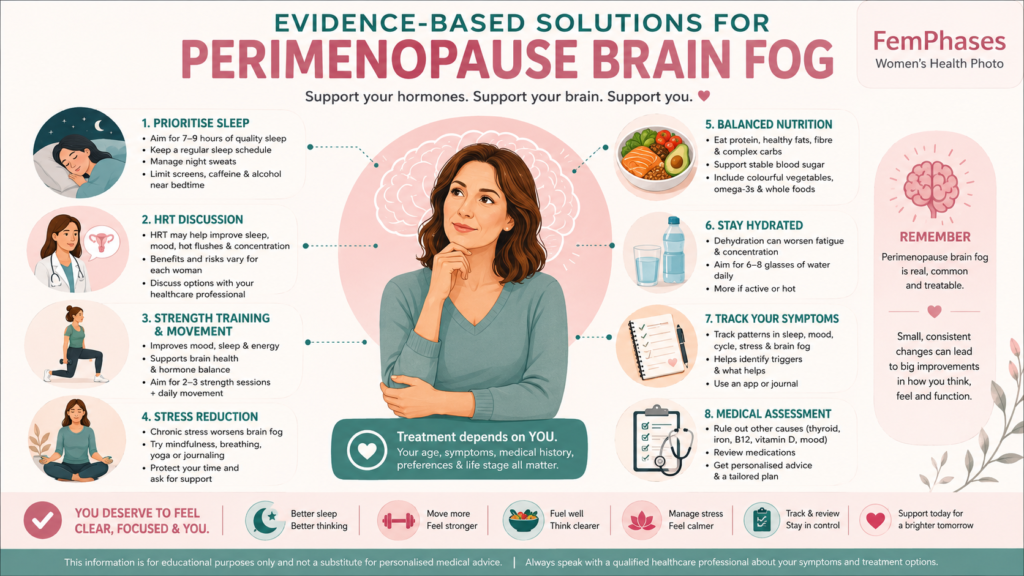
Evidence-Based Solutions
There is no single cure for perimenopause brain fog, but many women improve significantly with a combination of medical support, lifestyle changes, symptom management, and treatment of underlying contributors.
“Treatment for perimenopause brain fog depends on hormone changes, sleep quality, stress levels, overall health, and individual medical history.”
Medical Interventions
Medical Assessment
A healthcare professional may discuss:
- Your menstrual history
- Sleep patterns
- Mood symptoms
- Medication use
- Stress levels
- Family history
- Lifestyle factors
Blood tests may sometimes be recommended to check:
- Iron levels
- Thyroid function
- Vitamin B12
- Vitamin D
- Blood sugar levels
Hormone blood tests are not always necessary for diagnosing perimenopause in women over 45 because symptoms and menstrual changes are often more useful clinically.
Hormone Replacement Therapy (HRT)
For some women, HRT may improve brain fog, especially when symptoms are linked to hot flushes, sleep disruption, and mood changes.
HRT replaces some of the hormones that decline during menopause. It may help by:
- Improving sleep quality
- Reducing night sweats
- Stabilising hormone fluctuations
- Supporting mood and concentration
HRT is not suitable for everyone, and risks and benefits should always be discussed individually.
The NICE menopause guideline recommends discussing menopause symptoms and treatment options openly with healthcare professionals.
Non-Hormonal Treatments
Some women may benefit from:
- Cognitive behavioural therapy (CBT)
- Anxiety or depression treatment
- ADHD assessment if symptoms predate perimenopause
- Sleep treatment strategies
- Medication review to determine if side effects are contributing
Treating Underlying Deficiencies
Iron deficiency, thyroid disease, and vitamin deficiencies can worsen cognitive symptoms. Treating these conditions may significantly improve energy and concentration.

Holistic and Lifestyle Support
Lifestyle support matters because brain fog is rarely caused solely by hormones.
Prioritise Sleep
Sleep is one of the most important factors in cognitive function.
Helpful strategies include:
- Keeping a regular sleep schedule
- Reducing alcohol close to bedtime
- Keeping the bedroom cool
- Limiting late caffeine
- Managing night sweats
- Reducing screen exposure before sleep
Support Blood Sugar Stability
Large blood sugar swings can worsen mental fatigue and concentration problems.
Aim for meals containing:
- Protein
- Fibre
- Healthy fats
- Slow-release carbohydrates
Examples include:
- Greek yoghurt with berries and nuts
- Eggs and wholegrain toast
- Lentils, beans, or oily fish
- Vegetables with protein-rich meals
Exercise and Strength Training
Regular movement supports:
- Blood flow to the brain
- Mood regulation
- Sleep quality
- Stress reduction
- Cognitive function
You do not need intense exercise to benefit.
Helpful options include:
- Walking
- Strength training
- Yoga
- Pilates
- Swimming
- Dancing
The Office on Women’s Health menopause guidance highlights the importance of exercise, sleep, and stress management during menopause.
Stress Management
Chronic stress overloads the nervous system and can worsen brain fog dramatically.
Helpful approaches may include:
- Mindfulness
- Breathing exercises
- Therapy
- Journalling
- Reducing unrealistic expectations
- Asking for support
- Scheduling recovery time
Symptom Tracking
Tracking symptoms can help identify triggers and patterns.
You may notice links between brain fog and:
- Sleep quality
- Menstrual cycle changes
- Stress
- Alcohol
- Certain foods
- Busy periods at work
Supplements: A Balanced Approach
Some women ask about supplements for brain fog. Evidence is mixed, and supplements should not replace proper medical assessment.
Always discuss supplements with a healthcare professional, especially if you take medications or have health conditions.
Supplements marketed as “miracle menopause cures” should be approached cautiously.
When to See a Doctor
It is important to seek medical advice if:
- Symptoms interfere with daily life
- You feel unable to function normally
- Brain fog is worsening quickly
- You have severe anxiety or depression
- You notice personality changes
- Sleep problems are severe
- You have symptoms of anaemia
- You have unexplained weight loss
- You experience heavy bleeding
- You bleed after sex
- You bleed after menopause
- You develop severe headaches
- You have chest pain or shortness of breath
- You have thoughts of self-harm
You deserve to be taken seriously. Brain fog can be deeply distressing, even when it is linked to a common life stage.
The Royal College of Obstetricians and Gynaecologists provides additional information and support resources on menopause.
Key Takeaway
Perimenopause brain fog is common, real, and often linked to hormonal fluctuations, sleep disruption, stress, and the wider physical and emotional demands of midlife.
Although it can feel frightening, many women improve with the right combination of support, lifestyle changes, symptom tracking, and medical care where needed.
Pay attention to patterns, prioritise sleep and stress recovery, and seek assessment if symptoms feel severe, sudden, or out of proportion.
You do not have to “push through” or dismiss what you are experiencing.
Frequently Asked Questions
1. Can perimenopause brain fog feel like dementia?
Mild forgetfulness and concentration problems are common in perimenopause, but sudden or severe memory decline should always be medically assessed.
2. How long does perimenopause brain fog last?
Symptoms vary. Some women experience brain fog for a few months, while others notice fluctuations throughout perimenopause and early menopause.
3. Does HRT help brain fog?
For some women, yes. HRT may improve sleep, mood, hot flushes, and cognitive symptoms, particularly when symptoms are hormone-related.
4. Can anxiety make brain fog worse?
Yes. Anxiety, chronic stress, and overwhelm can significantly affect concentration, memory, and mental clarity.
5. What vitamins help with perimenopause brain fog?
If deficiencies are present, correcting iron, B12, or vitamin D deficiency may help. Supplements should be based on medical advice rather than guesswork.
6. Is brain fog normal during perimenopause?
Yes, many women experience it. However, severe, sudden, or worsening symptoms should not be ignored.
7. Can poor sleep alone cause brain fog?
Absolutely. Sleep disruption is one of the biggest contributors to cognitive symptoms during perimenopause.