Femphases: Helping women understand hormones, emotions, and midlife health.

Trust Bar Marquee

Hormonal Health

What Are the First Signs of Hormonal Changes in Women?

Many women describe it in the same quiet, uncertain way: “I don’t feel like myself, but I can’t explain why.” Maybe your periods have become unpredictable. Maybe you are waking at 3 a.m. with your mind racing. Maybe your patience feels thinner, your skin feels different, your energy dips without warning, or your usual jeans suddenly feel tighter around the middle. For many women, these subtle shifts are among the first signs of hormonal changes in women, especially in the years leading up to menopause. Hormonal changes can begin gradually, often in the late 30s or 40s, although timing varies. They may affect your cycle, sleep, mood, metabolism, sex life, skin, joints, concentration, and confidence. Some women notice one or two symptoms. Others feel as if their whole bodies have changed their rhythm. This article explains the first signs of hormonal changes in women, why they happen, what is normal, what needs medical review, and what practical, evidence-based steps may help you feel steadier, more informed, and supported. What Are Hormonal Changes in Women? Hormonal changes happen when the body’s chemical messengers shift in amount, timing, or pattern. Hormones are substances made by glands, such as the ovaries, thyroid, adrenal glands, and pancreas. They help regulate periods, fertility, mood, sleep, metabolism, temperature control, bone strength, blood sugar, and sexual function. For women aged 35–65, the most common hormonal transition is the movement from reproductive years into perimenopause, menopause, and postmenopause. Perimenopause means “around menopause.” It is the transition stage before menopause when ovarian hormone production becomes more unpredictable. Menopause is diagnosed after 12 consecutive months without a menstrual period, not caused by pregnancy, medication, or another medical condition. Postmenopause refers to the years after menopause. The main hormones involved include: Oestrogen: Supports the menstrual cycle, vaginal and urinary tissues, bones, brain function, skin, blood vessels, and temperature regulation. Progesterone: Helps regulate the menstrual cycle and supports sleep and a sense of calm in some women. Testosterone: Present in women in smaller amounts and involved in libido, energy, muscle strength, and well-being. Thyroid hormones: Regulate metabolism, temperature, heart rate, digestion, and energy. Insulin and cortisol influence blood sugar, stress response, appetite, sleep, and weight. The first signs of hormonal changes in women often appear when oestrogen and progesterone begin to fluctuate rather than decline. This is why symptoms can feel unpredictable. You may feel fine for weeks, then suddenly have heavier periods, poor sleep, anxiety, breast tenderness, or hot flushes. Trusted guidance from the NHS and Office on Women’s Health explains that hormone levels may change unevenly during the menopause transition, which is why symptoms can come and go. Common Signs and Symptoms The first signs of hormonal changes in women are not always dramatic. Many are easy to dismiss as stress, ageing, overwork, parenting, caregiving, or “just being busy.” In real life, women often report that symptoms build slowly until they start affecting sleep, patience, relationships, work performance, or confidence. a. Period Changes Changes in your menstrual cycle are often one of the earliest clues. You may notice: Periods coming closer together Longer gaps between periods Heavier bleeding Lighter bleeding More clots than usual Worse cramps Spotting before a period Periods that feel less predictable than before The NHS notes that a change in the usual pattern of periods is often one of the first signs of perimenopause. However, heavy bleeding, bleeding after sex, bleeding between periods, or bleeding after menopause should always be assessed. b. Sleep Disruption Many women say, “I’m exhausted, but I can’t sleep properly.” Sleep changes may include: Waking in the early hours Night sweats Lighter, more broken sleep Difficulty falling asleep Waking with anxiety or a racing heart Feeling unrefreshed despite enough hours in bed Poor sleep can make other symptoms feel worse, including irritability, brain fog, cravings, low mood, headaches, and fatigue. c. Mood and Anxiety Shifts Hormonal changes can affect brain chemicals involved in mood regulation. Women commonly describe: New or worsening anxiety Irritability Tearfulness Mood swings Lower confidence Feeling emotionally “thin-skinned” Panic-like feelings Low mood Reduced motivation This does not mean your symptoms are “all in your head.” Hormones, sleep, stress, life responsibilities, and past mental health history can all interact. Women with a history of PMS, postnatal depression, anxiety, depression, trauma, or PMDD may be more sensitive to hormonal shifts. d. Hot Flushes and Night Sweats Hot flushes are sudden waves of heat, often felt in the face, neck, chest, or upper body. They may come with sweating, flushing, palpitations, or chills afterwards. When they happen at night, they are called night sweats. Some women have obvious hot flushes early. Others only notice they are suddenly intolerant of warm rooms, alcohol, spicy foods, stress, or heavy bedding. e. Brain Fog and Concentration Changes Brain fog can feel frightening, especially for women who are used to being organised and mentally sharp. It may show up as: Forgetting words Losing your train of thought Difficulty concentrating Feeling mentally slower Forgetting why you walked into a room Struggling with multitasking Feeling less confident at work Brain fog is often worsened by poor sleep, stress, low mood, thyroid issues, anaemia, medication side effects, or vitamin deficiencies, so it is worth discussing persistent symptoms with a healthcare professional. f. Weight and Body Shape Changes Many women notice weight gain around the abdomen, even without major changes in eating habits. Hormonal changes can influence fat distribution, insulin sensitivity, appetite, muscle mass, sleep, and energy expenditure. This can feel deeply frustrating, especially when old routines no longer produce the same results. It is not a personal failure. Midlife metabolism is affected by hormones, muscle loss, sleep, stress, alcohol intake, activity levels, and genetics. g. Vaginal, Urinary, and Sexual Changes Lower oestrogen can affect the tissues of the vagina, vulva, bladder, and urethra. Symptoms may include: Vaginal dryness Pain or discomfort during sex Reduced libido Vulval itching or burning Recurrent urinary tract infections Urinary urgency Needing to pass urine more often Reduced arousal or sensitivity These symptoms are

What Are the First Signs of Hormonal Changes in Women? Read More »

Fibroids, Flooding, and Fatigue: How Heavy Bleeding Affects Midlife Women at Work

Introduction Fibroids, flooding and fatigue can quietly reshape a woman’s working life, especially in midlife when heavy bleeding, clots, exhaustion, and unpredictable cycles may collide with long shifts, meetings, uniforms, commuting, and caring responsibilities. When we talk about fibroids, flooding and fatigue, we are not only talking about periods. We are talking about energy, dignity, iron levels, concentration, workplace confidence, and the right to be taken seriously when bleeding begins to affect daily life. There is a moment many women know too well: you are at work, trying to focus, when you feel that sudden, unmistakable rush. You freeze for a second. You check the chair. You wonder how long until your next break. You calculate whether your pad, tampon, cup, or period underwear will hold. You think about the spare trousers you did not bring. You keep smiling, keep typing, keep caring for patients, teaching the class, leading the meeting, answering emails, serving customers, or standing through another long shift. This is the hidden reality of fibroids, flooding and fatigue at work. Heavy menstrual bleeding, also called menorrhagia, means bleeding that is heavy enough to affect physical, emotional, social, or daily life. NICE defines heavy menstrual bleeding as excessive menstrual blood loss that affects quality of life, and its guidance focuses on assessment, investigation, and treatment based on the woman’s needs and preferences. NICE Fibroids are non-cancerous growths that develop in or around the womb. They are common, especially in midlife, and they can cause heavy periods, pelvic pressure, pain, bloating, urinary frequency, and fertility-related concerns. Not all fibroids cause symptoms, but when they do, the effect on working life can be significant. And then there is the fatigue. Not ordinary tiredness. The kind that makes your legs feel heavy, your brain feel slow, and your patience feel thin before the workday has even properly started. For some women, this fatigue is linked to iron deficiency or anaemia from repeated heavy blood loss. Fibroids, flooding and fatigue deserve more than quiet endurance. They deserve proper assessment, practical support, and medical advocacy. The In-Depth Study Why fibroids can cause heavy bleeding Fibroids can affect bleeding depending on their size, number, and location. Fibroids that grow into or distort the womb cavity may increase the surface area of the womb lining, interfere with normal contraction of the uterus, and contribute to heavier or longer bleeding. Some women notice: Flooding through clothes or bedding Passing large clots Bleeding longer than seven days Needing double protection Changing pads or tampons every one to two hours Periods become unpredictable in perimenopause Pelvic heaviness, pressure, or bloating The CDC lists signs of heavy menstrual bleeding such as needing to change a pad or tampon in less than two hours, soaking through one or more pads or tampons every hour for several hours, needing double protection, changing products overnight, bleeding longer than seven days, passing clots the size of a quarter or larger, or having heavy flow that stops normal activities. CDC Why flooding feel worse during long shifts At home, heavy bleeding is stressful. At work, it can feel exposing. Long shifts often mean limited access to toilets, strict schedules, uniforms, physical movement, commuting, shared workspaces, and reduced privacy. For nurses, carers, teachers, retail staff, drivers, cleaners, hospitality workers, doctors, factory workers, and office workers in back-to-back meetings, a heavy period can become a logistical and emotional battle. This is where fibroids, flooding and fatigue move from a “period problem” into a workplace well-being issue. How heavy bleeding can lead to fatigue When bleeding is heavy month after month, the body may lose more iron than it can replace. Iron is needed to make haemoglobin, the protein in red blood cells that carries oxygen around the body. Low iron stores can cause fatigue even before anaemia becomes obvious on routine blood tests. Anaemia means there are not enough healthy red blood cells or haemoglobin to carry oxygen effectively. Symptoms may include: Exhaustion Dizziness Shortness of breath Palpitations Headaches Feeling cold Restless legs Poor concentration Weakness Reduced exercise tolerance Pale skin or inner eyelids If you are dragging yourself through shifts, feeling breathless on stairs, craving ice, relying heavily on caffeine, or feeling wiped out after every period, ask your clinician about a full blood count and a ferritin test, which checks iron stores. Why midlife can intensify the problem In perimenopause, ovulation may become less regular, and hormones can fluctuate. This can make bleeding heavier, closer together, further apart, or more unpredictable. But perimenopause should not be used as a blanket explanation for all heavy bleeding. The NHS advises seeing a GP if heavy periods are affecting your life, have been happening for some time, are associated with severe pain, happen alongside bleeding between periods or after sex, or occur with symptoms such as pain when urinating, opening the bowels, or having sex. NHS Signs and Symptoms a. Heavy bleeding signs to watch for Heavy bleeding may include: Soaking through protection every one to two hours Needing to wear double protection Passing large clots Flooding through clothes, bedding, or work uniforms Avoiding work tasks because of bleeding Planning your day around bathroom access Bleeding longer than seven days Waking at night to change products Feeling anxious about leaving the house during your period ACOG lists signs of heavy menstrual bleeding, including bleeding that lasts more than seven days, soaking through pads or tampons frequently, needing to wear more than one pad at a time, changing protection during the night, and passing large clots. ACOG b. Fibroid-related symptoms Fibroids may cause: Heavy or prolonged periods Pelvic pressure or heaviness Lower back pain Painful periods Bloating or abdominal fullness Frequent urination Constipation Pain during sex Fertility or pregnancy complications in some cases Some women have fibroids without knowing. Others know exactly where their fibroid sits because they can feel the pressure every time they bend, stand, or rush through a shift. c. Fatigue symptoms linked to iron loss Fatigue from heavy bleeding can feel different from

Fibroids, Flooding, and Fatigue: How Heavy Bleeding Affects Midlife Women at Work Read More »

Hormones and Anger in Perimenopause

The Overview There is a particular kind of anger that can arrive in perimenopause and feel nothing like your usual self. It may come fast. It may feel disproportionate. It may leave you thinking, Why did I react like that? And then, because women are so often trained to manage everyone else’s comfort, the anger is quickly followed by guilt. Hormones and anger are not about blaming every feeling on oestrogen or pretending hormones explain everything. It is about understanding that perimenopause can change the biological conditions your brain uses to regulate emotion. Perimenopause is the transition leading up to menopause, when ovarian hormones fluctuate before periods eventually stop. Menopause itself is confirmed after 12 months without a period. During this transition, many women experience changes in sleep, temperature control, periods, weight distribution, libido, memory, concentration, anxiety, low mood, and emotional steadiness. The NHS recognises mood swings, low mood, depression, memory problems, and concentration changes as symptoms of perimenopause and menopause, and notes that these can feel worse when sleep is poor and exhaustion builds. (nhs.uk) So no, you are not “just angry.” You may be under-slept, hormonally sensitive, overloaded, inflamed by stress, carrying invisible labour, and trying to function in a body whose internal settings are shifting. That does not mean anger is harmless or that we should ignore its impact on relationships, work, parenting, or self-esteem. It means anger deserves context, care, and a plan — not shame. Menopause Mood Tracker Tool The In-Depth Study What emotional regulation mean Emotional regulation means your ability to notice, tolerate, express, and recover from emotions without being completely taken over by them. It is not the same as never feeling angry. Healthy emotional regulation allows you to feel anger, understand what it is signalling, and respond rather than explode, freeze, withdraw, or spiral. During perimenopause, emotional regulation may become harder because several systems are changing at once: reproductive hormones, sleep, stress response, metabolism, brain chemistry, and life demands. Why oestrogen matters for mood Oestrogen is not only a reproductive hormone. It also interacts with brain systems involved in mood, sleep, cognition, temperature regulation, and stress sensitivity. During perimenopause, oestrogen can rise and fall unpredictably rather than decline in a straight line. That instability can be harder for some women than a steady low level. Research continues to explore how oestrogen affects neurotransmitters — chemical messengers such as serotonin, dopamine, and noradrenaline — which influence mood, motivation, reward, focus, and emotional sensitivity. A 2025 review on perimenopausal depression describes oestrogen’s role in mood-related brain pathways and why hormonal fluctuation may contribute to depressive and emotional symptoms in susceptible women. (PMC) This is one reason Hormones and Anger can feel so personal. Your usual coping tools may still be there, but the threshold for overwhelm may be lower. Progesterone, calm, and the “short fuse” Progesterone is often described as a calming hormone because some of its metabolites interact with GABA, a brain system involved in relaxation and inhibition. In perimenopause, progesterone may decline earlier or become less consistent, especially as ovulation becomes irregular. For some women, this can feel like losing an internal buffer. Things that once rolled off your back may suddenly land hard. Noise, mess, interruptions, unfairness, being touched out, being dismissed, or carrying too much responsibility can trigger anger faster than before. That anger is not imaginary. It is often a signal that your nervous system is running with less reserve. Sleep disruption makes anger louder Perimenopause-related insomnia, night sweats, early waking, and restless sleep can make emotional regulation much harder. Poor sleep affects the prefrontal cortex — the part of the brain involved in judgement, impulse control, perspective, and decision-making — while increasing reactivity in threat-detection systems. In plain English: when you are sleeping badly, your brain has less space between trigger and reaction. NICE recommends discussing management options based on individual symptoms and circumstances. It includes menopause-specific cognitive behavioural therapy as an option for vasomotor symptoms such as hot flushes and night sweats, either alongside HRT, when HRT is contraindicated, or when someone prefers not to use HRT. (NICE) Anger is often the visible tip of a bigger symptom cluster Many women search for hormones and anger because anger is the symptom that scares them most. But underneath it, there may be: 3 a.m. waking night sweats anxiety low mood brain fog migraines heavier or irregular periods palpitations low libido relationship strain workplace stress caring responsibilities blood sugar dips burnout This matters because treatment works best when the whole pattern is seen, not just the loudest symptom. Signs and Symptoms a. Emotional signs to watch for Perimenopause-related anger may show up as: feeling suddenly irritable or impatient snapping over small things rage that feels out of proportion crying after anger feeling overstimulated by noise, clutter, touch, or demands intense frustration before or during periods feeling less emotionally resilient than usual shame after conflict withdrawing because you are afraid of your own reactions The Office on Women’s Health lists mood changes among common menopause-related symptoms and encourages personalised symptom management plans, which is important because emotional symptoms rarely happen in isolation. (Office on Women’s Health) b. Physical symptoms that may travel with anger Anger may rise alongside physical changes such as: hot flashes or night sweats poor sleep headaches or worsening migraines breast tenderness joint aches palpitations heavier, lighter, closer, or skipped periods weight gain around the abdomen vaginal dryness or urinary symptoms The NHS notes that perimenopause and menopause can include mood changes, memory and concentration problems, weight changes, urinary symptoms, headaches, palpitations, joint pains, skin changes, and reduced libido. (nhs.uk) When anger may be more than perimenopause Perimenopause can contribute to emotional dysregulation, but it should not be used to explain away everything. Speak with a healthcare professional if anger is: new, intense, or worsening linked with panic attacks or depression affecting your relationships, work, parenting, or safety connected to trauma triggers accompanied by heavy alcohol use or substance use associated with thoughts of self-harm or

Hormones and Anger in Perimenopause Read More »

Is 30 or 35 the Best Age to Freeze Your Eggs? A Data-Backed Fertility Guide

Introduction If you are thinking about egg freezing, you are not overthinking it, and you are not late to the conversation. Many of us reach a point where fertility stops feeling like an abstract idea and starts feeling personal, urgent, and tangled up with real life: relationships, career, money, health, and timing. This guide is here to help us sort through that noise. We will look at what the data actually says about freezing eggs at 30 versus 35, why age matters biologically, what testing can and cannot tell us, what the process involves, and how to make a decision that feels informed rather than fear-driven. The short version is this: for most women, 30 gives better odds than 35, but 35 can still be a very reasonable and worthwhile age to freeze eggs, especially if you may need more than one cycle or you are not ready to try for pregnancy yet. (ASRM) What this guide will help you understand When people ask whether 30 or 35 is the best age to freeze eggs, they are usually asking something deeper: Will waiting 5 years meaningfully change my odds? Am I too early to do this now? Am I already cutting it close? Will egg freezing actually protect my future fertility? Those are sensible questions. The evidence suggests that age at the time the eggs are frozen matters more than age at the time the eggs are used later. Eggs frozen younger generally have a better chance of leading to a baby because both egg number and egg quality decline with age, and this decline becomes more noticeable in the mid-30s and steeper after the late 30s. (HFEA) Why age matters so much in fertility and egg freezing a) The biology, in plain language We are born with all the eggs we will ever have. Over time, that egg supply naturally gets smaller. But it is not only about quantity. As we get older, a larger share of eggs are more likely to have chromosomal problems, which makes fertilisation, embryo development, implantation, and miscarriage outcomes less favourable. (PubMed) That is why fertility changes with age, even in healthy women with regular periods. Regular cycles can indicate that ovulation is occurring, but they do not guarantee that egg quality has remained the same. Professional guidance consistently notes that female fertility declines gradually beginning in the early 30s, becomes more noticeable after 35, and drops more rapidly later in the decade. (PubMed) b) Why does that matter for egg freezing Egg freezing preserves eggs at the age they are collected. In other words, if eggs are frozen at 30 and used at 40, they are still biologically 30-year-old eggs. That is the central reason age at freezing is so important. HFEA guidance specifically notes that success is more strongly linked to the age at which the eggs were frozen than to the age at which they are thawed and used. (HFEA) Trying to Conceive After 35: What Changes and What Doesn’t Is 30 or 35 the better age to freeze eggs? The evidence-based answer For most women, 30 is biologically the better age to freeze eggs because: You are more likely to retrieve more eggs in one cycle. A higher proportion of those eggs is likely to be mature and chromosomally normal. You may need fewer cycles to reach a useful target number of frozen mature eggs. A recent age-based study of elective egg freezing found that at the 50th percentile, women aged 30 retrieved about 20 total oocytes and froze around 15 mature eggs, while women aged 35 retrieved about 14 total oocytes and froze around 11 mature eggs. That difference matters because future live birth odds rise with both younger age and more mature eggs banked. (PMC) ASRM’s evidence summary cites modelling suggesting that to reach about a 70% chance of a live birth, women aged 30–34 may need around 14 mature oocytes, while women aged 35–37 may need around 15. On paper, that sounds similar, but the practical difference is that women at 35 often retrieve fewer mature eggs per cycle than women at 30, so they may be more likely to need another round. (ASRM) So does that mean 35 is “too late”? No. Thirty-five is not too late. It is just not as favourable as 30. In real-world practice, many women freeze eggs around 35, and it can still be a smart fertility-preserving choice. HFEA reports that the average age of egg freezing patients in the UK was 35 in 2023. (HFEA) The better framing is this: If you are deciding between 30 and 35, and all else is equal, 30 is better. If you are already 35 and considering freezing, that does not mean you have missed your chance. If you wait from 30 to 35, you may reduce efficiency and increase the number of cycles needed. That is why many experts talk about the “best” age clinically as under 35, while acknowledging that the “right” age personally depends on your life, ovarian response, finances, and whether pregnancy is realistically likely in the near future. (Cambridge University Hospitals)   What the numbers say: egg yield, quality, and future live birth chances 1. Egg number falls with age The more mature eggs you freeze, the better your chances later, because not every egg survives thawing, fertilises, develops into a usable embryo, implants, or results in a live birth. That is normal biology, not failure. (OUP Academic) A 2017 counselling model found that the probability of at least one live birth rises with the number of mature eggs frozen and is consistently better at younger ages. (OUP Academic) 2. Egg quality also changes with age This is the part many people feel, but that is not always clearly explained. You can still ovulate regularly at 35, but the chance that an egg has normal chromosomes is lower than it was at 30. That is one reason miscarriage risk also increases with age. (ESHRE) 3. Egg freezing is

Is 30 or 35 the Best Age to Freeze Your Eggs? A Data-Backed Fertility Guide Read More »

Early Menopause vs Perimenopause: What’s the Difference?

Introduction If you have started noticing changes in your periods, sleep, mood, or body, it is very normal to wonder about early menopause vs perimenopause. Many women use these terms as if they mean the same thing, but they do not. Understanding the difference can help you feel less confused and know when it is worth checking in with a doctor. (nhs.uk) Quick answer: Perimenopause is the transition leading up to menopause, when hormone levels begin to change, but periods have not stopped for good yet. Early menopause means menopause has already happened earlier than usual, between the ages of 40 and 45. Menopause is reached when you have gone 12 months in a row without a period. (nhs.uk) Check Your Symptoms What is early menopause vs perimenopause? When people search for early menopause vs perimenopause, the most important thing to know is this: one is a stage of transition, and the other is about timing. Perimenopause means the transition to menopause. Perimenopause is the phase leading up to your final period. During this time, hormone levels can rise and fall unevenly, leading to symptoms that come and go. You may still have periods, but they often become less predictable. Perimenopause ends when you have not had a period for 12 months and officially reach menopause. (nhs.uk) Early menopause means menopause happens earlier than expected. Early menopause means your periods have stopped for good between the ages of 40 and 45. That is different from the usual age range, which is typically 45 to 55. Menopause before age 40 is usually called premature menopause or primary ovarian insufficiency. (nhs.uk) The simplest way to think about it Perimenopause: the lead-up to menopause Early menopause: menopause that happens sooner than usual You can be in perimenopause in your 30s or 40s, but you are only in early menopause once menopause has actually happened before age 45 (Office on Women’s Health) Why does it happen? The confusion around early menopause vs perimenopause often starts because both involve changing hormone levels, and both can cause similar symptoms. Why perimenopause happens Perimenopause happens because the ovaries gradually make less oestrogen and progesterone over time. This is a normal life stage. Hormone levels do not fall in a smooth, straight line, which is why symptoms can feel unpredictable. One month, you may feel mostly fine, and the next, you may have night sweats, irregular bleeding, or poor sleep. (Office on Women’s Health) Why does early menopause happen Early menopause may happen naturally, but it can also be linked to things like: Medical or surgical causes surgery to remove both ovaries Some cancer treatments, including chemotherapy or pelvic radiation (nhs.uk) Health and lifestyle factors smoking family history some autoimmune conditions certain genetic or chromosomal conditions (Office on Women’s Health) Sometimes there is no clear reason, which can feel frustrating and emotional. If menopause seems to be happening earlier than expected, it is worth getting proper medical advice rather than assuming it is “just stress” or “just getting older.” (Office on Women’s Health) Signs or symptoms This is where early menopause vs perimenopause can feel especially confusing, because the symptoms can overlap a lot. Common symptoms in both Period changes periods becoming irregular, heavier or lighter, bleeding skipped periods longer or shorter cycles (nhs.uk) Physical symptoms hot flushes night sweats vaginal dryness sleep problems reduced sex drive (nhs.uk) Emotional and mental symptoms mood swings anxiety low mood brain fog or trouble concentrating (nhs.uk) The key difference in symptoms is not the symptom itself. The real difference in early menopause vs perimenopause is not whether you have hot flushes or mood changes. It is whether you are still in transition or have already reached menopause. If you are still having periods, even irregular ones, you are more likely to be in perimenopause. If you have gone 12 straight months without a period and you are between 40 and 45, that is early menopause. (nhs.uk) What is normal, and when to pay attention A certain amount of change is common in midlife, but some signs deserve more attention. What can be normal in perimenopause cycles that are less predictable than before occasional skipped periods hot flushes, poor sleep, or mood changes symptoms that come and go rather than staying constant (nhs.uk) What is worth paying attention to menopause symptoms before age 45 periods stopping before age 40 very heavy bleeding bleeding after sex bleeding after 12 months without a period symptoms that are affecting work, relationships, sleep, or mental health (Office on Women’s Health) A medically responsible reminder Do not assume every change is hormonal. Thyroid problems, pregnancy, some medicines, and other health conditions can also affect periods and mood. If something feels unusual for you, getting checked is sensible, not dramatic. (Office on Women’s Health) When to speak to a doctor If you are trying to figure out early menopause vs perimenopause, speak to a doctor or qualified clinician if: you think menopause may be happening before age 45 your periods stop before age 40 your symptoms are hard to manage you have vaginal bleeding after menopause you have severe low mood, anxiety, or ongoing sleep problems you want advice on symptom relief, contraception, fertility, or hormone treatment options (Office on Women’s Health) A clinician may diagnose perimenopause based on your age and symptoms. Hormone blood tests are not always helpful in typical perimenopause because hormone levels can swing up and down. Still, testing may be considered when periods stop early or the picture is unclear. (Office on Women’s Health) Key takeaway When it comes to early menopause vs perimenopause, the difference is simple once you strip it back. Perimenopause is the transition before menopause, when symptoms start but periods have not stopped for good. Early menopause means menopause occurred between the ages of 40 and 45. If your symptoms are affecting your daily life, or if your periods stop earlier than expected, it is worth speaking to a doctor to get clear answers and support. (nhs.uk) Frequently

Early Menopause vs Perimenopause: What’s the Difference? Read More »

GLP-1 Microdosing in Perimenopause: Safe or Risky?

Introduction Somewhere between the hot flashes, the stubborn belly fat, the 3 a.m. waking, and the feeling that your body has quietly changed the rules, it makes sense that women are asking about GLP-1 microdosing in perimenopause. Not because they are vain. Not because they lack discipline. But because many are tired of being told that symptoms disrupting their daily lives are just “normal ageing.” GLP-1 medicines, such as semaglutide and tirzepatide, have changed the conversation around obesity, type 2 diabetes, appetite regulation, and metabolic health. The NHS describes semaglutide as a prescription GLP-1 agonist used to manage type 2 diabetes or treat obesity alongside diet and exercise changes. (nhs.uk) But GLP-1 microdosing in perimenopause is a different conversation. It sits in a grey zone between medical treatment, off-label prescribing, social media trends, and private wellness marketing. The key question is not “Could GLP-1 medicines help some women?” They can, when clinically appropriate. The better question is: Is microdosing evidence-based, safe, and appropriate for your body right now? Menopause Symptom Checker Quiz The Overview Perimenopause is the transition leading up to menopause, when ovarian hormone patterns become more unpredictable. Oestrogen and progesterone may rise and fall unevenly before periods stop completely. For many women, this stage brings hot flashes, night sweats, heavier or irregular periods, sleep disturbance, anxiety, joint aches, brain fog, and changes in body composition. At the same time, midlife metabolism can feel less forgiving. Muscle mass may decline, sleep disruption can affect hunger hormones, stress can increase cravings, and changing oestrogen levels may influence fat storage around the abdomen. This does not mean weight gain is inevitable. It does mean that the old advice to “eat less and move more” can feel painfully incomplete. GLP-1 microdosing in perimenopause has grown from this frustration. The idea is usually to use a lower-than-standard dose of a GLP-1 medicine to reduce appetite, improve cravings, support blood sugar stability, or avoid the stronger side effects some people experience at standard doses. However, there is an important distinction: Clinician-guided dose adjustment is not the same as wellness “microdosing.” A prescriber may adjust a medication carefully due to side effects, treatment response, medical history, or tolerability. But the current microdosing trend often involves non-standard doses, compounded products, online prescribing, or vague claims about “longevity,” “inflammation,” or “hormone balancing.” As of 2026, medical caution is warranted. STAT reported that there is no agreed clinical definition of GLP-1 microdosing for weight loss and no legitimate long-term evidence supporting it as a treatment approach. (STAT) The In-Depth Study What are GLP-1 medicines? GLP-1 stands for glucagon-like peptide-1, a hormone involved in appetite, digestion, insulin release, and blood sugar control. GLP-1 receptor agonists are medicines that mimic this hormone. In plain English, they can help some people: Feel fuller for longer Have fewer intense food cravings Lower blood sugar levels Lose weight when used alongside nutrition, movement, and medical supervision Improve some obesity-related cardiometabolic risks The World Health Organisation’s 2025 guidance describes GLP-1 receptor agonists as medicines that can lower blood sugar, support weight loss, reduce the risk of certain heart and kidney complications, and reduce the risk of early death in people with type 2 diabetes. Its obesity guidance focuses on liraglutide, semaglutide, and tirzepatide. (World Health Organisation) What does “microdosing” mean? This is where things get slippery. In medicine, dosing should be precise: a drug, a dose, a schedule, a reason, a monitoring plan, and clear safety instructions. But GLP-1 microdosing in perimenopause does not yet have a standard medical definition. Depending on who is using the term, it may mean: Starting at the lowest licensed dose and staying there longer Taking a fraction of a standard dose Spacing injections further apart Using compounded semaglutide or tirzepatide Using GLP-1s for mild weight gain, cravings, “metabolic optimisation,” or longevity Using the medication without meeting formal obesity, diabetes, or cardiometabolic criteria That lack of clarity matters. Without a shared definition, it is difficult to study safety, effectiveness, side effects, dose-response, or long-term outcomes. Why are perimenopausal women interested The interest is understandable. Many women in their 40s and 50s are dealing with symptoms that overlap: poor sleep, higher stress, increased abdominal fat, stronger cravings, fatigue, low mood, and reduced exercise recovery. Some women also develop insulin resistance, meaning the body has a harder time using insulin effectively to move glucose from the blood into cells. This can contribute to hunger, weight gain, raised blood sugar, and higher cardiometabolic risk. But perimenopause is not one single problem. Stubborn weight gain may be linked to sleep deprivation, thyroid disease, polycystic ovary syndrome, medication side effects, depression, stress, reduced muscle mass, alcohol intake, insulin resistance, or untreated menopause symptoms. That is why GLP-1 microdosing in perimenopause should not be used as a shortcut around proper assessment. What does the evidence say so far? The strongest evidence for GLP-1 medicines is in people with type 2 diabetes, obesity, overweight with weight-related complications, and some cardiovascular risk groups. NHS England states that semaglutide for obesity is prescribed through specialist weight management services and may be considered when diet and exercise changes have not worked on their own. (NHS England) For menopause specifically, the research is still developing. The British Menopause Society published a 2025 clinician tool on incretin-based therapies, including GLP-1 medicines, in women using HRT. The guidance highlights indications, menopause-related prescribing considerations, and clinical practice guidance. (British Menopause Society) But GLP-1 microdosing in perimenopause is not yet backed by robust long-term trials. That does not mean every low-dose approach is reckless. It means the phrase “microdosing” should not be treated as proven, gentle, or risk-free simply because it sounds smaller. Does HRT Increase Breast Cancer Risk? What the Latest Evidence Says Signs and Symptoms a. Signs your symptoms may be perimenopause-related Perimenopause can show up as: Hot flashes or night sweats Waking at 3 a.m. or struggling to stay asleep Irregular, heavier, lighter, shorter, or longer cycles New anxiety, irritability, low mood, or emotional sensitivity Brain fog or reduced concentration

GLP-1 Microdosing in Perimenopause: Safe or Risky? Read More »

What Is Ovulation? A Complete Guide to the Fertile Window

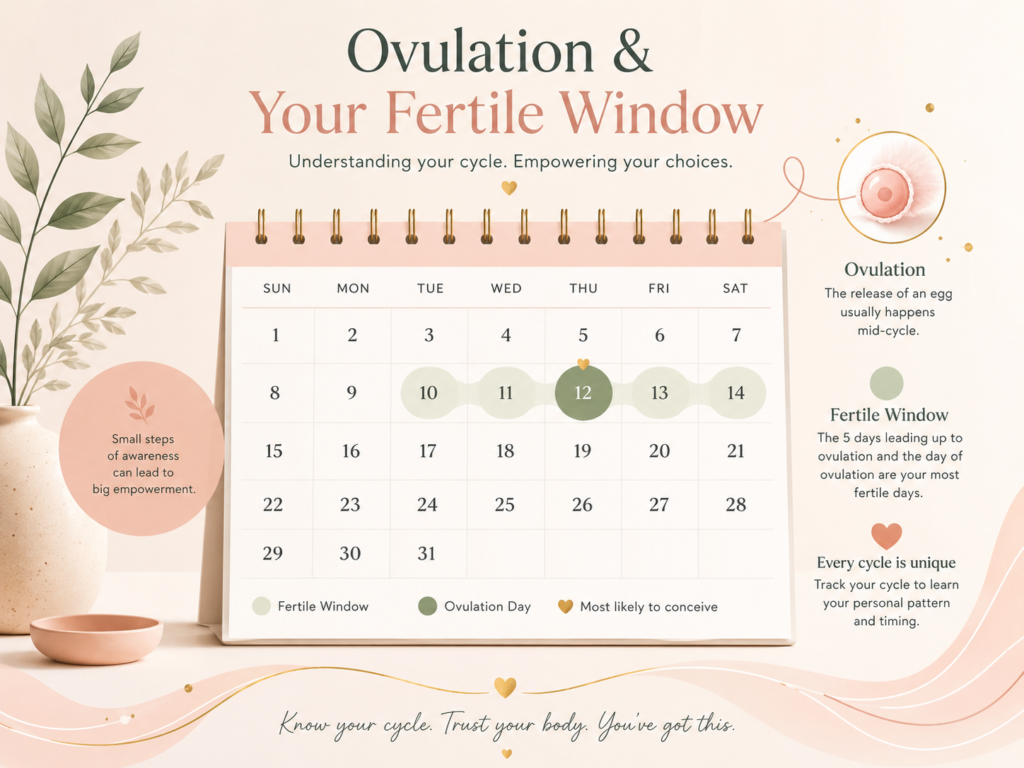
Introduction Every month, millions of women quietly ask themselves the same question: “When am I most likely to get pregnant?” Whether someone is hoping to conceive, trying to avoid pregnancy naturally, or simply trying to understand their body better, the answer almost always leads to one key biological event – ovulation. Ovulation is the moment in the menstrual cycle when the body releases an egg from the ovary. It sounds simple, but behind that moment is an intricate hormonal rhythm involving the brain, the ovaries, and the endocrine system. Understanding this process can help explain not only fertility but also many changes women experience throughout their cycle—energy shifts, mood changes, cervical mucus patterns, and even subtle changes in body temperature. In this guide, we’ll walk through what ovulation actually is, how the fertile window works, how to recognise the signs your body may give before ovulation, and why timing matters when it comes to conception. Along the way, we’ll also explore the science behind the process, drawing from established research and guidance from organisations such as the National Health Service (NHS), the World Health Organisation (WHO), and the National Institutes of Health (NIH). Understanding the Menstrual Cycle First To understand ovulation, it helps first to see the bigger picture. The menstrual cycle is the body’s monthly preparation for pregnancy. Although the average cycle lasts about 28 days, cycles ranging from 21 to 35 days are considered normal for adults, according to the NHS. The cycle is usually divided into four main phases: 1. Menstrual Phase This is the beginning of the cycle when the uterus sheds its lining, resulting in a period. 2. Follicular Phase During this phase, hormones stimulate the ovaries to develop follicles. Each follicle contains an immature egg. 3. Ovulation One follicle becomes dominant and releases an egg into the fallopian tube. 4. Luteal Phase After ovulation, the body prepares the uterus for possible pregnancy. Ovulation sits right in the middle of this process—it’s the point where fertility peaks. What Exactly Is Ovulation? Ovulation is the release of a mature egg (ovum) from one of the ovaries. Once released, the egg travels down the fallopian tube, where it may encounter sperm and become fertilised. If fertilisation does not occur, the egg dissolves within about 12 to 24 hours. However, sperm can survive in the reproductive tract for up to five days, which is why pregnancy can occur even if intercourse happens several days before ovulation. This window of opportunity is known as the fertile window. The Hormones Behind Ovulation A delicate hormonal communication system between the brain and ovaries controls ovulation. The process begins in the hypothalamus, a small region of the brain that secretes the hormone gonadotropin-releasing hormone (GnRH). GnRH signals the pituitary gland to release two key reproductive hormones: Follicle-Stimulating Hormone (FSH) FSH stimulates several follicles in the ovaries to grow and mature. Each follicle contains an egg. Usually, one follicle becomes dominant. Rising Estrogen As the dominant follicle develops, it produces increasing levels of estrogen, which thickens the uterine lining and signals the brain that the egg is nearly ready. The LH Surge When estrogen levels peak, the pituitary gland releases a sudden surge of luteinising hormone. This LH surge triggers ovulation, usually within 24–36 hours. Research cited by the National Institutes of Health confirms that the LH surge is the most reliable hormonal signal that ovulation is imminent. What Is the Fertile Window? The fertile window is the time during the menstrual cycle when pregnancy is possible. This window typically includes: • The five days before ovulation • The day of ovulation This six-day period exists because sperm can live for several days, while the egg survives for about one day. For example: If ovulation occurs on day 14, the fertile window may be days 9–14. However, ovulation timing can vary from cycle to cycle. When Does Ovulation Usually Occur? Many people believe ovulation always occurs on day 14, but this is true only for some individuals. Ovulation usually occurs about 12–14 days before the next period begins, regardless of total cycle length. Examples: Cycle LengthEstimated Ovulation 28 days Day 14 30 days Day 16 32 days Day 18 This variation is one reason why fertility tracking often requires observing body signals over several cycles. Signs Your Body May Be Ovulating The body often gives subtle clues that ovulation is approaching. Not everyone notices these changes, but many women can learn to recognise them with time. One of the most reliable fertility signs is cervical mucus. As ovulation approaches, cervical mucus often becomes: Many people describe it as having a consistency similar to raw egg whites. According to the NHS, this type of mucus helps sperm travel more easily toward the egg. After ovulation, progesterone slightly increases body temperature. This change is usually around 0.3–0.5°C (0.5–1°F). Tracking basal body temperature (BBT) daily can help confirm ovulation, though it cannot predict it in advance. Some people experience a brief pain on one side of the abdomen during ovulation. This is sometimes called mittelschmerz, a German term meaning “middle pain.” The discomfort is usually mild and short-lived. Many women report feeling more interested in intimacy around ovulation. Some researchers suggest this may be linked to hormonal changes that naturally encourage reproduction. Hormone fluctuations during ovulation can also cause: These symptoms vary widely from person to person. Methods for Tracking Ovulation Several methods can help identify ovulation and the fertile window. Tracking menstrual cycles over several months can provide an estimate of ovulation timing. However, this method is less accurate for irregular cycles. This involves measuring body temperature each morning before getting out of bed. A small temperature increase indicates ovulation has already occurred. Ovulation tests detect the LH surge in urine, which occurs shortly before ovulation. These tests are widely used and considered reliable when used correctly. Observing changes in cervical mucus throughout the cycle can help identify fertile days. This method is commonly used in fertility awareness approaches. Factors That Can Affect Ovulation

What Is Ovulation? A Complete Guide to the Fertile Window Read More »

Natural Ways to Cool Down a Hot Flash: Evidence-Based Relief

Introduction If you’re searching for natural ways to cool down a hot flash, you’re certainly not alone. Hot flashes (also called hot flushes) are among the most common symptoms experienced during perimenopause and menopause, affecting up to 80% of women at some point during the menopausal transition. A hot flash is a sudden sensation of intense warmth, often affecting the face, neck, chest, and upper body. It may be accompanied by sweating, flushing, palpitations, anxiety, and sometimes chills afterwards. Although hot flashes are not dangerous, they can significantly affect sleep, work, concentration, confidence, and quality of life. Current guidance from the NHS, NICE, the British Menopause Society (BMS), and the American College of Obstetricians and Gynaecologists (ACOG) emphasises that while hormone therapy remains the most effective treatment for many women, several evidence-based lifestyle strategies can help reduce symptoms and improve comfort. For many women, combining medical care with natural ways to cool down a hot flash can provide meaningful relief. Menopause Symptom Checker The In-Depth Study a. Understanding Why Hot Flashes Happen Hot flashes occur primarily because of declining estrogen levels during perimenopause and menopause. Oestrogen helps regulate the body’s internal temperature control system, located in an area of the brain called the hypothalamus. As hormone levels fluctuate, the hypothalamus becomes more sensitive to small temperature changes. This means that even a slight increase in body temperature may trigger: Sudden blood vessel dilation Increased skin blood flow Sweating A feeling of intense heat The body essentially behaves as if it needs to cool rapidly, even when no true overheating occurs. b. The Role of the Thermoregulatory Zone Researchers describe a “thermoneutral zone” the range of temperatures your body can tolerate comfortably. During menopause, this zone narrows significantly. Small temperature changes that previously went unnoticed can suddenly trigger: Heat sensations Sweating Facial flushing Night sweats This explains why many women notice symptoms after: Drinking hot beverages Entering warm rooms Experiencing stress Consuming alcohol Exercising c. Why Some Women Experience More Severe Symptoms Not all women experience hot flashes the same way. Research suggests symptom severity may be influenced by: Genetics Body weight Smoking status Stress levels Sleep quality Ethnicity Overall health Studies continue to explore why some women experience only occasional symptoms while others struggle with frequent daily episodes lasting years. d. What Recent Research Shows Recent evidence continues to support several non-pharmacological approaches alongside medical treatment. Research between 2024 and 2026 highlights benefits from: Maintaining a healthy body weight Improving sleep quality Stress reduction techniques Regular physical activity Environmental cooling strategies Cognitive behavioural therapy (CBT) Importantly, no supplement has been proven to eliminate hot flashes reliably, and women should be cautious about products marketed as “cures.” Signs and Symptoms a. Common Symptoms of a Hot Flash Hot flashes may include: Sudden intense heat Facial flushing Excessive sweating Rapid heartbeat Anxiety or discomfort Chills after sweating Damp clothing Sleep disruption b. Night Sweats Night sweats are essentially hot flashes that occur during sleep. Women may wake: Drenched in sweat Feeling overheated Needing to change clothes or bedding Unable to return to sleep easily d. When Symptoms Affect Daily Life Seek medical advice if symptoms are: Frequent Severe Affecting sleep Impacting mental well-being Interfering with work or relationships A Note on Self-Advocacy Many women are told to simply “put up with” menopausal symptoms. However, effective support exists. If hot flashes are affecting your quality of life, it is reasonable to discuss treatment options with your healthcare professional. Diagnosis and Treatment i. How Hot Flashes Are Diagnosed Diagnosis is usually based on: Symptom history Age Menstrual changes Medical history Blood tests are not always necessary in women over 45 experiencing typical menopausal symptoms. ii. Hormone Replacement Therapy (HRT) According to NICE, BMS, and ACOG guidance, hormone replacement therapy remains the most effective treatment for menopausal hot flashes. Benefits may include: Reduced hot flashes Improved sleep Better quality of life Reduced night sweats However, treatment decisions should always be individualised. iii. Non-Hormonal Medical Treatments Some women cannot or choose not to use HRT. Alternative options may include: Cognitive behavioural therapy Certain prescription medications Lifestyle interventions A healthcare professional can help determine the safest approach. iv. Combining Medical and Lifestyle Approaches Many women find the greatest benefit from combining clinical treatment with natural ways to cool down a hot flash and support overall well-being. Barriers a. Misinformation Online Social media often promotes supplements and detoxes claiming to “cure menopause.” Most lack strong scientific evidence. b. Delayed Diagnosis Some women experience symptoms for years before recognising they may be entering perimenopause. c. Healthcare Access Access to menopause-informed care remains inconsistent globally. d. Stigma Around Menopause Many women feel uncomfortable discussing symptoms at work, socially, or even within healthcare settings. Reducing stigma remains an important public health goal. Solutions & Support a. Keep Your Environment Cool One of the simplest natural ways to cool down during a hot flash is to reduce environmental heat exposure. Helpful strategies include: Using fans Keeping rooms cool Carrying a portable fan Opening windows when possible Lowering bedroom temperatures b. Dress in Layers Layered clothing allows rapid adjustment when symptoms begin. Choose: Breathable fabrics Moisture-wicking materials Loose-fitting clothing c. Stay Hydrated Cold water may help improve comfort during a hot flash. Many women find relief by: Carrying a reusable water bottle Drinking regularly throughout the day Taking small sips during symptoms d. Identify Personal Triggers Common triggers include: Alcohol Caffeine Spicy foods Hot drinks Warm environments Stress Keeping a symptom diary can help identify patterns. e. Practice Stress Reduction Stress activates the body’s stress response system and may worsen symptoms. Evidence-based approaches include: Mindfulness Meditation Deep breathing Yoga Gentle stretching d. Improve Sleep Quality Better sleep may reduce overall symptom burden. Consider: Consistent bedtimes Cooler bedrooms Limiting screens before bed Avoiding large evening meals e. Maintain Regular Physical Activity Exercise does not directly eliminate hot flashes but supports: Cardiovascular health Sleep Mood Weight management Activities may include: Walking Cycling Swimming Strength training f. Consider Cognitive Behavioural Therapy (CBT) CBT helps some

Natural Ways to Cool Down a Hot Flash: Evidence-Based Relief Read More »

Simple Nurse Hacks for Soothing Tender Hormonal Breasts

Introduction There are days when even putting on a bra feels unbearable. Your breasts feel swollen, heavy, sore, achy, sensitive to touch, and strangely “full” in a way that can make normal daily life uncomfortable. Rolling over in bed hurts. Walking downstairs hurts. Hugging someone hurts. Sometimes, even your favourite soft jumper brushing against your chest feels irritating. For many women, hormonal breast tenderness is a normal part of monthly life, but if you notice persistent, unusual, or worsening symptoms, consult a healthcare professional to rule out other causes like breast cancer. Remember, most tenderness is related to hormonal changes, not serious illness. Breast pain can create worry, frustration, body anxiety, irritability, and exhaustion. Recognising how physical symptoms are linked to emotional feelings can help you feel understood and supported. If that sounds familiar, you are not imagining it, overreacting, or “being sensitive.” Hormonal breast tenderness is real, physiologically complex, and deeply connected to the hormonal shifts happening inside your body. The good news is that there are gentle, practical ways to soothe tender hormonal breasts and support your nervous system, hormones, and emotional wellbeing at the same time, helping you feel more in control. “Perimenopause Symptom Quiz: Are Your Hormones Changing?” Signs and Symptoms a. Common Signs Hormonal breast tenderness can feel different from one woman to another. For some, it is a dull ache that appears a few days before a period. For others, it feels sharp, swollen, burning, heavy, throbbing, or intensely sensitive. Common symptoms include: Swollen or enlarged breasts Tenderness before periods Aching under the arms Pain around the sides of the breasts A feeling of heaviness or fullness Increased nipple sensitivity Lumpy or dense-feeling breast tissue Discomfort during exercise Pain when lying on the stomach Bra discomfort Sensitivity during hugs or touch Some women notice symptoms mostly in both breasts, especially during hormonal fluctuations. Others experience one breast feeling more painful than the other. Emotionally, the experience can also be draining. You may feel: Irritable from physical discomfort Frustrated by recurring symptoms Anxious about breast changes Exhausted from poor sleep Emotionally overwhelmed during PMS or perimenopause Hyper-aware of body sensations Many women also notice breast tenderness worsening during stressful periods, poor sleep, emotional burnout, or hormonal transitions like perimenopause. b. Why These Symptoms Happen Hormonal breast tenderness is often linked to changing levels of estrogen and progesterone throughout the menstrual cycle. After ovulation, hormonal shifts can cause breast tissue to retain more fluid, leading to temporary swelling or inflammation. Milk ducts and glands inside the breasts may also become more sensitive to hormonal stimulation. Estrogen tends to stimulate breast tissue growth and fluid retention, while progesterone can affect glandular tissue and swelling. When these hormones fluctuate rapidly, breasts may feel painful, enlarged, or unusually sensitive. Stress also plays a major role. When your body is under emotional or physical stress, cortisol levels rise. This can influence inflammation, fluid balance, sleep quality, nervous system regulation, and hormone signalling. Many women notice their breast pain feels worse during emotionally difficult months. Sleep deprivation, high caffeine intake, poor-fitting bras, weight changes, and perimenopausal hormone instability may also contribute. Hormonal and Psychological Context a. Hormonal Changes Hormones influence far more than reproduction. They affect mood, sleep, inflammation, pain sensitivity, appetite, emotional regulation, and even how your nervous system processes discomfort. In hormonal breast tenderness, several hormones may be involved. i. Estrogen Estrogen naturally rises during certain parts of the menstrual cycle. Higher estrogen levels can increase fluid retention and stimulate breast tissue, leading to swelling and soreness. During perimenopause, estrogen fluctuations can become unpredictable, causing breast tenderness to appear suddenly, then disappear, and then return, which can feel confusing but is a common part of this transition. ii. Progesterone Progesterone rises after ovulation. In some women, changing progesterone levels contributes to breast swelling and sensitivity, especially before menstruation. iii. Cortisol Stress hormones matter more than many women realise. Chronic stress may worsen inflammation, increase muscle tension, disrupt sleep, heighten pain sensitivity, and affect hormonal balance. Emotional overload can genuinely make physical symptoms feel more intense. iv. Serotonin Low serotonin levels during PMS or hormonal shifts may contribute to irritability, emotional sensitivity, anxiety, sleep disturbances, and increased awareness of discomfort. v. Thyroid Hormones Thyroid dysfunction can sometimes contribute to breast discomfort, fluid retention, menstrual changes, fatigue, and hormone disruption. b. Emotional and Mental Health Impact Tender hormonal breasts are not “just physical.” When your body hurts repeatedly, especially around hormonal changes, it can affect your emotional well-being, too. You may feel: Anxious every time symptoms return Frustrated that your body feels unpredictable Emotionally exhausted by monthly discomfort Irritable because pain lowers your tolerance Self-conscious about breast swelling Overwhelmed during PMS or perimenopause Lonely if nobody around you understands Some women also experience health anxiety around breast pain, especially if symptoms feel unfamiliar or intense. That emotional response makes sense. The brain and body constantly communicate through the nervous system. Physical discomfort can increase emotional stress, and emotional stress can heighten physical symptoms. This does not mean symptoms are “all in your head.” It means your body systems are deeply connected. What the Science Says a. Evidence-Based Insight Hormonal breast tenderness, often called cyclical mastalgia, is extremely common and affects many women during reproductive years and perimenopause. Research suggests breast pain is strongly influenced by hormonal fluctuations, especially changing estrogen and progesterone levels across the menstrual cycle. Current evidence also suggests several contributing factors may worsen symptoms, including: Hormonal sensitivity Stress and cortisol dysregulation Fluid retention Poor sleep High caffeine intake in some women Inflammation Perimenopausal hormone instability Certain medications Hormonal contraception Ill-fitting bras Weight changes Some studies suggest that reducing caffeine may help certain women with cyclical breast pain, although findings are mixed. Supportive bras, stress reduction, regular movement, and symptom tracking are commonly recommended as first-line strategies. Research also shows that chronic stress and nervous system overload can increase pain perception. When the body remains in a heightened state of stress, sensitivity to physical discomfort may increase. Perimenopause

Simple Nurse Hacks for Soothing Tender Hormonal Breasts Read More »

New Menopause Treatments in 2026: What Works?

Introduction Menopause care is changing rapidly, and The New Menopause Treatments Women Are Talking About in 2026 reflect a growing shift toward personalised, evidence-based care. For many women, menopause symptoms affect sleep, mood, concentration, relationships, work performance, sexual wellbeing, and overall quality of life. At the same time, social media, celebrity discussions, podcasts, and online health communities have created an explosion of information—some helpful, some misleading. The challenge is knowing which treatments are genuinely supported by science and which are being driven primarily by marketing. In this article, we’ll explore The New Menopause Treatments Women Are Talking About in 2026, what current medical evidence says, and how women can make informed decisions with their healthcare professionals. The Overview Menopause occurs when the ovaries permanently stop releasing eggs and menstrual periods cease for 12 consecutive months. The transition is driven by declining levels of oestrogen and progesterone. Recent years have brought significant changes to menopause care: Greater awareness and advocacy Updated menopause guidelines Increased research funding New non-hormonal medications Better understanding of personalised hormone therapy Expanded recognition of cognitive, metabolic, and cardiovascular symptoms Menopause Symptom Quiz While hormone replacement therapy (HRT) remains the most effective treatment for many menopausal symptoms, researchers have developed new options for women who cannot or prefer not to use hormones. Current guidance from major organisations, including NICE, the British Menopause Society, the International Menopause Society, ACOG, and endocrine experts, continues to support individualised treatment decisions based on symptoms, health history, and personal preferences. (British Menopause Society) The In-Depth Study 1. Neurokinin-3 (NK3) Receptor Antagonists: The Biggest New Development One of the most discussed innovations among the New Menopause Treatments Women Are Talking About in 2026 is a class of medications called NK3 receptor antagonists. These medications target temperature regulation pathways in the brain rather than replacing hormones. The best-known example is fezolinetant. Research shows that fezolinetant significantly reduces: Hot flushes Night sweats Sleep disruption related to vasomotor symptoms Clinical trials have demonstrated reductions in hot flush frequency of up to 60%, with improvements seen within weeks for many women. In 2026, NICE supported NHS prescribing of fezolinetant for eligible women experiencing moderate-to-severe symptoms when HRT is unsuitable. (British Menopause Society) What women should know: It is non-hormonal It may be suitable for some women who cannot take HRT Liver monitoring is required due to rare cases of liver injury It primarily treats hot flushes and night sweats rather than all menopause symptoms (acog.org) 2. Elinzanetant: The Next Generation Option Another emerging medication attracting attention is elinzanetant. This treatment works on related neurokinin pathways and has shown promising results in phase 3 clinical trials. Researchers report: Significant reduction in hot flush frequency Improved sleep quality Improvement in menopause-related quality of life measures While regulatory approvals vary internationally, experts view it as an important expansion of non-hormonal treatment options. (Contemporary OB/GYN) 3. Personalised Hormone Therapy One of the most important trends in 2026 is not necessarily a new drug but a new approach. Current menopause care increasingly focuses on: Individual risk assessment Symptom-based prescribing Shared decision-making Personal cardiovascular risk evaluation Bone health protection Modern HRT often uses: Body-identical oestradiol Micronised progesterone Transdermal patches Oestrogen gels Current international consensus continues to recognise HRT as the most effective treatment for vasomotor symptoms when appropriate for the individual woman. (Medscape) 4. Digital Menopause Care Platforms Another emerging trend is technology-assisted menopause management. Women increasingly use: Symptom tracking apps Telehealth menopause clinics Digital cognitive behavioural therapy (CBT) Wearable devices for sleep and symptom monitoring These tools do not replace medical treatment but may improve symptom tracking and treatment adherence. Why Am I So Tired During Menopause? Signs and Symptoms Menopause affects every woman differently. 1. Vasomotor Symptoms These include: Hot flushes Night sweats Temperature sensitivity 2. Sleep Disturbances Women may experience: Difficulty falling asleep Frequent waking Non-restorative sleep 3. Cognitive Changes Common concerns include: Brain fog Forgetfulness Reduced concentration 4. Mood and Emotional Changes Symptoms may include: Anxiety Irritability Low mood Increased emotional sensitivity 5. Genitourinary Symptoms Sometimes called Genitourinary Syndrome of Menopause (GSM), these symptoms may include: Vaginal dryness Pain during intercourse Urinary urgency Recurrent urinary tract infections 6. Medical Advocacy Matters Women should feel empowered to seek help when symptoms affect their quality of life. If symptoms are dismissed or inadequately addressed, seeking a second opinion from a menopause-trained healthcare professional is appropriate. Diagnosis and Treatment How Menopause Is Diagnosed For many women over age 45, diagnosis is based primarily on: Symptoms Menstrual history Routine hormone testing is often unnecessary unless symptoms or circumstances are unusual. NICE guidance continues to support symptom-based assessment in many cases. (NICE) Hormone Replacement Therapy HRT remains the gold standard treatment for: Hot flushes Night sweats Vaginal symptoms Sleep disturbances related to menopause For many women within 10 years of menopause onset and without contraindications, benefits often outweigh risks. (Medscape) Non-Hormonal Prescription Treatments These may include: Fezolinetant Certain antidepressants Gabapentin Clonidine in selected cases Treatment choice depends on symptoms and medical history. Vaginal Oestrogen Low-dose vaginal oestrogen remains highly effective for GSM symptoms and is considered safe for many women. (The Menopause Society) Barriers Despite growing awareness, challenges remain. a. Access to Specialists Many women still struggle to access menopause-trained clinicians. b. Misinformation Social media can spread: Unverified treatment claims Supplement misinformation Fear-based messaging c. Cost and Availability Newer treatments may: Be expensive Have limited insurance coverage Require specialist prescribing d. Health Inequalities Research continues to show disparities in diagnosis, treatment access, and menopause support across socioeconomic and ethnic groups. Solutions & Support a. Evidence-Based Medical Treatments Supported by current evidence: HRT when appropriate Fezolinetant Vaginal oestrogen Selected non-hormonal medications b. Lifestyle Medicine International menopause recommendations emphasise that all treatment plans should include lifestyle support. (Taylor & Francis Online) Helpful strategies include: Regular physical activity Resistance training Adequate protein intake Smoking cessation Limiting alcohol Good sleep hygiene c. Psychological Support Women experiencing anxiety, stress, or mood symptoms may benefit from: Cognitive behavioural therapy (CBT) Mindfulness-based interventions Counselling Social Support Support groups and menopause communities

New Menopause Treatments in 2026: What Works? Read More »