
Introduction
If you have found yourself standing in the kitchen wondering why you walked in there, rereading the same email three times, forgetting appointments, or feeling mentally “offline,” you are not alone. Many women experience these changes and are seeking answers, which can be reassuring and help them feel understood. Many women start searching for answers when they notice changes in memory, focus, and mental clarity and begin wondering: Is this perimenopause brain fog or ADHD?
It can feel unsettling, especially if you have always been organised, capable, and mentally sharp. Some women worry they are developing early dementia. Others wonder if stress is finally catching up with them. And for many women in their late 30s and 40s, hormonal changes during perimenopause may be playing a much bigger role than they realise.
Understanding how perimenopause brain fog differs from ADHD is crucial. This article will clarify the unique patterns, helping you distinguish between hormonal changes and lifelong attention difficulties so that you can seek appropriate support.
What Is Perimenopause Brain Fog?
Perimenopause brain fog is a term used to describe changes in memory, concentration, mental clarity, and processing speed linked to hormonal fluctuations during the years leading up to menopause.
It is not a medical diagnosis on its own, but it is a very real symptom experienced by many women during perimenopause. Hormonal shifts, especially changing oestrogen levels, can affect parts of the brain involved in attention, language, mood, and memory.
Perimenopause usually begins in a woman’s 40s, although it can start earlier. During this stage, periods may become irregular, and symptoms such as hot flushes, sleep disruption, anxiety, and mood changes often appear. Recognising these as common changes can help women feel more at ease with their experiences.
Brain fog can look different from one woman to another. For some, it feels like forgetfulness. For others, it is difficulty concentrating, mental exhaustion, or struggling to multitask as they once did.
Quick Answers
- “Perimenopause brain fog is a collection of memory, focus, and concentration symptoms linked to hormonal changes before menopause.”
- “Hormonal fluctuations during perimenopause can affect sleep, mood, and cognitive function at the same time.”
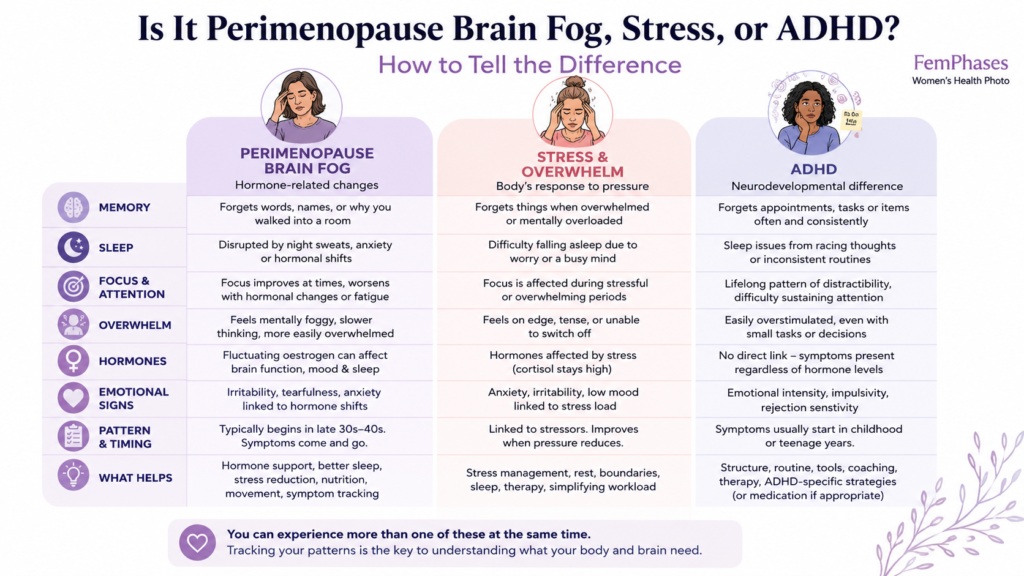
- “ADHD symptoms usually begin earlier in life, while perimenopause brain fog often appears during the late 30s or 40s.”
Daily Mood & Hormone Check-In
Why Does It Happen?
i. Hormonal Changes and the Brain
Oestrogen does much more than regulate periods. It also supports brain chemicals involved in memory, mood, focus, and verbal processing.
During perimenopause, oestrogen levels fluctuate unpredictably. These hormonal shifts can affect:
- Attention and concentration
- Word recall
- Mental processing speed
- Sleep quality
- Emotional regulation
Research suggests that sleep disruption and vasomotor symptoms, such as night sweats, may also contribute to cognitive symptoms.
You can read more from the British Menopause Society and the NHS menopause guidance.
ii. Stress and Mental Overload
Midlife is often a time of enormous emotional and mental pressure. Many women are balancing careers, caregiving, parenting teenagers, ageing parents, relationship stress, financial concerns, and chronic exhaustion all at once.
Chronic stress increases cortisol levels, which can affect concentration, sleep, and memory.
Stress-related cognitive symptoms often include:
- Feeling mentally overwhelmed
- Racing thoughts
- Difficulty switching off
- Irritability
- Poor focus during busy or emotional periods
iii. Sleep Deprivation
Sleep disruption is one of the most overlooked causes of brain fog.
Perimenopause commonly affects sleep because of:
- Night sweats
- Anxiety
- Hormonal shifts
- Frequent waking
- Insomnia
Poor sleep can cause:
- Forgetfulness
- Slower thinking
- Emotional sensitivity
- Reduced attention span
- Difficulty finding words
iv. Could It Be ADHD?
Some women discover ADHD during perimenopause because hormonal changes reduce the brain’s ability to compensate for long-standing attention difficulties.
ADHD in women is often missed earlier in life, especially in women who were academically capable or learned to mask symptoms.
Signs that ADHD may have been present before perimenopause include:
- Lifelong disorganisation
- Chronic procrastination
- Difficulty completing tasks
- Emotional impulsivity
- Time blindness
- Struggling with focus since childhood or teenage years
Perimenopause can sometimes make existing ADHD symptoms feel more intense.
The National Institute for Health and Care Excellence (NICE) ADHD guidance provides further information on assessment and diagnosis.
Signs and Symptoms
Common Symptoms of Perimenopause Brain Fog
- Forgetting names or words
- Losing track of conversations
- Difficulty concentrating
- Mental fatigue
- Trouble multitasking
- Walking into rooms and forgetting why
- Reduced confidence at work
- Feeling mentally “slower”
- Increased anxiety about memory
Symptoms are more common in Stress and Burnout
- Feeling emotionally overwhelmed
- Constant tension or worry
- Irritability
- Difficulty relaxing
- Trouble focusing during stressful periods
- Feeling mentally exhausted by decision-making
Symptoms Linked to Poor Sleep
- Waking unrefreshed
- Daytime sleepiness
- Poor short-term memory
- Reduced patience
- Brain fog that improves after better sleep
Symptoms That May Suggest ADHD
- Lifelong attention difficulties
- Chronic disorganisation
- Forgetting deadlines repeatedly
- Difficulty prioritising tasks
- Hyperfocus on some tasks but inability to start others
- Emotional impulsivity
- Symptoms present before perimenopause
What Is Normal and When to Pay Attention?
a. Common Changes
These symptoms can be common during perimenopause, but are still worth monitoring:
- Mild forgetfulness
- Difficulty concentrating during stress
- Temporary word-finding problems
- Mental fatigue after poor sleep
- Feeling less mentally sharp than usual
Tracking patterns can help identify triggers. Some women notice symptoms worsen:
- Before periods
- During stressful weeks
- After poor sleep
- During heavy bleeding or fatigue
b. Needs Urgent Attention
Please seek medical advice urgently if you experience:
- Sudden confusion
- One-sided weakness
- Difficulty speaking suddenly
- Severe headaches
- Fainting
- Chest pain
- Shortness of breath
- Rapid worsening of memory
- Thoughts of self-harm
- Major personality changes
These symptoms should never automatically be assumed to be perimenopause.
Evidence-Based Solutions
Treatment depends on the cause, severity, overall health, age, menopause stage, medical history, and personal preferences.
Medical Interventions
Medical Assessment
A healthcare professional may ask about:
- Menstrual changes
- Sleep quality
- Mood symptoms
- Stress levels
- Family history
- Medication use
- ADHD symptoms in childhood
Blood tests may sometimes be used to check:
- Iron levels
- Thyroid function
- Vitamin B12
- Vitamin D
- Anaemia
- Blood sugar levels
Hormone blood tests are not always needed to diagnose perimenopause in women over 45 because symptoms and menstrual changes are often more helpful clinically.
Hormone Replacement Therapy (HRT)
For some women, HRT may help improve:
- Sleep
- Hot flushes
- Mood
- Cognitive symptoms related to menopause
HRT is not suitable for everyone, so decisions should always involve an individual discussion with a clinician.
The NHS HRT information page explains benefits and risks in more detail.
ADHD Assessment
If symptoms have existed since childhood or early adulthood, it may be worth discussing ADHD assessment with a healthcare professional.
An assessment usually involves:
- Detailed symptom history
- Childhood patterns
- Functional difficulties
- Mental health screening
Mental Health Support
Anxiety, depression, and chronic stress can strongly affect memory and concentration.
Support may include:
- Talking therapies
- Cognitive behavioural therapy (CBT)
- Stress management
- Medication where appropriate
Perimenopause Symptom Checker
Holistic and Lifestyle Support
i. Protect Sleep First
Sleep has a huge impact on cognition.
Helpful strategies include:
- Consistent sleep and wake times
- Reducing evening alcohol
- Limiting caffeine late in the day
- Cooling the bedroom
- Managing night sweats
- Reducing screen exposure before bed
ii. Blood Sugar and Nutrition Support
Large blood sugar swings may worsen fatigue and concentration problems.
Try to include:
- Protein with meals
- Fibre-rich foods
- Regular meals
- Healthy fats
- Adequate hydration
Iron deficiency can also worsen fatigue and brain fog, especially in women with heavy periods.
iii. Movement and Exercise
Regular exercise supports:
- Mood
- Sleep
- Brain health
- Stress regulation
- Cognitive function
Strength training and walking can be particularly beneficial during perimenopause.
iv. Reduce Mental Overload
Many women are carrying invisible mental labour.
Helpful supports may include:
- Written reminders
- Digital calendars
- Reducing multitasking
- Delegating responsibilities
- Breaking tasks into smaller steps
v. Symptom Tracking
Tracking symptoms over several months can help reveal patterns linked to:
- Menstrual cycles
- Sleep
- Stress
- Diet
- Workload

When to See a Doctor
Please speak with a healthcare professional if:
- Symptoms are affecting daily life or work
- You feel persistently low or anxious
- You are struggling to cope emotionally
- Memory problems are worsening
- Symptoms are severe or sudden
- You suspect ADHD
- You have heavy bleeding or anaemia symptoms
- You experience bleeding after menopause
- You have severe sleep disruption
- You feel unsafe or hopeless
The Office on Women’s Health menopause resource provides additional information and support.
Key Takeaway
If you are wondering whether it is perimenopause brain fog or ADHD, the most important clue is often the pattern.
Perimenopause brain fog usually appears during the hormonal transition years and often overlaps with sleep disruption, anxiety, cycle changes, and stress. ADHD symptoms, on the other hand, are usually lifelong, even if they become more noticeable during perimenopause.
You do not need to “push through” silently or assume you are failing. Your symptoms are real, valid, and worth exploring properly.
Start by tracking:
- Sleep
- Menstrual changes
- Stress levels
- Mood
- Attention symptoms
- Daily functioning
Small patterns often tell us more than isolated bad days.
Not sure where your symptoms fit? Take the Tools and Quizzes to understand your pattern.
Frequently Asked Questions
1. Can perimenopause feel like ADHD?
Yes. Hormonal changes during perimenopause can affect attention, memory, and organisation in ways that may resemble ADHD symptoms.
2. Does perimenopause brain fog go away?
For many women, symptoms improve once hormones stabilise, sleep improves, or appropriate treatment and support are in place.
3. How do I know if it is stress or hormones?
Stress-related symptoms often worsen during periods of emotional overload, while hormone-related symptoms may follow menstrual changes and occur alongside hot flushes, sleep disruption, or mood shifts.
4. Can HRT help brain fog?
Some women find that HRT improves sleep, mood, and cognitive symptoms related to menopause, although responses vary individually.
5. Can you develop ADHD during perimenopause?
Perimenopause does not cause ADHD, but hormonal changes can make previously hidden symptoms more noticeable.
6. What deficiency causes brain fog in women?
Iron deficiency, low vitamin B12, thyroid problems, poor sleep, and chronic stress can all contribute to brain fog symptoms.
7. When should I worry about memory loss?
Seek medical review if memory problems are sudden, rapidly worsening, affecting safety, or associated with confusion, weakness, personality changes, or neurological symptoms.