What Is Ovulation? A Complete Guide to the Fertile Window
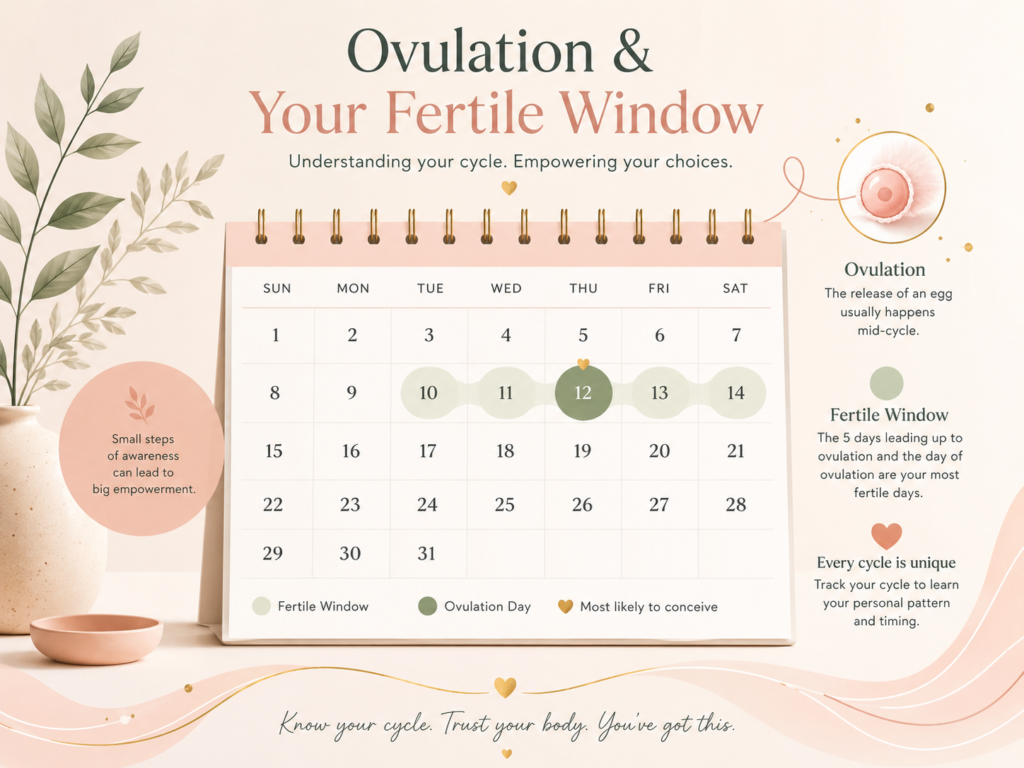
Introduction Every month, millions of women quietly ask themselves the same question: “When am I most likely to get pregnant?” Whether someone is hoping to conceive, trying to avoid pregnancy naturally, or simply trying to understand their body better, the answer almost always leads to one key biological event – ovulation. Ovulation is the moment in the menstrual cycle when the body releases an egg from the ovary. It sounds simple, but behind that moment is an intricate hormonal rhythm involving the brain, the ovaries, and the endocrine system. Understanding this process can help explain not only fertility but also many changes women experience throughout their cycle—energy shifts, mood changes, cervical mucus patterns, and even subtle changes in body temperature. In this guide, we’ll walk through what ovulation actually is, how the fertile window works, how to recognise the signs your body may give before ovulation, and why timing matters when it comes to conception. Along the way, we’ll also explore the science behind the process, drawing from established research and guidance from organisations such as the National Health Service (NHS), the World Health Organisation (WHO), and the National Institutes of Health (NIH). Understanding the Menstrual Cycle First To understand ovulation, it helps first to see the bigger picture. The menstrual cycle is the body’s monthly preparation for pregnancy. Although the average cycle lasts about 28 days, cycles ranging from 21 to 35 days are considered normal for adults, according to the NHS. The cycle is usually divided into four main phases: 1. Menstrual Phase This is the beginning of the cycle when the uterus sheds its lining, resulting in a period. 2. Follicular Phase During this phase, hormones stimulate the ovaries to develop follicles. Each follicle contains an immature egg. 3. Ovulation One follicle becomes dominant and releases an egg into the fallopian tube. 4. Luteal Phase After ovulation, the body prepares the uterus for possible pregnancy. Ovulation sits right in the middle of this process—it’s the point where fertility peaks. What Exactly Is Ovulation? Ovulation is the release of a mature egg (ovum) from one of the ovaries. Once released, the egg travels down the fallopian tube, where it may encounter sperm and become fertilised. If fertilisation does not occur, the egg dissolves within about 12 to 24 hours. However, sperm can survive in the reproductive tract for up to five days, which is why pregnancy can occur even if intercourse happens several days before ovulation. This window of opportunity is known as the fertile window. The Hormones Behind Ovulation A delicate hormonal communication system between the brain and ovaries controls ovulation. The process begins in the hypothalamus, a small region of the brain that secretes the hormone gonadotropin-releasing hormone (GnRH). GnRH signals the pituitary gland to release two key reproductive hormones: Follicle-Stimulating Hormone (FSH) FSH stimulates several follicles in the ovaries to grow and mature. Each follicle contains an egg. Usually, one follicle becomes dominant. Rising Estrogen As the dominant follicle develops, it produces increasing levels of estrogen, which thickens the uterine lining and signals the brain that the egg is nearly ready. The LH Surge When estrogen levels peak, the pituitary gland releases a sudden surge of luteinising hormone. This LH surge triggers ovulation, usually within 24–36 hours. Research cited by the National Institutes of Health confirms that the LH surge is the most reliable hormonal signal that ovulation is imminent. What Is the Fertile Window? The fertile window is the time during the menstrual cycle when pregnancy is possible. This window typically includes: • The five days before ovulation • The day of ovulation This six-day period exists because sperm can live for several days, while the egg survives for about one day. For example: If ovulation occurs on day 14, the fertile window may be days 9–14. However, ovulation timing can vary from cycle to cycle. When Does Ovulation Usually Occur? Many people believe ovulation always occurs on day 14, but this is true only for some individuals. Ovulation usually occurs about 12–14 days before the next period begins, regardless of total cycle length. Examples: Cycle LengthEstimated Ovulation 28 days Day 14 30 days Day 16 32 days Day 18 This variation is one reason why fertility tracking often requires observing body signals over several cycles. Signs Your Body May Be Ovulating The body often gives subtle clues that ovulation is approaching. Not everyone notices these changes, but many women can learn to recognise them with time. One of the most reliable fertility signs is cervical mucus. As ovulation approaches, cervical mucus often becomes: Many people describe it as having a consistency similar to raw egg whites. According to the NHS, this type of mucus helps sperm travel more easily toward the egg. After ovulation, progesterone slightly increases body temperature. This change is usually around 0.3–0.5°C (0.5–1°F). Tracking basal body temperature (BBT) daily can help confirm ovulation, though it cannot predict it in advance. Some people experience a brief pain on one side of the abdomen during ovulation. This is sometimes called mittelschmerz, a German term meaning “middle pain.” The discomfort is usually mild and short-lived. Many women report feeling more interested in intimacy around ovulation. Some researchers suggest this may be linked to hormonal changes that naturally encourage reproduction. Hormone fluctuations during ovulation can also cause: These symptoms vary widely from person to person. Methods for Tracking Ovulation Several methods can help identify ovulation and the fertile window. Tracking menstrual cycles over several months can provide an estimate of ovulation timing. However, this method is less accurate for irregular cycles. This involves measuring body temperature each morning before getting out of bed. A small temperature increase indicates ovulation has already occurred. Ovulation tests detect the LH surge in urine, which occurs shortly before ovulation. These tests are widely used and considered reliable when used correctly. Observing changes in cervical mucus throughout the cycle can help identify fertile days. This method is commonly used in fertility awareness approaches. Factors That Can Affect Ovulation
What Is Ovulation? A Complete Guide to the Fertile Window Read More »