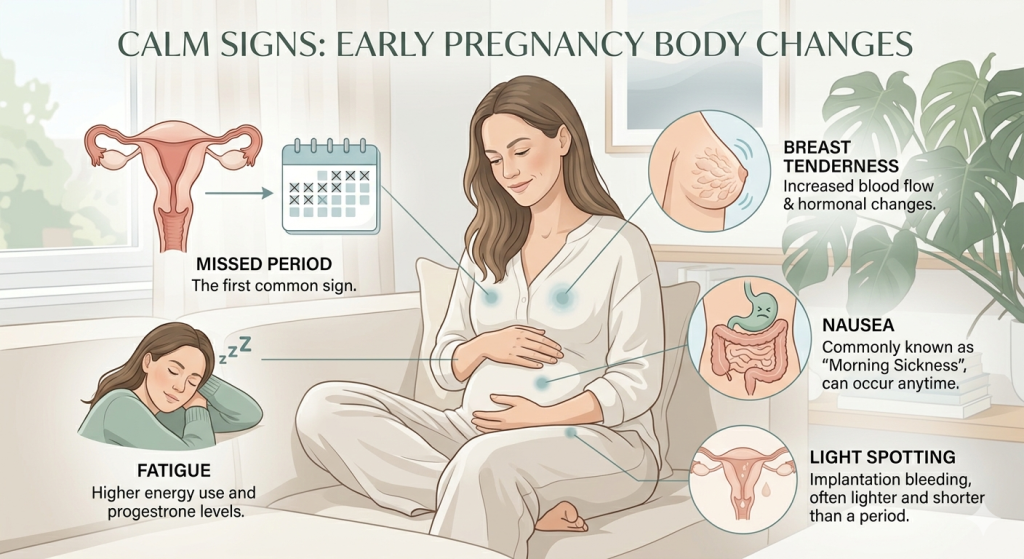

It is very common to feel a cramp, pull, or dull ache in early pregnancy and immediately worry that something is wrong. For many women, early pregnancy can feel surprisingly similar to a period at first, which is why cramps can feel confusing.
The important thing to know is that mild cramping in early pregnancy can be normal, especially if it is brief, light, and not getting worse. But cramping that is severe, one-sided, persistent, or comes with bleeding, dizziness, shoulder pain, or feeling unwell needs medical assessment. (nhs.uk)
Quick answer
Light cramping in early pregnancy is often linked to normal changes in the uterus and surrounding tissues. It can feel a bit like period pain. What is not normal is severe pain, cramping with heavy bleeding, one-sided pelvic pain, fainting, or shoulder tip pain. Those symptoms can point to miscarriage, ectopic pregnancy, or another problem and should be checked urgently. (nhs.uk)
What is it?
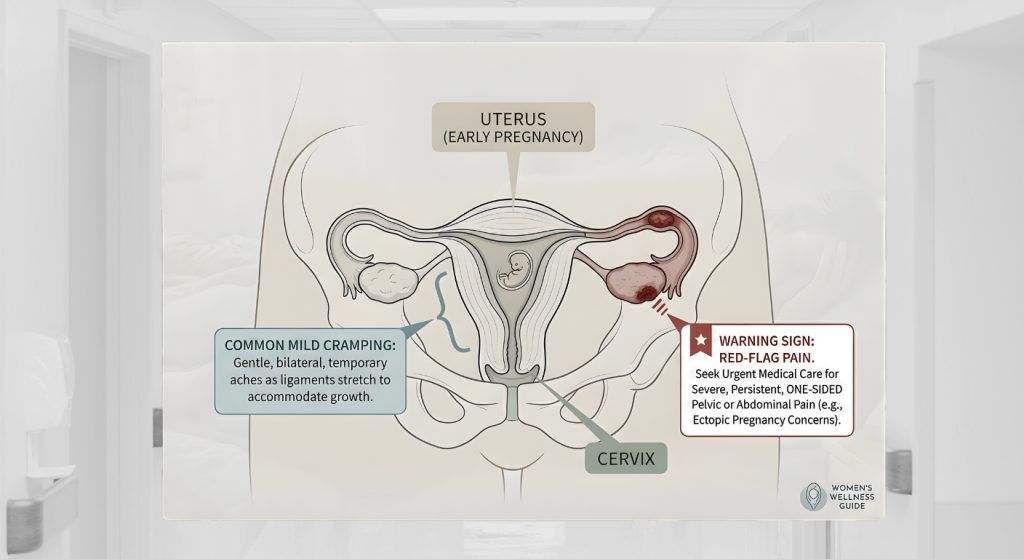
Cramping in early pregnancy usually means mild abdominal or pelvic pain that may feel like period cramps, stretching, pulling, or an aching sensation low in the tummy. The NHS notes that stomach pains and cramps are common in pregnancy and are often nothing serious, especially when mild and short-lived. NHS pregnancy week-by-week guidance also notes that in the first trimester, some women notice cramping that feels a bit like period pains. (nhs.uk)
Cramping can happen very early, sometimes before a woman fully realises she is pregnant. That does not automatically mean there is a problem.
Why does it happen?
In many cases, early pregnancy cramps happen because your body is changing quickly.
Possible common reasons include:
- the uterus beginning to grow and stretch
- ligaments and muscles adjusting
- normal early pregnancy changes in the pelvis and womb
- digestive causes such as constipation, trapped wind, or bloating, which are also common in pregnancy (nhs.uk)
The NHS says mild pain that improves when you change position, rest, defecate, or pass wind is often not serious. Leeds Teaching Hospitals also notes that aching and cramping pains can happen as the womb increases in size in early pregnancy. (nhs.uk)
Medically responsible reminder: normal cramping should usually be mild. If pain is worsening, sharp and one-sided, or making you feel faint or unwell, do not assume it is just stretching. (Clinical Knowledge Summaries)
Signs or symptoms
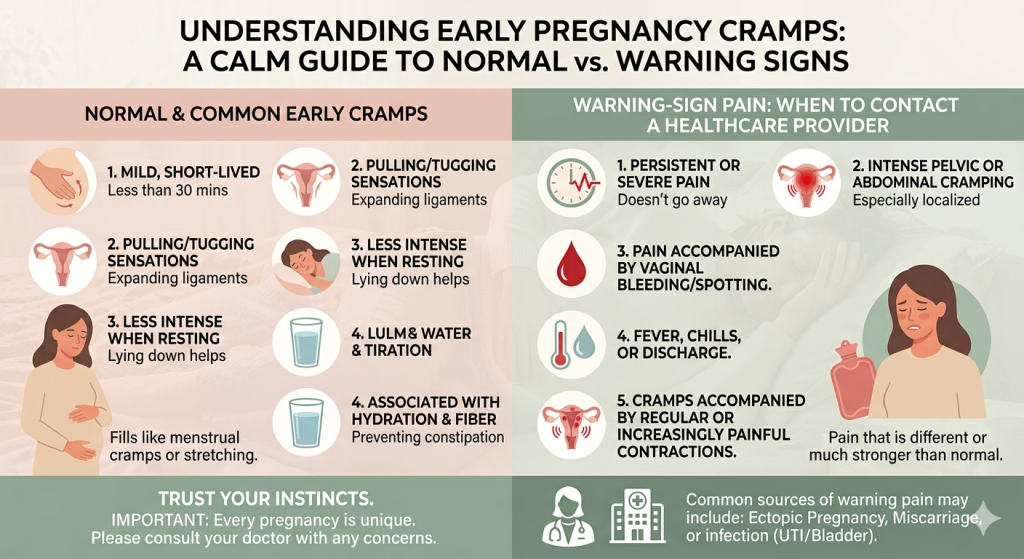
Normal early pregnancy cramping is more likely to be:
- mild to moderate
- short-lived
- felt as a dull ache, pulling, or period-like cramp
- not getting stronger over time
- not linked with heavy bleeding (nhs.uk)
Symptoms that need more attention include:
- one-sided pain
- severe or sharp pain
- bleeding or passing clots
- dizziness, fainting, or weakness
- shoulder tip pain
- fever
- pain that does not settle or keeps getting worse (Clinical Knowledge Summaries)
These symptoms can sometimes be linked to ectopic pregnancy or miscarriage. NICE guidance says ectopic pregnancy should be suspected when pain is present with a missed period or vaginal bleeding, especially with unilateral pelvic pain. (Clinical Knowledge Summaries)
What is normal, and when to pay attention
A lot of early pregnancy discomfort falls into the “watch and monitor” category rather than the “panic” category.
Cramping may be more likely to be normal when it is:
- light and period-like
- brief or occasional
- eased by rest or changing position
- not associated with heavy bleeding
- not paired with severe tenderness or feeling faint (nhs.uk)
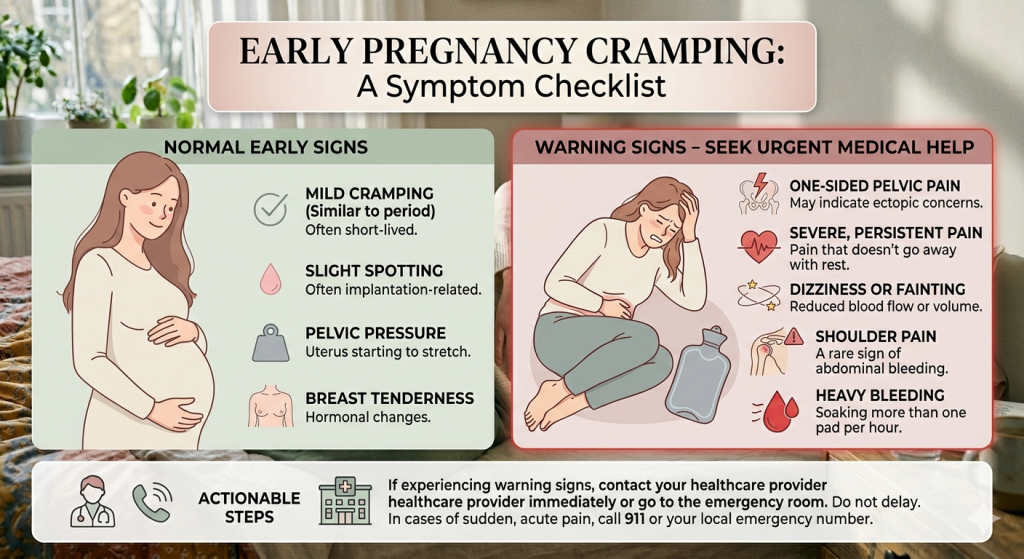
Pay closer attention if:
- the pain is getting worse instead of better
- it is mainly on one side
- you also have spotting or bleeding
- you feel dizzy, weak, or faint
- the pain is severe enough to stop you functioning normally (Clinical Knowledge Summaries)
ACOG notes that bleeding and cramping can be signs of early pregnancy loss, although not all bleeding or cramping means a loss is happening. That is why it is better to look at the whole picture rather than focus on a single symptom. (acog.org)
Medically responsible reminder: if cramping comes with bleeding, it is worth speaking to a healthcare professional, even if the bleeding seems light. (Mayo Clinic)
When to speak to a doctor
Speak to a doctor, midwife, GP, or early pregnancy unit if you are pregnant or might be pregnant and you are worried about cramping.
Get urgent medical help if you have:
- severe abdominal or pelvic pain
- one-sided pain
- bleeding with pain
- shoulder tip pain
- fainting, collapse, or marked dizziness
- fever, chills, or feeling suddenly very unwell (nhs.uk)
Mayo Clinic advises prompt review if you have bleeding with belly pain or cramping. NHS advice is also clear: if you have stomach pains and are worried, contact your maternity unit or urgent care service. (nhs.uk)
Medically responsible reminder: ectopic pregnancy can become life-threatening if it is missed. Sudden severe pain, shoulder pain, or fainting in early pregnancy should be treated as an emergency. (Clinical Knowledge Summaries)
Key takeaway
Cramping in early pregnancy is often normal when it is mild, brief, and does not get worse. Many women experience cramps that are similar to period pain in the first trimester. What matters most is how severe the pain is, whether it is one-sided, and whether it comes with bleeding or feeling unwell. If something feels off, trust that instinct and get checked. (nhs.uk)
FAQs
Are cramps normal in early pregnancy?
Yes. Mild cramps can be common in the first trimester and may feel a bit like period pain. (nhs.uk)
When should I worry about cramping in early pregnancy?
You should worry more if the pain is severe, one-sided, worsening, or comes with bleeding, dizziness, fainting, or shoulder pain. (Clinical Knowledge Summaries)
Can early pregnancy cramps feel like period cramps?
Yes. Many women describe early pregnancy cramps as period-like. (nhs.uk)
Is cramping without bleeding normal in pregnancy?
It can be. Mild cramping without bleeding is often less concerning than pain with bleeding, though persistent or severe pain still needs medical review. (nhs.uk)
Can cramping be a sign of ectopic pregnancy?
Yes. One-sided pelvic pain, especially with bleeding, dizziness, or shoulder tip pain, can be a sign of ectopic pregnancy and needs urgent assessment. (Clinical Knowledge Summaries)
Medical Disclaimer
This article is for general educational purposes only and is not a substitute for medical advice, diagnosis, or treatment. If you are pregnant or think you may be pregnant and have concerning cramps, bleeding, or feel unwell, seek medical advice promptly. Get urgent help straight away for severe pain, one-sided pain, shoulder pain, fainting, or heavy bleeding. (nhs.uk)