
Introduction
You go to the bathroom, notice a clear, stretchy discharge, and suddenly start wondering: Is this a sign I’m ovulating? Does it mean I’m more fertile right now? That question is incredibly common, especially if you are trying to understand your cycle or hoping to conceive.
The short answer is yes: egg-white discharge usually indicates your body is in its most fertile phase. It is often a sign that ovulation is approaching and that cervical mucus is becoming more sperm-friendly. But like any body sign, it is helpful to understand what it means, what is normal, and when a change needs medical attention. (ACOG)
Quick answer
Egg white discharge usually refers to clear, slippery, stretchy cervical mucus that appears around ovulation. It often means estrogen is rising and your fertile window is open or very close. This type of mucus can help sperm move more easily through the cervix, which is why it is considered one of the main natural fertility signs. (ACOG)
What is it?
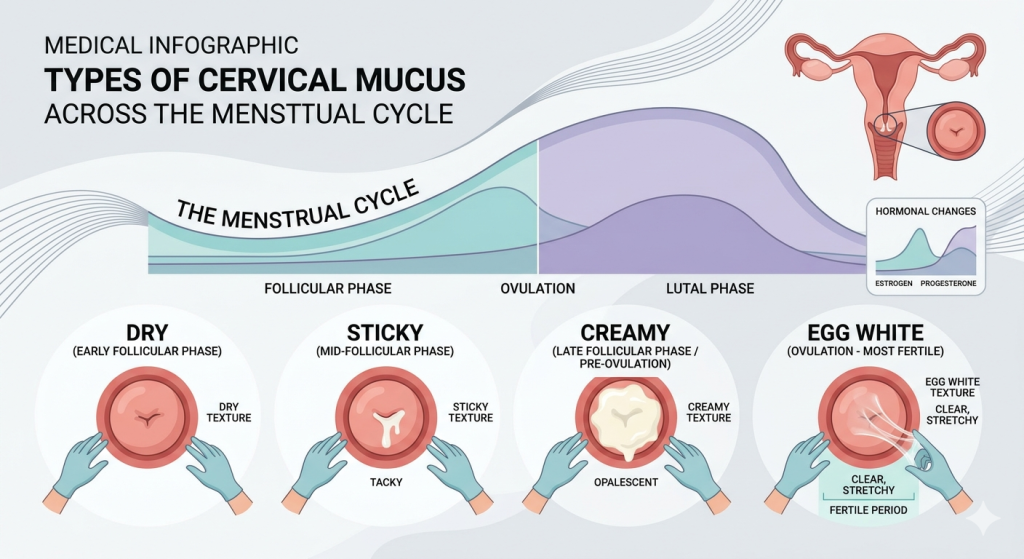
Egg white discharge is cervical mucus that looks and feels a bit like raw egg white. It is usually:
- clear or slightly cloudy
- stretchy between the fingers
- slippery or wet
- more noticeable than at other times in the cycle
This discharge is different from the thicker, stickier, or creamier mucus many women notice earlier or later in their cycle. Around ovulation, cervical mucus often becomes thinner and more elastic. That change is a normal response to shifting hormone levels. (nhs.uk)
A helpful reminder: this is usually cervical mucus, not a sign that something is wrong. Normal vaginal discharge changes across the menstrual cycle, and ovulation is one of the times when those changes are most noticeable. (ACOG)
Why does it happen?
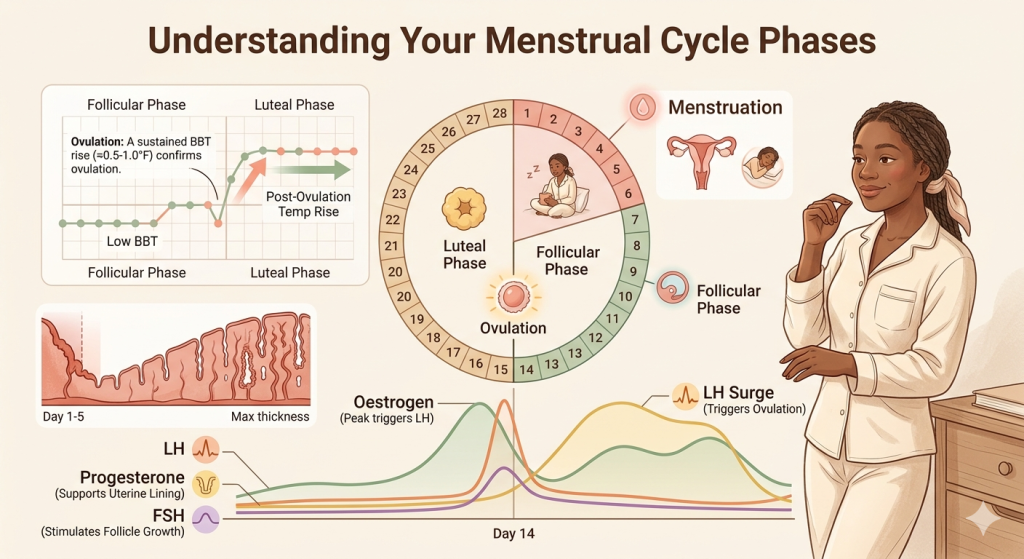
Egg white discharge happens because oestrogen rises in the days leading up to ovulation. Higher oestrogen changes the cervix and the mucus it produces, making it thinner, more elastic, and more slippery. This matters because sperm survive and move better in this kind of mucus. (ASRM)
In simple terms, your body is creating a more supportive environment for conception.
This type of mucus tends to appear in the fertile window, often peaking shortly before ovulation. One reason it matters so much is that sperm can survive in the reproductive tract for several days, so fertile mucus increases the chance that sperm are already there when the egg is released. NHS says sperm can survive for up to 7 days in the fallopian tubes, although the most fertile days are the few days before and around ovulation. (ASRM)
Signs or symptoms
If you are noticing egg white discharge, you may also be noticing other ovulation-related signs. These can include:
- a clear, stretchy, slippery discharge
- a wetter feeling in the underwear or vulval area
- increased discharge for a day or a few days
- mild one-sided pelvic discomfort in some cycles
- a positive ovulation test around the same time
- a rise in basal body temperature after ovulation, not before
Not everyone notices all of these signs, and not every cycle looks the same. Some women naturally produce a lot of cervical mucus, while others notice only a small amount. Both can be normal. The key pattern is the shift toward mucus that feels more slippery and stretchable around mid-cycle. (nhs.uk)
For women trying to conceive, this can be a practical clue. Intercourse during the days when this mucus appears may line up well with the fertile window. Still, it is not an exact guarantee of ovulation or pregnancy. It is best used as one helpful sign rather than the only sign. (ASRM)
What is normal, and when to pay attention
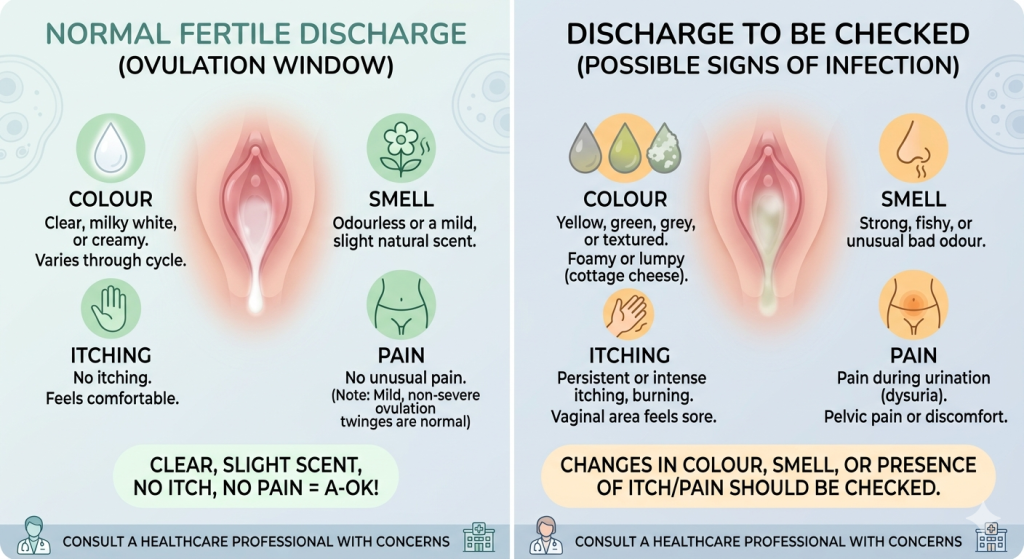
In most cases, egg white discharge is normal and healthy. Clear to white discharge without a strong odour is usually part of normal vulvovaginal health. (ACOG)
What is usually normal:
- clear, slippery, stretchy discharge around ovulation
- no strong fishy or unpleasant smell
- no itching, burning, or soreness
- no pelvic pain beyond mild, brief ovulation discomfort
- a pattern that tends to repeat from cycle to cycle
When to pay attention:
- discharge that smells strong or fishy
- green, yellow, grey, frothy, or pus-like discharge
- thick white discharge with itching or irritation
- pain during sex or when passing urine
- bleeding unrelated to your period
- pelvic pain, fever, or feeling unwell
These symptoms may point to an infection or another condition rather than normal fertile mucus. NHS and ACOG both advise getting checked if your discharge changes in colour, odour, amount, or causes irritation or pain. (nhs.uk)
A medically responsible note here: cervical mucus tracking can be useful, but it does not replace medical evaluation if cycles are very irregular, periods have stopped unexpectedly, or you have symptoms that feel unusual for your body.
When to speak to a doctor
Speak to a doctor or sexual health clinician if:
- your discharge has a new smell, unusual colour, or causes discomfort
- you have irregular periods and are not sure whether you are ovulating
- you have been trying to conceive for 12 months without pregnancy, or for 6 months if you are 35 or older
- sex is painful, or you have pelvic pain between periods
- you have concerns about possible infection or STI exposure
Also, if you are tracking egg white discharge but never seem to notice it, that does not automatically mean something is wrong. Hydration, cycle variation, some medications, breastfeeding, hormonal contraception, and individual differences can all affect cervical mucus patterns. A clinician can help if you are unsure what you are seeing or if fertility questions are starting to feel stressful.

Key takeaway
Egg white discharge usually means your body is moving into its fertile phase. It is one of the most common signs that ovulation is near and that cervical mucus is becoming more supportive for sperm. That makes it a helpful natural fertility clue, especially when paired with cycle tracking, ovulation tests, or temperature charting.
At the same time, normal fertile mucus should not come with a bad smell, itching, burning, or significant pain. If it does, or if something feels off for you, it is worth getting checked.
FAQs
Is egg white discharge a sign of ovulation?
Usually, yes. It often appears in the days leading up to ovulation and is considered a common fertility sign. (ACOG)
Can you get pregnant when you have egg white discharge?
Yes. This is often one of the most fertile times in the cycle because the mucus can help sperm survive and move more easily. (ASRM)
How many days does egg white discharge last?
It varies. Some women notice it for one day, while others notice it for several days around mid-cycle. Cycle patterns can differ from person to person.
What if I never notice egg white discharge?
That can happen. Some women produce less noticeable mucus, and some cycles are less obvious than others. If you are trying to conceive and are worried about ovulation or fertility, speak to a clinician.
Does egg white discharge always mean everything is healthy?
Not always. It is often normal, but discharge with a strong smell, an unusual colour, itching, burning, or pain needs medical assessment. (nhs.uk)