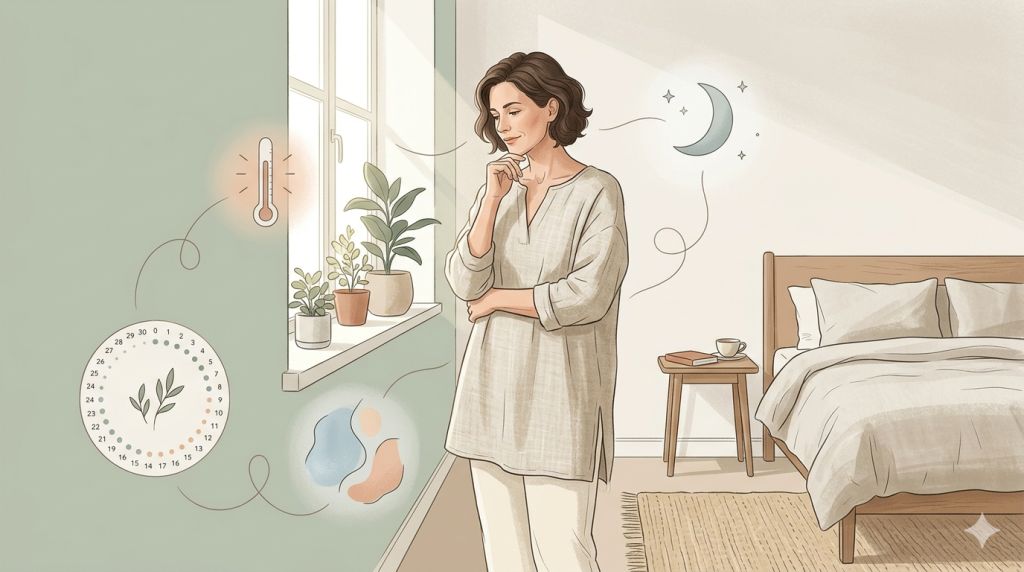

Missing Periods in Perimenopause: Why It Happens and When to Pay Attention
If you’ve found yourself asking, is it normal to miss periods in perimenopause, you are far from alone. A lot of women notice their cycle changing in their 40s or early 50s and wonder whether skipped periods are just part of the transition or a sign that something else is going on.
The uncertainty can feel unsettling, especially if your periods used to be predictable. One month arrives right on time, the next disappears, and then it comes back heavier or later than usual. That can be confusing, frustrating, and sometimes worrying.
Quick answer:
Yes, it is normal to miss periods in perimenopause. As hormone levels start to fluctuate and ovulation becomes less regular, cycles often become unpredictable. But not every bleeding change should be ignored, and some symptoms are worth getting checked. (nhs.uk)
What is it?
Perimenopause is the stage leading up to menopause. It is the transition time when your ovaries gradually begin producing hormones less consistently, and your periods may start to change. Menopause itself is reached when you have gone 12 months in a row without a period. (nhs.uk)
Can you get pregnant during perimenopause?
What “missing periods” can look like
Missing periods in perimenopause does not always mean your periods stop completely right away. It can look more like:
- skipping one month, then having a period the next
- longer gaps between periods
- shorter cycles than usual
- lighter bleeding some months and heavier bleeding others
- periods that seem to arrive unpredictably (The Menopause Society)
A simple way to think about it
Your cycle may stop acting like a steady clock and start acting more like shifting weather. That is often one of the earliest signs of the perimenopause transition.
Why does it happen?
The main reason it is normal to miss periods in perimenopause is that ovulation becomes less regular. In later adulthood, your hormones tend to follow a more reliable pattern. In perimenopause, that pattern becomes more uneven.
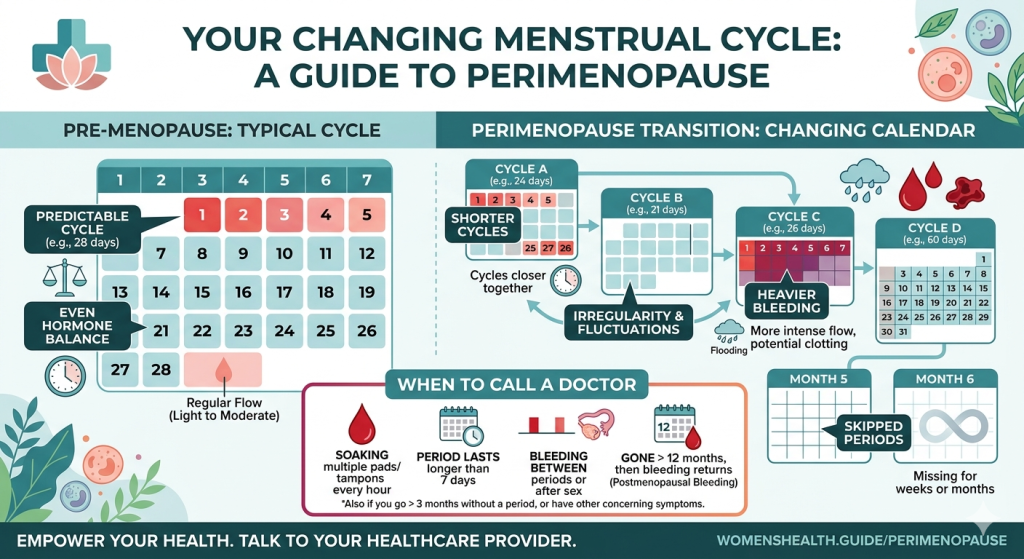
Hormone changes behind skipped periods
Oestrogen and progesterone start fluctuating.
Your ovaries do not release hormones in the same steady way as before. These hormonal ups and downs can affect whether you ovulate and when your period comes. (The Menopause Society)
Ovulation may not happen every month.
If you do not ovulate, your cycle may be delayed or skipped. That is one reason a missed period can happen during perimenopause.
Bleeding patterns can change, too.
Because the uterine lining may build up differently from cycle to cycle, bleeding may become lighter or heavier, shorter or longer.
It is also important to remember that missed periods are not always caused by perimenopause. Pregnancy, stress, thyroid problems, PCOS, weight changes, intense exercise, and some medicines can also affect your cycle. (nhs.uk)
Signs or symptoms
Is it normal to miss periods in perimenopause? It helps to know what other changes often come with it.
Common cycle changes
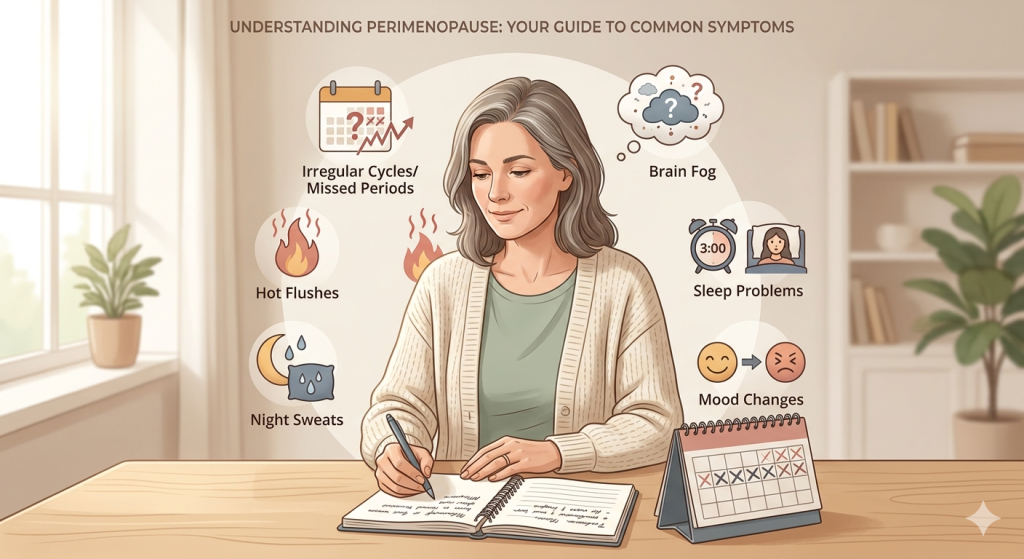
- periods becoming irregular
- missed or skipped periods
- longer or shorter cycles
- changes in flow
- spotting or bleeding at unexpected times (nhs.uk)
Other symptoms that may happen at the same time
Physical symptoms
- hot flushes
- night sweats
- sleep problems
- vaginal dryness
- joint aches or general body changes (nhs.uk)
Emotional and mental symptoms
- mood changes
- anxiety
- lower confidence
- brain fog, or trouble concentrating (nhs.uk)
Not every woman will have all of these. Some mainly notice cycle changes, while others have a wider mix of symptoms. (The Menopause Society)
What is normal, and when to pay attention
This is often the part women want clarified most. Yes, it is normal to miss periods in perimenopause, but some bleeding changes deserve a closer look.
What is usually considered common
It is often normal in perimenopause to have:
- skipped periods
- cycles that come closer together or farther apart
- lighter or heavier bleeding than usual
- changing cycle length from month to month
What deserves attention
Bleeding that is very heavy.
Pay attention if you are soaking through pads or tampons quickly, passing large clots, or bleeding heavily enough to affect daily life. ACOG advises discussing bleeding changes rather than assuming they are automatically harmless.
Bleeding between periods or after sex
This can happen for different reasons and should not just be put down to hormones without checking. (acog.org)
Bleeding after menopause
Once you have gone 12 full months without a period, any vaginal bleeding after that should be assessed by a doctor. (acog.org)
Missing periods under age 45
Periods becoming very irregular or stopping completely before 45 can sometimes point to early menopause or another health issue, and is worth discussing with a clinician. (nhs.uk)
One more important reminder
Even if it is normal to miss periods in perimenopause, pregnancy is still possible until menopause is confirmed. If there is any chance you could be pregnant, take a test. The Menopause Society notes that fertility declines during perimenopause, but unintended pregnancy can still happen. (The Menopause Society)
When to speak to a doctor
Book an appointment if:
- your bleeding becomes much heavier than usual
- you bleed between periods
- you bleed after sex
- your periods stop suddenly and you are unsure why
- you have severe pain, dizziness, or unusual fatigue
- you think you might be pregnant
- bleeding happens after 12 months without a period
- your symptoms are affecting sleep, mood, work, or daily life (acog.org)
How to sleep better during perimenopause
Why it is worth checking
A doctor can help rule out other causes of missed periods or abnormal bleeding, including pregnancy, thyroid issues, fibroids, polyps, or other conditions. It is always better to ask than to sit with uncertainty. (nhs.uk)

Key takeaway
So, is it normal to miss periods in perimenopause? In many cases, yes. Skipped periods are a common part of the menopausal transition because hormones and ovulation become less predictable. But “common” does not mean every bleeding change should be ignored.
A good rule is this: if your periods are changing in a way that feels clearly different, unusually heavy, painful, persistent, or worrying, get medical advice. You do not need to guess your way through it.
FAQs
Is it normal to miss periods in perimenopause for several months?
Yes, it can be. Some women go months without a period and then bleed again before reaching menopause. Menopause is only confirmed after 12 months without a period. (nhs.uk)
Can you still get pregnant if you miss periods in perimenopause?
Yes. Ovulation can still happen even when periods are irregular, so pregnancy is still possible until menopause is reached. (The Menopause Society)
How do I know if missing periods are perimenopause or something else?
Age, symptoms, and your overall health history all matter. Pregnancy, stress, thyroid problems, PCOS, and some medicines can also cause missed periods. (nhs.uk)
What bleeding is not normal in perimenopause?
Very heavy bleeding, bleeding between periods, bleeding after sex, or any bleeding after menopause should be checked by a doctor. (acog.org)
At what age should I worry about missed periods?
If periods become irregular or stop before age 45, it is sensible to speak to a doctor to check for early menopause or other causes. (nhs.uk)
Medical disclaimer
This article is for general education and is not a substitute for personal medical advice. If you have heavy bleeding, bleeding after sex, bleeding after 12 months without a period, severe pain, symptoms of anaemia, or any change that worries you, please speak to a doctor or qualified healthcare professional.