
Spotting before your period: what it means, why it happens, and when to worry
If you’ve noticed spotting before your period, it can be hard not to wonder what your body is trying to tell you. Is it just part of your cycle? Could it mean pregnancy? Or is it a sign that something else is going on?
The good news is that spotting before your period is often linked to common, non-serious causes like hormonal shifts, ovulation, or birth control. But sometimes it needs a closer look, especially if it is new, frequent, painful, heavy, or happening after sex.
What is it?
Spotting before your period means light bleeding or blood-stained discharge that happens before your usual menstrual flow starts. It is usually much lighter than a period. You might only notice a few drops on your underwear, a little pink, red, or brown discharge, or blood when you wipe.
How spotting is different from a period
A full period usually follows a more recognisable pattern. A normal menstrual cycle often comes every 21 to 35 days, and bleeding usually lasts 3 to 7 days.
Spotting is more likely to be:
- light enough for a liner rather than a pad or tampon
- pink, light red, brown, or rust-coloured
- brief, often lasting hours to 1 to 2 days
- off-pattern for your usual cycle
Why Is My Period Late but I’m Not Pregnant? Common Causes, Hormone Changes, and When to Worry
Why does it happen?
There is no single reason for spotting before your period. Timing matters a lot.
i. Hormonal changes
Small hormone shifts can cause the uterine lining to shed a little early. This can happen naturally in some cycles, especially around ovulation or in the days leading up to a period. Ovulation spotting tends to happen around the middle of the cycle, often about halfway between one period and the next, and is usually very light and short-lived.
ii. Birth control
Hormonal contraception is one of the most common causes of bleeding between periods. This includes the pill and other hormone-based methods. Breakthrough bleeding is often harmless, but it is still worth mentioning to a clinician if it continues or changes.
iii. Early pregnancy
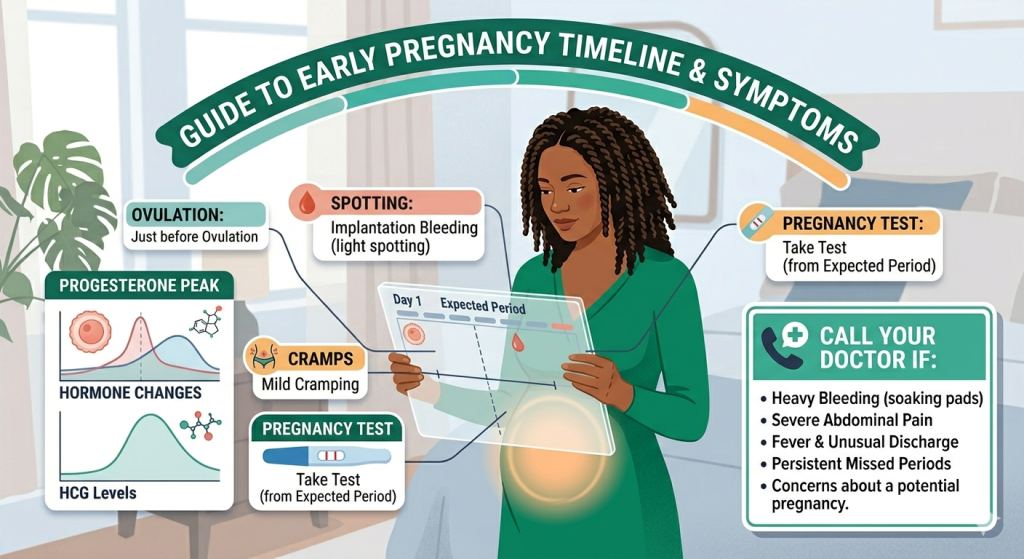
Sometimes spotting before your period is actually implantation bleeding. This can happen when a fertilised egg implants into the lining of the uterus. It is usually very light, often pink or brown, and tends to happen about 10 to 14 days after ovulation, which can be close to when a period is due.
iv. Infections or irritation
Sexually transmitted infections can cause bleeding between periods. Bleeding after sex can also happen with cervical changes, vaginal dryness, or irritation.
v. Polyps, fibroids, PCOS, or endometriosis
Small growths, such as polyps or fibroids, can cause spotting. Conditions like PCOS can disrupt the cycle, and endometriosis can cause pain plus bleeding between periods.
vi. Perimenopause
As hormones become less predictable in the years leading up to menopause, cycles can become less regular, and spotting may show up more often. Any bleeding after menopause, though, should always be checked.

Signs or symptoms
Spotting before your period can look slightly different from one woman to another, but there are a few common patterns.
What it may look like
- a few drops of blood on toilet paper
- light pink, red, or brown discharge
- very light staining on the underwear
- bleeding that lasts less than a day or up to 2 days
What may come with it?
Mild symptoms that can happen with normal spotting
- light cramping
- breast tenderness
- bloating
- changes in discharge
Symptoms that deserve more attention
- pelvic pain that feels stronger than usual
- bleeding after sex
- foul-smelling discharge
- fever
- missed period plus pain
- bleeding that gets heavier or keeps returning
Bleeding between periods: common causes and when to get checked
What is normal, and when to pay attention
A small amount of spotting before your period can be normal once in a while, especially if:
- it is very light
- it stops within a day or two
- it happens around ovulation
- it occurs soon after starting or changing hormonal birth control
- you have no severe pain or other worrying symptoms
Pay closer attention if it is:
- happening every cycle when it never used to
- getting heavier
- lasting longer than a couple of days
- happening after sex
- linked with severe pain, dizziness, or unusual discharge
- happening after menopause
A practical next step
If spotting before your period is new or confusing, track:
- when it happens
- what colour it is
- how long it last
- whether you have pain, sex-related bleeding, or other symptoms
- whether pregnancy is possible
That record can make a doctor’s appointment much more useful. Cleveland Clinic also recommends tracking where the spotting falls in your cycle to help work out whether it matches ovulation or something else.
When to speak to a doctor
It is sensible to speak to a doctor or a sexual health clinic if you are bleeding between periods or after sex. NHS guidance says that unusual bleeding is often not serious, but it should still be checked.
Book an appointment soon if:
- spotting before your period keeps happening
- your periods have changed noticeably
- you have bleeding after sex
- you think you might be pregnant
- you have symptoms of infection
- you have pelvic pain or worsening cramps
Get urgent help if:
- you have missed a period, have unusual bleeding, and have tummy or pelvic pain
- the bleeding becomes heavy
- you feel faint, weak, or unwell
A missed period with bleeding and pain can be a sign of ectopic pregnancy, which needs urgent assessment.
Key takeaway
Spotting before your period is common, and in many cases it comes down to hormones, ovulation, contraception, or early pregnancy. But it is worth paying attention to the pattern. If it is new, persistent, painful, heavy, or tied to other symptoms, getting checked is the safest next step. You do not need to panic, but you do not need to ignore it either.
Frequently Asked Questions
Is spotting before your period normal?
Yes, it can be. Light spotting before a period may happen because of hormone changes, ovulation, or birth control. If it is unusual for you, keeps happening, or comes with pain, it should be checked.
Can spotting before your period mean pregnancy?
Yes. Implantation bleeding can happen about 10 to 14 days after ovulation and may look like very light pink or brown spotting around the time a period is due.
How many days before a period can spotting happen?
It depends on the cause. Ovulation spotting usually happens mid-cycle, while implantation bleeding can happen close to the expected period. Hormonal spotting can also happen in the days leading up to a period.
What colour is spotting before a period?
It may be pink, light red, brown, or dark brown. Brown spotting often means older blood leaving the body slowly.
Should I worry about brown spotting before my period?
Not always. Brown spotting can be harmless, especially if it is light and short-lived. But if it is new, frequent, or comes with pain or other symptoms, it is worth getting medical advice.
When is spotting before your period not normal?
It needs more attention if it is heavy, keeps coming back, happens after sex, comes with pelvic pain, or happens after menopause.
Medical disclaimer
This article is for general education and is not a diagnosis. If you have spotting before your period that is persistent, heavy, painful, happens after sex, or comes with a missed period or pelvic pain, speak to a qualified healthcare professional promptly. Seek urgent care for severe pain, heavy bleeding, fainting, or possible ectopic pregnancy.