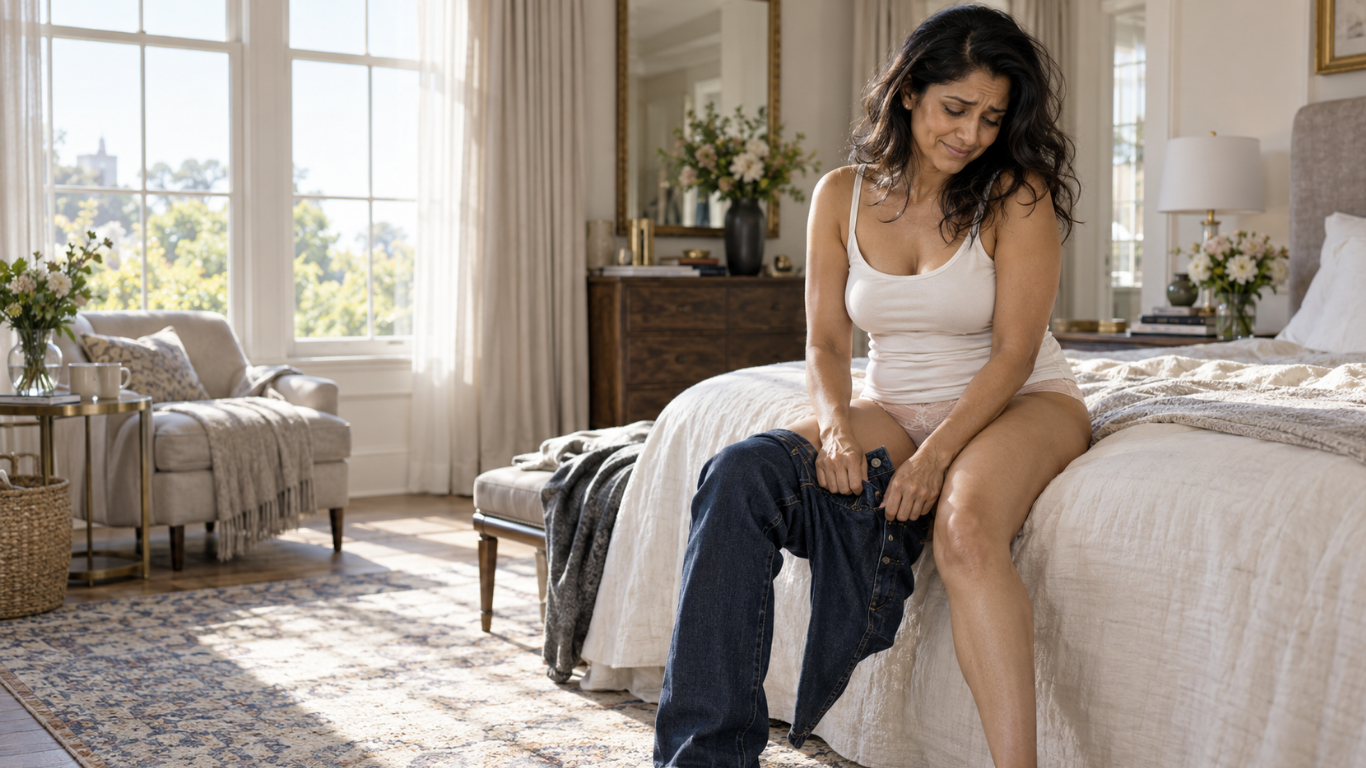


At 35, I realised I had spent years checking my life against an invisible timetable shaped by societal expectations-deadlines I believed I should meet to be successful or fulfilled. The unsettling part was discovering how many of its deadlines had never really belonged to me.
On the morning after my thirty-fifth birthday, I stood barefoot in my bedroom holding a green dress I had not worn in three years.
It was still a good dress. Silk, fitted at the waist, expensive enough that I had once dry-cleaned it after someone spilt sparkling water near it. I had worn it to an engagement party when I was 31, back when nearly every photograph of me seemed to involve a balloon arch, a champagne glass or someone holding up a newly decorated left hand.
I held it against myself and looked in the mirror.
Nothing was wrong with the dress.
Nothing was particularly wrong with me.
And yet I had the strange, unmistakable feeling that both belonged to a life I had been trying very hard to catch up with.
The night before, over birthday drinks, a friend had asked what I wanted for the next five years.
She meant it kindly.
I laughed and said something about finally buying a house, travelling more and perhaps meeting someone before my eggs staged a formal protest.
Everyone laughed.
So did I.
But later, brushing mascara from beneath my eyes at nearly midnight, I caught myself thinking: Do I actually want the life I keep saying I am late for?
It was the first time I allowed myself to finish the question.
The life I thought I would have by 35
At 25, I had a remarkably detailed understanding of who I would be by 35. She had a husband. Possibly two children, although I had never quite decided whether the second was a boy or a girl. She owned a house with a kitchen big enough for an island. She had a job title that sounded important without requiring explanation. She booked holidays months in advance. Her savings account did not induce nausea.
Most importantly, she appeared settled.
I did not realise then how much I wanted the appearance of certainty.
My actual life had turned out differently.
I rented a flat with unreliable water pressure and a kitchen drawer that came off its runners if you opened it too confidently. I had a career I was good at, although I had recently begun wondering whether being good at something was a sufficient reason to keep doing it indefinitely.
I was single.
I had savings, but not enough to make property websites feel recreational.
I had friendships I loved, parents who still rang to ask whether I had eaten, and a niece who considered me an expert in nail varnish and chocolate biscuits.
Plenty in my life was good.
That almost made my dissatisfaction harder to admit.
I was not miserable. I was measuring.
A friend bought a house, and I mentally calculated how many years behind her I was. Someone announced a pregnancy, and I felt joy, followed by a private flicker of panic so quick I could pretend it had not happened. A former colleague became a director, and suddenly my perfectly respectable job looked suspiciously small.
Social media did not create the habit, but it gave it excellent lighting.
I could be sitting on my own sofa, content five minutes earlier, then see somebody’s kitchen renovation, anniversary trip or newborn wrapped in beige cashmere and feel as though I had misunderstood the assignment.
How I began to stop comparing my life to others
Nothing dramatic happened when I turned 35. There was no breakdown. No resignation email typed at 2 am. No cinematic decision involving a suitcase and an airport departures board.
What changed was quieter and, in some ways, more inconvenient.
I began noticing the gap between what society says I should want and what I genuinely desire.
For years, I had said I wanted to buy a house as soon as possible. Yet every time I imagined committing myself to one place for the next decade, I felt strangely trapped.
I told people I was ready for a serious relationship, and I was. But I had also spent years accepting dates with men I did not particularly like because rejecting perfectly decent people seemed irresponsible at my age.
I had begun treating my own life like an airport gate that might close without warning.
Hurry.
Choose.
Commit.
Catch up.
The problem with living that way was that I could no longer tell desire from fear.
One Sunday afternoon, my mother rang while I was sorting clothes for charity. I mentioned the green dress and said, jokingly, that perhaps I should keep it in case my life became glamorous again.
There was a pause.
Then she asked, “Was it glamorous?”
I looked at the dress.
I remembered the engagement party where I had worn it. I had spent half the evening in the toilets scrolling through photographs of an ex who had recently moved in with someone else.
“No,” I said.
And we both laughed.
That small question stayed with me.
How much of my past had I polished simply because it was over?
How much of my imagined future had I romanticised simply because I had not reached it?

The uncomfortable part of choosing my own timeline
Stopping the comparison did not make me immune to it, and I still feel its pull sometimes.
I still feel something complicated when another pregnancy announcement appears in the group chat.
I still occasionally look at property prices and wonder whether I have made terrible financial decisions.
There are evenings when being single feels spacious and luxurious, and others when I would happily exchange all that glorious independence for someone else to notice that we are running out of milk.
I have not arrived at some serene place where I no longer care what anybody thinks.
I care.
I simply recognise the feeling sooner.
At 35, I began asking myself a different question whenever that familiar panic appeared.
Do I want this, or do I want the relief of knowing I have kept up?
The answers have not always been flattering.
Sometimes I want the photograph more than the experience.
Sometimes I want the title because I imagine it will silence an insecurity no promotion could realistically fix.
Sometimes I envy women whose lives I would not actually choose.
That last one surprised me most.
Comparison had flattened other women into symbols. Married. Mother. Homeowner. Director. Traveller. Successful. Behind. Ahead.
I was doing it to myself too.
I had reduced a whole life to a collection of milestones and then wondered why it never felt sufficient.
A few weeks after my birthday, I met an old university friend for coffee. We had not seen each other for almost a year.
Within half an hour, she told me she was considering leaving the job I had privately envied for years.
She looked exhausted.
“I thought this was what I wanted,” she said.
There it was again.
The sentence I had been circling in my own life.
Not everything we work towards remains something we want once we get close enough to touch it.
That does not necessarily mean we chose badly.
Sometimes the person who made the plan is simply no longer the person living it.
I am still working out what fits
The green dress stayed on my bedroom chair for another week.
Every evening I walked past it.
Eventually, I put it in the charity bag.
Not because I had become a new woman overnight, or because clearing a wardrobe is a profound act of reinvention. I got rid of it because I no longer liked wearing it.
That was enough.
There are still things I want.
Love, certainly.
Financial security.
Work that interests me.
A home that feels mine, whether or not I own the bricks.
I am less certain about motherhood than I once pretended to be, and more aware that uncertainty has its own consequences. I cannot turn every decision into an endless exercise in keeping my options open.
There are choices ahead of me.
Real ones.
Some will involve compromise. Some may involve regret.
But I no longer want to make them simply because another woman reached a particular milestone before I did.
A month after my birthday, I was getting ready for dinner when I opened the wardrobe and reached automatically towards the space where the green dress used to hang.
For a second, my hand stopped in mid-air.
Then I chose a soft black shirt I had worn dozens of times.
It was not glamorous.
It did not represent transformation.
It just felt like me.
For now, I am learning to let that be enough.