If you have been wondering what a hot flush feels like, you are not alone. For many women, it can feel sudden, strange, and hard to explain at first. One minute you feel fine, and the next you feel a wave of heat rising through your chest, neck, or face. Hot flushes are very common in perimenopause and menopause, and while they are usually not dangerous, they can be uncomfortable, disruptive, and sometimes worrying.
Quick answer
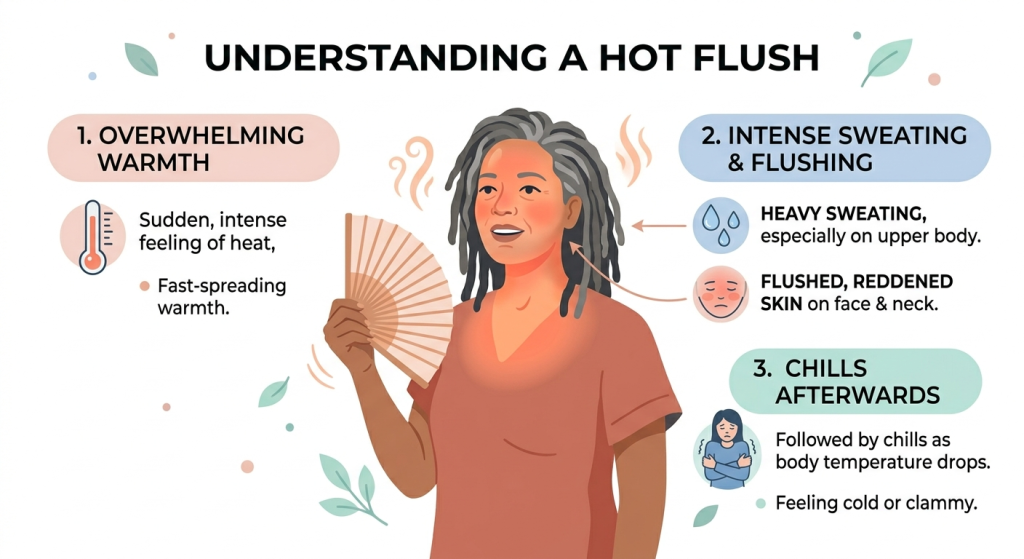
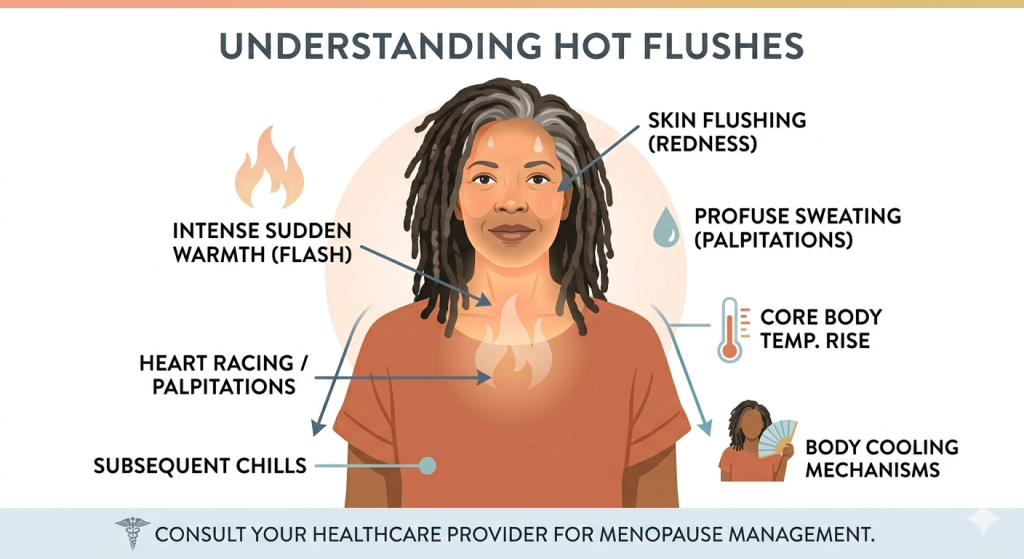
So, what does a hot flush feel like? Most women describe it as a sudden rush of heat, often strongest in the face, neck, and chest. You may also notice sweating, flushed or clammy skin, a racing heartbeat, chills afterwards, or anxiety while it is happening. Hot flushes are one of the most common menopause symptoms and are linked to changing estrogen levels that affect the body’s temperature control.
What is a hot flush?
A hot flush is a short episode of sudden warmth that seems to spread quickly through the upper body. It may last for a few seconds or several minutes. Some women feel only mild warmth. Others feel intense heat, damp skin, and a strong need to remove layers, open a window, or cool down fast. When it happens during sleep, it is often called a night sweat.
When women ask what a hot flush feels like, they are often trying to work out whether what they are experiencing is normal. A hot flush can feel like:
- a sudden wave of internal heat
- warmth rising into the chest, neck, and face
- flushed or reddened skin
- sweating or damp clothing
- a pounding or fluttering heartbeat
- clammy skin followed by chills as the episode passes
- feeling unsettled, irritated, or briefly anxious
Why does it happen?
Hot flushes are part of what doctors call vasomotor symptoms. They are strongly linked to the hormone changes of perimenopause and menopause, especially falling and fluctuating oestrogen levels. These changes affect the brain’s temperature regulation, making the body more likely to trigger a heat response even when you are not actually overheating.
They can start in perimenopause, which means they may begin before their periods stop completely. NHS guidance notes that menopause symptoms can start years before periods end and can continue afterwards.
Some women also notice triggers that make a hot flush more likely, such as:
- hot drinks
- caffeine
- alcohol
- spicy food
- smoking
- stress
- warm rooms or heavy bedding
Perimenopause symptoms: How to tell if your changing periods are normal
Signs or symptoms
If you are asking what a hot flush feels like, the experience is often more than just “feeling warm.” It can be a whole-body sensation that appears suddenly and fades just as quickly.
Common signs include:
- sudden heat in the upper body
- flushed face or neck
- sweating
- clammy skin
- chills afterwards
- sleep disruption if it happens at night
- mood changes or irritability because repeated flushes can be exhausting
Hot flushes can also affect quality of life. They may interrupt work, sleep, concentration, confidence, and social comfort. For some women, they are occasional and manageable. For others, they happen many times a day and become one of the hardest parts of menopause.
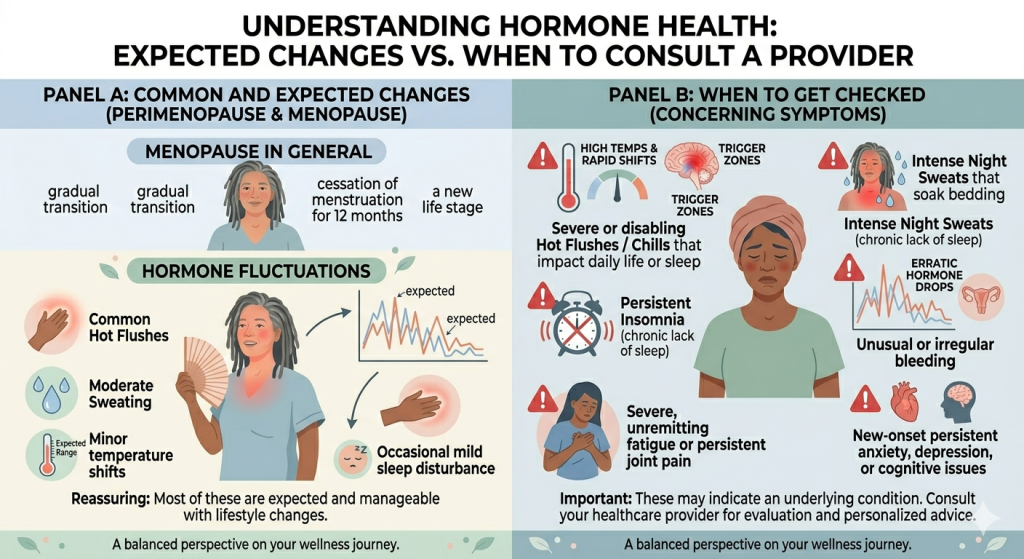
What is normal, and when to pay attention
In many cases, hot flushes are a normal part of perimenopause and menopause. They can last for months or years, and symptoms may change over time. Not every woman has them, and their severity varies widely from person to person.
What is usually considered common or expected:
- episodes that come and go
- flushes that are mild to moderate
- more symptoms around perimenopause or early menopause
- night sweats that disturb sleep but improve with support or treatment
It is worth paying closer attention if:
- symptoms are severe or happening very often
- your sleep is badly affected
- you feel faint, unwell, or have chest pain
- the symptoms do not seem to fit your age or cycle pattern
- you are unsure whether it is menopause or something else
A medically responsible reminder: not every episode of sudden heat is automatically menopause. Other health issues can sometimes cause similar symptoms, so it is sensible to get checked if anything feels unusual, persistent, or worrying.
When to speak to a doctor
Speak to a doctor, GP, or menopause-trained clinician if hot flushes are affecting your daily life, sleep, mood, or ability to function. NHS guidance advises speaking to a GP or nurse if you think you have perimenopause or menopause symptoms.
Treatment options can include lifestyle steps, cognitive behavioural therapy, and prescription treatment. Hormone therapy is considered the most effective treatment for bothersome hot flushes for many women, though it is not right for everyone.
Practical things that may help include:
- dressing in light layers
- keeping the bedroom cool
- using a fan
- choosing cooler drinks
- reducing known triggers
- managing stress
- exercising regularly
- seeking support if symptoms are affecting sleep or mood
Why Is My Period Late but I’m Not Pregnant? Common Causes, Hormone Changes, and When to Worry
Key takeaway
If you have been asking, “What does a hot flush feel like?” the simplest answer is this: it usually feels like a sudden wave of heat rising through the upper body, often accompanied by sweating, flushing, and sometimes chills or a racing heartbeat afterwards. It is a very common menopause symptom, and while it can feel unsettling, support and treatment are available. If your symptoms are frequent, severe, or affecting your life, it is worth speaking to a healthcare professional.
FAQs
What does a hot flush feel like during menopause?
It usually feels like a sudden rush of heat, most noticeable on the face, neck, and chest, often accompanied by sweating, flushing, and sometimes chills afterwards.
How long does a hot flush last?
A hot flush often lasts from seconds to a few minutes, though frequency and intensity vary widely between women.
Are hot flushes normal in perimenopause?
Yes. They often begin in perimenopause, even before periods stop completely.
What can trigger a hot flush?
Common triggers include alcohol, caffeine, spicy foods, stress, smoking, and warm environments.
When should I worry about hot flushes?
You should seek medical advice if symptoms are severe, unusual, affecting sleep or daily life, or if you are not sure menopause is the cause.
Medical disclaimer
This article is for general educational purposes only and is not a substitute for medical advice, diagnosis, or treatment. Hot flushes are common in perimenopause and menopause, but sudden heat, sweating, or similar symptoms can sometimes have other causes. If your symptoms are severe, unusual, getting worse, or affecting your daily life, speak to a qualified healthcare professional.