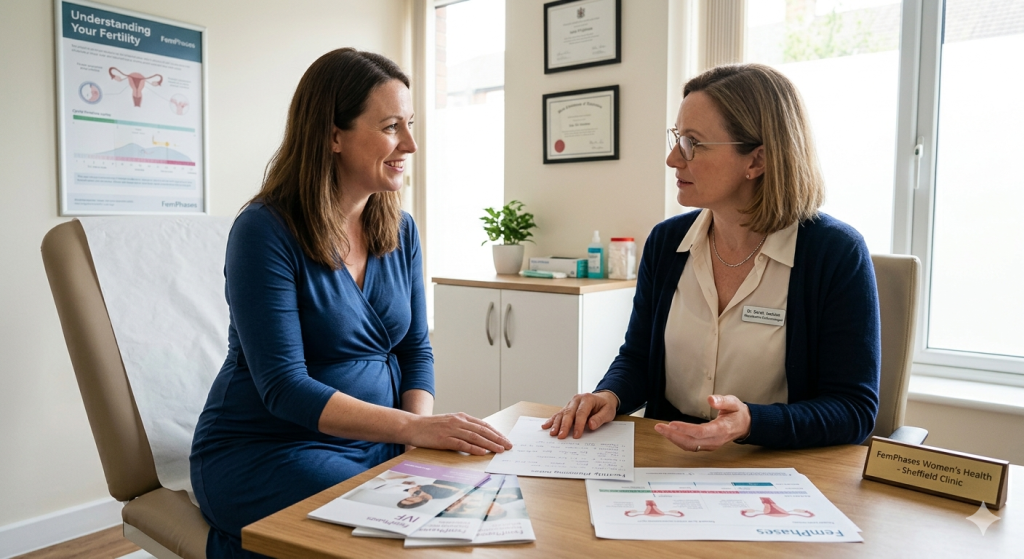
Seeing light spotting when you were not expecting it can be unsettling, especially if you are trying to conceive or wondering whether you might be pregnant. A very common question is: Is this my period starting, or could it be implantation bleeding?
Quick answer:
Implantation bleeding is usually very light spotting or a small amount of bleeding that may look pink, brown, dark brown, or sometimes light red. It tends to be lighter than a period, does not usually soak a pad, and may happen around 10 to 14 days after conception, often close to the time a period is due. Not everyone gets it, and the only way to confirm pregnancy is with a test. (Cleveland Clinic)
What is it?
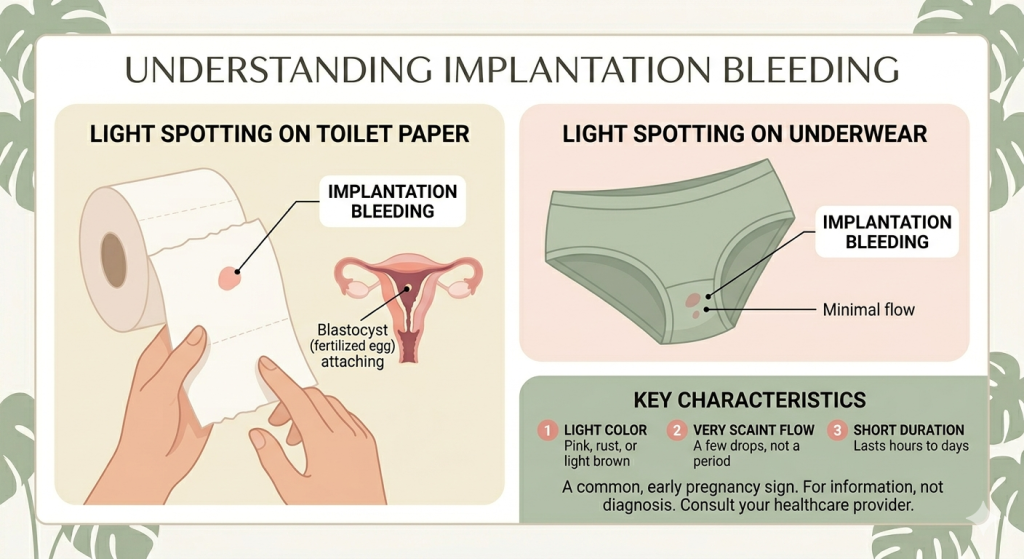
Implantation bleeding is light spotting that can happen when a fertilised egg attaches to the lining of the uterus in very early pregnancy. It is considered one possible early pregnancy sign, but not everyone experiences it. Some women notice nothing at all, while others may see just a few spots of blood on underwear or toilet paper. (Mayo Clinic)
It is easy to confuse implantation bleeding with the start of a period because it can happen around the same time your period is due. The difference is usually in the amount, colour, and duration. Implantation bleeding is more often described as spotting or very light bleeding rather than a full menstrual flow. (Cleveland Clinic)
Why does it happen?
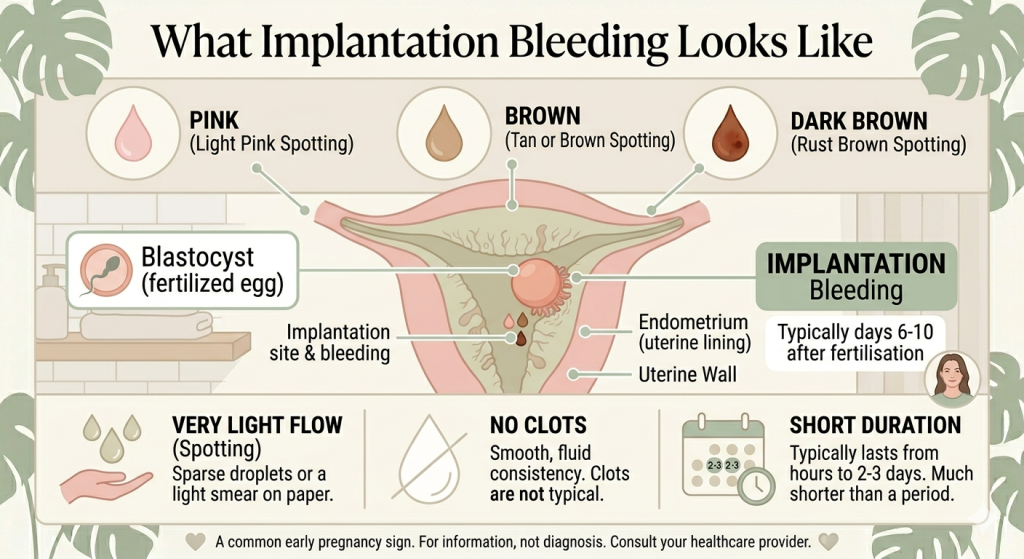
Implantation bleeding is thought to happen when the fertilised egg attaches to the uterine lining. This early step in pregnancy can sometimes cause a small amount of bleeding or spotting. It usually occurs about 10 to 14 days after conception, which is why it can appear close to the expected time of a period. (Mayo Clinic)
That timing is one reason implantation bleeding can feel confusing. You may think your period is beginning, when in fact the bleeding is much lighter and shorter than usual. It is also worth knowing that implantation bleeding is only one possible explanation for spotting. Not all early pregnancy spotting is implantation bleeding, and not all spotting means pregnancy. (nhs.uk)
Medically responsible reminder: spotting alone cannot diagnose pregnancy. A home pregnancy test is the best next step if pregnancy is possible. (nhs.uk)
Signs or symptoms
So, what does implantation bleeding actually look like?
It is usually:
- Light spotting or very light bleeding
- Pink, brown, dark brown, or sometimes light red
- Small drops, streaks, or a light stain
- Too light to soak through a pad
- Short-lived, often lasting hours to a few days (Cleveland Clinic)
Some women describe it as blood mixed with discharge, or discharge with a pink or brown tinge. It often looks more like spotting between periods than a true menstrual flow. Cleveland Clinic notes that bright red heavy bleeding or bleeding with clots is usually not what implantation bleeding looks like. (Cleveland Clinic)
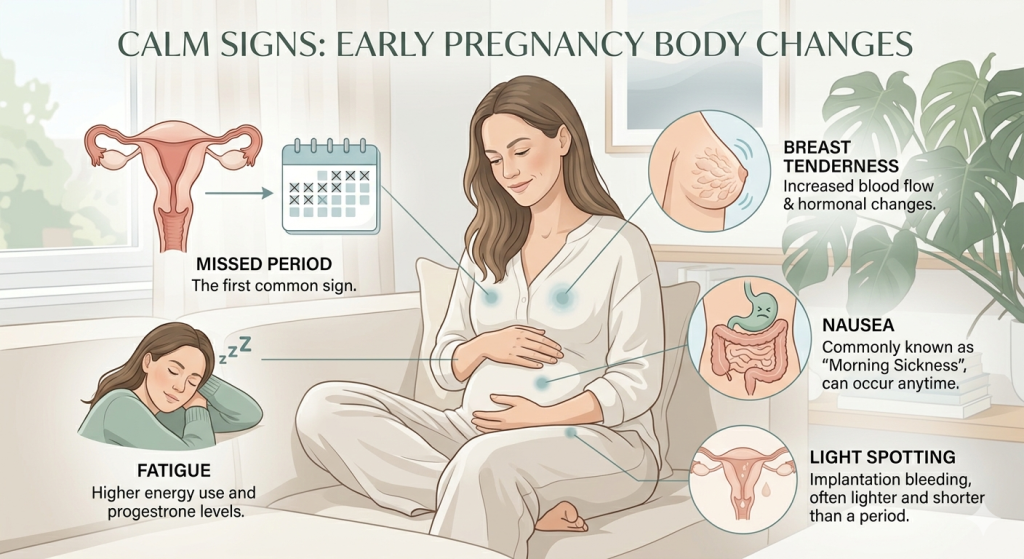
You may also notice a few other early pregnancy symptoms around the same time, such as:
- mild cramping
- breast tenderness
- tiredness
- nausea later on
- a missed or lighter period than usual (Mayo Clinic)
Still, some women have implantation bleeding with no other obvious symptoms, and many pregnant women never have implantation bleeding at all. (Mayo Clinic)
What is normal, and when to pay attention
Light spotting in early pregnancy can be common. NHS and ACOG both note that bleeding in early pregnancy does not always mean something is seriously wrong. In many cases, it is light and brief. (ACOG)
What is less typical for implantation bleeding is:
- bleeding that becomes heavy like a normal period
- soaking a pad
- bright red bleeding that keeps going
- passing clots or tissue
- strong or worsening pain
- one-sided pelvic pain
- dizziness, fainting, fever, or chills (Cleveland Clinic)
These symptoms deserve prompt medical advice because they can sometimes point to miscarriage, ectopic pregnancy, or another cause of bleeding that needs assessment. (ACOG)
A practical way to think about it is this: implantation bleeding is usually light, short, and not very dramatic. If it feels heavy, painful, or worrying, it is worth getting checked.
When to speak to a doctor
Speak to a doctor, midwife, early pregnancy unit, or other healthcare professional if:
- you have a positive pregnancy test, and bleeding continues
- bleeding lasts longer than a day
- the bleeding becomes moderate or heavy
- you have pain, especially one-sided pain
- you pass clots or tissue
- you feel faint, unwell, feverish, or unsure what is happening (Mayo Clinic)
If pregnancy is possible, taking a home pregnancy test after a missed period is usually the clearest next step. If the test is negative but your period hasn’t arrived yet, repeat it in a few days or speak to a healthcare professional. (nhs.uk)
Reassuring realistic wellness scene of a woman holding a pregnancy test while speaking to a clinician, calm modern clinic setting, soft light, medically accurate and supportive tone
Key takeaway
Implantation bleeding usually looks like very light pink, brown, or dark brown spotting and is much lighter than a period. It may occur around the time your period is due, which can make it confusing. The main thing to remember is that light spotting can happen in early pregnancy, but heavy bleeding, clots, severe pain, or feeling unwell should always be checked. A pregnancy test is the best way to move from guessing to knowing. (Cleveland Clinic)
FAQs
Is implantation bleeding red or brown?
It is more often described as pink, brown, or dark brown, though some women may notice light red spotting. Heavy, bright red bleeding is less typical of implantation bleeding. (Cleveland Clinic)
Can implantation bleeding look like a light period?
Yes, it can look like a very light period, but it is usually lighter and shorter and does not build into a full menstrual flow. (nhs.uk)
How long does implantation bleeding last?
It may last a few hours to a few days. Ongoing bleeding that becomes heavier should be assessed. (Cleveland Clinic)
Does implantation bleeding have clots?
Usually, no. Bleeding with clots is less typical of implantation bleeding and should not be assumed to be normal early pregnancy spotting. (Cleveland Clinic)
When should I take a pregnancy test after spotting?
If pregnancy is possible, take a home pregnancy test after a missed period or a few days after the spotting if your period does not arrive. (nhs.uk)
Medical disclaimer:
This article is for general health education and is not a substitute for personal medical advice, diagnosis, or treatment. If you have heavy bleeding, severe pain, feel faint, or think you may have an ectopic pregnancy or miscarriage, seek urgent medical care.