If you keep waking up hot, damp, or needing to change your clothes or bedding, it is natural to wonder, why am i sweating at night? This is a very common question, especially in perimenopause and menopause, when night sweats often happen as part of the body’s changing hormone patterns. But menopause is not the only possible reason, which is why it helps to understand what night sweats are, what can trigger them, and when they deserve a closer look.
Quick answer
If you are asking, why am i sweating at night, one of the most common answers is perimenopause or menopause, when changing oestrogen levels can affect the body’s temperature control and cause night sweats. Night sweats are the nighttime version of hot flushes and can range from mild warmth to sweating that soaks sleepwear or sheets. Other possible causes include anxiety, some medicines, low blood sugar, alcohol, or other health conditions, so persistent or unusual symptoms should be checked.
What is it?
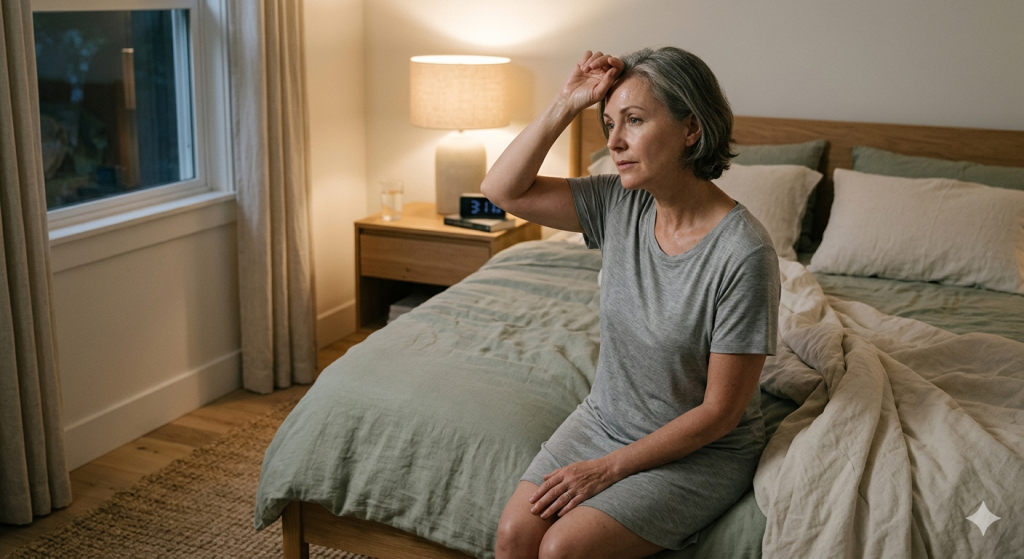
Night sweats are episodes of sweating during sleep that feel more intense than just being too warm under a duvet. They may wake you suddenly, leave your skin clammy, or make you feel cold afterwards once the sweat starts to dry. In menopause care, they are often grouped with hot flushes under the term vasomotor symptoms.
When women search why am I sweating at night, they are often trying to work out whether this is ordinary overheating or something more. A room that is too warm or heavy bedding can cause sweating, but that is not always the same as true night sweats. Repeated episodes that interrupt sleep, especially alongside other menopause symptoms, are more suggestive of night sweats linked to hormone changes.
Why does it happen?
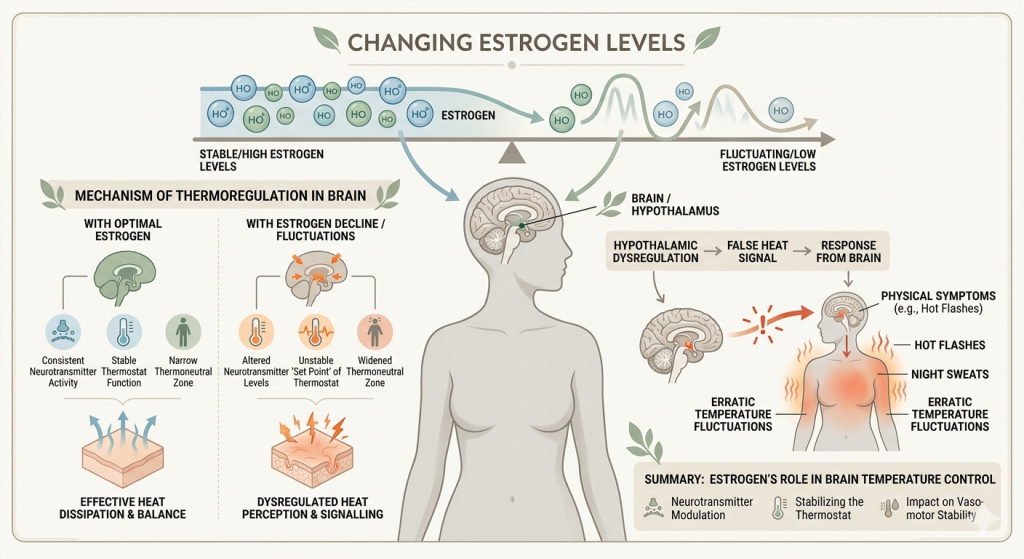
For many women, the answer to why am i sweating at night is linked to perimenopause or menopause. Falling and fluctuating oestrogen levels can affect the hypothalamus, the part of the brain involved in temperature control. That can make the body react as if it is overheating, even when it is not, leading to sweating, flushing, and broken sleep.
Night sweats can start during perimenopause, which means they may begin before periods stop completely. They are also very common. The Menopause Society says hot flashes and night sweats are the most commonly reported symptoms of the menopause transition, with up to 80% of women experiencing them at some point.
Still, menopause is not the only explanation for why I’m sweating at night. NHS guidance lists other common causes, including:
- anxiety
- medicines such as some antidepressants, steroids, and painkillers
- low blood sugar
- alcohol or drug use
- hyperhidrosis, which causes excessive sweating
- sometimes no clear cause is found
Mayo Clinic also notes that night sweats can sometimes be linked to infections, thyroid problems, and other medical conditions.
Hormone Replacement Therapy (HRT) and contraception: Do you need birth control in perimenopause?
Signs or symptoms
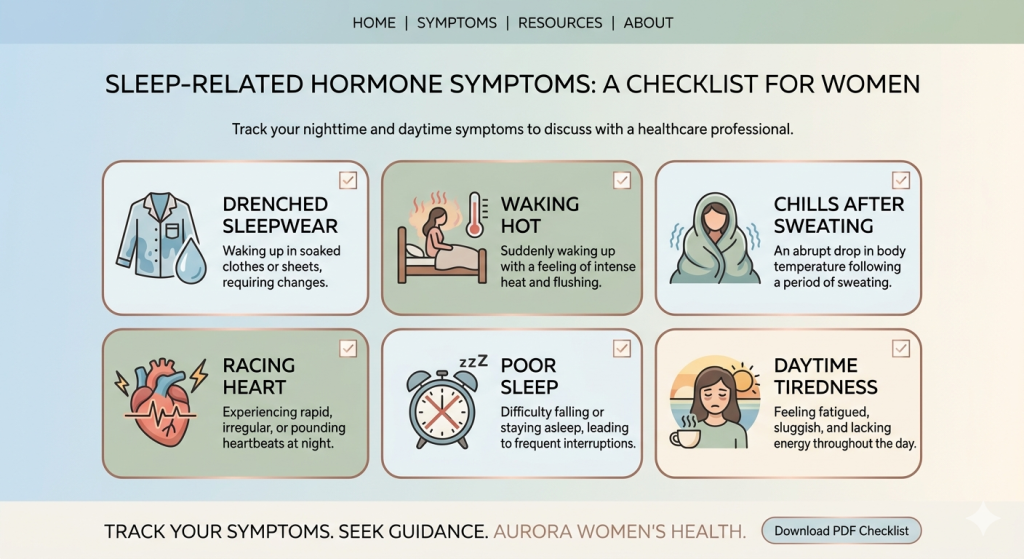
Night sweats can feel different from one woman to another. Common signs include:
- waking up sweaty or drenched
- damp pyjamas or bed sheets
- feeling very hot suddenly during sleep
- flushed skin
- a racing heart or unsettled feeling
- waking up cold or chilled afterwards
- poor sleep and tiredness the next day
If you are still asking, why am I sweating at night, it can help to notice whether it happens with other menopause symptoms too, such as irregular periods, hot flushes in the daytime, mood changes, sleep trouble, or brain fog. These symptom patterns can help make sense of what is going on.
What is normal, and when to pay attention
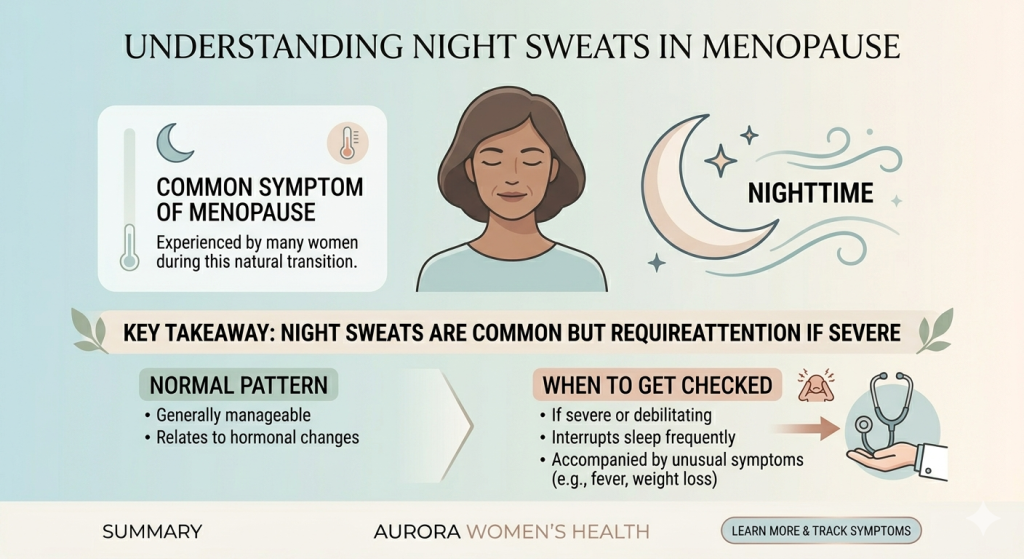
In perimenopause and menopause, night sweats are common and can happen for months or years. Symptoms vary a lot. Some women notice occasional mild sweating. Others wake several times a night feeling soaked and exhausted. NICE says menopause symptoms can range from minor to severe and may be experienced over short or long time periods.
What is often considered common:
- sweating episodes that come and go
- symptoms alongside perimenopause or menopause
- broken sleep from feeling suddenly hot
- improvement with cooling steps or treatment
What deserves more attention:
- symptoms that are new, severe, or getting worse
- drenching sweats without any clear menopause pattern
- fever, unexplained weight loss, or feeling generally unwell
- symptoms that started after a new medicine
- night sweats with chest pain, breathing difficulty, or fainting
A medically responsible reminder: not every answer to why am i sweating at night is menopause. Recurrent night sweats can have other causes, so it is worth getting checked when symptoms do not fit the bigger picture or feel off.
Bleeding Between Periods: Common Causes and When to Get Checked
When to speak to a doctor
Speak to a doctor or menopause-trained clinician if night sweats are affecting sleep, mood, work, or daily life. NHS guidance says to speak to a GP or nurse if you think you have menopause or perimenopause symptoms.
It is also sensible to seek medical advice if:
- you are not sure whether menopause is the cause
- the sweating is frequent or severe
- you have other worrying symptoms
- lifestyle changes are not helping
- you want to discuss treatment options
What may help in the meantime:
- keep the bedroom cool
- wear light sleepwear
- use lighter bedding
- avoid triggers such as alcohol, spicy food, caffeine, smoking, or overheating
- try stress reduction
- exercise regularly
- seek support for bothersome symptoms because effective treatments are available
For many women with bothersome vasomotor symptoms, hormone therapy is the most effective treatment, though it is not suitable for everyone and should be discussed with a clinician.
Key takeaway
If you have been asking, why am i sweating at night, the most common reason in midlife is perimenopause or menopause, when hormone changes can trigger night sweats. They are common, but they should not be brushed aside if they are severe, unusual, or affecting your quality of life. Good support, practical self-care, and medical treatment can make a real difference.
FAQs
Why am I sweating at night during perimenopause?
Because changing oestrogen levels can affect the body’s temperature regulation and trigger night sweats, which are a common vasomotor symptom of the menopause transition.
Are night sweats the same as hot flushes?
They are closely related. Night sweats are hot flushes that happen during sleep.
When should I worry about night sweats?
It is worth getting checked if the sweats are severe, unexplained, worsening, or accompanied by other concerning symptoms such as fever, weight loss, chest pain, or fainting.
What helps with menopause night sweats?
Cooling the bedroom, wearing light clothing, reducing triggers, managing stress, and discussing treatment options with a clinician can all help.
Can medication cause night sweats?
Yes. NHS guidance lists some medicines, including certain antidepressants, steroids, and painkillers, as possible causes.
Medical disclaimer
This article is for educational and informational purposes only and is not a substitute for medical advice, diagnosis, or treatment. FemPhases does not provide personal medical care, and reading this content should not replace speaking with a qualified doctor, GP, nurse, pharmacist, or other licensed healthcare professional.
Night sweats can have different causes. If you have new, severe, persistent, or worsening symptoms, or if something does not feel right, seek medical advice promptly. Seek urgent medical care if you have chest pain, difficulty breathing, fainting, severe illness, or any symptom that feels like an emergency.