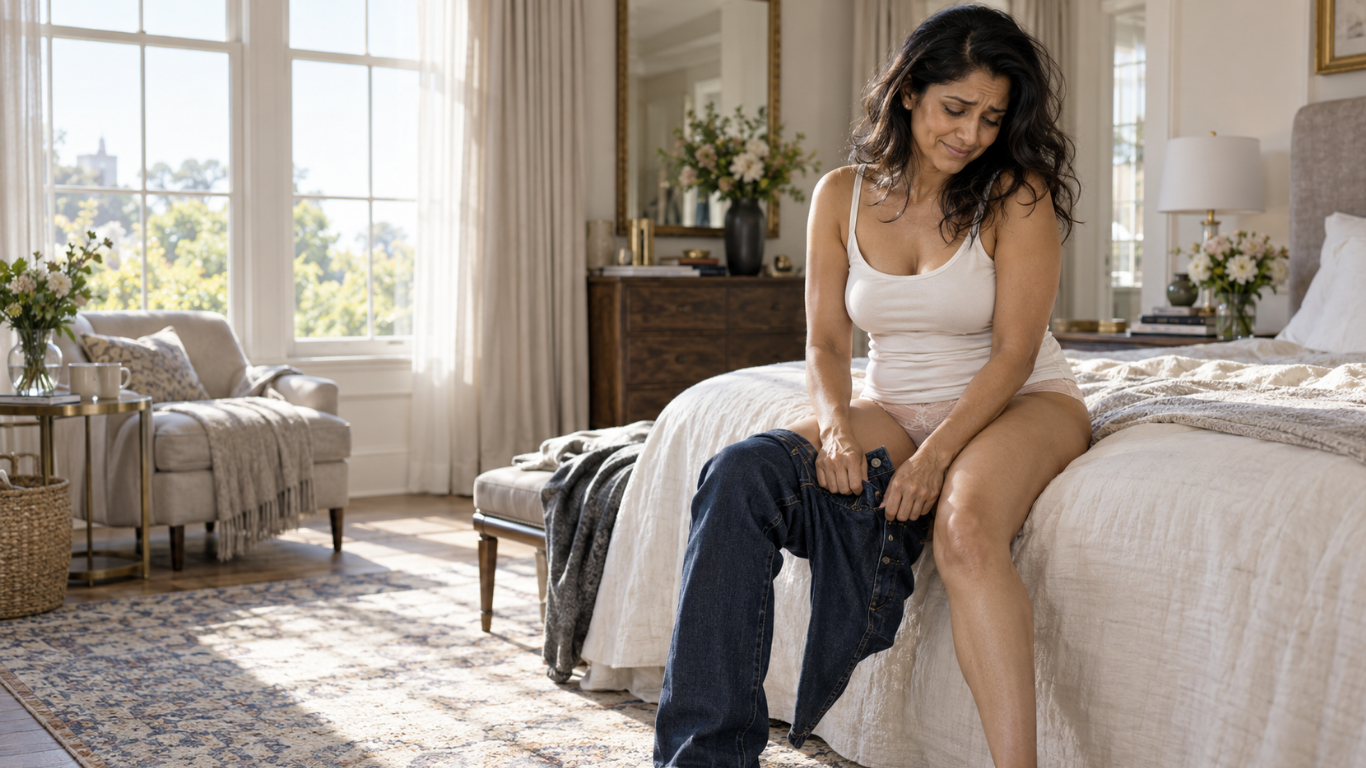

You may notice it while doing something you have done countless times before.
The moisturiser that once worked perfectly now disappears into your skin without making it feel comfortable. Your scalp feels drier. Your foundation settles differently. A spot appears along your jawline just as you are trying to work out why your cheeks have become sensitive.
Then there is the hairbrush.
Perhaps it holds more strands than usual. Your parting looks slightly wider, or your ponytail no longer feels as full. None of these changes may seem dramatic on their own, yet together they can make your reflection feel unfamiliar.
Midlife skin and hair changes are common, which can help women feel reassured and less alone in their experiences, fostering acceptance and reducing worry. Recognizing these changes as normal can empower women to approach self-care with confidence.
The aim is not to wage war on every line, spot, or loose hair, but to understand what may be changing and support women in feeling understood and empowered in their self-care journey.
During perimenopause and menopause, changing hormone levels may affect the skin’s moisture, thickness and resilience. Some women notice dry or itchy skin, increased sensitivity, changes in oiliness or adult acne. Hair may become drier, feel more fragile or gradually appear thinner.
The NHS guide to menopause and perimenopause symptoms includes dry or itchy skin and hair thinning or loss among the changes some women experience.
However, hormones are not the only possible explanation.
Skin and hair can also be affected by thyroid conditions, iron deficiency, autoimmune illness, scalp disorders, medication, recent illness, rapid weight change, restrictive eating, chronic stress, inherited patterns of hair loss, or hormonal imbalances. Recognising these signs can help you understand whether your changes are related to hormones or other health conditions, and when to consult a healthcare professional.
A gentle routine may support comfort, but seeking professional advice for persistent, sudden, or painful changes can help women feel supported and confident in their health decisions. Consulting a healthcare professional ensures appropriate care and peace of mind.
Why Skin and Hair Can Change in Midlife
Hormones influence skin and hair, but they also respond to what is happening throughout the rest of the body.
This is why two women of the same age can have entirely different experiences with skin and hair changes, emphasizing the importance of personalized care and understanding individual responses to midlife changes.
1. Skin may hold less moisture
As hormone levels change around menopause, the skin can become drier, thinner or less firm. You may notice tightness after cleansing, itching, flaking or greater sensitivity to products you previously tolerated.
Weather, central heating, hot showers, fragranced products, frequent exfoliation, and some medicines can contribute to dryness. Eczema, psoriasis and thyroid conditions may also affect how the skin feels.
Dryness is not evidence that you have neglected yourself. Sometimes the routine that served your skin for years simply needs to become quieter and more supportive.
2. Sensitivity can appear unexpectedly
Midlife skin may react more strongly to active ingredients, fragrance or repeated cleansing. A product marketed as “anti-ageing” may contain ingredients that work for some people but are too irritating for your skin.
Redness, stinging and peeling are not signs that a product is working harder. They can indicate irritation or damage to the skin barrier.
Persistent facial redness, visible blood vessels, burning or acne-like bumps may also be associated with conditions such as rosacea and should not automatically be blamed on menopause.
3. Adult acne can arrive alongside dryness
It can feel particularly unfair to experience spots and dryness at the same time.
Changing hormone patterns may contribute to breakouts, often around the lower face or jawline. Still, adult acne may also be influenced by skincare products, medication, stress, polycystic ovary syndrome or other hormonal conditions. Acne can cause oily skin, inflamed spots and tenderness, and it may lead to scarring or dark marks.
Trying to scrub spots away usually adds irritation without addressing the cause.
Prescription treatments and hormonal therapies may help some women with persistent acne, but these require professional guidance because suitability depends on your health, other medicines and individual risks.
4. Hair growth may slow or become less dense
Hair naturally moves through cycles of growth, rest and shedding. Changes in hormones, age and genetics can gradually alter those cycles.
Female-pattern hair loss often appears as a widening parting or reduced density over the top of the scalp. It tends to progress gradually rather than causing complete baldness.
Excessive shedding can look different. You may notice more hair falling out all over the scalp after an illness, major stress, rapid weight loss, surgery, or other physical strain. This type of shedding is often called telogen effluvium.
For Black women, traction from tight braids, extensions, weaves, or repeatedly pulled-back styles can also damage hair follicles. Some forms of scarring hair loss are more common in Black women and benefit from early dermatological assessment.
What These Changes Can Look Like in Everyday Life
Skin and hair changes are sometimes treated as superficial concerns. The emotional effect can be anything but superficial.
Your face and hair are part of how you recognise yourself. When they change unexpectedly, you may feel exposed, older than you expected or less confident in social and professional settings.
You may begin avoiding bright lighting or photographs. Hair washing can become stressful because you are counting the strands in the shower. You might spend money on products promising dramatic restoration, then blame yourself when nothing changes.
These concerns can also affect intimacy. You may not want someone touching your face or hair when you are already feeling self-conscious.
None of this means you are vain.
It means a visible part of your identity is changing, and you are trying to make sense of it.
Unhelpful assumptions worth challenging
Midlife skin and hair changes do not mean:
- You have failed to care for yourself.
- Every change is caused by menopause.
- You need an aggressive anti-ageing routine.
- Adult acne is caused by poor hygiene.
- Hair loss is something you must hide.
- Expensive products are always more effective.
- Supplements are automatically safe.
- You should accept sudden or severe changes without assessment.
There is a difference between respecting natural change and ignoring something that may need treatment.
How to Adapt Your Skin and Hair Routine
The most useful changes are often the least dramatic.
These are general wellbeing suggestions. They do not replace diagnosis or prescribed treatment when needed.
1. Simplify your skincare routine
A basic routine may include:
- A gentle, fragrance-free cleanser
- A moisturiser suited to dry or sensitive skin
- Broad-spectrum sun protection during the day
Avoid introducing several new products at once. This makes it harder to identify what is helping or causing irritation.
The American Academy of Dermatology’s menopause skincare guidance recommends focusing on moisture, sun protection and adapting care as skin becomes drier or thinner.
2. Treat dryness before adding strong active ingredients
Apply moisturiser while the skin is slightly damp. Creams or ointments may feel more comfortable than light lotions when dryness is significant.
Reduce very hot showers, harsh soaps and frequent scrubs. If you use ingredients such as retinoids, exfoliating acids or acne treatments, introduce them slowly and stop if you develop persistent burning, swelling or severe peeling.
Retinoid medicines and some acne treatments require additional caution during pregnancy or when pregnancy is possible. Ask a pharmacist, GP or dermatologist for guidance.
3. Be gentle with thinning or fragile hair
Please try to reduce repeated pulling, high heat, and harsh chemical treatments. Looser hairstyles, lower-temperature styling and gentle handling while hair is wet may help limit avoidable breakage.
Choose shampoos and conditioners based on your scalp and hair texture rather than on marketing aimed at your age.
Do not assume that every loose strand requires a supplement. The American Academy of Dermatology warns that excessive amounts of some nutrients may worsen hair loss.
4. Notice patterns and timing
Keep brief notes about:
- When the change began
- Whether shedding is gradual or sudden
- Where thinning is most visible
- Scalp itching, pain, scaling or tenderness
- New medicines or hormonal treatments
- Recent illness, surgery or significant stress
- Menstrual changes or heavy bleeding
- Changes in eating, weight or energy
- New facial hair, irregular periods or persistent acne
Photographs taken in similar lighting every month can be more useful than checking your parting several times a day.
5. Seek targeted advice before buying more products
A pharmacist may help with straightforward dryness or mild acne. A GP can assess possible underlying causes and arrange blood tests where appropriate.
A dermatologist can distinguish between different types of acne, skin inflammation and hair loss. Effective hair-loss treatment begins with identifying the cause rather than trying a series of products at random.
It is worth getting support if…
- Hair loss begins suddenly or progresses quickly.
- You develop round or clearly defined bald patches.
- Your scalp is painful, inflamed, severely itchy or covered in thick scale.
- The skin on your scalp looks smooth or scarred where hair has been lost.
- Your parting is steadily widening, or your ponytail is noticeably thinner.
- Acne is painful and can leave scars or affect your confidence.
- A rash is spreading, blistering, bleeding or failing to heal.
- A mole or skin mark changes in size, shape, colour or appearance.
- Skin or hair changes occur alongside fatigue, weight change, heavy periods or feeling unusually cold.
- New facial hair, acne, or scalp thinning may occur with significant menstrual changes.
- A medicine appears to have triggered the change.
When Professional Treatment May Help
Treatments depend on the cause.
Persistent acne may be managed with topical treatments, antibiotics, hormonal medicines or other prescription options. Some treatments can irritate sensitive skin, interact with medicines or be unsuitable during pregnancy, so they should be selected with professional guidance.
Hair-loss treatment may include topical or oral medicines, changes to hair practices or treatment of an underlying condition. Female-pattern hair loss, inflammatory scalp conditions and scarring alopecia require different approaches.
Hormone replacement therapy may be appropriate for some women who have wider menopausal symptoms. Still, it should not be started solely as a cosmetic hair or skin treatment without an individual discussion. The NHS advises discussing HRT and other menopause treatments with a doctor, nurse or pharmacist.
Herbal menopause products, hair vitamins and online hormone treatments are not automatically safe. They may interact with medicines, provide excessive nutrients or delay proper assessment.
Conclusion
Midlife can change how skin holds moisture, how hair grows, and how familiar products feel.
Some of this may be connected to hormonal transition. Some may reflect genetics, health conditions, medication, stress, styling practices or the accumulated effect of years of sun and everyday life.
You do not need to pretend that visible changes never affect you. You are allowed to care about your appearance without believing that your body must remain unchanged.
Begin with gentleness. Simplify what has become irritating. Protect what feels more vulnerable. Ask questions when a change does not make sense.
The goal is not to chase your younger face or force your hair to behave exactly as it once did. It is to understand the body you have now and give it care that fits.
When to Speak to a Healthcare Professional
Arrange a routine appointment if a skin or hair change is persistent, worsening, painful or affecting your emotional wellbeing.
Seek prompt or urgent medical advice if you experience:
- A rapidly spreading or blistering rash
- Swelling of the lips, tongue or throat
- Difficulty breathing
- Skin peeling after starting a new medicine
- A painful, hot or swollen area with fever
- Sudden hair loss with other neurological or physical symptoms
- A mole or lesion that is bleeding, changing rapidly or not healing
- Severe distress or thoughts of harming yourself
Frequently Asked Questions
1. Is dry skin a normal part of menopause?
Dry or itchy skin can occur during perimenopause and menopause, but menopause is not the only possible cause. Weather, products, medication, eczema, thyroid conditions and other health issues may also contribute.
Seek advice if dryness is severe, widespread, painful or not improving with gentle care.
2. Why do I have acne and dry skin at the same time?
Different areas of the face may produce varying amounts of oil, while the protective skin barrier may still feel dry or irritated.
Hormonal changes, unsuitable products and strong acne treatments may all contribute. A simple routine and professional advice may be more helpful than using harsher products.
3. Is hair thinning always caused by low oestrogen?
No. Changing hormones may play a role, but genetics, iron deficiency, thyroid disease, medication, scalp conditions, illness, stress and tight hairstyles are among the other possibilities.
The pattern and timing of the hair loss can help a healthcare professional identify the likely cause.
4. Should I take biotin or hair supplements?
Not automatically.
Supplements are most useful when a deficiency is identified. High doses of certain nutrients may cause harm, interfere with medical tests or worsen hair loss, so discuss supplements with a pharmacist or healthcare professional first.
5. Can thinning hair grow back?
It depends on the cause. Hair shedding following illness or stress may improve with time, while female-pattern hair loss may require ongoing treatment.
Scarring forms of hair loss can permanently damage follicles, making early assessment especially important.
6. Do I need a complicated anti-ageing routine?
No. Many women do well with a gentle cleanser, moisturiser and sun protection.
You can add products based on your concerns and skin tolerance, but more steps don’t automatically mean better results.
Key Takeaways
- Skin may become drier, more sensitive or more acne-prone in midlife.
- Hair may feel drier, break more easily, shed excessively or gradually become thinner.
- Hormonal changes can contribute, but they are not the only possible cause.
- Gentle routines are often more supportive than aggressive “anti-ageing” approaches.
- Adult acne and hair loss are treatable concerns, not personal failures.
- Sudden, painful, patchy or rapidly progressing changes should be assessed.
- Supplements and prescription treatments require appropriate professional guidance.
- Supporting your changing skin and hair is more useful than fighting your reflection.
Medical Disclaimer
This article is for educational purposes only and does not replace personalised medical advice, diagnosis or treatment. If you are worried that your symptoms are getting worse, or if something does not feel right in your body, please speak with your doctor, nurse practitioner, gynaecologist, endocrinologist, dermatologist, or another qualified healthcare professional. Seek urgent medical help for severe, sudden or concerning symptoms.