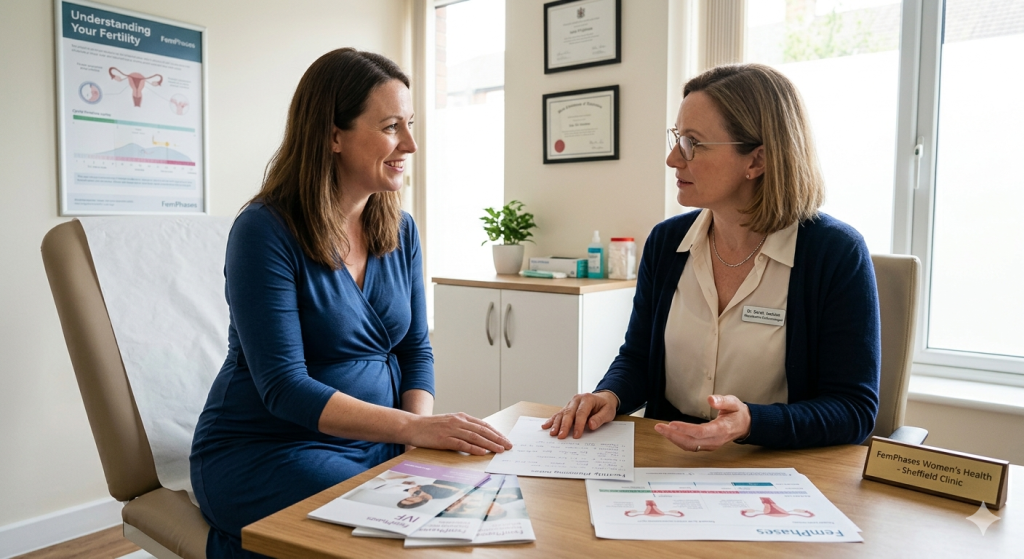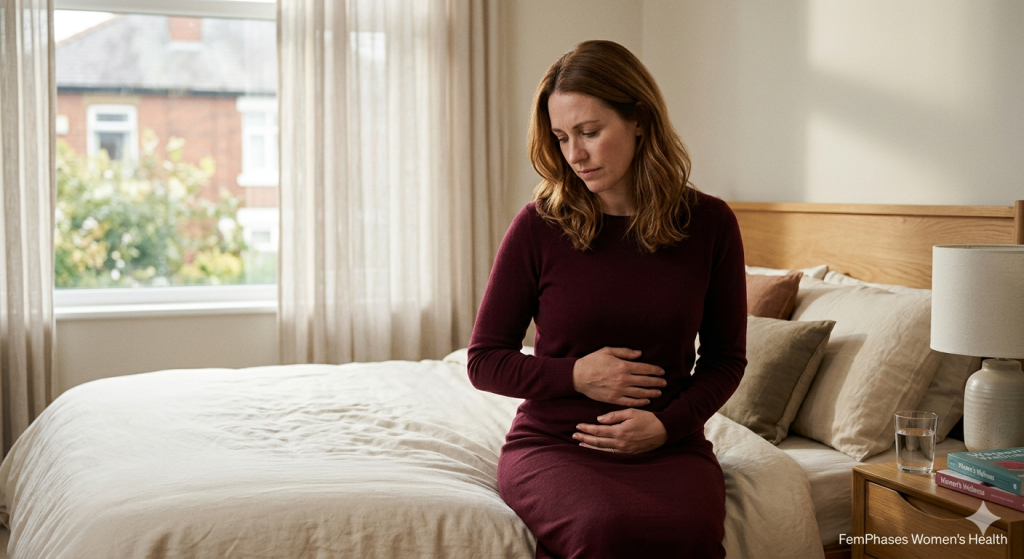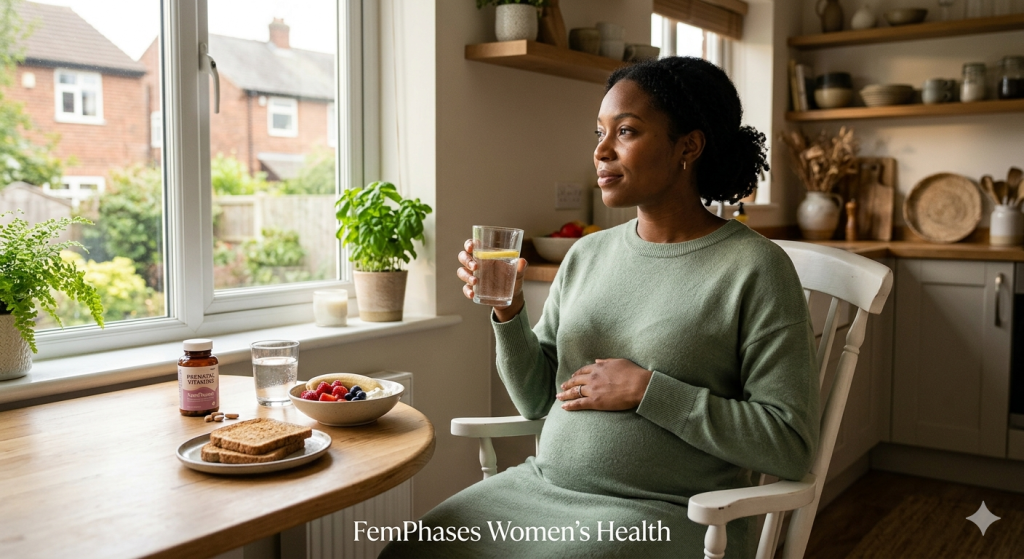

You might be asking yourself a very ordinary but very loaded question: Could I be pregnant? Maybe your period is late, your breasts feel sore, or you suddenly feel unusually tired. It can be hard to know what is meaningful and what could be PMS.
Quick answer:
The earliest signs of pregnancy often include a missed or lighter period, breast tenderness, tiredness, nausea, needing to pee more often, and sometimes light spotting or mild cramping. These changes occur because pregnancy hormones begin to rise very early. The only way to know for sure is to take a pregnancy test, ideally after a missed period.
What is it?
The earliest signs of pregnancy are the first body changes some women notice in the days or weeks after conception. Not everyone gets symptoms right away, and not everyone gets the same ones. Some women notice changes before a missed period, while others do not notice much until later.
It is also important to remember that early pregnancy symptoms can overlap with premenstrual symptoms. That is why symptoms alone cannot confirm pregnancy. A home pregnancy test is usually the clearest next step.
Why does it happen?
Early pregnancy symptoms happen mainly because hormone levels begin to change quickly after a fertilised egg implants in the uterus. Hormones such as hCG and progesterone can affect energy levels, breasts, digestion, mood, and the bladder. Increased blood volume and other early body adjustments also play a role.
If implantation happens, some women notice very light spotting or mild cramping around that time. Implantation bleeding is usually light, brief, and much less heavy than a typical period.
Medically responsible reminder: symptoms can give clues, but they do not diagnose pregnancy. Testing matters.
Signs or symptoms
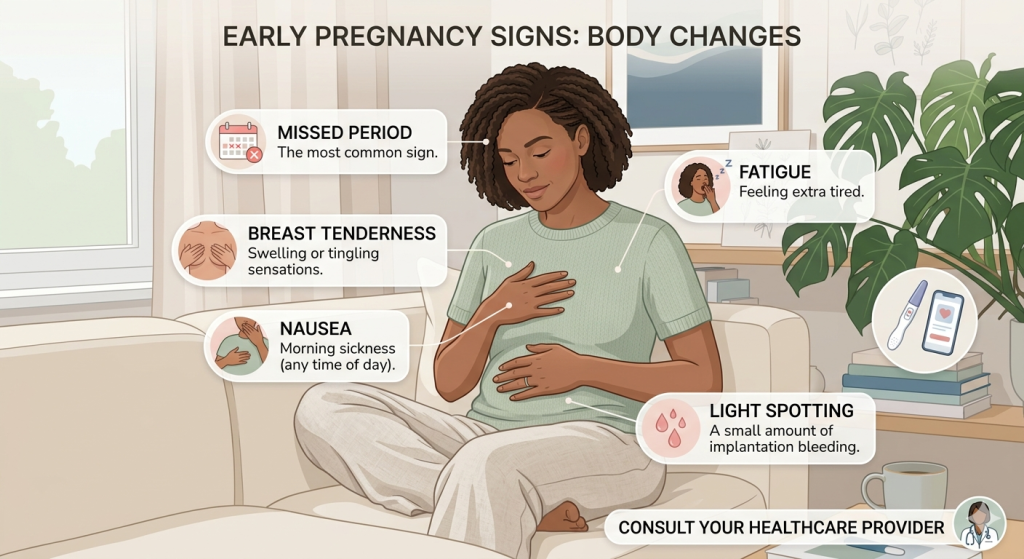
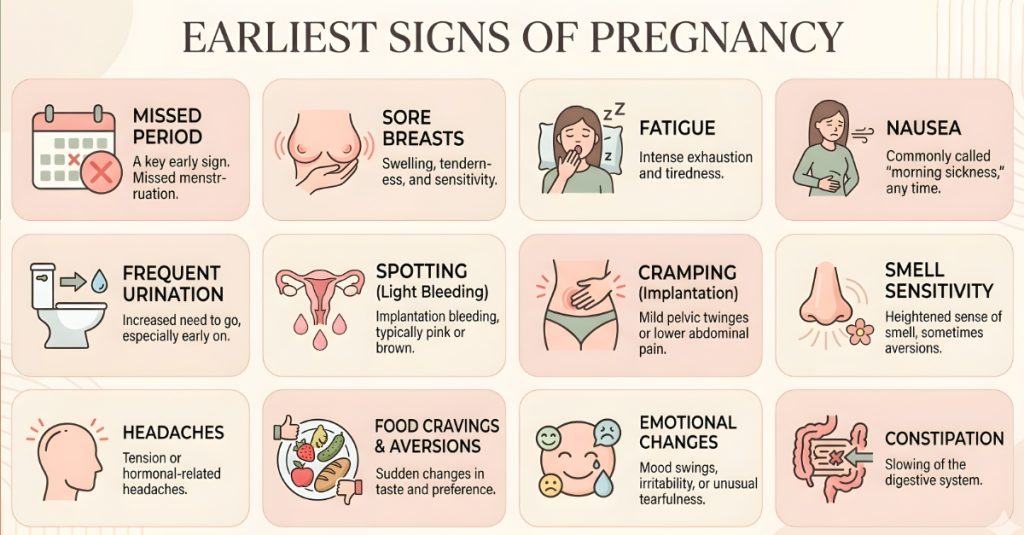
The earliest signs of pregnancy can include:
- A missed period or a lighter-than-usual period
- Breast tenderness, swelling, tingling, or darker nipples
- Feeling very tired
- Nausea, with or without vomiting
- Needing to pee more often
- Light spotting
- Mild cramping
- A heightened sense of smell or changes in food preferences
- Mood changes
- Bloating or a milky white vaginal discharge
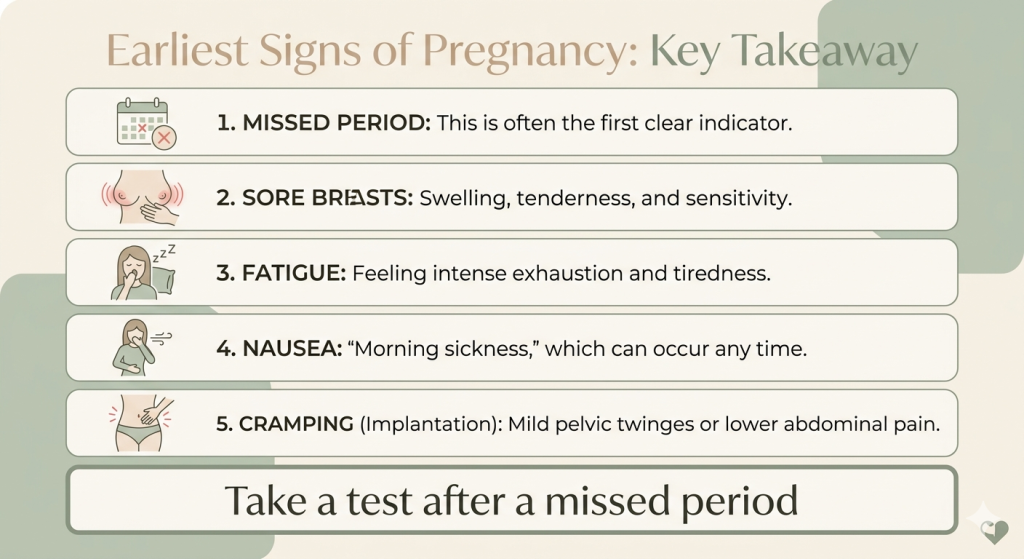
A missed period is often the first sign many women notice. Breast soreness and tiredness can also appear very early. Nausea is commonly called “morning sickness,” but it can occur at any time of day.
Light spotting can happen in early pregnancy, but it is usually much lighter than a normal period. Mild cramping can also happen early on. Heavier bleeding, severe pain, or feeling faint is different and should not be brushed off.
What is normal, and when to pay attention
It can be normal in early pregnancy to feel tired, nauseated, emotional, bloated, or to notice mild breast soreness and more frequent urination. Some women also notice light spotting or mild cramps. Others feel almost nothing at first. Both can happen.
What deserves more attention is heavy bleeding, strong or worsening abdominal pain, pain on one side, fainting, or symptoms that feel severe rather than mild. Bleeding in early pregnancy can be common, but it should still be reported to a healthcare professional.
A practical rule: if symptoms are mild, monitor them and take a pregnancy test. If symptoms are heavy, painful, or worrying, seek medical advice sooner.
When to speak to a doctor
Speak to a doctor, midwife, sexual health clinic, or other healthcare professional if:
- your pregnancy test is positive and you want guidance on next steps
- you have bleeding in pregnancy
- you have strong pain, one-sided pain, shoulder pain, or fainting
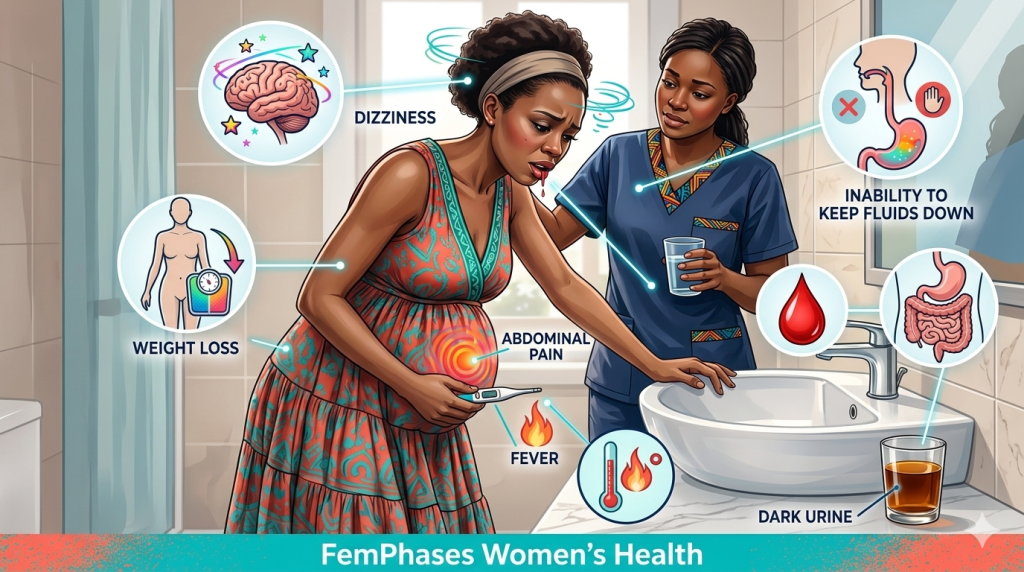
- you are vomiting so much that you cannot keep fluids down
- your symptoms feel severe or do not feel right to you
If you think you may be pregnant, taking a home pregnancy test after a missed period is usually the most useful first step. If it is negative but your period still does not come, repeat the test in a few days or speak to a healthcare professional.
Key takeaway
The earliest signs of pregnancy often include a missed period, sore breasts, tiredness, nausea, frequent urination, and sometimes light spotting or mild cramping. These symptoms can start early, but they can also feel a lot like PMS. The clearest next step is a pregnancy test after a missed period, along with medical advice if you have heavy bleeding, severe pain, or anything that feels worrying.
FAQs
What is usually the very first sign of pregnancy?
For many women, a missed period is the first noticeable sign. Some also notice sore breasts, tiredness, or light spotting before that.
Can you feel pregnant after 1 week?
Usually, it is too early to know for sure at 1 week. Some women notice very early changes soon after implantation, but many do not feel any symptoms that early.
Can early pregnancy feel like PMS?
Yes. Breast tenderness, bloating, tiredness, and mild cramping can overlap with PMS, which is why a pregnancy test is important.
Is spotting normal in early pregnancy?
Light spotting can happen in early pregnancy, including around implantation. Heavy bleeding is different and should be checked by a healthcare professional.
When should I take a pregnancy test?
A home pregnancy test is usually most reliable after a missed period. If the result is negative but your period still does not come, test again in a few days.