


If you’ve ever looked at your underwear or toilet paper and wondered whether the colour of your discharge means something is wrong, you are not alone. Vaginal discharge colour is a question many women search for when they notice discharge that looks different from usual and want a clear, calm answer.
For most women, discharge changes slightly throughout the month. Clear, white, or off-white discharge is often normal. Colours like grey, green, bright yellow, or blood-stained discharge are more likely to need attention, especially if there is a strong smell, itching, burning, pain, or bleeding outside your period.
What is it?
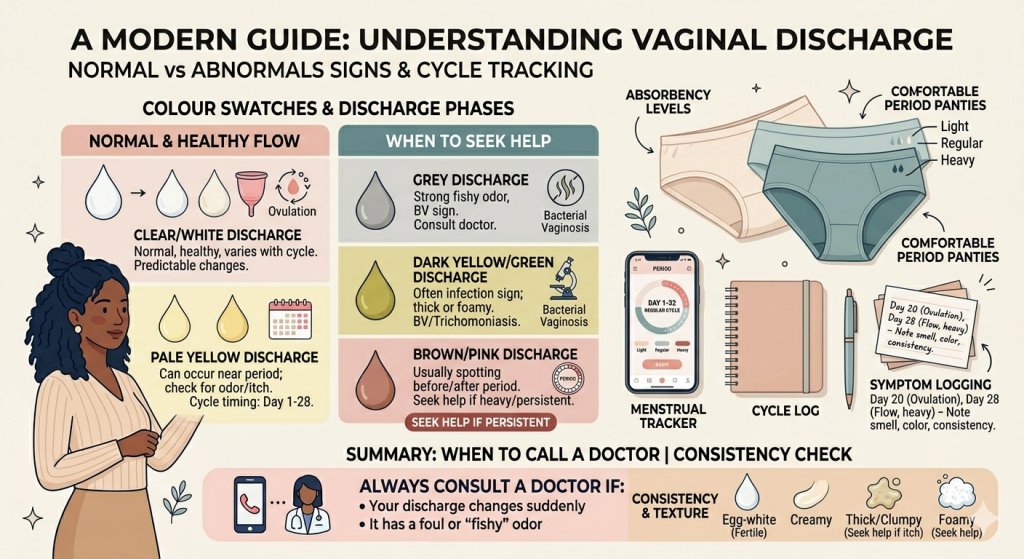
Vaginal discharge is fluid made by the vagina and cervix. It helps keep the vagina clean, moist, and protected. ACOG says normal discharge is usually clear to white and has no noticeable odour. Cleveland Clinic also notes that healthy discharge can be clear, milky white, or off-white, and its texture can vary throughout the menstrual cycle.
What normal discharge can look like
Normal discharge may be:
- clear
- white or off-white
- watery
- slightly sticky
- creamy
- stretchy and slippery around ovulation
These changes often occur because hormones fluctuate throughout the month. Cervical mucus naturally changes around ovulation, when it can become more slippery or egg-white-like.
Why colour gets so much attention
When people search for vaginal discharge colours, they are usually trying to work out whether a colour change is harmless or a warning sign. Colour matters, but it is not the only clue. Smell, texture, itching, burning, pelvic pain, and whether the change is new for you all matter too.
Why does it happen?
The short answer is that discharge changes because your body changes. Hormones, ovulation, your period, pregnancy, infections, irritation, and menopause can all affect how discharge looks. Mayo Clinic says unusual discharge can happen with yeast infection, bacterial vaginosis, sexually transmitted infections, pregnancy, menopause-related changes, and some hygiene products.
Common colour meanings
i. Clear or white
This is usually normal. ACOG and NHS both note that healthy discharge is often clear or white.
ii. Thick white
This can still be normal at some points in the cycle. But if it looks clumpy, like cottage cheese, and causes itching or soreness, thrush becomes more likely.
iii. Yellow
A pale yellow discharge may sometimes be harmless, especially if it has no odour or causes no irritation. But dark yellow discharge, or yellow discharge with pain, smell, or itching, may need checking. ACOG notes that yellow discharge that differs from your normal can occur with some STIs.
iv. Green
Green discharge is not usually considered normal and may indicate an infection, especially if it is frothy or accompanied by irritation. NHS lists green or yellow frothy discharge as a possible sign of trichomoniasis.
v. Grey
Grey discharge, especially if thin and fishy-smelling, often raises concern for bacterial vaginosis. The NHS describes bacterial vaginosis as commonly causing greyish-white, thin discharge with a strong fishy smell.
vi. Brown or blood-tinged
Brown discharge can happen when old blood mixes with vaginal fluid. It may appear around the start or end of a period. But bleeding between periods or after menopause should not be ignored.
Signs or symptoms
When thinking about vaginal discharge colours, it helps to look beyond colour alone.
Signs that are often less worrying
These usually fit with normal discharge:
- clear, white, or off-white colour
- mild change in amount across the month
- no strong odour
- no itching, burning, or pain
- stretchy mucus around ovulation
Signs that may point to a problem
These deserve more attention:
- fishy smell
- thick, clumpy, white discharge with itching
- green, grey, or unusually yellow discharge
- soreness, swelling, or burning
- pain when peeing or during sex
- pelvic pain
- spotting outside your period
The NHS and Mayo Clinic both advise getting checked if discharge changes in colour, smell, or texture and is accompanied by irritation, bleeding, or pain.
What is normal, and when to pay attention
This is where vaginal discharge colour becomes most useful. Not every change means a problem. Your usual pattern matters.
Usually normal
Clear, milky, or off-white discharge
This is the range most often considered healthy.
Cycle-related changes
You may notice more discharge before ovulation or in the weeks before your period. ACOG notes that discharge can become thicker and heavier in the weeks leading up to menstruation.
Mild brown discharge around a period
This can be old blood rather than a fresh problem.
Pay attention when
The discharge is new or clearly different.
A big change from your usual pattern matters more than a small variation.
There is a strong smell.
A fishy smell often needs assessment, especially with grey discharge.
There is itching, burning, or soreness.
These symptoms suggest irritation, thrush, vaginitis, or infection.
There is bleeding outside your period.
This should not be brushed off, especially after menopause.

When to speak to a doctor
If you are searching vaginal discharge colours because something feels off, trust that instinct. Speak to a doctor, sexual health clinic, or nurse if you have:
- green, grey, or strong yellow discharge
- discharge with a strong, unpleasant smell
- itching, burning, swelling, or pain
- bleeding between periods or after sex
- pelvic pain
- Symptoms that keep coming back
- a new discharge change during pregnancy
- any bleeding or brown discharge after menopause
Mayo Clinic recommends medical review for greenish, yellowish, thick, cheesy, or strongly smelling discharge, and for itching, burning, irritation, or spotting outside your period.
A practical reminder
Try not to self-diagnose based solely on colour. Different infections and causes can overlap, and the right treatment depends on the actual cause. NHS specifically advises against self-diagnosing unusual discharge.
Key takeaway
If you have been looking for vaginal discharge colours, the main thing to remember is this: clear, white, and off-white discharge is often normal, while grey, green, strongly yellow, foul-smelling, itchy, painful, or blood-stained discharge outside your period deserves more attention. Most changes are treatable, and getting checked early can save you a lot of worry.
Frequently Asked Questions
What colour discharge is considered normal?
Normal discharge is usually clear, white, or off-white, and it should not have a strong smell.
Is yellow discharge always an infection?
Not always. Pale yellow can sometimes be harmless, but darker yellow discharge or discharge with smell, itching, or pain should be checked.
What does grey discharge usually mean?
Grey discharge, especially with a fishy odour, often indicates bacterial vaginosis.
Is thick white discharge normal?
Sometimes, yes. But if it is clumpy and comes with itching or soreness, thrush may be the cause.
Why is my discharge green?
Green discharge is not usually normal and may be associated with infection, including trichomoniasis.
Is brown discharge always a problem?
No. Brown discharge can be old blood, especially around your period. But blood-stained discharge outside your period should be checked.
Can discharge change during ovulation?
Yes. Around ovulation, discharge often becomes clearer, stretchier, and more slippery.
Medical disclaimer
This article is for general education only and is not a diagnosis. If your discharge has a strong smell, unusual colour, itching, burning, pelvic pain, or bleeding outside your period, please speak to a doctor or sexual health clinic. If you are pregnant, unwell, or have