If you are in early pregnancy and food suddenly feels confusing, unappealing, or even impossible to eat, you are not doing anything wrong. For many of us, the first trimester is not glowing or graceful. It can be a strange mix of joy, worry, nausea, food aversions, exhaustion, and the pressure to “eat perfectly” at the exact time eating may feel hardest. The good news is that early Pregnancy nutrition does not need to look flawless to be effective. What matters most is understanding the basics, knowing which nutrients truly count, staying safe with food, and getting help early if symptoms are making it hard to cope.
In this guide, we will walk through what your body is doing in the first 12 weeks, which nutrients matter most, what to do if nausea takes over, which foods and supplements require extra caution, and exactly when symptoms cross the line from common to something that needs medical support. (nhs.uk)
Why early pregnancy nutrition matters
The first 12 weeks of pregnancy are a major period of growth. Long before a bump appears, your baby’s brain, spinal cord, heart, and other early structures are developing rapidly. That is why nutrition in early pregnancy matters so much: this is a time of fast cell growth, placental development, and hormonal change, all happening in a relatively short window. Folic acid is especially important in these early weeks because it helps reduce the risk of neural tube defects, which affect the developing brain and spine. In the UK, standard guidance is 400 micrograms of folic acid daily until 12 weeks of pregnancy, with 5 mg daily recommended for some higher-risk groups, such as people with diabetes, certain blood disorders, previous affected pregnancies, or medicines that interfere with folate metabolism. (nhs.uk)
Vitamin D matters too. It supports healthy bone development and the functioning of other body systems, including the baby’s developing skeleton and organs. NHS guidance recommends 10 micrograms of vitamin D daily during pregnancy. Alongside this, a balanced diet helps provide energy, protein, iron, calcium, iodine, fibre, and other nutrients that support both you and the pregnancy, even if day-to-day eating is less than ideal. (nhs.uk)
Folic Acid, Prenatal Vitamins, and What You Need Before Pregnancy
What is happening in the first 12 weeks
The “why” in simple terms
Early pregnancy is hormonally intense. Rising levels of human chorionic gonadotropin (hCG) and oestrogen are linked with nausea and smell sensitivity. At the same time, progesterone relaxes smooth muscle, which can slow digestion and contribute to bloating, reflux, and constipation. At the same time, blood volume is beginning to rise, your metabolism is shifting, and your body is prioritising the growth of the placenta and embryo. That is why you might feel ravenous one day, repulsed by food the next, and far more tired than usual. None of this means you are failing at nutrition. It means your body is doing a lot, very early. (ACOG)
The key point is this: in early pregnancy, perfection is not the target. Consistency with the essentials is. Small, manageable, repeated choices often matter more than ideal meals.
Common symptoms that can affect eating
Many people in early Pregnancy notice symptoms that directly change appetite, food tolerance, and hydration. You might be feeling:
- Nausea, especially in the morning or when your stomach is empty
- Vomiting or gagging when brushing teeth, smelling food, or eating certain textures
- Food aversions, often to meat, eggs, coffee, fried foods, or strongly scented meals
- Heightened sense of smell that makes normal kitchen smells unbearable
- Extreme fatigue, making shopping, cooking, and meal prep feel impossible
- Bloating, reflux, or indigestion
- Constipation from hormonal changes and slower digestion
- Sudden cravings or a preference for very plain foods
- Anxiety around eating “the right things” while struggling to eat much at all (ACOG)
These symptoms are common, but they still deserve care and practical support.
The nutrients that matter most
Folic acid
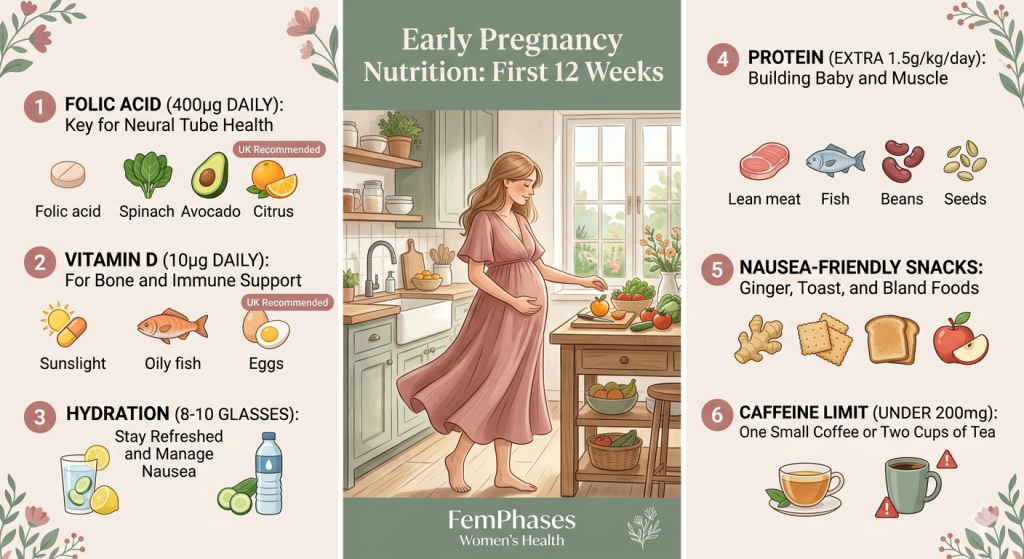
This is the non-negotiable supplement in early pregnancy. Standard UK guidance is 400 micrograms daily from before conception until 12 weeks. If you did not start before becoming pregnant, start as soon as you find out you are pregnant. Higher-dose 5 mg folic acid is recommended for certain people at increased risk, and that should be discussed with a GP or maternity clinician. (nhs.uk)
Food sources of folate include leafy greens, legumes, citrus, and fortified cereals, but diet alone is usually not enough to reliably meet the recommended amount in early pregnancy. (nhs.uk)
Vitamin D
The NHS advises 10 micrograms daily during pregnancy. This is usually taken as a supplement because food sources and sunlight alone are often not enough, especially in the UK. (University Hospitals Birmingham)
Protein
You do not need to “eat for two” in the first trimester, but you do need regular nourishment. Protein supports tissue growth and helps with steadier energy and fullness. Good options include eggs, beans, lentils, yoghurt, milk, tofu, fish, chicken, and nut butters. If nausea is severe, smaller protein portions spread throughout the day may feel more manageable than a single large meal.
Iron, calcium, iodine, and fibre
These all matter in pregnancy, but they do not usually require separate supplements unless advised by a clinician. In practice, it helps to think in terms of food groups: dairy or fortified alternatives for calcium; eggs and seafood for iodine; beans and leafy greens for iron; and fruit, vegetables, oats, and wholegrains for fibre. If constipation is creeping in, fluid and fibre together usually work better than fibre alone.
Fish and healthy fats
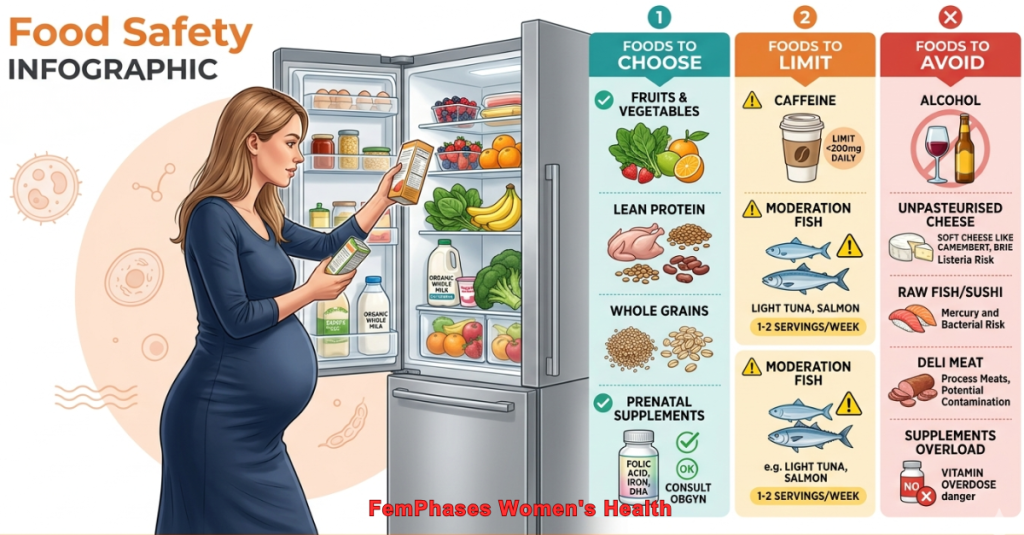
Fish can be a useful source of protein and omega-3 fats. FDA/EPA guidance advises pregnant people to eat 8 to 12 ounces of lower-mercury fish per week. In contrast, NHS guidance notes that some fish should be limited or avoided due to mercury or other pollutant exposure. (U.S. Food and Drug Administration)
Earliest Signs of Pregnancy: What They Mean and When to Test
What to eat when nausea is getting in the way
When early Pregnancy nausea is strong, this is not the season for rigid meal plans. It is the season for “what can I keep down, and how can I build from there?”
A gentle approach often works best:
- Eat small, frequent meals or snacks rather than large ones.
- Try eating before you get very hungry, because an empty stomach can worsen nausea.
- Keep simple foods nearby: crackers, toast, cereal, plain rice, bananas, applesauce, yoghurt, oatcakes, or dry snacks.
- Sip fluids slowly throughout the day rather than drinking large amounts at once
- Cold foods may smell less intensely than hot foods.
- Add nutrition where you can: peanut butter on toast, yoghurt with fruit, soup with lentils, cheese and crackers, or a smoothie with milk or a fortified alternative.
- Rest when possible, because exhaustion can amplify nausea (ACOG)
Some people find vitamin B6 helpful for nausea. ACOG notes that vitamin B6 can be tried first, and doxylamine may be added if needed. In the UK, RCOG notes that doxylamine/pyridoxine (Xonvea) is the only licensed treatment specifically for nausea and vomiting of pregnancy, and other anti-sickness medicines may also be used when appropriate. (ACOG)
Foods, drinks, and supplements to be careful with
Early Pregnancy nutrition is not only about what to include. It is also about what to limit or avoid.
a. Caffeine
Current guidance is to limit caffeine intake to no more than 200 mg per day during pregnancy. This includes coffee, tea, cola, energy drinks, and chocolate. (nhs.uk)
b. Alcohol
The safest advice is to avoid alcohol in pregnancy. Alcohol crosses the placenta, and NHS guidance links drinking in pregnancy with increased risks, including miscarriage, preterm birth, and low birthweight. (nhs.uk)
c. High-risk foods
Food safety matters because some infections, including listeriosis, can be much more serious in pregnancy. Avoid or take care with foods such as unpasteurised dairy, certain chilled ready-to-eat foods, undercooked meat, and higher-mercury fish. Use the current NHS pregnancy food safety guidance as your reference point. (nhs.uk)
d. Vitamin A supplements
Do not take supplements containing retinol, a form of vitamin A, unless a clinician specifically advises it. NHS guidance recommends checking pregnancy multivitamins carefully. (nhs.uk)
Evidence-Based Solutions for Morning Sickness
When you’re struggling to keep anything down, “perfect nutrition” goes out the window. Survival is the priority.
Medical Interventions
If nausea is preventing you from staying hydrated, your doctor may suggest:
-
Vitamin B6 and Doxylamine: A first-line, FDA-approved combination for nausea.
-
Anti-emetics: In cases of Hyperemesis Gravidarum (severe vomiting), prescriptions like Ondansetron may be necessary. Always consult your OB-GYN before starting any medication.
Lifestyle strategies are important, but sometimes early Pregnancy nutrition needs medical backup, especially if vomiting, weight loss, or dehydration are starting to take hold.
Holistic & Lifestyle Changes
-
The “Dry Cracker” Method: Keep plain crackers on your nightstand. Eat two before you even sit up in bed to stabilize your blood sugar.
-
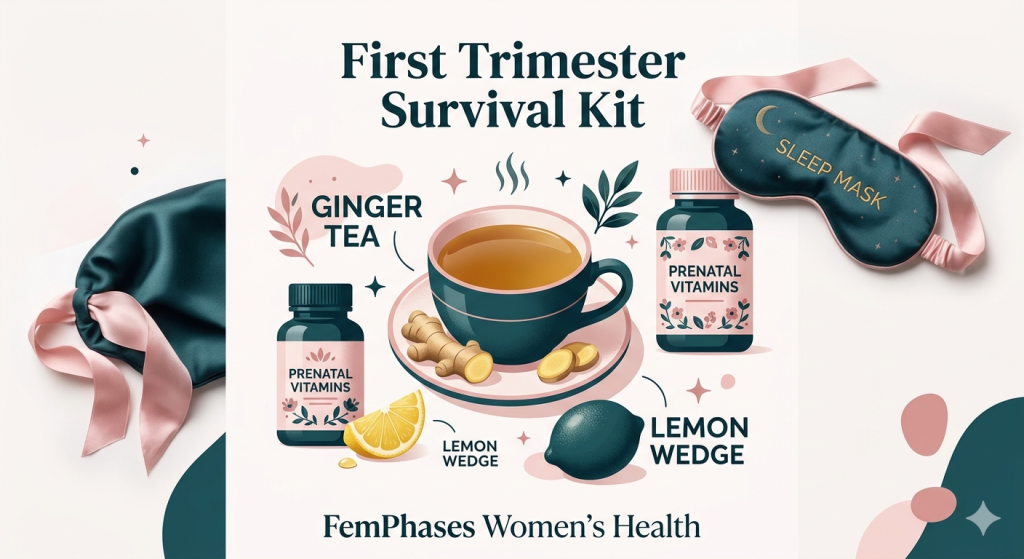
Ginger Therapy: Clinical trials show ginger is as effective as some over-the-counter meds for mild nausea. Try ginger tea or high-quality lozenges.
-
P6 Acupressure: Using “Sea-Bands” on your wrists can stimulate the pressure point associated with relieving nausea.
-
Protein Over Sugar: Blood sugar spikes can worsen nausea. Small, frequent snacks high in protein (like Greek yogurt or a handful of almonds) are often better tolerated than large meals.
These are often enough for mild symptoms:
- regular snacks
- bland or cold foods
- separating food and fluids if drinking with meals triggers vomiting
- rest
- support with meal prep from a partner, friend, or family member
- sticking with a prenatal routine you can actually tolerate
Medical interventions
For nausea and vomiting that are affecting daily life, clinicians may recommend antiemetics. NICE advises offering an antiemetic when a pregnant person chooses pharmacological treatment, and for moderate-to-severe symptoms, it advises considering intravenous fluids and sometimes outpatient treatment. The RCOG states that the anti-sickness medicines listed in its guideline are considered safe in pregnancy, including the first trimester. (NICE)
This matters because untreated severe vomiting can lead to dehydration, weight loss, and significant distress. You do not have to “just push through” if you are barely managing. Early treatment is often kinder and more effective than waiting until things become severe. (nhs.uk)
When to see a doctor
Some early-pregnancy symptoms require prompt medical review. Please seek urgent advice from your GP, midwife, maternity unit, NHS 111, or emergency services if you have:
- Unable to keep food or fluids down for 24 hours
- Very dark urine or not passing urine for more than 8 hours
- Feeling faint, dizzy, or very weak, especially on standing
- Vomiting blood
- Weight loss with ongoing vomiting
- Severe abdominal pain
- Vaginal bleeding, especially with pain
- One-sided lower abdominal pain
- Shoulder-tip pain
- Collapse or fainting (nhs.uk)
That last group of symptoms matters because one-sided pain, bleeding, shoulder-tip pain, dizziness, or fainting can be warning signs of an ectopic pregnancy, which needs urgent assessment. (nhs.uk)

Frequently Asked Questions
Question: Can poor eating in the first trimester harm my baby?
Answer
Not necessarily. Many people in early pregnancy survive on a narrow range of foods for a few weeks because of nausea and food aversions. The priority is staying hydrated, taking folic acid, taking vitamin D, and eating what you can manage while symptoms settle. Get support sooner if vomiting is severe or intake is very limited. (nhs.uk)
Question: Do I need to eat more calories in the first 12 weeks?
Answer
Usually, no. In the first trimester, most people do not need a big increase in calories. The focus is quality, consistency, and tolerance, not “eating for two.” (nhs.uk)
Question: What is the most important supplement in early pregnancy?
Answer
Folic acid is the key supplement in the first 12 weeks, with 400 micrograms daily recommended for most people and 5 mg daily for certain higher-risk groups. Vitamin D 10 micrograms daily is also advised in pregnancy. (nhs.uk)
Question: How much caffeine is safe in pregnancy?
Answer
Current guidance is to keep caffeine below 200 mg a day during pregnancy. That total includes all sources, not just coffee. (nhs.uk)
Question: When is morning sickness no longer “normal”?
Answer
Morning sickness can be a sign of dehydration if you are unable to keep fluids down, are becoming dehydrated, are losing weight, are passing very dark urine, or are feeling faint. Those symptoms can suggest more severe nausea and vomiting, sometimes called hyperemesis gravidarum. (nhs.uk)
Disclaimer: This content is for informational purposes only and does not constitute medical advice. Always seek the advice of your physician or other qualified health provider with any questions you may have regarding a medical condition.