

Walking and cardio support heart health, fitness and balance, but bones need a stronger stimulus. Progressive resistance training, gradually lifting more challenging weights, places useful stress on bones and muscles. In your 40s, combining strength, impact, balance and aerobic exercise offers the broadest protection.
Understanding This Midlife Change
Bone may look solid and unchanging, but it is living tissue that is continually broken down and rebuilt. Osteoporosis develops when bone becomes less dense and structurally weaker, increasing the likelihood of fractures.
Your 40s can be an important time to protect the bone you already have. This does not mean your body is suddenly fragile. It means exercise choices now may influence strength, mobility and fracture risk later.
Walking is valuable, especially if it helps you stay consistently active. However, bones adapt to the demands placed upon them. Once your body becomes accustomed to ordinary walking, it may no longer provide enough new stimulus to improve bone strength substantially.
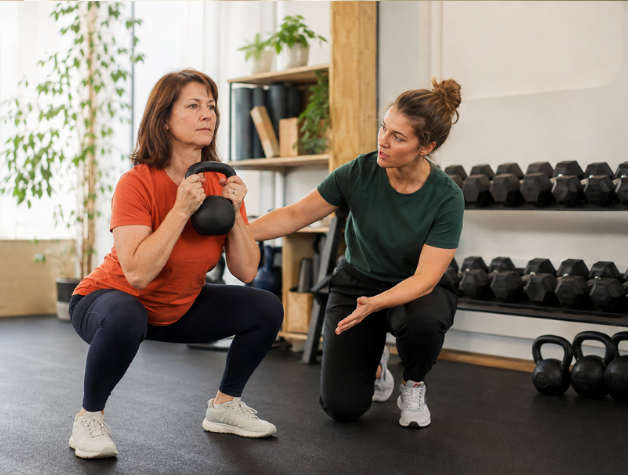
Resistance training asks more of the skeleton. Muscles pull on bones as you squat, press, pull, carry and lift, prompting bone tissue to adapt. Using challenging weights that are safe for you can help you feel capable and proactive about strengthening your bones.
What May Be Happening in the Body
Most bone mass is built earlier in life, but bone remodelling continues throughout adulthood. Oestrogen helps regulate this process. As oestrogen fluctuates during perimenopause and settles at a lower level after menopause, bone breakdown may begin to outpace rebuilding.
The speed of change varies. Genetics, nutrition, menstrual history, body weight, activity, smoking, alcohol, medicines and medical conditions all influence bone health. Early or premature menopause can increase risk because the skeleton spends more years with lower oestrogen exposure.
Muscle also matters. Resistance training supports muscle mass and power, which help you climb stairs, recover your balance and manage everyday loads. Stronger muscles cannot guarantee that a fracture will never happen, but they contribute to both bone strength and fall prevention.
How It Can Affect Everyday Life
Osteoporosis is often called a silent condition because bone loss usually causes no symptoms until a fracture occurs. Knowing this can help you feel vigilant and motivated to prioritize prevention, even if you feel fine.
Prevention is therefore less about responding to pain and more about preparing the body for ordinary life: lifting luggage, carrying shopping, moving furniture, getting up from the floor or catching yourself after a stumble.
For women who have spent years doing mainly cardio, strength training may feel unfamiliar. It can also be quietly empowering. Progress might mean using a heavier dumbbell, completing a controlled squat or carrying two bags without discomfort not pursuing a particular body shape.
If body composition changes are also on your mind, the guide to menopause, weight changes and self-care explains why strength training offers benefits beyond the number on a scale.
Common Signs, Variations, or Misunderstandings
“Walking is enough for bone health.” Walking is weight-bearing and better for bones than being inactive, but it may provide only a modest bone-loading stimulus. Current guidance generally supports combining resistance exercise with appropriately chosen impact activity.
“Heavy lifting means maximal lifting.” It does not. A challenging set may leave you feeling that you could complete only another two or three good repetitions. Beginners can start with lighter weights and build gradually, which helps maintain motivation and confidence.
“Cardio is pointless after 40.” Cardio remains important for heart and lung health, stamina, sleep and metabolic wellbeing. The problem is relying on it as the entire bone-health plan.
“Joint pain means I should avoid weights.” Not necessarily. Loads and movements can often be modified. However, persistent pain, swelling, heat, instability or reduced movement needs assessment. See Menopause Joint Pain: Causes, Symptoms and Relief for other possible influences.
“Osteoporosis always has warning signs.” Usually it does not. Sudden back pain, loss of height or a fracture after a minor fall may indicate an existing vertebral or other fragility fracture and should be assessed.
Options That May Help
Lifestyle support
Aim for progressive resistance training on two or three non-consecutive days each week. Exercises may include:
- Squats or sit-to-stands
- Hip hinges or deadlift variations
- Step-ups and lunges
- Rows and chest presses
- Overhead presses
- Loaded carries
The Royal Osteoporosis Society suggests working towards two or three strength sessions weekly, commonly using sets of 8–12 repetitions. The appropriate starting point depends on your experience and health.
Impact exercise—such as brisk stair climbing, dancing, jogging, hopping or jumping—can provide an additional bone stimulus. Impact is not suitable for everyone, particularly without modification after certain fractures or with significant joint, balance or pelvic-floor difficulties. Expert consensus supports combining resistance and impact work while tailoring exercise to fracture risk and ability (British Journal of Sports Medicine consensus statement).
Continue aerobic activity and include balance practice. Bone health benefits most from a mix of resistance, impact, and cardio exercises, not from relying on just one type.
Eat enough protein and include calcium-rich foods. Vitamin D requirements and supplementation advice vary with location, skin exposure, diet and medical history. Reading the practical food ideas in What Foods Support Healthy Hormones Naturally?.
Clinical treatment
Exercise supports your overall bone health but does not replace osteoporosis medication when fracture risk is high. This can help you feel reassured that combining treatments is a proactive step for your safety and well-being.
Menopausal hormone therapy, also called HRT, can reduce bone loss and fracture risk while it is being used. Still, the decision should consider symptoms, age, time since menopause, medical history and personal preferences. It is not automatically appropriate for every woman, nor should it be prescribed solely because she has entered her 40s.
Practical preparation
If you are new to lifting, begin with movements you can control and increase resistance gradually. A suitably qualified exercise professional or physiotherapist can help if you have osteoporosis, previous fractures, pain, balance problems or uncertainty about technique.
Keep the area around you clear, use stable footwear and avoid copying advanced online workouts before learning the basic movement.
 Other Factors to Consider
Low bone density is not caused only by menopause. Risk may also be affected by:
- A parent with a hip fracture
- Previous fractures after minor trauma
- Low body weight or long-term undernutrition
- Eating disorders or prolonged loss of periods
- Coeliac disease, inflammatory disease or thyroid disorders
- Long-term corticosteroid use
- Some breast cancer, epilepsy and other medicines
- Smoking or high alcohol intake
- Premature ovarian insufficiency or menopause before 45
Calcium or vitamin D supplements are not universally necessary, and excessive doses can cause harm. Consider food intake, deficiency risk, kidney health, and local guidance.
When to Seek Support
Speak with a healthcare professional before beginning high-intensity or impact exercise if you have diagnosed osteoporosis, a previous spinal or hip fracture, repeated low-trauma fractures, significant balance problems or unexplained back pain.
Arrange assessment for sudden severe back pain, noticeable height loss or a fracture caused by a minor fall or ordinary movement. Seek urgent care after a fall if you cannot bear weight, have severe pain, new weakness or loss of bladder or bowel control.
Screening rules differ internationally. For example, the US Preventive Services Task Force recommends screening postmenopausal women under 65 when clinical assessment identifies increased fracture risk. Other countries use different age and risk thresholds.
Preparing to Speak With a Healthcare Professional
Record:
- Any fractures, including the date and how they happened
- New back pain, height loss, falls or balance changes
- Your menstrual and menopause history
- A family history of osteoporosis or hip fracture
- Current and previous corticosteroid use
- Medicines, supplements and hormone treatments
- Typical calcium-containing foods and vitamin D sources
- Smoking, alcohol and exercise patterns
Ask whether you need a fracture-risk assessment or a dual-energy X-ray absorptiometry scan, commonly called a DXA or DEXA scan. Other useful questions include: Is resistance or impact exercise appropriate for me? Do any of my medicines affect bone? Should my calcium or vitamin D status be reviewed? Would menopause treatment or osteoporosis medication be relevant?
Frequently Asked Questions
How heavy should I lift for bone health?
Use a resistance that feels challenging while allowing controlled technique. Increase it gradually rather than beginning with maximal loads.
Are resistance bands enough?
They can be an effective starting point, particularly for beginners. Over time, the resistance needs to remain challenging for continued progress.
Can swimming or cycling strengthen bones?
They support cardiovascular fitness but are not weight-bearing, so they provide less direct bone-loading stimulus. Combine them with resistance and suitable weight-bearing activity.
Can I lift weights if I already have osteoporosis?
Often, yes. Exercise is usually encouraged, but movements may need modification based on fracture history, spinal health, and balance.
Do I need a bone-density scan in my 40s?
Not routinely in every country or for every woman. Earlier assessment may be appropriate when significant risk factors are present.
Conclusion
Walking deserves a place in a healthy week, but it should not carry the entire responsibility for bone protection. Bones respond to meaningful, progressive loads, while muscles need regular challenges to remain strong.
The most useful approach combines resistance training, suitable impact, cardio, balance, supportive nutrition and clinical care when needed. Starting in your 40s is not about fearing later life. It is about building capacity for the life you want to keep living.
Key Takeaways
- Progressive resistance training usually gives bones a stronger stimulus than ordinary walking.
- “Heavy” means challenging for you, not lifting the maximum possible weight.
- Cardio remains valuable for heart health, fitness and overall wellbeing.
- Resistance, impact and balance exercise serve different but complementary purposes.
- Bone loss commonly causes no symptoms, so personal risk factors matter.
- Exercise supports treatment but does not replace osteoporosis medication when fracture risk is high.
Medical Disclaimer
This article is for educational purposes only and does not replace personalised medical advice, diagnosis, or treatment. If you are concerned about new, persistent, or worsening symptoms, speak with a doctor, nurse practitioner, gynaecologist, endocrinologist, or another qualified healthcare professional. Seek urgent medical help if symptoms are severe, or you believe you may be experiencing a medical emergency.