

You walk into the kitchen and suddenly forget why you are there. Your heart feels strangely fluttery. You snap at your partner over something tiny, then feel guilty five minutes later. At 3am, your mind starts racing about work, your children, your ageing parents, your future, your health, and things that never used to keep you awake before.
Then comes the thought many women quietly carry:
“What is happening to me?”
Many women quietly carry the thought: “What is happening to me?” Recognising that anxiety and emotional changes are real can help women feel validated and understood, especially when these symptoms are often dismissed or explained away as ‘stress’ or ‘getting older.’
They are not failing.
Perimenopause can affect the brain just as much as the ovaries. Hormonal fluctuations influence mood, sleep, stress responses, memory, emotional regulation, and even how sensitive the nervous system feels day to day. The emotional symptoms can be deeply real, physically overwhelming, and surprisingly intense.
And yet, many women are never warned about it.
This article explores the link between perimenopause and anxiety, why it happens, what symptoms can look like, what science currently understands, and, most importantly, what can genuinely help.
What Is Perimenopause?
Perimenopause is the transition phase leading up to menopause. It often begins in a woman’s 40s, though for some it can start in the late 30s. During this time, hormone levels especially oestrogen and progesterone fluctuate unpredictably rather than steadily declining.
This transition can last several years.
According to the NHS menopause guidance, common symptoms include:
- Irregular periods
- Hot flushes
- Night sweats
- Sleep problems
- Mood changes
- Brain fog
- Anxiety
- Low mood
- Reduced concentration
- Heart palpitations
What surprises many women is that emotional and psychological symptoms can appear before physical symptoms become obvious.
Sometimes anxiety is the very first clue.
Why Anxiety Can Suddenly Appear in Perimenopause
Many women who experience anxiety during perimenopause have never previously struggled with anxiety disorders. Others notice old anxiety becoming stronger, more physical, or harder to manage.
This is where the link between perimenopause and anxiety becomes important to understand.
Hormones like oestrogen and progesterone interact with brain chemicals such as serotonin and dopamine, influencing mood and anxiety levels, so fluctuations can make women more emotionally sensitive or reactive.
i. Oestrogen affects serotonin and emotional regulation.
Oestrogen plays a role in regulating serotonin, dopamine, and other brain chemicals involved in mood and emotional stability.
When oestrogen fluctuates rapidly, some women may feel more emotionally sensitive, reactive, tearful, or anxious, which can help women feel understood and less alone in their experiences.
ii. Progesterone has calming effects.
Progesterone can have a naturally calming, sedating effect on the nervous system. As progesterone levels decline or fluctuate, some women notice:
- Feeling “wired”
- Increased panic sensations
- Difficulty relaxing
- More overwhelm
- Heightened emotional sensitivity
iii. Sleep disruption worsens anxiety.
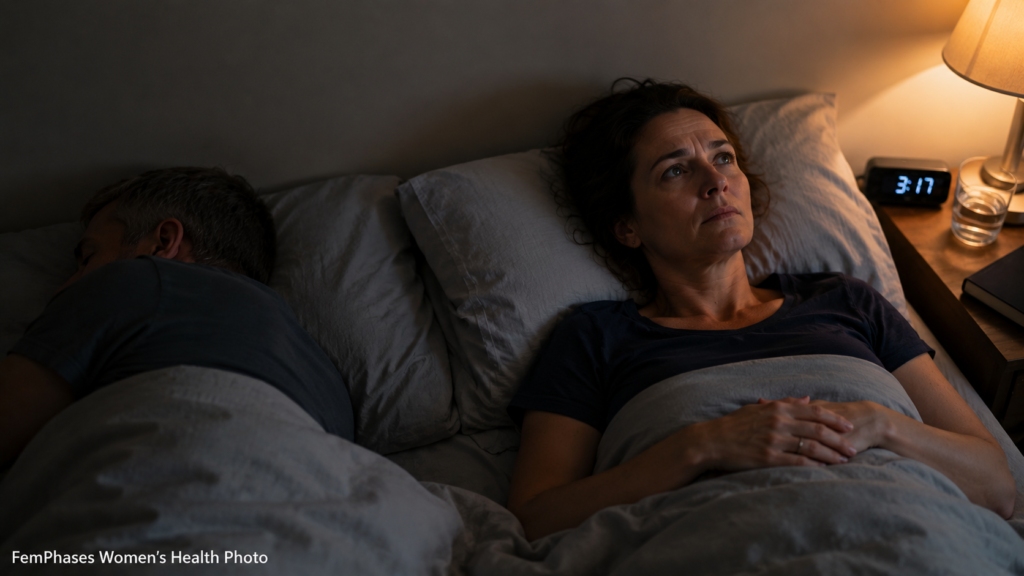
Perimenopause often affects sleep long before women connect the dots hormonally.
Night sweats, early waking, insomnia, and restless sleep place the nervous system under chronic strain. Poor sleep can significantly increase anxiety symptoms, irritability, and emotional exhaustion.
iv. Stress tolerance changes
Many women describe feeling as though their nervous system suddenly becomes “less resilient.”
Things they once handled reasonably well now feel emotionally overwhelming.
This is not a weakness. It reflects a complex interaction between hormones, sleep, stress load, nervous system sensitivity, and midlife pressures.
The British Menopause Society explains that fluctuating hormone levels during perimenopause can significantly affect psychological well-being and emotional health.
What Perimenopausal Anxiety Actually Feels Like
One reason the link between perimenopause and anxiety gets missed is that symptoms do not always look like stereotypical anxiety.
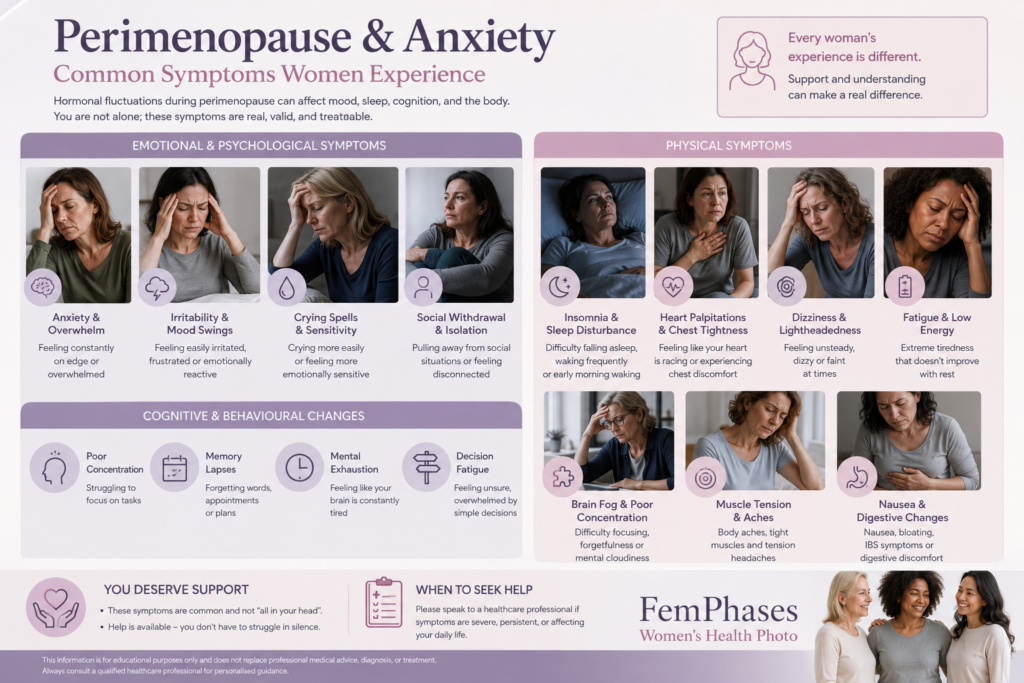
Women often describe experiences like:
- Feeling constantly “on edge”
- A sense of impending doom
- Sudden panic attacks
- Racing thoughts at night
- Health anxiety
- Feeling emotionally fragile
- Heart palpitations
- Overthinking conversations
- Increased social anxiety
- Feeling overstimulated by noise or crowds
- Crying more easily
- Feeling emotionally detached or numb
- Irritability that feels out of character
Some women say:
“I don’t even recognise myself anymore.”
Others feel ashamed because they appear outwardly capable while internally struggling to cope.
Many are also juggling enormous invisible pressures:
- Careers
- Parenting teenagers
- Caring for ageing parents
- Relationship strain
- Financial stress
- Grief
- Chronic exhaustion
Hormonal shifts do not happen in isolation from real life.
The Symptoms Women Often Ignore or Explain Away
Sometimes women spend years trying to “fix” anxiety without recognising a hormonal component underneath it.
Common overlooked signs include:
1. Physical symptoms
- Dizziness
- Heart racing
- Chest tightness
- Tingling sensations
- Nausea
- Tension headaches
- IBS flare-ups
- Muscle tension
- Sudden fatigue
2. Emotional symptoms
- Feeling emotionally overwhelmed
- Increased sensitivity
- Sudden anger
- Loss of confidence
- Feeling disconnected from yourself
- Fearfulness without a clear reason
3. Cognitive symptoms
- Brain fog
- Poor concentration
- Forgetfulness
- Difficulty finding words
- Mental exhaustion
The Office on Women’s Health notes that mood and cognitive symptoms are common during the menopausal transition and can significantly affect quality of life.
Why So Many Women Feel Dismissed
Unfortunately, women’s symptoms are still sometimes minimised in healthcare settings.
Some women are told:
- “It’s just stress.”
- “You’re depressed.”
- “You’re too young for perimenopause.”
- “Your blood tests are normal.”
This can leave women doubting themselves.
Because hormone levels fluctuate during perimenopause, diagnosis often depends on clinical history and symptom patterns rather than a single blood test, emphasizing the importance of detailed health discussions.
Clinical history and symptom patterns matter enormously.
This uncertainty can feel frustrating, especially when symptoms are affecting daily life.
Can Hormone Therapy Help Anxiety?
For some women, yes.
For others, anxiety may require a broader combination approach.
The NICE menopause guideline explains that hormone replacement therapy (HRT) may improve low mood and other menopausal symptoms in some women.
However, responses vary.
Some women notice:
- Better sleep
- Reduced anxiety
- Improved emotional stability
- Fewer panic sensations
- Better cognitive clarity
Others may need:
- Psychological support
- Stress management strategies
- Medication for anxiety
- Lifestyle changes
- Sleep treatment
- Trauma-informed therapy
There is no single “correct” path.
And most importantly, asking for support when needed is a sign of strength, not failure, helping women feel empowered to seek help without shame.
What Actually Helps: Evidence-Based Support Strategies
When discussing the link between perimenopause and anxiety, it is important to move beyond vague advice like “just reduce stress.”
Women deserve practical, realistic support.
1. Prioritising Sleep
Sleep disruption can dramatically worsen anxiety.
Helpful strategies may include:
- Consistent sleep times
- Limiting alcohol close to bedtime
- Reducing late-night screen exposure
- Managing night sweats
- Reviewing caffeine intake
- Seeking medical support for persistent insomnia
Even modest sleep improvements can reduce nervous system overload.
2. Understanding the Nervous System
Many women feel calmer simply by understanding that hormonal fluctuations can affect anxiety.
Education reduces fear.
When symptoms are unexplained, the brain often interprets them as danger.
Understanding that symptoms may be hormonally influenced can reduce catastrophic thinking.
3. Gentle Exercise Rather Than Punishing Exercise
During perimenopause, some women become more sensitive to excessive high-intensity exercise, especially when already exhausted or stressed.
Supportive movement often works better:
- Walking
- Strength training
- Yoga
- Pilates
- Swimming
- Stretching
- Moderate cardio
Exercise supports mood regulation, sleep, cardiovascular health, and stress resilience.
4. Therapy That Feels Validating
Cognitive behavioural therapy (CBT) can help some women manage anxiety symptoms, especially catastrophic thinking and panic patterns.
But many women also benefit from therapy that acknowledges:
- Hormonal shifts
- Identity changes
- Caregiver stress
- Midlife transitions
- Emotional burnout
Feeling emotionally understood matters.
5. Reducing the Shame Around Symptoms
One of the hardest parts of perimenopausal anxiety is the self-judgement.
Women often tell themselves:
- “I should cope better.”
- “I’m overreacting.”
- “I’m becoming weak.”
- “Other women manage this.”
But anxiety symptoms are not character flaws.
They are real experiences happening inside a changing nervous system and body.
That distinction matters.
Myth: “If It’s Hormonal, It Isn’t Real Anxiety”
This is one of the biggest misconceptions.
Hormonal anxiety is still real anxiety.
The symptoms are real.
The fear feels real.
The panic feels real.
The exhaustion feels real.
Understanding hormones helps explain why symptoms may suddenly appear or intensify.
When to Seek Medical Advice
It is important not to assume every symptom is automatically caused by perimenopause.
Please seek medical advice if you experience:
- Severe anxiety or panic
- Suicidal thoughts
- Chest pain
- Significant mood changes
- Persistent insomnia
- Sudden severe symptoms
- Symptoms interfering with daily life
- Concerns about heart health or thyroid issues
Conditions like thyroid disorders, anaemia, depression, cardiac conditions, and other health issues can overlap with perimenopausal symptoms.
You Are Not “Losing Yourself”
Many women quietly fear they are becoming emotionally unstable, incapable, or permanently changed.
But often, what they are experiencing is an under-recognised interaction between hormones, stress, sleep disruption, nervous system sensitivity, and the enormous emotional labour many women carry in midlife.
Understanding the link between perimenopause and anxiety can be profoundly relieving.
Not because it magically fixes everything overnight.
But because clarity reduces fear.
And because women deserve to know that these experiences are common, biologically real, and worthy of support.
You do not have to “push through” while pretending everything feels normal.
You deserve information.
You deserve compassion.
You deserve proper care.
And you deserve to feel listened to.
Practical Takeaways
If you suspect perimenopause may be affecting your anxiety:
- Track symptoms and menstrual changes
- Prioritise sleep and nervous system recovery
- Reduce self-blame
- Speak to a healthcare professional familiar with menopause
- Consider discussing HRT if appropriate
- Seek emotional support early rather than waiting until burnout
- Remember that symptoms can improve with the right support
Small steps matter.
Medical Disclaimer
This article is for educational purposes only and does not replace personalised medical advice, diagnosis, or treatment. If you are worried about your symptoms, if your symptoms are getting worse, or if something does not feel right in your body, please speak with your doctor, nurse practitioner, gynaecologist, endocrinologist, or another qualified healthcare professional. Seek urgent medical help for severe, sudden, or concerning symptoms.