
Introduction
You know that feeling when your phone buzzes one more time and suddenly you want to cry?
Or when someone asks you a simple question and your brain freezes, even though you used to handle ten things at once without thinking?
For many women, that constant sense of being “on edge” has become so normal that they barely notice it anymore. The racing thoughts at 2am. The tight shoulders. The exhaustion that sleep does not fix. The irritability that feels unlike you. The sense that your body is stuck in survival mode.
This is partly why nervous system-friendly living has become such an important conversation in women’s health.
It is not just another wellness trend. In many ways, it is a response to how overwhelmed modern life has become — especially for women balancing work, caregiving, hormones, mental load, emotional labour, financial stress, and constant digital stimulation.
At the same time, more research is helping us understand how chronic stress affects the nervous system, hormone health, sleep, inflammation, mood, and even symptoms during perimenopause and menopause.
Many women are not “failing to cope.” Their nervous systems are overloaded.
And that changes the conversation completely.
What Does “Nervous System-Friendly Living” Actually Mean?
At its core, nervous system-friendly living means creating daily habits, routines, environments, and expectations that help your body feel safer, calmer, and less overwhelmed.
It does not mean avoiding stress completely. That is impossible.
Instead, it means reducing unnecessary stress overload while helping your nervous system recover more effectively from everyday life.
Your nervous system is constantly scanning for safety and danger. This happens automatically, often without conscious awareness. When stress becomes chronic, the body can remain stuck in a prolonged “fight, flight, freeze, or fawn” state.
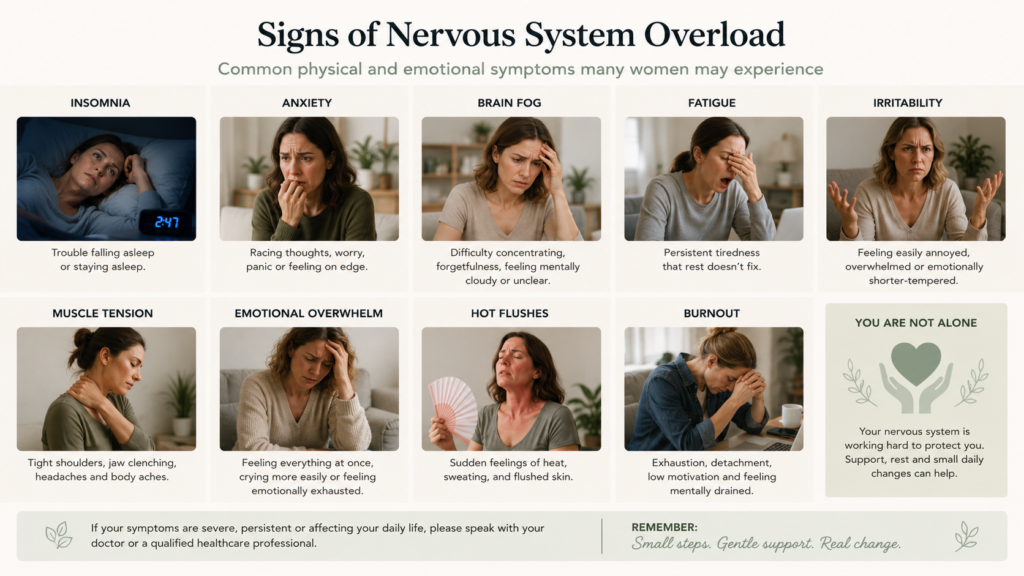
Over time, this may contribute to symptoms such as:
- Anxiety
- Irritability
- Poor sleep
- Fatigue
- Brain fog
- Digestive issues
- Muscle tension
- Heart palpitations
- Emotional overwhelm
- Burnout
- Increased sensitivity to stress
- Feeling emotionally numb or disconnected
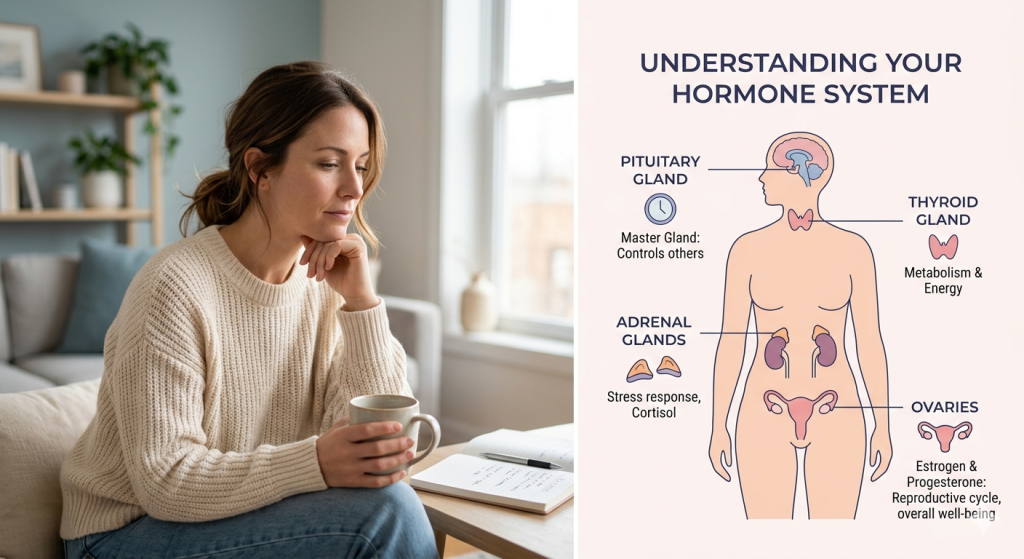
For women in perimenopause or menopause, fluctuating hormones can make the nervous system even more sensitive to stress. Declining oestrogen levels may affect mood regulation, sleep quality, temperature control, and stress resilience. British Menopause Society
That means the same workload or emotional pressure you managed at 35 may suddenly feel much harder at 45.
Not because you are weak.
Because your body is changing.
Why So Many Women Feel Permanently Overstimulated
Modern life places enormous demands on the nervous system.
Many women spend years functioning in a constant state of hypervigilance without realising it.
You answer messages while making dinner. You remember school forms while attending meetings. You carry emotional responsibility for family members. You worry about ageing parents, finances, children, relationships, work deadlines, and your own health — often all at once.
Meanwhile, your nervous system rarely gets genuine rest.
Scrolling late at night, multitasking all day, constant notifications, poor sleep, and chronic emotional stress all keep the body physiologically activated.
Eventually, the body starts sending signals.
Sometimes softly at first.
Sometimes loudly.

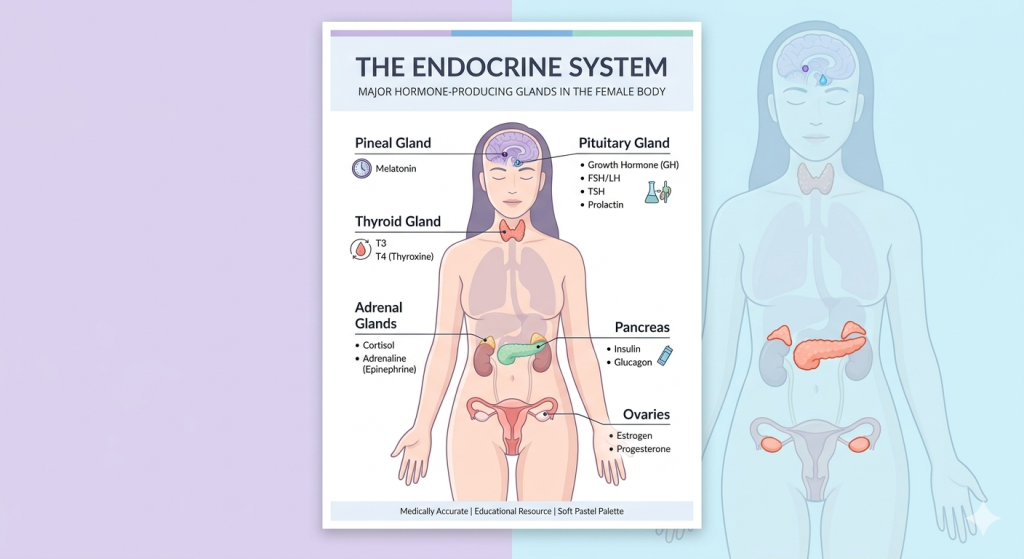
The Link Between Stress Hormones and Women’s Health
When we talk about stress, many people think only about emotions. However, stress is also biological.
The body releases hormones such as cortisol and adrenaline during stress responses. In short bursts, this is helpful. It helps us respond to danger.
The problem happens when stress becomes chronic.
Long-term nervous system activation may affect:
- Sleep quality
- Blood sugar regulation
- Appetite and cravings
- Immune function
- Mood
- Menstrual cycles
- Energy levels
- Cardiovascular health
Research also shows that chronic stress can worsen menopausal symptoms, including hot flushes, anxiety, sleep disturbances, and mood changes. NHS Menopause Overview
Importantly, stress does not always come from dramatic trauma.
It can also come from:
- Chronic overwork
- Emotional caregiving
- Lack of rest
- Financial strain
- Feeling unsafe or unsupported
- Poor sleep
- Ongoing uncertainty
- Constant sensory stimulation
This matters because many women minimise their own stress.
They tell themselves:
“I should be coping better.”
“Other people have it worse.”
“It’s probably just me.”
Yet the body still keeps score.
Nervous System-Friendly Living Is Not Laziness
This is one of the biggest misconceptions.
Rest is often misunderstood in cultures that reward constant productivity.
Many women have been conditioned to believe their worth depends on how much they can tolerate, carry, achieve, or sacrifice.
As a result, slowing down can feel uncomfortable, unfamiliar, or even guilt-inducing.
However, nervous system regulation is not about becoming unproductive.
It is about sustainability.
Your body was never designed for endless stress without recovery.
In fact, recovery is biologically necessary.
The nervous system needs periods of safety, calm, pleasure, connection, movement, and restoration to function well.
Without those moments, even strong people eventually struggle.
Signs Your Nervous System May Be Overloaded
Sometimes women do not recognise stress because they are still functioning externally.
You can appear capable while feeling completely overwhelmed on the inside.
Possible signs of nervous system overload include:
- Feeling “tired but wired”
- Snapping over small things
- Trouble relaxing
- Constant muscle tension
- Feeling emotionally flat
- Waking at 3 am with racing thoughts
- Difficulty concentrating
- Increased anxiety before periods or during perimenopause
- Digestive discomfort during stressful periods
- Feeling exhausted after social interaction
- Becoming highly sensitive to noise or stimulation
- Feeling like you are always behind
These experiences are common.
They are also deeply human.
What Actually Helps the Nervous System?
There is no single magical solution. Nervous system regulation is usually built through consistent small changes rather than dramatic overhauls.
That is important because many overwhelmed women do not need more pressure disguised as “self-improvement.”
They need support that feels realistic.
Implementing small, consistent habits can make women feel capable and hopeful about improving their nervous system health.
1. Prioritising Sleep Without Perfectionism
Sleep is one of the most important forms of nervous system recovery.
However, many women struggle with sleep during periods of hormonal transition, stress, anxiety, or burnout.
Helpful strategies may include:
- Reducing screen exposure before bed
- Keeping wake-up times consistent
- Limiting excessive caffeine late in the day
- Creating calming evening routines
- Lowering stimulation before sleep
- Seeking medical advice for persistent insomnia
Importantly, one bad night does not mean your body is broken.
Sometimes women become so anxious about sleep that the stress itself worsens insomnia.
Gentle consistency usually helps more than perfection.
NICE Guidance on Sleep and Mental well-being
2. Eating in Ways That Support Energy Stability
Extreme dieting and restrictive wellness culture can place additional stress on the body.
For many women, nervous system-friendly living involves eating regularly enough to support stable energy and blood sugar levels.
This may include:
- Balanced meals with protein, fibre, and healthy fats
- Eating consistently rather than skipping meals
- Staying hydrated
- Reducing excessive alcohol intake
- Avoiding shame-based approaches to food
Blood sugar fluctuations can worsen anxiety, irritability, fatigue, and shakiness in some people.
Sometimes the body needs nourishment, not punishment.
3. Gentle Movement Instead of Constant Intensity
Exercise can support mood, sleep, cardiovascular health, and stress resilience. However, excessively intense exercise without adequate recovery may worsen stress symptoms in some women.
Especially during burnout, perimenopause, or chronic exhaustion, the nervous system may respond better to gentler forms of movement, such as:
- Walking
- Stretching
- Yoga
- Strength training with recovery
- Swimming
- Dancing
- Pilates
Movement should not always feel like punishment.
Sometimes the healthiest exercise is the one your body can sustain consistently.
World Health Organisation Physical Activity Guidelines
4. Reducing Chronic Overstimulation
Modern nervous systems are dealing with levels of stimulation humans did not evolve for.
Many women notice improvements when they intentionally reduce sensory overload.
That may involve:
- Turning off non-essential notifications
- Taking breaks from social media
- Spending time outdoors
- Creating quieter environments
- Limiting constant multitasking
- Protecting small moments of calm
This is not about becoming disconnected from life.
It is about giving the brain occasional space to breathe.
5. Safe Relationships Matter More Than People Realise
The nervous system responds strongly to human connection.
Feeling emotionally safe, supported, understood, and respected can help regulate stress responses. On the other hand, chronic conflict, criticism, unpredictability, or emotional invalidation can keep the body in a prolonged state of alertness.
Many women have spent years ignoring how draining certain relationships feel.
Your nervous system notices, even when your mind tries to minimise it.
Supportive relationships are not a luxury. They are part of health.
6. Understanding Hormonal Changes Compassionately
Perimenopause and menopause can intensify nervous system symptoms in ways that surprise many women.
Fluctuating hormones may contribute to:
- Anxiety
- Mood swings
- Poor sleep
- Heart palpitations
- Brain fog
- Emotional sensitivity
- Increased stress reactivity
Unfortunately, many women are dismissed or told they are “just stressed.”
The reality is usually more complex.
Hormones, stress, sleep, mental health, lifestyle, and physical health often interact with each other.
This is why compassionate, informed healthcare matters so much.
American College of Obstetricians and Gynaecologists (ACOG) Menopause Resources
Myth: Nervous System Regulation Means Being Calm All the Time
This is not true.
Healthy nervous systems still experience stress, grief, frustration, anger, and anxiety.
The goal is not permanent calmness.
The goal is flexibility.
A regulated nervous system can move through stress and eventually return to a steadier baseline.
You are not failing because you still have difficult days.
You are human.
Small Things That Often Help More Than Expected
Many women searching for answers assume they need a dramatic transformation.
Often, healing looks much quieter than that.
Sometimes it looks like:
- Sitting outside for ten minutes
- Eating lunch before 3pm
- Saying no without overexplaining
- Going to bed earlier
- Crying after holding everything together too long
- Asking for help
- Leaving a draining situation
- Taking a walk without your phone
- Having one honest conversation
- Resting before complete burnout
These things can seem “too small” to matter.
Yet, nervous systems often respond more to consistency, safety, and repetition than to intensity.
When to Seek Medical Support
While lifestyle changes can help support well-being, persistent or severe symptoms should not be ignored.
It is important to seek professional medical advice if you experience:
- Severe anxiety or depression
- Chest pain
- Significant sleep disruption
- Sudden changes in mood or cognition
- Persistent fatigue
- Heart palpitations
- Heavy bleeding
- Severe menopausal symptoms
- Symptoms interfering with daily life
You deserve proper assessment and support.
Sometimes symptoms are related to stress. Sometimes they are linked to hormones, thyroid conditions, nutritional deficiencies, mental health conditions, cardiovascular issues, or other medical concerns.
Both things can be true:
Your stress is real.
And you still deserve medical care.
The Bigger Picture: Why This Conversation Matters
The rise of nervous system-friendly living reflects something many women have felt for years:
Modern life has become emotionally and physiologically exhausting.
Women are increasingly recognising that survival mode should not be a permanent lifestyle.
There is growing awareness that health is not only about productivity, appearance, or pushing harder. It is also about recovery, emotional safety, sleep, boundaries, connection, and sustainability.
That shift matters.
Not because women need to become perfectly calm.
But because they deserve lives that do not constantly overwhelm their bodies.
Conclusion
If your body feels more sensitive lately, if your patience feels thinner, if your exhaustion feels deeper than simple tiredness, you are not imagining it.
Your nervous system may simply be asking for support.
That does not mean you are weak.
It does not mean you are lazy.
And it certainly does not mean you are failing.
Sometimes, the healthiest thing a woman can do is stop treating her body like a machine that should cope endlessly without rest.
Nervous system-friendly living is not about perfection. It is about learning to work with your body instead of constantly against it.
And for many women, that shift can feel less like giving up — and more like finally coming home to themselves.
Medical Disclaimer
This article is for educational purposes only and does not replace personalised medical advice, diagnosis, or treatment. If you are worried about your symptoms, if your symptoms are getting worse, or if something does not feel right in your body, please speak with your doctor, nurse practitioner, gynaecologist, endocrinologist, or another qualified healthcare professional. Seek urgent medical help for severe, sudden, or concerning symptoms.