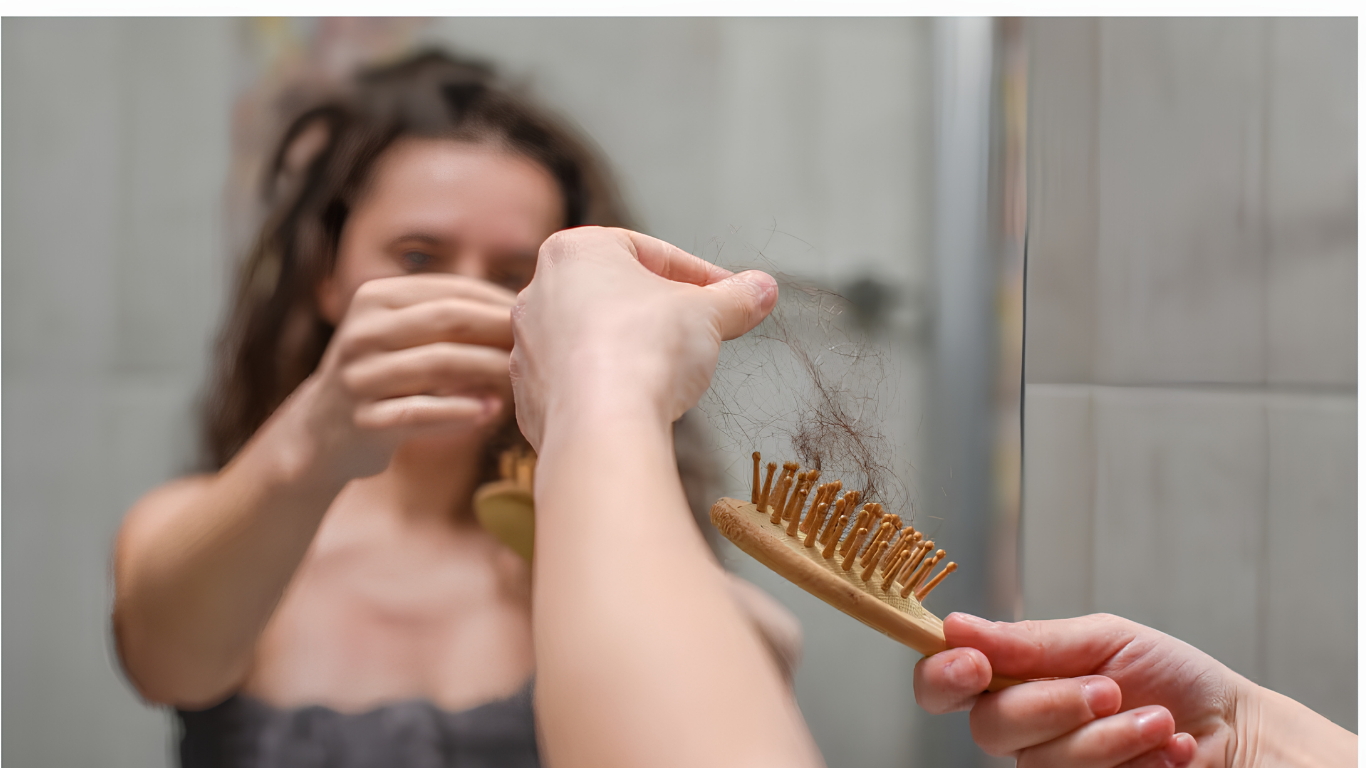


If hot flushes leave you suddenly overheated, sweaty, or unsettled, menopause may be one explanation. Cooling strategies can ease discomfort, and many women find relief, helping you feel more in control of your experience. However, frequent, severe or unusual episodes deserve a conversation with a qualified healthcare professional.
Why Does My Body Suddenly Feel So Hot?
You can be sitting at your desk, cooking dinner or having an ordinary conversation when suddenly heat seems to rise through your chest and neck and settle across your face. Within moments, you may be reaching for a window, peeling off a cardigan or wondering why everyone else in the room seems perfectly comfortable.
Hot flashes—more often called hot flushes in the UK—are recognised symptoms of perimenopause and menopause. They belong to a group of symptoms known as vasomotor symptoms, which also includes night sweats. (NICE)
Changing oestrogen levels during the menopause transition can affect the brain systems involved in temperature regulation. Your body may become more sensitive to relatively small temperature changes, triggering blood flow to the skin and sweating as it tries to cool itself.
That does not mean every sudden feeling of heat is hormonal. Context matters, especially if the episodes are new, unusual for you or accompanied by other symptoms. Recognizing these signs can help you feel more understood and supported in seeking appropriate help.
If you are still trying to work out whether what you are experiencing sounds like a typical flush, FemPhases’ What Does a Hot Flush Feel Like? Signs, Causes and Relief explores the sensation in more detail.
What a Hot Flash Can Look Like in Everyday Life
A flush is not always simply “feeling warm.” Some women experience a mild spreading heat. Others need to stop what they are doing because the sensation arrives so quickly.
You may notice:
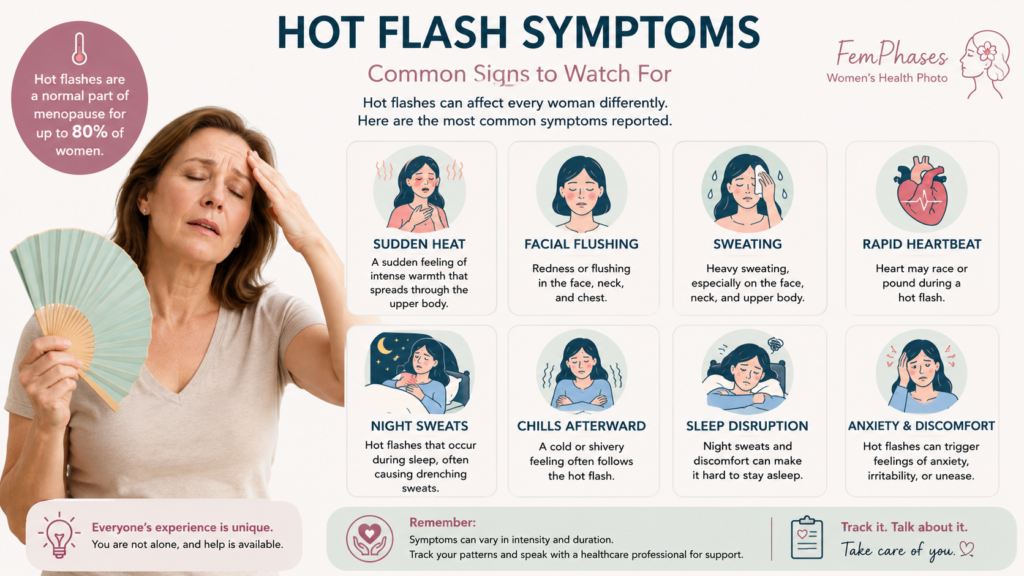
- sudden warmth across your face, neck, chest or upper body
- facial flushing
- sweating or damp skin
- a racing or more noticeable heartbeat
- feeling briefly restless or uncomfortable
- chills or feeling cold once the sweating settles
- damp clothes
- disrupted sleep when episodes happen at night
The physical sensation may last only a short time, yet its effect can linger. You may lose your train of thought halfway through a presentation, become self-conscious during dinner, avoid certain clothes because you worry about visible sweating, or wake at night and struggle to fall back asleep.
Repeated night-time episodes can leave you starting the next day already tired. If that sounds familiar, you may also find Why Am I Sweating at Night? Causes, Menopause and What Helps useful.
Some women also begin questioning whether several changes are connected—perhaps periods have become unpredictable, sleep feels different and hot flushes have appeared at the same time. Our guide to the first signs of menopause and perimenopause can help you look at the wider pattern without assuming one symptom proves the cause.
Small Things That Can Make Hot Flashes Easier to Manage
No single lifestyle trick switches hot flashes off for everyone. But there are practical ways to make an episode less uncomfortable and reduce some of the situations that seem to trigger symptoms for you.
1. Make cooling easy, rather than complicated
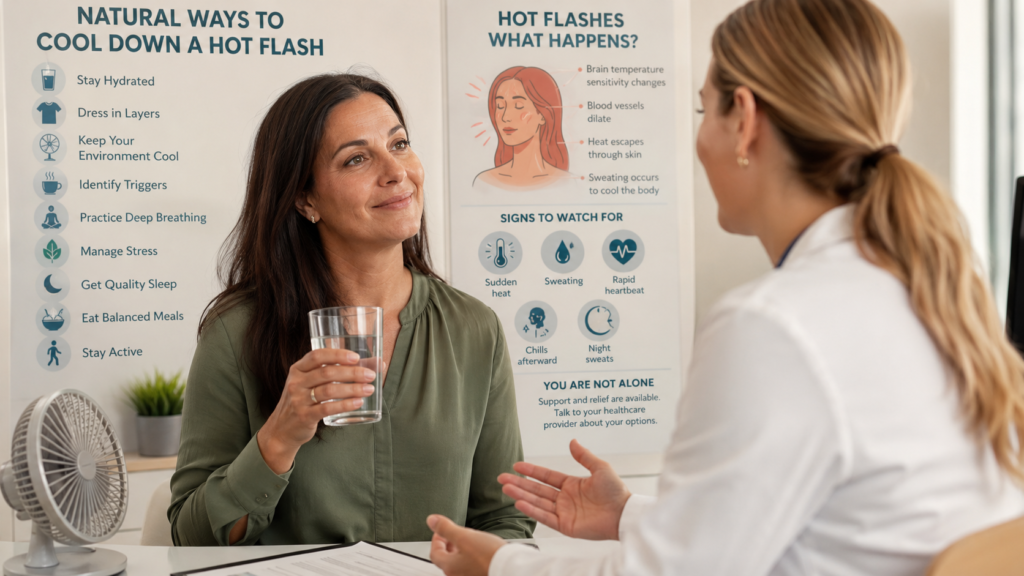
Keep the things you actually use within reach: a fan beside your desk or bed, cool water in your bag, lighter bedding and clothing you can remove easily.
The NHS recommends measures including lightweight clothing, keeping the bedroom cool, cool drinks or showers and using a fan. NHS: things you can do to help menopause symptoms (nhs.uk)
These measures may improve comfort during a flush, even though they do not necessarily stop the biological trigger itself.
2. Notice your own patterns
Alcohol, caffeine, spicy foods, hot drinks, smoking, stress and warm environments are reported triggers for some women. That does not mean you need to remove everything you enjoy from your life.
Try tracking what happens before your flushes for a couple of weeks. You may discover that a particular glass of wine, overheated bedroom or rushed morning makes symptoms more likely—or you may find no obvious food trigger at all.
The goal is information, not restriction. Tracking your patterns and understanding triggers can empower you to manage hot flashes more effectively and confidently.
3. Rethink your layers
A breathable top under a cardigan or jacket gives you somewhere to go when the heat arrives. Loose-fitting or moisture-wicking fabrics can also feel more comfortable if sweating is part of your experience.
This can be especially useful at work, on public transport or anywhere you cannot easily control the room temperature.
4. Protect sleep where you can
Night sweats can create a frustrating cycle: you wake hot, throw off the duvet, become cold, then lie awake thinking about how tired you will be tomorrow.
A cooler bedroom, lighter bedding layers, and breathable sleepwear may help. If disturbed sleep continues, it deserves attention rather than being written off as something you simply have to endure.
NICE now recommends considering menopause-specific cognitive behavioural therapy, or CBT, for vasomotor symptoms and menopause-related sleep difficulties. CBT is a structured psychological approach that can help change the thoughts, behaviours and responses that increase distress around symptoms. NICE menopause recommendations (NICE)
5. Keep supporting your whole health
Regular movement, balanced nutrition, adequate hydration and stress-management habits matter for much more than hot flashes. They can support sleep, mood, cardiovascular health, muscle strength and general wellbeing through midlife.
Exercise does not guarantee that hot flashes will disappear, so try not to treat it as another task you must perform perfectly.
What Else Could Be Causing the Heat or Sweating?
Menopause is a common explanation for hot flushes in midlife, but it is not the only explanation for sweating or feeling unusually hot.
Medicines, anxiety, low blood sugar and excessive-sweating conditions can sometimes contribute. Night sweats can also need further assessment when they occur without an obvious menopause pattern or alongside other symptoms. NHS guidance on night sweats and other possible causes (nhs.uk)
This is particularly important when something about the symptom feels markedly different from your usual experience.
It is worth getting support if…
- hot flashes or night sweats are regularly disturbing your sleep
- they are affecting work, relationships, concentration or everyday confidence
- symptoms have become noticeably more frequent or severe
- you regularly wake with soaking-wet bedding
- you have unexplained weight loss, fever or feel generally unwell
- you experience chest pain, breathlessness, fainting or another sudden concerning symptom
- you are unsure whether menopause is actually the cause
- you simply want to understand your treatment options
When to Speak to a Healthcare Professional
You don’t need to wait until hot flashes become unbearable to ask about them.
A GP, nurse practitioner, gynaecologist or menopause-informed clinician can consider your symptoms alongside your age, menstrual pattern, medical history, medicines and other possible explanations.
If menopause-related vasomotor symptoms are troubling you, treatment options go beyond cooling strategies. Current NICE guidance recommends offering HRT for menopause-associated vasomotor symptoms and considers menopause-specific CBT an option alongside HRT or when HRT is not suitable or preferred. (NICE)
Hormone therapy can be highly effective for hot flashes and night sweats, but whether it is appropriate depends on individual circumstances and should involve a discussion of benefits, risks and preferences. ACOG similarly describes systemic hormone therapy as an effective treatment for hot flashes and night sweats. ACOG: Hormone Therapy for Menopause (ACOG)
If you are preparing to discuss symptoms with someone, FemPhases’ Perimenopause Appointment: Questions Worth Asking may help you organise what has changed and what you want to ask.
Conclusion
A hot flash can last only minutes and still interrupt your sleep, your concentration, your clothes, your confidence, and the rhythm of an otherwise ordinary day.
Small cooling strategies can make those moments easier. Learning your own triggers may help too. But you do not have to keep adding more self-care tricks indefinitely if symptoms are significantly affecting your life.
Sometimes the most useful next step is not another fan or another glass of cold water. It is understanding what your body is doing, considering other possible explanations and deciding what kind of support makes sense for you.
Frequently Asked Questions Women Often Ask
What is the quickest natural way to cool down during a hot flash?
Move somewhere cooler if possible, remove a layer, use a fan and sip a cool drink. These measures may make you more comfortable, although they may not stop the flush itself.
Does cold water stop hot flashes?
Cold water may help you feel cooler during an episode, but there is not good evidence that drinking cold water switches off the underlying vasomotor response.
Are hot flashes always caused by menopause?
No. Menopause is a common cause in midlife, but medicines, anxiety and some health conditions can cause similar heat or sweating symptoms.
Can stress trigger a hot flash?
Some women notice more flushes when stressed. Stress-management strategies may therefore be useful, although triggers and responses vary from woman to woman.
Should I consider HRT for hot flashes?
It may be worth discussing if your symptoms are bothersome. HRT is an established treatment for menopause-associated vasomotor symptoms, but suitability depends on your health history, symptoms and preferences.
Key Takeaways
- Hot flashes and night sweats are common vasomotor symptoms during perimenopause and menopause.
- Cooling your environment, dressing in layers and keeping cool drinks nearby can improve comfort.
- Your triggers may include heat, alcohol, caffeine, spicy foods or stress but not every woman has identifiable triggers.
- Regular movement, sleep support and stress management support wider wellbeing even if they do not eliminate every flush.
- Do not automatically assume every episode of heat or sweating is menopause.
- Persistent, severe, unusual or disruptive symptoms deserve further assessment.
- Lifestyle support and medical treatment can be used together; you do not have to choose one or the other.
Medical Disclaimer
This article is for educational purposes only and does not replace personalised medical advice, diagnosis or treatment. If you are worried that your symptoms are getting worse, or if something does not feel right in your body, please speak with your doctor, nurse practitioner, gynaecologist, endocrinologist, or another qualified healthcare professional. Seek urgent medical help for severe, sudden or concerning symptoms.