


One minute you are answering an email, folding laundry, or trying to make dinner. Next, you are overwhelmed by a surge of anger that feels far bigger than the moment itself. You snap at your partner. You cry in the car. You feel guilty afterwards, but also strangely exhausted.
For many women, perimenopause rage can feel frightening, confusing, and deeply unlike themselves.
And yet, this experience is far more common than most people realise.
Perimenopause – the transitional phase leading up to menopause – is increasingly recognised not just as a reproductive shift, but as a whole-body neurological, hormonal, and psychological transition. While hot flushes and irregular periods are often discussed, emotional symptoms such as irritability, anxiety, anger, and emotional dysregulation are frequently under-recognised or dismissed, despite their significant impact on daily life.
Recent research from organisations including the National Institutes of Health, the National Institute for Health and Care Excellence, and the American College of Obstetricians and Gynaecologists increasingly acknowledges that fluctuating hormones can significantly affect mood, sleep, stress tolerance, and emotional resilience.
But hormones are only part of the picture.
Many women in midlife are also carrying intense mental and emotional loads:
- Careers and workplace stress
- Caring for children and ageing parents
- Financial pressure
- Relationship strain
- Chronic sleep deprivation
- Invisible emotional labour
- Long-term burnout
So when rage appears during perimenopause, the real question is often not “Is this hormones or stress?” but rather:
How are hormones and burnout amplifying each other?
Understanding that interaction matters. Because when women are told they are simply “overreacting” or “being difficult,” many delay seeking help and continue suffering in silence.
The good news is that there are evidence-based ways to understand, support, and treat these symptoms. Knowing support options can help women feel hopeful and less alone in managing perimenopause-related mood changes.
Perimenopause Symptom Quiz
How Hormonal Changes Affect Mood and Emotional Regulation
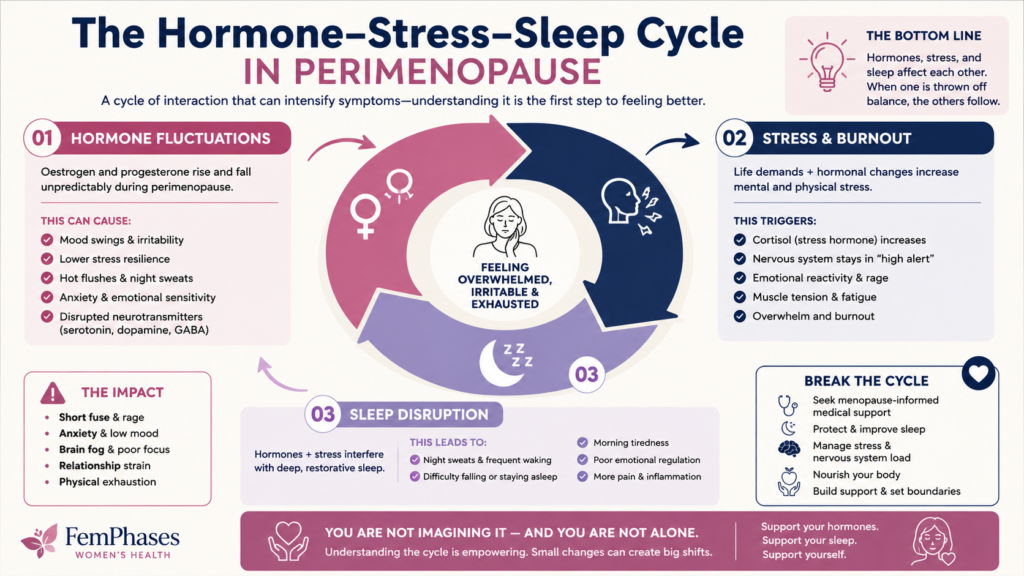
Fluctuating levels of oestrogen and progesterone characterise perimenopause.
Oestrogen does far more than regulate periods. It also affects:
- Serotonin (mood regulation)
- Dopamine (motivation and reward)
- Cortisol response (stress hormone regulation)
- Sleep quality
- Brain temperature regulation
- Cognitive processing
When oestrogen fluctuates unpredictably, the brain can become more sensitive to stress and emotional triggers, which may lead to sudden mood swings or feelings of overwhelm.
i. Oestrogen and the Brain’s Stress Response
Research suggests that fluctuating oestrogen may increase activation in the brain’s emotional processing centres, including the amygdala, which plays a key role in fear, threat perception, and emotional intensity.
This can lead to:
- Lower frustration tolerance
- Increased irritability
- Emotional reactivity
- Sudden anger or rage episodes
- Heightened sensitivity to stress
Importantly, this does not mean women are “unstable.” It means the nervous system is responding differently under hormonal stress.
ii. Progesterone, Anxiety, and Emotional Exhaustion
Progesterone has calming effects on the brain through interaction with GABA receptors — chemical pathways associated with relaxation and nervous system regulation.
As progesterone levels decline in perimenopause:
- Anxiety may increase
- Sleep quality may worsen
- Nervous system recovery becomes harder
- Emotional overwhelm may intensify
This combination can create a “short fuse” feeling that many women describe.
iii. Sleep Disruption Intensifies Emotional Reactivity
Sleep disturbance is one of the strongest predictors of mood symptoms in perimenopause.
Night sweats, insomnia, anxiety, and hormonal fluctuations can severely affect restorative sleep.
Poor sleep directly impacts:
- Emotional regulation
- Impulse control
- Stress tolerance
- Cognitive function
- Pain sensitivity
Even mild chronic sleep deprivation can increase irritability and anger responses.
Burnout and Midlife Overload
Hormones do not exist in isolation.
Many women entering perimenopause are already operating under sustained stress before hormonal symptoms begin.
a. The Invisible Mental Load
Midlife women are often simultaneously:
- Managing households
- Supporting children
- Caring for elderly relatives
- Working full-time
- Navigating relationship pressures
- Coping with financial strain
This ongoing cognitive and emotional labour creates chronic nervous system activation.
When hormonal changes reduce stress resilience, previously manageable demands may suddenly feel unbearable.
b. Chronic Stress and Cortisol Dysregulation
Burnout involves long-term activation of the body’s stress response system.
Over time, chronic stress can disrupt:
- Cortisol rhythms
- Sleep cycles
- Immune function
- Blood sugar balance
- Emotional regulation
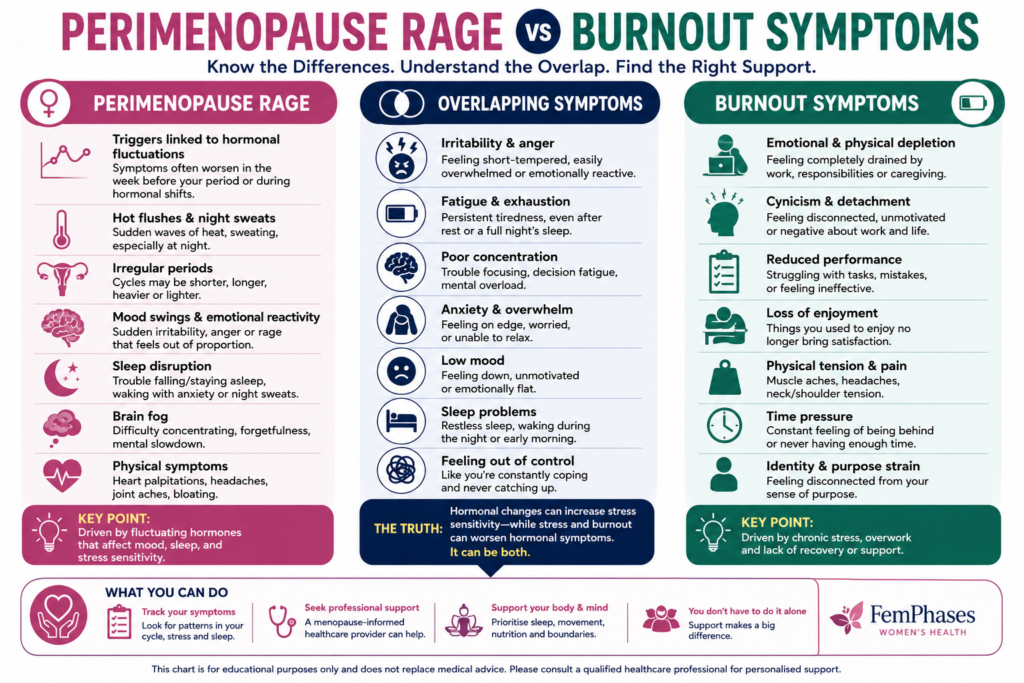
Research increasingly shows overlap between burnout symptoms and perimenopausal symptoms:
- Fatigue
- Brain fog
- Irritability
- Emotional numbness
- Anxiety
- Sleep problems
- Difficulty concentrating
For many women, these experiences become biologically intertwined.
c. Why Rage Often Appears “Out of Nowhere”
Rage during perimenopause is rarely caused by one single event.
Instead, it often reflects:
- Hormonal sensitivity
- Nervous system overload
- Emotional suppression
- Chronic stress accumulation
- Sleep deprivation
- Feeling unseen or unsupported
Sometimes anger emerges because the body can no longer sustain years of over-functioning without consequence.
The Role of Neurodiversity and Mental Health History
Emerging research suggests women with:
- ADHD
- Autism
- PMDD (Premenstrual Dysphoric Disorder)
- Anxiety disorders
- Depression
- Trauma histories
may experience more severe mood symptoms during perimenopause.
Hormonal shifts can amplify existing nervous system sensitivities.
Many women are first diagnosed with ADHD or mood disorders during midlife because symptoms become more noticeable as hormonal buffering declines.
Symptoms, Diagnosis & Barriers
Signs That Perimenopause Rage May Be Happening
Perimenopause rage can present differently for different women.
Common experiences include:
- Sudden intense anger
- Feeling emotionally explosive
- Irritability over small triggers
- Crying and anger cycling together
- Feeling “not like yourself”
- Guilt after emotional outbursts
- Increased sensitivity to noise or stress
- Emotional exhaustion
- Feeling constantly overstimulated
Some women also notice:
- Brain fog
- Hot flushes
- Cycle changes
- Sleep disruption
- Anxiety
- Palpitations
- Low mood
i. Rage Is Not Always Loud
Not all rage looks explosive.
For some women, it appears as:
- Emotional withdrawal
- Resentment
- Internalised anger
- Numbness
- Increased cynicism
- Persistent irritability
Why Diagnosis Can Be Difficult
Perimenopause is diagnosed clinically, meaning symptoms and menstrual history are often more important than hormone blood tests alone.
Because hormone levels fluctuate dramatically during perimenopause, a single blood test may not reflect the full picture.
i. Common Barriers Women Face
Many women report:
- Being dismissed as “stressed”
- Having symptoms attributed only to mental health
- Being told they are “too young”
- Feeling embarrassed discussing rage or anger
- Not recognising emotional symptoms as hormonal
Women from marginalised communities may face additional barriers due to healthcare inequities, stigma, or reduced access to menopause-informed care.
When to Seek Medical Support
It is important to seek professional assessment if symptoms:
- Affect relationships or work
- Cause significant distress
- Include severe anxiety or depression
- Involve thoughts of self-harm
- Suddenly worsen
- Affect sleep or daily functioning
A healthcare professional may assess:
- Menstrual history
- Mental health history
- Thyroid function
- Iron levels
- Sleep patterns
- Medication interactions
- Hormonal symptoms
Solutions & Support
a. Hormone Therapy (HRT)
Hormone Replacement Therapy (HRT) is considered one of the most effective treatments for moderate-to-severe menopausal symptoms in eligible women.
How HRT May Help Mood Symptoms
Stabilising fluctuating hormone levels may improve:
- Irritability
- Sleep quality
- Anxiety
- Emotional reactivity
- Hot flushes
For some women, emotional symptoms improve significantly once sleep and nervous system regulation improve.
However, HRT is not appropriate for everyone and should be discussed individually with a qualified healthcare professional.
b. Mental Health Support and Therapy
Therapy can be especially helpful when rage is linked to:
- Chronic stress
- Trauma
- Relationship strain
- Burnout
- Caregiver overload
- Emotional suppression
Evidence-Based Psychological Approaches
Helpful approaches may include:
- Cognitive Behavioural Therapy (CBT)
- Acceptance and Commitment Therapy (ACT)
- Nervous system regulation strategies
- Trauma-informed therapy
- Mindfulness-based interventions
CBT has particularly strong evidence for improving menopause-related mood symptoms and sleep difficulties.
c. Sleep Restoration as Treatment
Sleep is not a luxury during perimenopause. It is a core medical need.
Improving sleep may reduce:
- Emotional volatility
- Anxiety
- Irritability
- Brain fog
- Fatigue
Sleep-Supportive Strategies
Evidence-supported approaches include:
- Consistent sleep routines
- Reducing evening alcohol intake
- Limiting late caffeine
- Managing night sweats
- Morning daylight exposure
- Gentle evening, nervous system calming practices
d. Nutrition and Blood Sugar Stability
Blood sugar instability can worsen irritability and stress sensitivity.
Some women notice improved emotional regulation with:
- Higher protein intake
- Fibre-rich meals
- Reduced ultra-processed foods
- Consistent meal timing
- Hydration
- Omega-3 intake
Restrictive dieting during perimenopause may worsen stress physiology and fatigue.
e. Movement and Nervous System Regulation
Exercise supports:
- Mood regulation
- Sleep quality
- Bone health
- Insulin sensitivity
- Stress resilience
But more is not always better.
Women experiencing burnout may benefit more from:
- Walking
- Strength training
- Yoga
- Pilates
- Low-impact movement
- Nervous system recovery practices
rather than high-intensity exercise overload.
f. Social Support Matters More Than Many Realise
Isolation can intensify emotional distress.
Research consistently shows that supportive relationships improve stress resilience and emotional well-being during menopause transitions.
Even one validating conversation can reduce shame and help women seek support earlier.
Conclusion
Perimenopause rage is real, common, and biologically meaningful.
It is not simply “bad temper,” personal failure, or emotional weakness.
For many women, rage emerges from the interaction between:
- Hormonal fluctuation
- Sleep disruption
- Chronic stress
- Burnout
- Emotional overload
- Nervous system exhaustion
Understanding this matters because symptoms are treatable.
With the right combination of medical support, nervous system care, sleep restoration, psychological support, and lifestyle interventions, many women experience significant improvement.
Most importantly, you do not have to minimise your experience to deserve help.
Mood & Hormone Checker
The FemPhases Takeaway
1. Actionable Next Steps
If you suspect perimenopause rage may be affecting you:
a. Start Tracking Patterns
Notice links between:
- Mood changes
- Menstrual cycles
- Sleep
- Stress
- Workload
- Nutrition
2. Prioritise Sleep Protection
Even small improvements in sleep quality can affect emotional regulation.
3. Reduce Invisible Overload
Ask:
- What am I carrying alone?
- What support do I need?
- What can realistically change?
4. Seek Menopause-Informed Care
If symptoms are affecting quality of life, speak with a healthcare professional experienced in menopause care.
Remember This
Anger is often information, not failure.
Sometimes it is the nervous system signalling that something needs support, rest, boundaries, or treatment.

Frequently Asked Questions
1. Is rage a normal symptom of perimenopause?
Yes. Many women experience irritability, anger, or emotional reactivity during perimenopause due to hormonal fluctuations, sleep disruption, and stress sensitivity.
2. What hormones cause perimenopause rage?
Fluctuating oestrogen and declining progesterone are strongly linked to mood and nervous system changes during perimenopause.
3. Can HRT help with mood swings and anger?
For some women, HRT may help stabilise hormonal fluctuations and improve symptoms such as irritability, anxiety, and sleep disturbance.
4. How do I know if it is burnout or perimenopause?
It may be both. Burnout and perimenopause often overlap and amplify one another. A healthcare assessment can help evaluate contributing factors.
5. When should I see a doctor about mood symptoms?
You should seek medical support if symptoms affect work, relationships, sleep, or daily functioning, or if you experience severe anxiety, depression, or emotional distress.
6. Can perimenopause worsen anxiety or ADHD symptoms?
Yes. Hormonal fluctuations may intensify existing mental health or neurodivergent symptoms in some women.
7. Does perimenopause rage go away after menopause?
For many women, symptoms improve once hormone fluctuations stabilise after menopause, though support and treatment may still be helpful.
Medical Disclaimer
This article is for educational purposes only and does not replace personalised medical advice, diagnosis, or treatment. If you are worried about your symptoms, if your symptoms are getting worse, or if something does not feel right in your body, please speak with your doctor, nurse practitioner, gynaecologist, endocrinologist, or another qualified healthcare professional. Seek urgent medical help for severe, sudden, or concerning symptoms.