Introduction
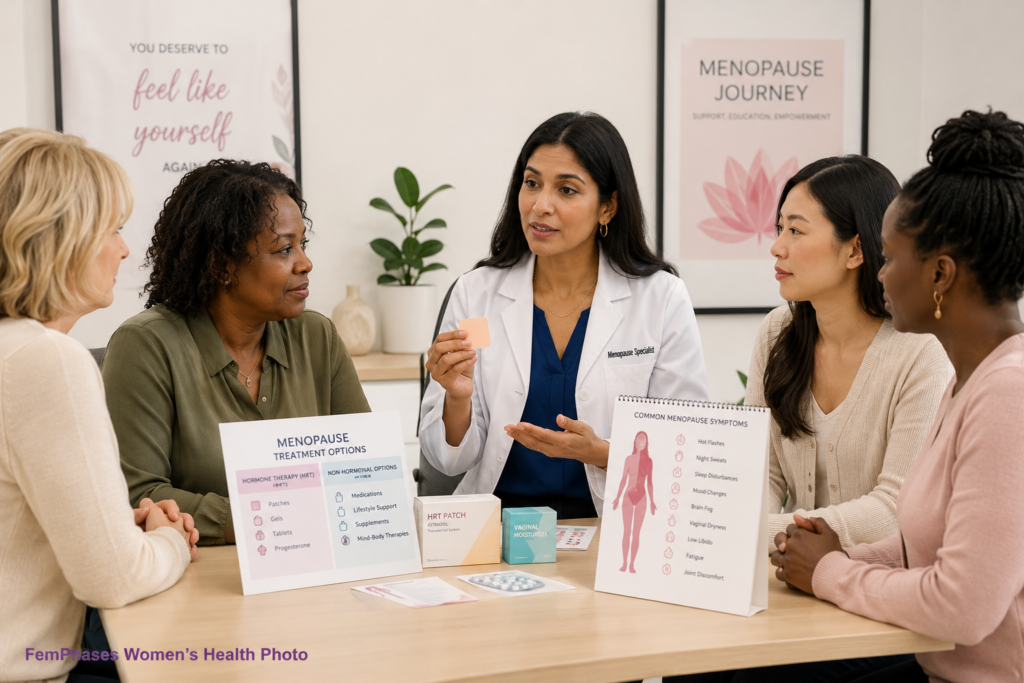
Menopause care is changing rapidly, and The New Menopause Treatments Women Are Talking About in 2026 reflect a growing shift toward personalised, evidence-based care. For many women, menopause symptoms affect sleep, mood, concentration, relationships, work performance, sexual wellbeing, and overall quality of life. At the same time, social media, celebrity discussions, podcasts, and online health communities have created an explosion of information—some helpful, some misleading.
The challenge is knowing which treatments are genuinely supported by science and which are being driven primarily by marketing. In this article, we’ll explore The New Menopause Treatments Women Are Talking About in 2026, what current medical evidence says, and how women can make informed decisions with their healthcare professionals.
The Overview
Menopause occurs when the ovaries permanently stop releasing eggs and menstrual periods cease for 12 consecutive months. The transition is driven by declining levels of oestrogen and progesterone.
Recent years have brought significant changes to menopause care:
- Greater awareness and advocacy
- Updated menopause guidelines
- Increased research funding
- New non-hormonal medications
- Better understanding of personalised hormone therapy
- Expanded recognition of cognitive, metabolic, and cardiovascular symptoms
Menopause Symptom Quiz
While hormone replacement therapy (HRT) remains the most effective treatment for many menopausal symptoms, researchers have developed new options for women who cannot or prefer not to use hormones. Current guidance from major organisations, including NICE, the British Menopause Society, the International Menopause Society, ACOG, and endocrine experts, continues to support individualised treatment decisions based on symptoms, health history, and personal preferences. (British Menopause Society)
The In-Depth Study
1. Neurokinin-3 (NK3) Receptor Antagonists: The Biggest New Development
One of the most discussed innovations among the New Menopause Treatments Women Are Talking About in 2026 is a class of medications called NK3 receptor antagonists.
These medications target temperature regulation pathways in the brain rather than replacing hormones.
The best-known example is fezolinetant.
Research shows that fezolinetant significantly reduces:
- Hot flushes
- Night sweats
- Sleep disruption related to vasomotor symptoms
Clinical trials have demonstrated reductions in hot flush frequency of up to 60%, with improvements seen within weeks for many women. In 2026, NICE supported NHS prescribing of fezolinetant for eligible women experiencing moderate-to-severe symptoms when HRT is unsuitable. (British Menopause Society)
What women should know:
- It is non-hormonal
- It may be suitable for some women who cannot take HRT
- Liver monitoring is required due to rare cases of liver injury
- It primarily treats hot flushes and night sweats rather than all menopause symptoms (acog.org)
2. Elinzanetant: The Next Generation Option
Another emerging medication attracting attention is elinzanetant.
This treatment works on related neurokinin pathways and has shown promising results in phase 3 clinical trials.
Researchers report:
- Significant reduction in hot flush frequency
- Improved sleep quality
- Improvement in menopause-related quality of life measures
While regulatory approvals vary internationally, experts view it as an important expansion of non-hormonal treatment options. (Contemporary OB/GYN)
3. Personalised Hormone Therapy
One of the most important trends in 2026 is not necessarily a new drug but a new approach.
Current menopause care increasingly focuses on:
- Individual risk assessment
- Symptom-based prescribing
- Shared decision-making
- Personal cardiovascular risk evaluation
- Bone health protection
Modern HRT often uses:
- Body-identical oestradiol
- Micronised progesterone
- Transdermal patches
- Oestrogen gels
Current international consensus continues to recognise HRT as the most effective treatment for vasomotor symptoms when appropriate for the individual woman. (Medscape)
4. Digital Menopause Care Platforms
Another emerging trend is technology-assisted menopause management.
Women increasingly use:
- Symptom tracking apps
- Telehealth menopause clinics
- Digital cognitive behavioural therapy (CBT)
- Wearable devices for sleep and symptom monitoring
These tools do not replace medical treatment but may improve symptom tracking and treatment adherence.
Why Am I So Tired During Menopause?
Signs and Symptoms
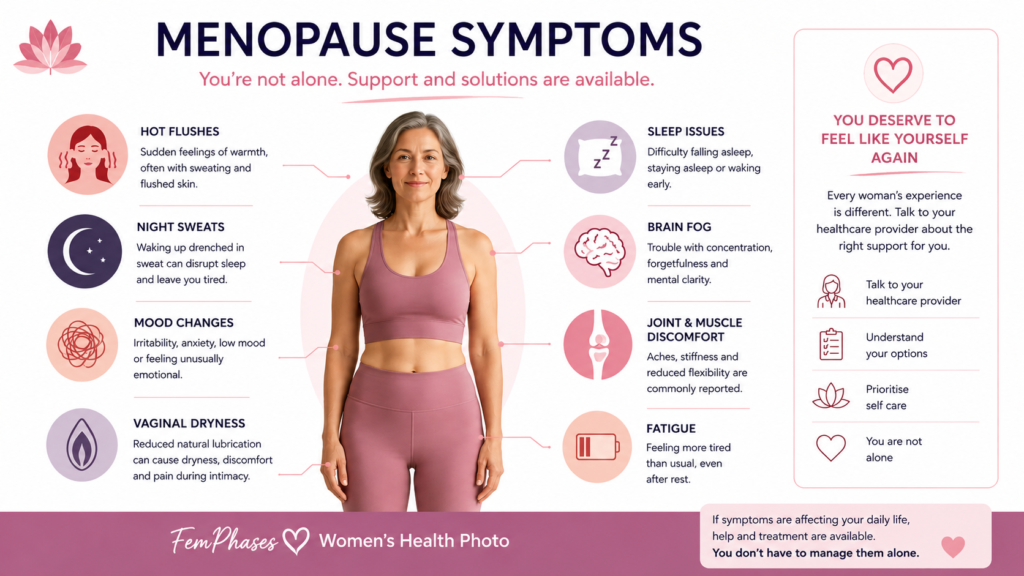
Menopause affects every woman differently.
1. Vasomotor Symptoms
These include:
- Hot flushes
- Night sweats
- Temperature sensitivity
2. Sleep Disturbances
Women may experience:
- Difficulty falling asleep
- Frequent waking
- Non-restorative sleep
3. Cognitive Changes
Common concerns include:
- Brain fog
- Forgetfulness
- Reduced concentration
4. Mood and Emotional Changes
Symptoms may include:
- Anxiety
- Irritability
- Low mood
- Increased emotional sensitivity
5. Genitourinary Symptoms
Sometimes called Genitourinary Syndrome of Menopause (GSM), these symptoms may include:
- Vaginal dryness
- Pain during intercourse
- Urinary urgency
- Recurrent urinary tract infections
6. Medical Advocacy Matters
Women should feel empowered to seek help when symptoms affect their quality of life.
If symptoms are dismissed or inadequately addressed, seeking a second opinion from a menopause-trained healthcare professional is appropriate.
Diagnosis and Treatment
How Menopause Is Diagnosed
For many women over age 45, diagnosis is based primarily on:
- Symptoms
- Menstrual history
Routine hormone testing is often unnecessary unless symptoms or circumstances are unusual. NICE guidance continues to support symptom-based assessment in many cases. (NICE)
Hormone Replacement Therapy
HRT remains the gold standard treatment for:
- Hot flushes
- Night sweats
- Vaginal symptoms
- Sleep disturbances related to menopause
For many women within 10 years of menopause onset and without contraindications, benefits often outweigh risks. (Medscape)
Non-Hormonal Prescription Treatments
These may include:
- Fezolinetant
- Certain antidepressants
- Gabapentin
- Clonidine in selected cases
Treatment choice depends on symptoms and medical history.
Vaginal Oestrogen
Low-dose vaginal oestrogen remains highly effective for GSM symptoms and is considered safe for many women. (The Menopause Society)
Barriers
Despite growing awareness, challenges remain.
a. Access to Specialists
Many women still struggle to access menopause-trained clinicians.
b. Misinformation
Social media can spread:
- Unverified treatment claims
- Supplement misinformation
- Fear-based messaging
c. Cost and Availability
Newer treatments may:
- Be expensive
- Have limited insurance coverage
- Require specialist prescribing
d. Health Inequalities
Research continues to show disparities in diagnosis, treatment access, and menopause support across socioeconomic and ethnic groups.
Solutions & Support
a. Evidence-Based Medical Treatments
Supported by current evidence:
- HRT when appropriate
- Fezolinetant
- Vaginal oestrogen
- Selected non-hormonal medications
b. Lifestyle Medicine
International menopause recommendations emphasise that all treatment plans should include lifestyle support. (Taylor & Francis Online)
Helpful strategies include:
- Regular physical activity
- Resistance training
- Adequate protein intake
- Smoking cessation
- Limiting alcohol
- Good sleep hygiene
c. Psychological Support
Women experiencing anxiety, stress, or mood symptoms may benefit from:
- Cognitive behavioural therapy (CBT)
- Mindfulness-based interventions
- Counselling
Social Support
Support groups and menopause communities can reduce isolation and improve confidence in managing symptoms.
Conclusion
The conversation around menopause has changed dramatically. Many of The New Menopause Treatments Women Are Talking About in 2026 represent meaningful advances in women’s healthcare, particularly the emergence of effective non-hormonal options such as NK3 receptor antagonists.
However, the strongest message from current evidence is that there is no single best treatment for every woman. The most effective menopause care remains personalised, evidence-based, and centred on individual symptoms, goals, preferences, and health risks.
Women deserve accurate information, compassionate care, and access to treatments that help them thrive during this life stage.
Takeaway
Quick Action Plan
✔ Track your symptoms for several weeks
✔ Discuss treatment options with a qualified healthcare professional
✔ Ask whether HRT is appropriate for your situation
✔ Explore non-hormonal treatments if HRT is unsuitable
✔ Prioritise sleep, exercise, nutrition, and stress management
✔ Seek specialist support if symptoms affect daily life
✔ Be cautious about supplements marketed as menopause “cures”
Frequently Asked Questions
1. What is the newest menopause treatment available in 2026?
Fezolinetant is among the most significant new evidence-based treatments. It is a non-hormonal medication that targets brain pathways involved in hot flushes and night sweats. (British Menopause Society)
2. Is HRT still considered the best treatment for menopause symptoms?
For many women with bothersome vasomotor symptoms and no major contraindications, HRT remains the most effective treatment. (acog.org)
3. Can I take menopause treatment if I cannot use hormones?
Yes. Several non-hormonal options exist, including fezolinetant and certain prescription medications used for symptom management. (PubMed)
4. Are menopause supplements proven to work?
Evidence for many supplements remains limited. Supplements should not be viewed as cures and should be discussed with a healthcare professional. (The Guardian)
5. How do I know if I am in menopause or perimenopause?
Symptoms, age, and menstrual history are often more useful than hormone blood tests for women over age 45. (NICE)
6. Can menopause affect mental health?
Yes. Hormonal changes can contribute to anxiety, low mood, irritability, and sleep disruption, although symptoms vary widely between individuals.
7. Is brain fog during menopause real?
Yes. Many women report concentration difficulties, memory lapses, and mental fatigue during the menopause transition.
Not Sure Where Your Symptoms Fit?
Take the Tools and Quizzes to understand your pattern.
Explore symptom trackers, hormone health assessments, and menopause screening tools to understand better what your body may be telling you.
Medical Disclaimer
This article is for educational purposes only and does not replace personalised medical advice, diagnosis, or treatment. If you are worried about your symptoms, if your symptoms are getting worse, or if something does not feel right in your body, please speak with your doctor, nurse practitioner, gynaecologist, endocrinologist, or another qualified healthcare professional. Seek urgent medical help for severe, sudden, or concerning symptoms.