

You might notice it in the quiet moments. Your partner reaches for you, a romantic scene comes on television, or you remember a time when desire felt easier, and now, there is almost nothing there. Not disgust. Not always sadness. Just absence. If you have been asking yourself, “Why has my libido disappeared?” please know this does not mean you are broken, cold, or failing as a woman. Libido can change for many physical, emotional, hormonal, relational, and lifestyle reasons. This article will help you understand what may be happening, what is common, and when it may be time to seek support.
What is Libido?
Libido means sexual desire or interest in sex. It can include wanting physical intimacy, feeling sexually curious, responding to touch, having sexual thoughts, or feeling open to closeness. For some women, libido feels spontaneous — it arrives on its own. For others, desire is more responsive, appearing after emotional connection, relaxation, affection, or gentle stimulation.
This matters because many women believe desire should always “just happen.” When it does not, they may feel guilty, ashamed, or worried. But sexual desire is strongly influenced by what is happening in your body, brain, relationship, and life. It is not separate from exhaustion, stress, pain, hormones, sleep, body confidence, medication, or emotional safety.
Why Desire Feels Different
A disappearing libido is often your body’s way of saying, “Something needs attention.” That something may be medical, emotional, relational, hormonal, or practical. Often, it is a mixture.
Perimenopause Symptom Checker
i. Stress, Exhaustion and the Mental Load
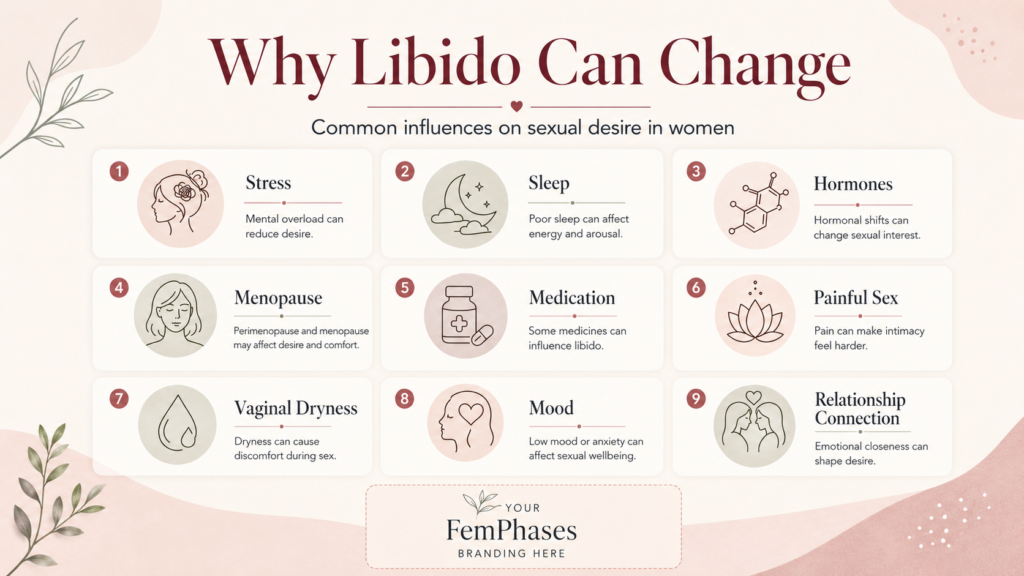
One of the most common reasons libido fades is chronic stress. When your body is under pressure, it prioritises survival, problem-solving, parenting, working, caregiving, healing, and getting through the day. Sexual desire often needs enough rest, safety, and mental space to emerge.
For many women, the issue is not that they do not care about sex. It is because their nervous system is overloaded. The nervous system is the body’s communication network, helping regulate stress, arousal, energy, sleep, and emotional responses. When it is constantly switched into alert mode, desire can feel distant.
The mental load can also play a quiet but powerful role. Planning meals, remembering appointments, managing children’s needs, caring for relatives, working shifts, handling household tasks, and emotionally supporting everyone else can leave very little room for pleasure. Desire often struggles to grow in a body that feels constantly responsible.
ii. Hormones Can Play a Role, But They Are Not the Whole Story
Hormones are chemical messengers that help regulate many body functions, including the menstrual cycle, mood, sleep, vaginal comfort, and sexual response. Changes in oestrogen, progesterone, testosterone, thyroid hormones, prolactin, and cortisol can all influence how you feel.
During perimenopause the years leading up to menopause hormone levels can fluctuate. This may come with irregular periods, hot flushes, night sweats, mood changes, poor sleep, brain fog, anxiety, vaginal dryness, and lower libido. Menopause is confirmed after 12 months without a period, unless periods have stopped for another reason, such as surgery, contraception, or treatment.
Pregnancy, birth, and breastfeeding can also change libido. After having a baby, lower oestrogen, higher prolactin, disrupted sleep, healing tissues, feeding demands, body changes, and emotional adjustment can all affect desire. This is common, but common does not mean you have to suffer in silence.
Thyroid conditions, diabetes, anaemia, chronic illness, pain conditions, endometriosis, polycystic ovary syndrome, and some cancer treatments may also affect sexual well-being. If your libido change comes with other new symptoms, it is worth looking at the bigger picture.
iii. Pain, Dryness and Discomfort Can Quiet Desire
If sex hurts, the body learns to protect you. Painful sex is sometimes called dyspareunia, which means pain before, during, or after sexual activity. It can happen because of vaginal dryness, infections, pelvic floor tension, vulval skin conditions, endometriosis, scarring after birth, menopause-related tissue changes, or anxiety linked to previous pain.
Vaginal dryness can feel like burning, soreness, friction, itching, tearing, or irritation. It can happen during menopause, while breastfeeding, after some cancer treatments, with certain medications, or alongside hormonal contraception.
This is important: if intimacy has become uncomfortable, your low libido may not be a lack of love or attraction. It may be your body trying to avoid pain. Pushing through painful sex can make fear and tension worse. A gentler and more effective approach is to treat the discomfort first.
iv. Medications, Contraception and Health Treatments
Some medicines can affect libido, arousal, orgasm, lubrication, or sexual satisfaction. These may include some antidepressants, blood pressure medications, hormonal contraceptives, pain medicines, and treatments that affect hormone levels.
This does not mean you should stop medication on your own. Many medicines are important and protective. But it does mean you can ask for a medication review. A doctor, nurse practitioner, pharmacist, gynaecologist, or mental health prescriber may be able to discuss options, alternatives, dose timing, or ways to manage side effects.
Contraception can be more individual. Some women feel better on hormonal contraception because it reduces pain, heavy bleeding, acne, or cycle-related mood changes. Others notice lower desire, mood shifts, dryness, or reduced arousal. Your lived experience matters, and it is reasonable to discuss it.
v. Relationship, Safety and Emotional Connection Matter
Libido does not live only in the pelvis. It also lives in communication, trust, tenderness, resentment, pressure, confidence, past experiences, and emotional safety.
You may notice low libido if you feel criticised, unseen, rushed, pressured, disconnected, or responsible for everyone else’s needs. You may also lose desire after betrayal, grief, trauma, unresolved conflict, body shame, or repeated painful sex.
This does not mean libido is “all in your head.” It means sexual desire is deeply human. Your emotional world and physical body are connected. For many women, desire becomes possible again when there is less pressure and more safety, honesty, affection, rest, and support.
What Is Often Misunderstood About Low Libido
Low libido is often misunderstood as a personal failure, a relationship failure, or simply a hormone problem. In reality, it may be none of those things.
It is also not always a problem. Some women naturally have lower sexual desire and feel completely content. It becomes a concern when the change is unwanted, distressing, sudden, persistent, painful, or causing relationship strain.
Another misunderstanding is that supplements or “hormone-balancing” products can cure low libido. Be cautious with big promises. Some products are poorly studied, may interact with medication, or may delay proper care. Evidence-informed support begins with understanding the cause, not chasing a quick fix.
Is Painful Sex Normal During Perimenopause? What Helps
Practical Support
Start by removing blame. Instead of asking, “What is wrong with me?” try asking, “What has changed in my body, my mind, my relationship, or my life?”
A simple symptom note can help. For two to four weeks, track:
- Sleep quality
- Stress levels
- Menstrual cycle changes
- Vaginal dryness or pain
- Mood and anxiety
- Medication or contraception changes
- Alcohol intake
- Breastfeeding or postpartum changes
- Relationship pressure or emotional distance
You do not need a perfect health journal. A few notes in your phone can reveal patterns.
If sex is uncomfortable, pause the pressure to perform and focus on comfort first. Consider a good-quality lubricant for sexual activity and a vaginal moisturiser for ongoing dryness. If dryness, burning, recurrent urinary symptoms, or painful sex continue, ask about vaginal oestrogen or other appropriate treatments.
If you suspect stress is a major factor, begin small. Ten minutes of quiet, a short walk, asking for help with one task, reducing evening screen overload, or having an honest conversation can matter. Desire often returns more easily when your body has moments of safety.
Talk with your partner if it feels safe. You might say, “I miss feeling connected, but I feel pressure when sex becomes the only measure of closeness.” This opens the door to affection without expectation.
If hormones may be involved, especially around perimenopause, menopause, postpartum recovery, or contraception changes, book a review. You deserve care that looks at the whole picture.
Low sex drive (loss of libido)
When to Seek Help
Seek professional advice if your libido disappears suddenly, lasts for several months, causes distress, or feels very different from your usual pattern. You should also seek help if low libido comes with painful sex, vaginal dryness, bleeding after sex, pelvic pain, recurrent urinary symptoms, low mood, anxiety, exhaustion, hot flushes, night sweats, irregular bleeding, or symptoms that interfere with daily life.
It is also worth asking for support if your libido changed after starting medication, changing contraception, giving birth, stopping breastfeeding, surgery, cancer treatment, or entering perimenopause or menopause.
A healthcare professional may explore hormones, thyroid health, iron levels, medication side effects, vaginal symptoms, pelvic pain, mental health, and relationship context. This is not about blaming you. It is about finding what your body needs.
Summary
If your libido has disappeared, it can feel as though a private part of you has gone quiet. But quiet does not mean gone forever. Your body may be asking for rest, comfort, treatment, safety, honesty, or simply a kinder pace. There is no shame in needing support, and there is no prize for pretending everything is fine. Desire can be complicated, but it is not beyond understanding. Begin gently. Notice the pattern. Ask the right questions. And remember: you are not alone in this, and you deserve care that listens to the whole of you.
Medical Disclaimer
This article is for educational purposes only and does not replace personalised medical advice, diagnosis, or treatment. If you are worried about your symptoms, if your symptoms are getting worse, or if something does not feel right in your body, please speak with your doctor, nurse practitioner, gynaecologist, endocrinologist, or another qualified healthcare professional. Seek urgent medical help for severe, sudden, or concerning symptoms.