


Hormonal changes can affect far more than menstrual cycles. They can influence mood, sleep, energy levels, concentration, body temperature, libido, and emotional wellbeing. Yet many women struggle to explain these changes to a partner who does not understand what is happening.
Learning how to explain your hormonal shifts to a partner can reduce misunderstandings, improve emotional support, and strengthen relationships during life stages such as perimenopause, menopause, pregnancy, postpartum recovery, fertility treatment, and menstrual cycle transitions.
The good news is that most relationship challenges around hormones are not caused by a lack of love. They are often caused by a lack of knowledge. Understanding the science behind hormonal shifts and learning how to communicate them effectively can help both partners feel more connected and supported.
Overview
Hormones are chemical messengers produced by glands within the endocrine system. They travel through the bloodstream and influence numerous body functions, including metabolism, reproduction, mood regulation, sleep, and stress responses.
During life stages such as perimenopause and menopause, levels of hormones, including oestrogen and progesterone, can fluctuate significantly. According to current guidance from the NHS, NICE, and leading menopause organisations, these fluctuations may contribute to symptoms such as:
- Hot flushes
- Night sweats
- Mood changes
- Anxiety
- Irritability
- Brain fog
- Fatigue
- Sleep disturbances
- Joint aches
- Changes in sexual desire
When partners cannot see these biological changes happening, they may mistakenly interpret symptoms as personality changes, relationship problems, or emotional overreactions.
Understanding how to explain your hormonal shifts to a partner begins with recognising that hormones affect the whole body—not just reproductive health.
Hormonal balance Quiz
In-Depth Study
Why Hormonal Changes Affect Emotions
Oestrogen interacts with neurotransmitters including serotonin, dopamine, and norepinephrine.
These brain chemicals help regulate:
- Mood
- Motivation
- Emotional resilience
- Sleep
- Stress responses
When hormone levels fluctuate, the brain may temporarily struggle to maintain the same level of emotional stability.
This is not a sign of weakness or poor coping skills. It is a recognised biological response.
Why Hormonal Changes Affect Sleep
Many women notice worsening sleep during perimenopause and menopause.
Research suggests fluctuating hormones can contribute to:
- Difficulty falling asleep
- Frequent waking
- Night sweats
- Early morning waking
- Reduced sleep quality
Poor sleep then amplifies symptoms such as anxiety, irritability, emotional sensitivity, and fatigue.
Why Cognitive Symptoms Occur
Many women report experiencing:
- Brain fog
- Forgetfulness
- Difficulty concentrating
- Mental fatigue
Emerging research suggests that changing oestrogen levels may affect brain regions involved in memory and information processing.
Explaining this to a partner can help them understand that occasional forgetfulness is not laziness or lack of interest.
Hormones and Relationship Dynamics
When symptoms are misunderstood, couples may experience:
- Increased conflict
- Communication breakdowns
- Emotional distance
- Reduced intimacy
- Feelings of isolation
Studies increasingly show that partner education can significantly improve coping, relationship satisfaction, and emotional wellbeing during hormonal transitions.
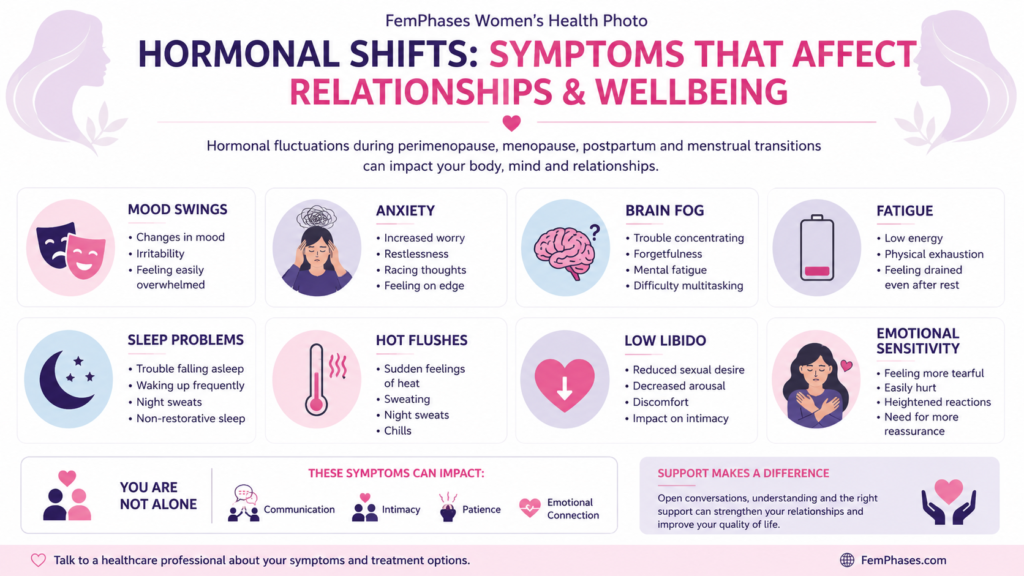
Signs and Symptoms
Recognising symptoms can help both partners understand what is happening.
a. Emotional Symptoms
- Irritability
- Mood swings
- Anxiety
- Increased emotional sensitivity
- Feeling overwhelmed
- Reduced stress tolerance
b. Physical Symptoms
- Hot flushes
- Night sweats
- Fatigue
- Headaches
- Joint pain
- Breast tenderness
- Weight changes
c. Cognitive Symptoms
- Brain fog
- Forgetfulness
- Reduced concentration
- Mental fatigue
d. Relationship-Related Symptoms
- Lower libido
- Reduced patience
- Increased need for support
- Desire for more personal space
- Emotional withdrawal during symptom flares
A Note on Medical Advocacy
Women are often told symptoms are simply part of ageing or stress.
If symptoms are affecting daily life, relationships, sleep, work, or mental wellbeing, seeking professional assessment is appropriate and important.
Diagnosis and Treatment
How Hormonal Changes Are Evaluated
Healthcare professionals may assess:
- Medical history
- Menstrual patterns
- Symptom history
- Lifestyle factors
- Sleep quality
- Mental health
- Medication use
Blood tests may sometimes be used, depending on age and circumstances.
Hormone Replacement Therapy (HRT)
For suitable candidates, HRT can help reduce symptoms caused by declining oestrogen levels.
Potential benefits may include:
- Reduced hot flushes
- Improved sleep
- Better mood stability
- Improved quality of life
Treatment decisions should always be individualised.
Non-Hormonal Medical Options
Some women may benefit from:
- Cognitive behavioural therapy (CBT)
- Certain antidepressants
- Sleep interventions
- Specialist menopause support
Relationship Education as Treatment
One often overlooked intervention is partner education.
Helping a partner understand the biological basis of symptoms can reduce blame and improve empathy.
Barriers and Challenges
i. “You Don’t Look Sick”
Hormonal changes are largely invisible.
Many women hear comments such as:
- “You seem fine.”
- “Everyone gets tired.”
- “You’re just stressed.”
This can create feelings of frustration and isolation.
ii. Lack of Public Awareness
Many people receive little formal education about:
- Perimenopause
- Menopause
- Hormonal fluctuations
- Women’s endocrine health
Partners may not understand what they have never been taught.
iii. Fear of Being Judged
Some women worry about appearing:
- Difficult
- Emotional
- Weak
- Demanding
As a result, they minimise symptoms and avoid discussing them.
iv. Relationship Communication Patterns
Long-standing communication habits can make difficult conversations feel uncomfortable.
Solutions and Support
Explain the Biology, Not Just the Symptoms
Instead of saying:
“I’ve been really emotional lately.”
Try:
“My hormone levels are fluctuating, which can affect the chemicals in my brain that regulate mood and stress.”
This helps remove blame and adds context.
Use Specific Examples
Partners often understand concrete examples better than general descriptions.
For example:
- “I’m waking five times each night because of night sweats.”
- “The brain fog makes it harder to concentrate.”
- “My patience is lower because I’m exhausted.”
Share Reliable Information
Consider reading trusted resources together.
Helpful resources include:
- NHS Menopause Information
- NICE Menopause Guidance
- British Menopause Society
- Office on Women’s Health Menopause Resources
Focus on Teamwork
Effective conversations often sound like:
- “Here’s what I’m experiencing.”
- “Here’s what helps.”
- “How can we work through this together?”
A collaborative approach usually creates better outcomes than assigning blame.
Prioritise Self-Care
Evidence-based lifestyle strategies include:
- Regular physical activity
- Good sleep hygiene
- Stress management
- Balanced nutrition
- Social support
- Limiting alcohol and smoking
These strategies do not eliminate hormonal changes but may reduce symptom severity.
Conclusion
Understanding how to explain your hormonal shifts to a partner is about more than describing symptoms. It is about helping someone understand the biological, emotional, and practical realities of hormonal change.
Most partners want to help but may not know how. Clear communication, education, and mutual empathy can transform confusion into understanding and frustration into support.
Hormonal shifts are a normal part of many stages of a woman’s life. No one should feel they must navigate them alone.
Takeaway
Key Action Steps
✅ Explain the biology behind your symptoms.
✅ Use specific examples rather than general statements.
✅ Share trusted educational resources.
✅ Focus on teamwork rather than blame.
✅ Seek medical support if symptoms are affecting quality of life.
✅ Remember that understanding often develops over time.
Frequently Asked Questions
1. How do I explain hormonal changes to my partner?
Use simple, factual language. Explain that hormones influence mood, sleep, energy, cognition, and physical well-being—not just reproduction.
2. Why doesn’t my partner understand my hormonal symptoms?
Many people have never received education about perimenopause, menopause, or hormone health. Lack of understanding is often due to lack of information rather than lack of care.
3. Can hormones really affect emotions?
Yes. Hormones interact with brain chemicals that regulate mood, stress responses, motivation, and emotional resilience.
4. How can my partner support me during hormonal changes?
Listening, learning about symptoms, offering practical help, and showing empathy can all make a meaningful difference.
5. Should my partner attend medical appointments?
Some couples find this helpful. Attending appointments together can improve understanding and provide opportunities to ask questions.
6. Can hormone treatment improve relationship difficulties?
If symptoms are contributing to relationship stress, appropriate treatment may improve well-being and communication. Treatment should always be discussed with a healthcare professional.
7. When should I seek medical help?
Seek professional advice if symptoms are affecting your daily activities, work, relationships, mental health, or quality of life.
Not Sure Where Your Symptoms Fit?
Take the Tools and Quizzes to understand your pattern.
Medical Disclaimer
This article is for educational purposes only and does not replace personalised medical advice, diagnosis, or treatment. If you are worried about your symptoms, if your symptoms are getting worse, or if something does not feel right in your body, please speak with your doctor, nurse practitioner, gynaecologist, endocrinologist, or another qualified healthcare professional. Seek urgent medical help for severe, sudden, or concerning symptoms.