
Nancy, Age: 45
My Story
I practised what I was going to say in the car
I do this before most appointments now. Not because I’m nervous, though I am, a bit, but because I’ve learned that if I don’t walk in with the right words in the right order, I’ll leave without saying what I actually came to say. I’ll minimise. I’ll soften. I’ll hear myself saying, “It’s probably nothing, but —” and watch the conversation drift somewhere unhelpful before I’ve even properly started.
So I sit in the car park, engine off, handbag on the passenger seat, and I rehearse. I say the sentences out loud, quietly, to the steering wheel. I time myself. I keep it under two minutes because I know that’s roughly how long I’ll have before questions start and the appointment takes its own shape. I know how that sounds. I know it shouldn’t be this way.
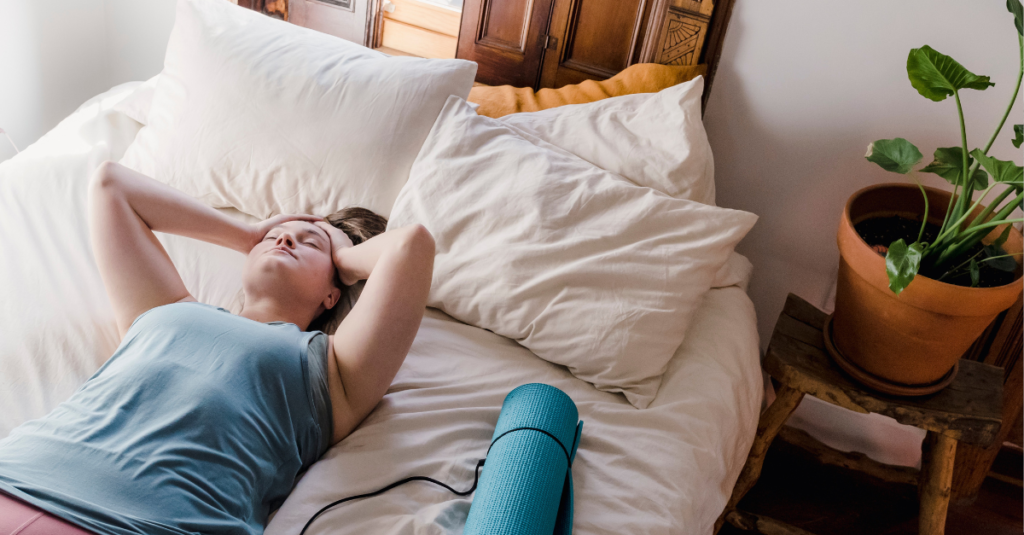
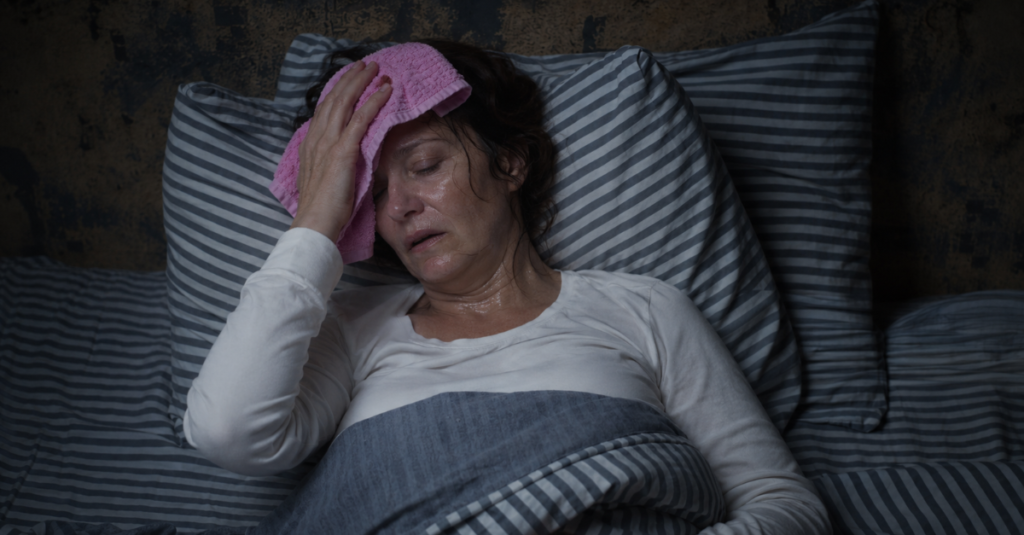
It started about eighteen months ago. I’d been feeling off, and I know “off” isn’t a medical term, but that’s the most honest word I have for it. A collection of things that didn’t seem connected but arrived together, like guests at a party who insist they don’t know each other but keep standing in the same corner. Heart palpitations that came and went. A heaviness in my limbs that made the stairs feel longer than they used to. Headaches that settled behind my eyes on random afternoons. A persistent feeling of being slightly outside my own life, like watching it through a window.
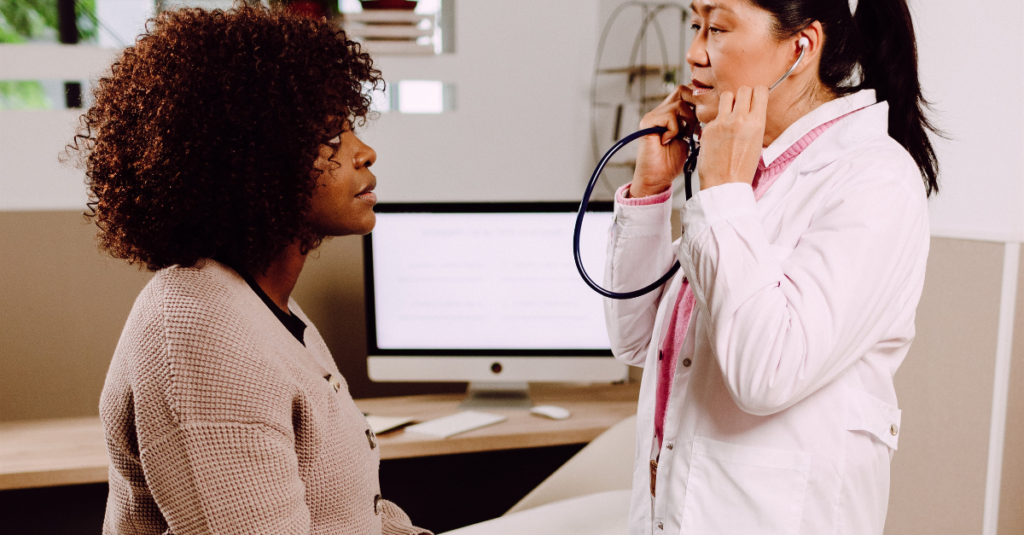
I went to my GP first, obviously. She was kind. She ran some bloods, checked my thyroid, looked at my iron levels. Everything came back normal. She said the word “stress” the way you might gently offer someone a biscuit, expecting it to be accepted. I nodded because I didn’t know what else to do. Maybe it was stress. Maybe she was right. I went home and tried to be less stressed, which, if you’ve ever attempted it, is a bit like trying to be taller.
A few months later, when nothing had changed, I went back. Different GP this time; my usual one was on leave. He listened for about ninety seconds, then said it was probably anxiety and suggested I try mindfulness. He printed a leaflet from the computer and handed it to me across the desk. I took it because I was raised to be polite. I sat in the car afterwards and looked at the leaflet. It had a cartoon drawing of a woman sitting cross-legged under a tree. I put it in the glove box, where it still is.
I want to be fair here, because this isn’t a story about bad doctors. Both of those GPs were doing their jobs. They were working within time constraints and following protocols and probably seeing thirty patients a day, each one carrying their own collection of vague, overlapping symptoms that don’t fit neatly into a box. I don’t think either of them dismissed me deliberately. But the effect was the same: I left feeling like the problem was mine to solve. Like I just needed to try harder to be well.
I saw a physiotherapist about the heaviness in my legs. She gave me exercises. I did them, diligently, for six weeks. Nothing changed. I saw an optician about the headaches: new prescription, new lenses. The headaches stayed. Each appointment was perfectly professional, perfectly reasonable, and perfectly incomplete. Everyone looked at their piece of the picture. Nobody stepped back to see the whole thing.
The worst part wasn’t being told I was fine. It was starting to believe it. Starting to think maybe this is just what forty-five feels like. Maybe I’m making too much of it. Maybe everyone walks around with a low hum of wrongness, and they’ve just learned not to mention it. I stopped bringing it up with my husband because I’d run out of new ways to describe something that had no name. I stopped mentioning it to friends because I could hear how I sounded a woman with normal blood results complaining about being tired. I stopped trusting my own knowledge of my own body, and that was the loneliest loss of all.
My sister-in-law, Diane, is a practice nurse in another city. We’re not especially close; we see each other at Christmas and the odd birthday, but she rang one evening to ask about something else entirely, and I must have sounded flat, because she asked what was going on. And for some reason — maybe because she wasn’t my doctor, maybe because she wasn’t in the room, maybe because I was tired of rehearsing and performing and pretending I just told her. All of it. The palpitations, the heaviness, the headaches, the fog, the feeling that something was happening inside me that nobody was taking seriously. I talked for about fifteen minutes without stopping.
When I’d finished, she said, “Have you seen anyone who actually sat with all of that together?”
I hadn’t. Of course I hadn’t. Each appointment had been about one symptom, one system, one ten-minute window. Nobody had heard the full picture because I’d never had the space to lay it all out.
Diane recommended a GP at a different practice a woman she knew professionally who had a particular interest in women’s health. I felt strange about it, like I was doing something disloyal. But I booked the appointment.
I remember the date. It was a Thursday in November. I sat in the waiting room with my two-minute script ready and my hands gripped together in my lap.
She called me in. She sat down. And the first thing she said was, “Tell me everything. Start wherever you want. I’m not going to rush you.”
I almost didn’t believe her. I’d become so used to editing myself, to squeezing my symptoms into a list that could be delivered before the conversation moved on, that the invitation actually to speak felt unfamiliar. Dangerous, almost. Like stepping onto ice you’re not sure will hold.
But I told her. Not the rehearsed version. The real one. The palpitations at four in the morning. The way my legs felt after climbing the stairs. The headaches that no new glasses could fix. The brain fog that made me feel stupid in meetings. The slow, corrosive feeling of not being believed not by anyone in particular, but by the process itself. By the system that kept returning “normal” when nothing felt normal at all.
She listened for almost twenty minutes. She didn’t interrupt. She didn’t reach for the leaflet printer. She made notes, but not in a way that felt like she was filing me. More like she was building something, fitting the pieces together the way I’d been trying to, alone, for over a year.
When I’d finished, she looked at her notes and then looked at me and said, “I can hear how frustrating this has been. And I want you to know you were right to keep coming back.”
I cried. Right there in her consulting room, with the fluorescent lights and the blood pressure cuff on the wall and the poster about flu jabs. I cried because somebody had finally said the thing I’d needed to hear for eighteen months: you were right.
Not right in the sense of a diagnosis. Not right as in here’s what’s wrong with you. Just: you were right to listen to your body. You were right to keep asking. You were right not to accept an answer that didn’t match what you were feeling.
Looking Back
I’ve thought a lot about what made that appointment different. It wasn’t magic. She didn’t have access to tests the other GPs didn’t. She didn’t say anything particularly revolutionary. What she did was give me time and treat the whole picture as one thing instead of five separate things.
But more than that — and this is the part I keep coming back to — she believed me before she had evidence. She didn’t wait for a blood result or a scan to take me seriously. She listened to what I was telling her about my own body and treated it as information worth acting on.
It sounds like such a small thing. Listening. But when you’ve spent a year and a half doubting yourself, being listened to isn’t small. It’s everything.
What Helped Me
Finding a GP who was willing to sit with complexity rather than reach for the quickest explanation. That was the turning point. Not because the other professionals were wrong, but because she was the first one who had the time and the inclination to see the whole picture.
Diane’s question, “Has anyone sat with all of that together?” changed the way I thought about my own healthcare. I’d been presenting fragments, one symptom per appointment, one puzzle piece at a time. Nobody could see what it was because nobody had all the pieces in front of them.
Writing everything down before appointments. Not a script, exactly, but a timeline. When things started. How they connected. What made them better or worse. I bring it with me now, folded in my bag, and I hand it over at the beginning. It sounds clinical, but it’s actually an act of self-respect. It says: I know my body. Here is what it’s telling me. Please read this before we begin.
Stopping apologising for being persistent. For months I started every appointment with some version of “Sorry to bother you again” or “I know you’re busy.” I don’t do that anymore. I’m not rude. I’m not aggressive. But I’ve stopped treating my own health concerns like an inconvenience to someone else’s day.
What I Wish I’d Known
I wish I’d known that normal blood results don’t always mean nothing is happening. That tests can come back clear, and your experience can still be completely valid. Those two things can be true at the same time.
I wish I’d known earlier that I was allowed to seek a second opinion. Or a third. That it wasn’t disloyalty or hysteria or attention-seeking — it was a woman listening to her own body and refusing to be told she was imagining things.
I wish someone had told me that the system isn’t always designed to see women’s health in the round. Not out of malice, but out of structure. Ten-minute appointments. One problem per visit. Tick the box, run the bloods, print the leaflet. It’s not anyone’s fault, exactly, but it means that the women whose symptoms don’t fit tidily into a single category often fall through the gaps. And knowing that — just knowing it would have saved me a year of thinking the gap was something wrong with me.
I wish I’d known that trusting yourself is a skill, and that it’s possible to lose it gradually, without noticing, and that getting it back takes practice and patience and, sometimes, one person in a consulting room saying: you were right to keep asking.
Reflection
I’m still with that GP. I see her every few months. We’re working through things together — carefully, without rushing — and I feel, for the first time in a long time, like I’m part of the conversation about my own health rather than standing outside it, knocking on the glass.
I don’t rehearse in the car anymore. Or not as much. I still bring my notes, my little folded timeline, because that’s just sensible. But I don’t time myself. I don’t trim the edges off what I’m feeling to make it fit into someone else’s schedule. I walk in, and I say what I need to say, and I trust that it will be heard, because it has been heard, and that changes everything.
The thing I want other women to know the thing I would go back and tell myself, sitting in that car park eighteen months ago with a mindfulness leaflet in the glove box is this: you are the leading authority on your own body. You have always been. And when someone finally listens to you the way you deserve to be listened to, it doesn’t just change your healthcare. It gives you back your voice.
I’d forgotten I had one for a while. I won’t forget again.
Every woman’s experience is different. This story is shared to help others feel less alone and is not intended to replace professional medical advice.