

Maybe sex used to feel easy, natural, or at least comfortable enough not to think about. Then, somewhere in your forties or early fifties, something changed. Penetration may feel dry, stingy, tight, burning, or sore afterwards. You might find yourself avoiding intimacy, not because you do not care, but because your body has started sending signals you cannot ignore.
Painful sex during perimenopause is more common than many women realise, but that does not mean you have to put up with it. In this article, we’ll look at why it can happen, what is often misunderstood, what may help, and when to speak with a healthcare professional.
Perimenopause Symptom Checker
What is painful sex?
Painful sex can be common during perimenopause, but pain should never be treated as something you must silently endure.
A helpful way to think about it is this: it may be common, but it is still a symptom. Your body is giving you information. Sometimes that information is related to hormonal changes. Sometimes it is linked to pelvic floor tension, infections, skin changes, stress, relationship strain, medication, or another gynaecological condition.
The medical term for painful sex is dyspareunia. It can mean pain before, during, or after sex. The pain may feel sharp, burning, tight, raw, deep, cramping, or like friction. Some women notice it only with penetration. Others feel soreness for hours or even days afterwards.
During perimenopause, this can feel especially confusing because your periods may still be coming, your hormone levels may be fluctuating, and you may not think of yourself as “menopausal” yet. But perimenopause is a transition, and intimate symptoms can begin before your final period.
Why perimenopause can make sex painful
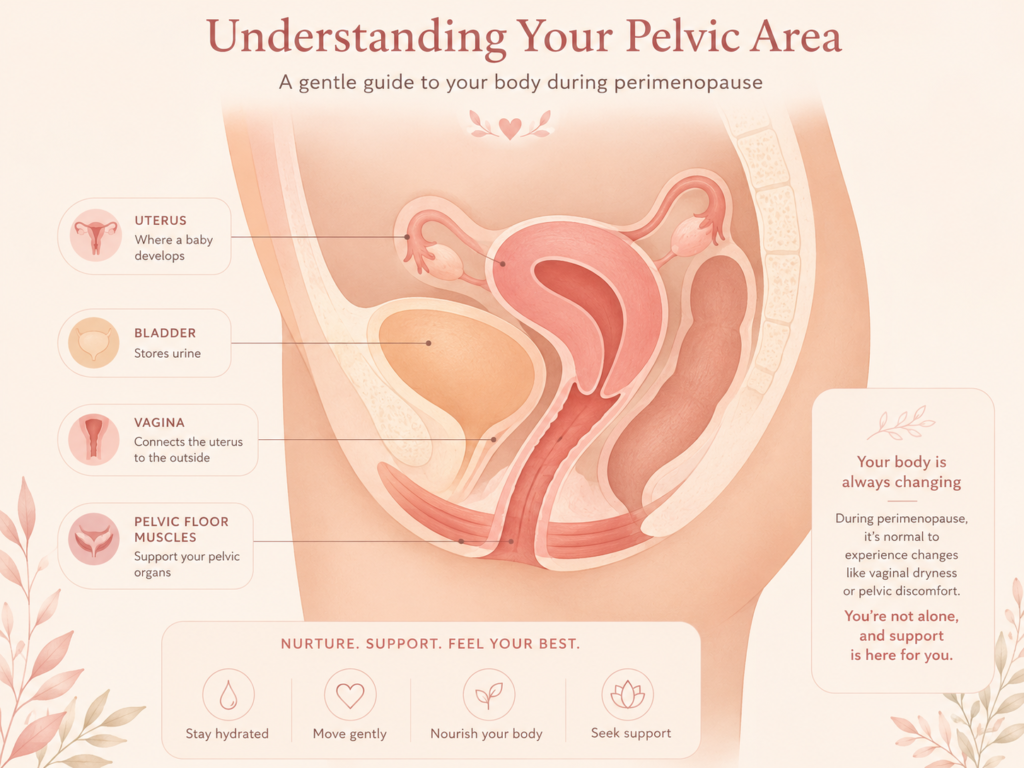
Perimenopause is the stage leading up to menopause. During this time, oestrogen levels do not simply decline in a straight line. They rise and fall unpredictably. These hormonal shifts can affect the vulva, vagina, bladder, urethra, mood, sleep, and sexual desire.
Oestrogen helps support the tissues around the vagina and vulva. It helps maintain natural moisture, elasticity, blood flow, and the thickness of the vaginal lining. When oestrogen fluctuates or falls, some women notice:
- Vaginal dryness
- Burning or stinging during sex
- A feeling of tightness or reduced stretch
- Soreness at the vaginal opening
- Itching or irritation
- Light spotting after sex
- More urinary urgency or recurrent urinary symptoms
- Lower desire, especially if sex has become uncomfortable
These symptoms are often described under the umbrella term genitourinary syndrome of menopause, or GSM. This means changes affecting the genital and urinary tissues associated with lower oestrogen levels. The term can sound clinical, but the experience is very human: discomfort, worry, avoidance, frustration, and sometimes grief for how your body used to feel.
Sex After Menopause
What painful sex can feel like
Not all pain during sex is the same. Paying attention to the type and location of pain can help you explain it more clearly if you speak to a clinician.
Pain at the entrance of the vagina may feel like:
- Burning
- Stinging
- Rawness
- Friction
- A “tearing” feeling
- Tightness or difficulty with penetration
This can happen with vaginal dryness, vulval irritation, skin sensitivity, reduced arousal, pelvic floor tension, or conditions affecting the vulval skin.
Deeper pain may feel like:
- Cramping
- Aching
- Pressure
- Pain with certain positions
- Pain that feels internal or pelvic
Deeper pain may be linked to pelvic floor muscle tension, fibroids, endometriosis, ovarian cysts, pelvic inflammation, previous surgery, or other pelvic health concerns. It is worth getting checked, especially if it is new, persistent, or worsening.
The emotional side matters too.
Painful sex is not just a physical issue. It can affect how you feel about your body, your confidence, your relationship, and your sense of closeness.
Many women start bracing for pain before sex even begins. Over time, that anticipation can cause the pelvic floor muscles to tighten. This can make penetration feel even more uncomfortable, creating a difficult loop: pain, worry, tension, more pain.
This does not mean “it is all in your head.” It means the body and mind are deeply connected. Pain changes how the nervous system responds. If your body has learned that sex hurts, it may protect you by tightening, withdrawing, or reducing desire.
You are not broken. Your body may need gentler care, better lubrication, hormonal support, pelvic floor support, or time to feel safe again.
Why Has My Libido Disappeared? Common Causes and Gentle Support
What is commonly misunderstood
One of the biggest misunderstandings is that painful sex is just part of getting older. It is not.
Another misunderstanding is that using lubricant means something is wrong with you. It does not. Lubricant is a practical comfort tool, not a failure. Many women need more lubrication during perimenopause because natural moisture may be reduced, even when they feel emotionally interested in sex.
It is also worth knowing the difference between a lubricant and a vaginal moisturiser.
A lubricant is used during sex to reduce friction. It works in the moment.
A vaginal moisturiser is used regularly, whether or not you are having sex. It helps hydrate the vaginal tissues over time and may reduce everyday dryness or irritation.
Some women need both.
Could it be something other than hormones?
Yes. Hormonal changes are a common cause, but not the only one. Painful sex can also be linked to:
- Thrush, bacterial vaginosis, urinary infections, or sexually transmitted infections
- Vulval skin conditions such as lichen sclerosis or eczema
- Pelvic floor muscle tension or vaginismus
- Endometriosis, fibroids, ovarian cysts, or pelvic inflammatory disease
- Previous childbirth trauma, tears, episiotomy, surgery, or scar tissue
- Certain medications, including some antidepressants, antihistamines, and hormonal treatments
- Low arousal, stress, fatigue, relationship difficulties, or past sexual trauma
This is why it is important not to self-blame. Pain during sex is not a character flaw, a lack of effort, or a sign that intimacy is over. It is a health symptom with possible explanations and support options.
What treatments may help?
Treatment depends on the cause. For mild dryness or friction, a good-quality lubricant and regular vaginal moisturiser may make a noticeable difference.
For more persistent symptoms linked to low oestrogen, a clinician may discuss local vaginal oestrogen. This is oestrogen placed directly in or around the vagina, often as a cream, tablet, pessary, or ring. It is different from full-body hormone therapy because it mainly works locally on the vaginal and urinary tissues.
Other options may include pelvic floor physiotherapy, treatment for infections or skin conditions, psychosexual therapy, or further gynaecological assessment if the pain is deep, severe, or unexplained.
The most important message is this: painful sex during perimenopause is not something you have to tolerate quietly. There are many ways to make intimacy more comfortable, and you deserve care that takes your symptoms seriously.
Practical Support
1. Start with comfort, not performance.
When sex has become painful, it can help to take the pressure off penetration for a while. Intimacy does not have to mean pushing through discomfort. In fact, pushing through pain can sometimes make the body more guarded.
Try shifting the focus to closeness, touch, affection, and pleasure without a goal in mind. This gives your body a chance to relearn safety.
2. Use the right kind of lubricant
A lubricant can reduce friction and make penetration more comfortable. Many women prefer water-based or silicone-based lubricants. Water-based lubricants are easy to wash off and widely available. Silicone-based lubricants often last longer, which can be helpful when dryness is a bigger issue.
Avoid products that sting, feel sticky, or contain strong fragrances. Your vulval and vaginal tissues may be more sensitive during perimenopause.
3. Add a vaginal moisturiser.
If you feel dry, sore, or irritated even when you are not having sex, a vaginal moisturiser may help. Use it regularly, not just before intimacy. Think of it less like a quick fix and more like ongoing skin support for delicate tissue.
4. Make arousal slower and kinder.
Perimenopause can change how quickly your body responds. You may need more time, more stimulation, and more emotional ease before penetration feels comfortable.
Helpful shifts include:
- Longer foreplay
- Slower penetration
- Trying positions where you control depth and pace
- Pausing when discomfort starts
- Using lubricant before pain begins, not after
5. Notice patterns
Keep a simple note of when pain happens. You might track:
- Where the pain is
- What it feels like
- Whether dryness, itching, urinary symptoms, or bleeding are present
- Whether it changes around your cycle
- Whether certain positions make it better or worse
This can help you explain your symptoms clearly to a healthcare professional.
6. Consider pelvic floor support.
If sex feels tight, blocked, or painful despite lubrication, pelvic floor muscle tension may be part of the picture. A pelvic floor physiotherapist can assess whether the muscles are overactive, guarded, weak, or tender. Many women are surprised to learn that pelvic floor work is not always about “doing more Kegels.” Sometimes the body needs relaxation, release, and calming of the nervous system.
7. Speak kindly to yourself.
Painful sex can bring up shame, sadness, or anxiety. Please do not reduce your body to a problem. Your body is changing, communicating, and asking for support. That is not failure. That is information.
When to Seek Help
Speak with a doctor, nurse practitioner, gynaecologist, sexual health clinician, menopause specialist, or pelvic health professional if sex is repeatedly painful, if symptoms are affecting your relationship or well-being, or if you are avoiding intimacy because you expect pain.
It is especially important to seek advice if you notice bleeding after sex, unusual discharge, pelvic pain, a new lump, vulval skin changes, persistent itching or burning, recurrent urinary symptoms, pain that is deep or severe, or pain that does not improve with lubricant and gentler intimacy.
You do not need to wait until symptoms are unbearable. A calm conversation with a knowledgeable clinician can help identify the cause and guide treatment. Painful sex is a valid reason to ask for care.
Summary
Painful sex during perimenopause is common, but it is not something you have to accept as your new normal. Hormonal shifts can affect vaginal moisture, elasticity, tissue comfort, arousal, urinary symptoms, and desire. But pain can also come from infections, skin conditions, pelvic floor tension, deeper pelvic concerns, medication, stress, or past experiences.
The kindest next step is not to push through. It is to listen. With the right support, many women find comfort again. Your body is not betraying you. It may simply be asking for a different kind of care.
Yes, it can be. Hormonal change
Frequently Asked Questions
1. Is painful sex a symptom of perimenopause?
s during perimenopause can reduce vaginal moisture and elasticity, making sex feel dry, sore, tight, or burning. But other causes are possible, so persistent pain should be evaluated.
2. Why does sex suddenly hurt in my 40s?
In your 40s, fluctuating oestrogen can affect the vaginal and vulval tissues. Stress, sleep disruption, pelvic floor tension, infections, medication, and relationship factors can also play a role. Sudden or repeated pain is worth discussing with a clinician.
3. Can vaginal dryness happen before menopause?
Yes. Vaginal dryness can begin during perimenopause, before your final period. It may come and go at first because hormones fluctuate during this stage.
4. What is the best lubricant for painful sex in perimenopause?
Many women do well with water-based or silicone-based lubricants. Silicone-based lubricants may last longer. Avoid fragranced or irritating products, and stop using anything that causes burning or stinging.
5. Do I need vaginal oestrogen for painful sex?
Not always. Some women improve with lubricants, moisturisers, and gentler intimacy. If symptoms are persistent or linked to vaginal tissue changes, a healthcare professional may discuss local vaginal oestrogen or other options.
6. Can pelvic floor problems cause painful sex?
Yes. If your pelvic floor muscles are tight, guarded, or tender, penetration can feel painful or difficult. Pelvic floor physiotherapy may help, especially when pain feels like tightness, burning, or a sensation of being blocked.
7. Should I keep having sex if it hurts?
Try not to push through pain. Pain can make the body tense and more protective over time. Pause, use comfort measures, explore non-penetrative intimacy, and seek support if pain keeps happening.
Not sure where your symptoms fit? Take the Tools and Quizzes to understand your pattern.
Medical Disclaimer
This article is for educational purposes only and does not replace personalised medical advice, diagnosis, or treatment. If you are worried about your symptoms, if your symptoms are getting worse, or if something does not feel right in your body, please speak with your doctor, nurse practitioner, gynaecologist, endocrinologist, or another qualified healthcare professional. Seek urgent medical help for severe, sudden, or concerning symptoms.