Introduction
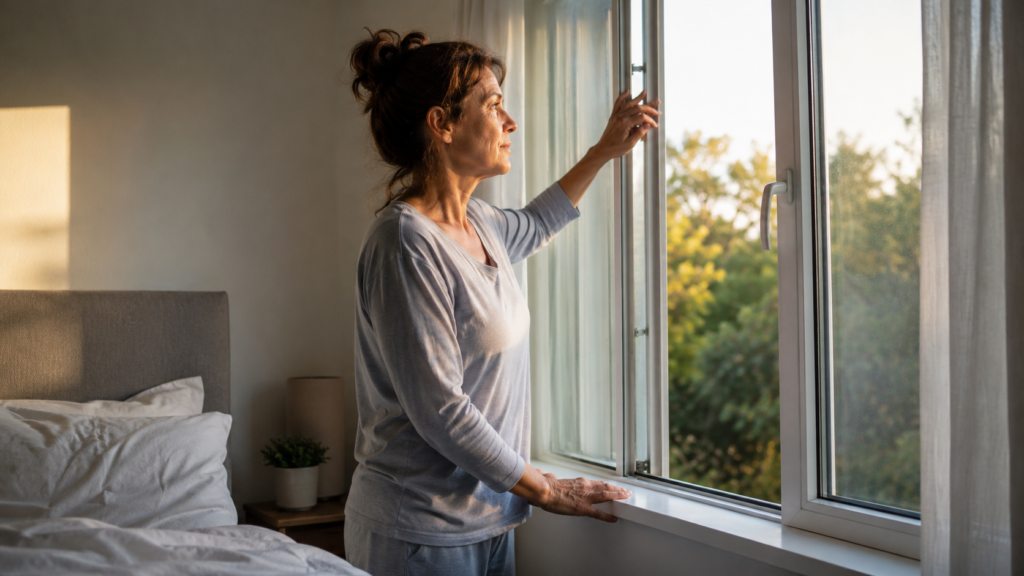
You wake up at 3:17am again.
Your duvet is tangled around your legs, your heart feels strangely alert, and your mind is already racing through tomorrow’s to-do list. Earlier that day, you forgot a colleague’s name halfway through a sentence. Last week, your period arrived two weeks early. This month, it did not arrive at all.
And somewhere in the middle of all this, one question keeps circling in your mind:
How long does menopause last?
And somewhere in all this, one question keeps circling in your mind: How long does menopause last? Remember, symptoms vary widely, so your experience may be different from others, which can help reduce feelings of uncertainty.
The truth is, menopause is not one single event. It is a gradual hormonal transition that unfolds over time, often in stages. Some women move through it relatively smoothly. Others experience years of fluctuating symptoms that affect sleep, mood, concentration, energy, confidence, relationships, and daily life.
However, understanding the timeline can make the experience feel less frightening and more manageable.
This guide explains how long menopause lasts, what happens during each phase, why symptoms can vary so much from woman to woman, and what can genuinely help.
First, What Exactly Is Menopause?
Menopause officially happens when you have gone 12 consecutive months without a menstrual period, and there is no other medical reason for the change.
The average age of menopause in the UK is around 51 years old, although it can happen earlier or later. Before that point, most women go through perimenopause, which is the transition phase leading up to menopause. After menopause comes postmenopause, which lasts for the rest of one’s life.
In other words, menopause itself is technically one point in time — but the hormonal changes around it can last for years.
According to the NHS menopause overview, symptoms can begin months or even years before periods stop completely.
So, How Long Does Menopause Last?
The honest answer is: it varies.
However, research gives us some useful averages.
Most women experience menopausal symptoms for around:
- 4–8 years overall
- Perimenopause commonly lasts 4–10 years
- Hot flushes alone may last around 7 years on average
- Some women experience symptoms into their 60s or beyond
Many women notice waves and fluctuations rather than a constant decline, which can help you feel more hopeful and patient during this process.
Some months feel manageable. Others feel surprisingly difficult. Hormones can shift unevenly, which is one reason symptoms often feel unpredictable.
The important thing to remember is this:
Long-lasting symptoms do not mean you are failing to cope or that something is “wrong” with you, which can help you feel more confident and less self-critical.
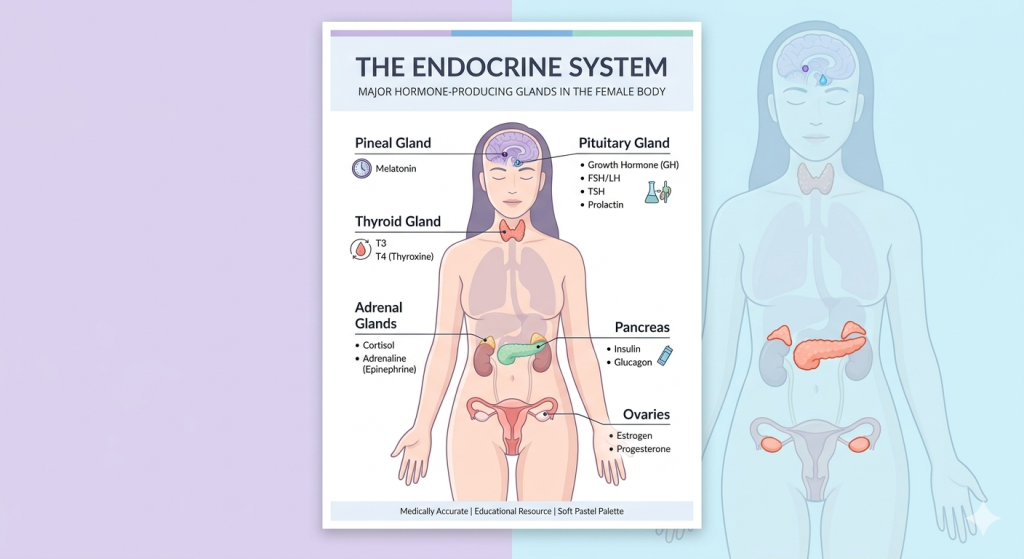
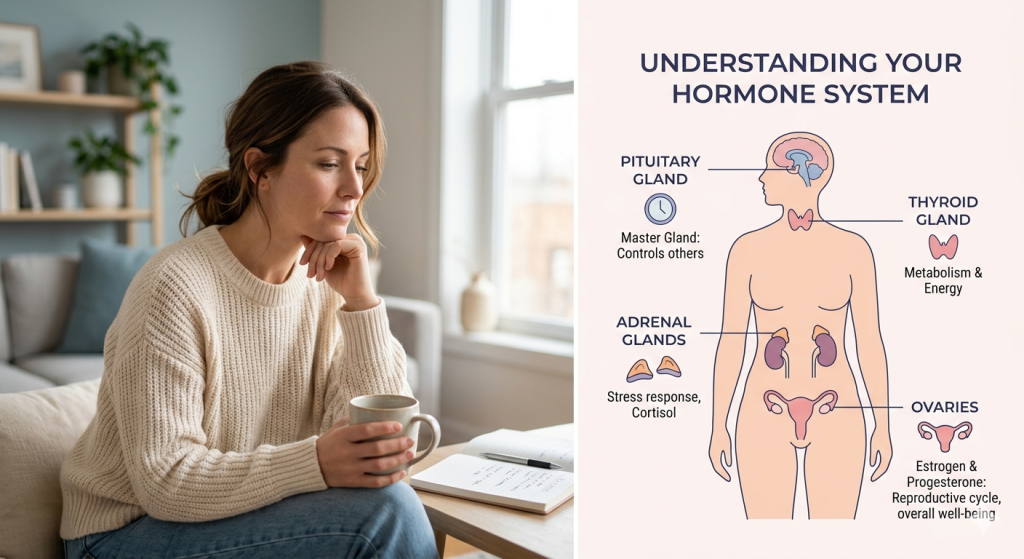
Hormonal transitions affect the brain, nervous system, sleep, metabolism, and emotional regulation not just periods.
The Menopause Timeline Explained
1. Perimenopause: The Transition Phase
This is usually the longest stage.
Perimenopause often begins in your 40s, although some women notice changes in their late 30s. During this phase, the ovaries gradually produce less oestrogen and progesterone, but hormone levels can fluctuate dramatically from month to month.
That hormonal unpredictability is why symptoms can feel confusing.
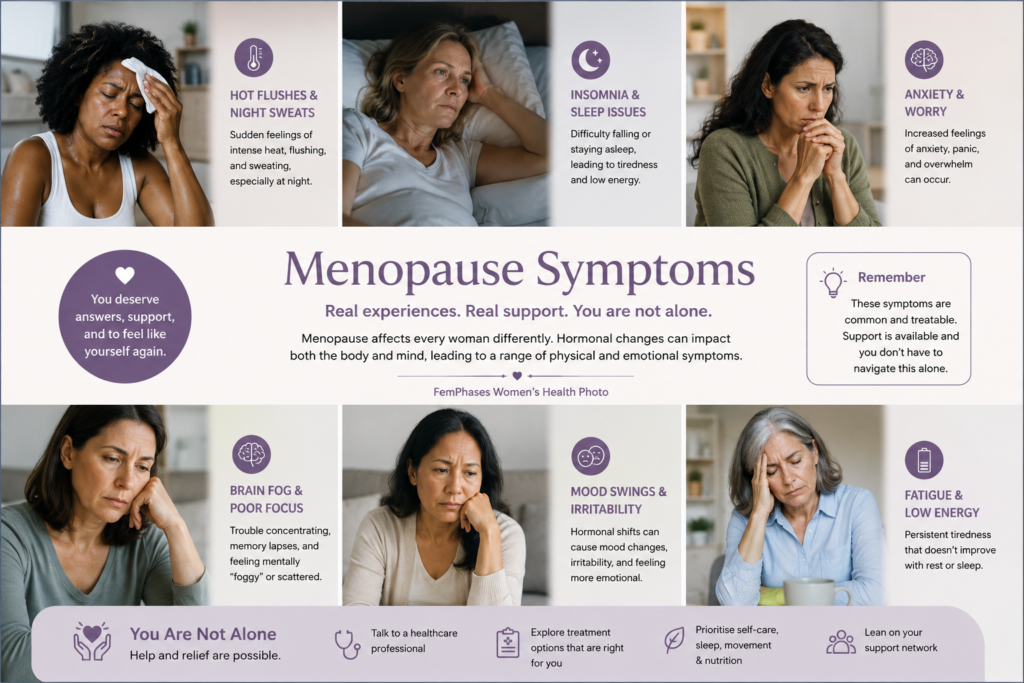
Common Perimenopause Symptoms
- Irregular periods
- Heavier or lighter bleeding
- Anxiety or irritability
- Sleep disruption
- Brain fog
- Mood swings
- Hot flushes
- Night sweats
- Fatigue
- Reduced stress tolerance
- Joint aches
- Lower libido
Many women say the emotional changes feel especially unsettling because they do not always recognise themselves.
You may suddenly feel:
- emotionally reactive,
- less resilient,
- socially withdrawn,
- overwhelmed by noise or stress,
- or unusually tearful.
These experiences are incredibly common, although many women are never warned about them.
The British Menopause Society explains that fluctuating hormones can significantly affect mood, sleep, concentration, and overall well-being.
How Long Does Perimenopause Last?
Typically:
- 4–8 years
- Sometimes shorter
- Occasionally longer
For some women, symptoms come and go gradually. For others, the transition feels more abrupt.
2. Menopause: The Official Milestone
Menopause itself is reached once:
- you have had no periods for 12 months, and
- no other medical explanation exists.
At this stage, ovarian hormone production has declined significantly.
Some women feel relief when they reach menopause because the unpredictability of periods ends. Others continue experiencing symptoms, especially hot flushes and sleep disruption.
Common Symptoms Around Menopause
- Hot flushes
- Night sweats
- Vaginal dryness
- Sleep difficulties
- Anxiety
- Low mood
- Brain fog
- Changes in skin and hair
- Weight redistribution
- Joint discomfort
According to the American College of Obstetricians and Gynaecologists (ACOG), vasomotor symptoms like hot flushes can continue for years after periods stop.
3. Post menopause: The Adjustment Phase
Post menopause begins after the 12-month mark without periods.
Hormones usually become more stable here, although “stable” does not necessarily mean “back to normal.” Instead, the body gradually adapts to lower oestrogen levels.
For many women:
- hot flushes reduce,
- mood becomes steadier,
- and energy slowly improves.
However, some symptoms can persist.
Symptoms That May Continue
- Vaginal dryness
- Reduced bone density
- Bladder changes
- Sleep difficulties
- Joint stiffness
- Libido changes
This stage is also important for long-term health because lower oestrogen levels can affect:
- heart health,
- bone strength,
- muscle mass,
- and metabolic health.
The NICE menopause guidance recommends personalised care and symptom management based on each woman’s experiences and risks.
Why menopause lasts for different lengths of time varies greatly due to factors like genetics, overall health, stress levels, and lifestyle choices. Recognizing this can help women understand that their experience is unique and normal. One reason women feel confused is that friends often have completely different experiences.
One woman may have mild symptoms for two years. Another may struggle for a decade.
Both experiences are valid.
Several factors can influence how long menopause lasts:
i. Genetics
Family history matters. Often, women experience menopause similarly to mothers or sisters.
ii. Surgical Menopause
Removing the ovaries causes a sudden hormonal drop, which can create more intense symptoms.
iii. Smoking
Smoking is associated with earlier menopause and may worsen symptoms.
iv. Stress and Mental Health
Chronic stress affects sleep, nervous system regulation, and emotional resilience, which can amplify menopausal symptoms.
vi. Overall Health
Conditions like thyroid disorders, depression, autoimmune disease, and chronic fatigue can overlap with menopause symptoms.
One of the Biggest Myths About Menopause
Myth: Menopause Only Causes Hot Flushes
In reality, menopause can affect almost every system in the body.
Oestrogen interacts with:
- the brain,
- blood vessels,
- skin,
- bones,
- bladder,
- muscles,
- and nervous system.
That is why symptoms can feel surprisingly broad and sometimes emotionally disorienting.
Many women describe feeling:
- “not like myself,”
- mentally scattered,
- emotionally fragile,
- or exhausted in a way sleep does not fully fix.
These experiences are not imaginary. They are recognised physiological responses to hormonal change.
When Symptoms Feel Emotionally Heavy
Many women quietly blame themselves during menopause.
They wonder if they are:
- becoming lazy,
- less capable,
- too emotional,
- or “losing it.”
In reality, fluctuating hormones can genuinely affect:
- emotional regulation,
- concentration,
- sleep quality,
- stress tolerance,
- and nervous system sensitivity.
Sleep deprivation alone can dramatically worsen anxiety, irritability, forgetfulness, and low mood.
This is one reason reassurance matters so much.
Understanding what is happening biologically often reduces fear and self-criticism.
What Can Actually Help?
There is no universal solution. However, evidence-based support can make a significant difference.
a. Lifestyle Support
Small changes often help more than extreme routines.
Helpful strategies include:
- Regular movement
- Strength training
- Reducing alcohol if symptoms worsen after drinking
- Prioritising sleep routines
- Managing stress gently rather than perfectly
- Eating regular, balanced meals
- Staying socially connected
Importantly, perfection is not required.
Many women already feel exhausted and overwhelmed. Support should feel realistic, not like another impossible standard to meet.
b. Hormone Replacement Therapy (HRT)
HRT can significantly reduce symptoms for many women, especially:
- hot flushes,
- night sweats,
- vaginal dryness,
- and sleep disruption.
It is not suitable for everyone, but for many women, the benefits outweigh the risks.
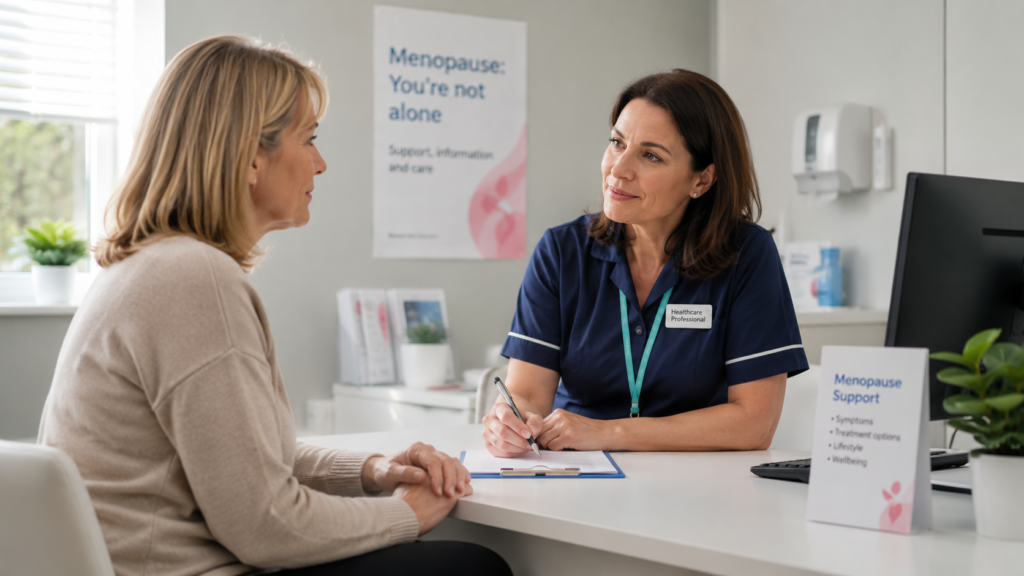
The Royal College of Obstetricians and Gynaecologists (RCOG) provides balanced information about menopause treatment options.
A personalised discussion with a healthcare professional is important because treatment depends on:
- medical history,
- symptoms,
- age,
- and individual risk factors.
c. Non-Hormonal Support
Some women cannot or prefer not to use HRT.
Other options may include:
- CBT for menopause symptoms
- Prescription non-hormonal medications
- Vaginal moisturisers or local oestrogen
- Sleep support strategies
- Pelvic floor physiotherapy
What matters most is finding support that feels safe, sustainable, and appropriate for your situation.
When Should You Seek Medical Advice?
Although menopause is normal, some symptoms should still be assessed.
Speak to a healthcare professional if you experience:
- very heavy bleeding,
- bleeding after menopause,
- severe depression,
- chest pain,
- sudden severe symptoms,
- persistent pelvic pain,
- or symptoms affecting daily functioning.
You deserve proper support, not dismissal.
Practical Takeaways
If you remember nothing else, remember this:
- Menopause is a transition, not a personal failure
- Symptoms often fluctuate rather than steadily worsen
- Perimenopause can last several years
- Many symptoms improve over time
- Emotional changes are common and biologically real
- Support exists, even if it takes time to find the right approach
- You do not need to “just put up with it”
Most importantly, you are not alone in wondering how long menopause lasts.
Thousands of women are asking the same question as they navigate work, relationships, caregiving, exhaustion, changing bodies, and a healthcare system that does not always explain things clearly enough.
Conclusion
Menopause can feel strangely invisible. You may look “fine” on the outside while quietly struggling through broken sleep, anxiety, overwhelm, hot flushes, brain fog, or a deep sense that your body suddenly feels unfamiliar.
That can be lonely.
However, understanding the menopause timeline often brings relief, as uncertainty can be exhausting in its own way.
While there is no exact universal answer to how long menopause lasts, most women gradually move into a more stable phase with time, support, and appropriate care.
This chapter is not about losing yourself.
It is about your body adapting to a major hormonal transition — one that deserves understanding, evidence-based support, and compassion.
And you deserve those things too.